GPT-5.6 Becomes Microsoft Copilot 365's Preferred Model: An In-Depth Look at the OpenAI-Microsoft Partnership

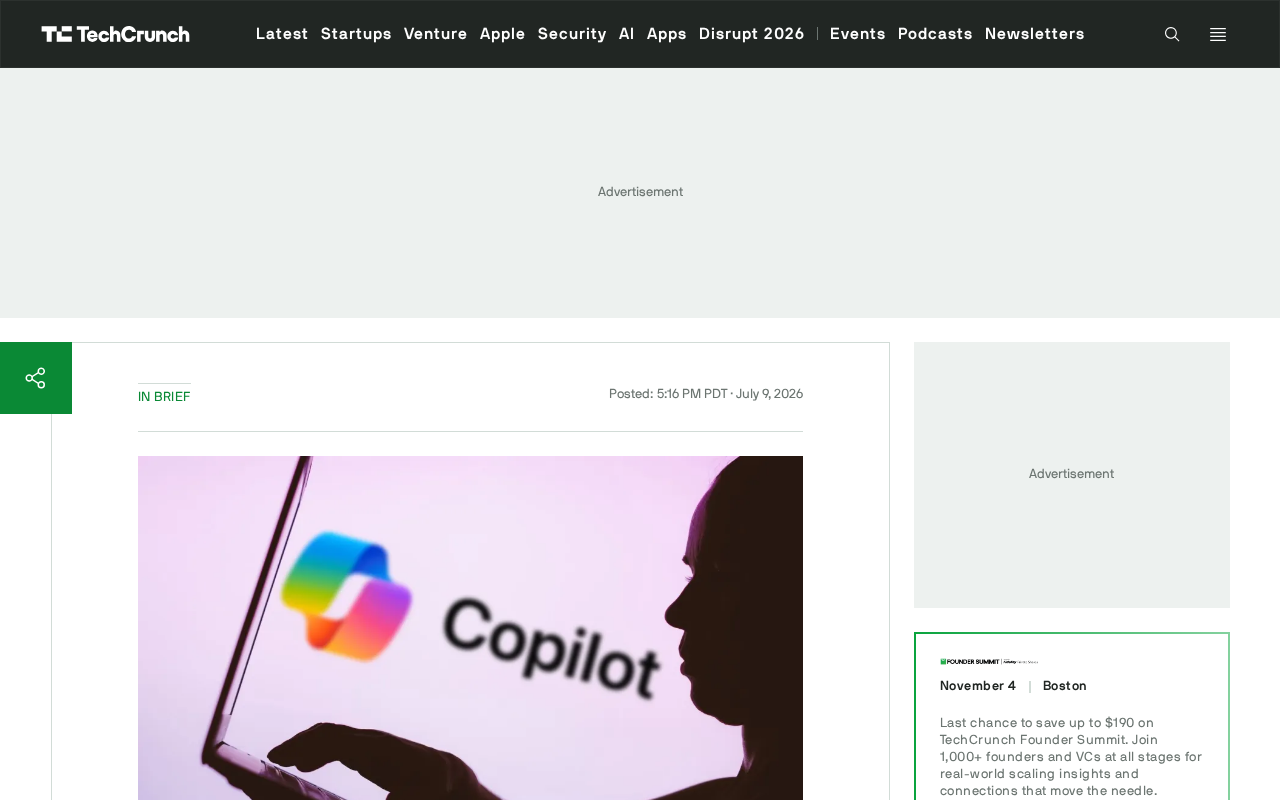
OpenAI names GPT-5.6 the preferred model for Microsoft Copilot 365, signaling continued deep collaboration.
Amid rumors of a split, OpenAI confirmed GPT-5.6 as the preferred model for Microsoft Copilot 365. This article analyzes the strategic logic behind the partnership, the rise of multi-model architectures, RAG and post-training technology, and why enterprise productivity remains AI's clearest path to monetization.
A Signal of Cooperation Amid Breakup Rumors
Recently, speculation surrounding the relationship between OpenAI and Microsoft has continued to intensify. As OpenAI keeps expanding its commercial footprint and begins building independent compute infrastructure, many have questioned the long-term direction of this tech alliance. It is precisely against this backdrop of "breakup rumors" that OpenAI has officially announced: GPT-5.6 will become the preferred model for Microsoft Copilot 365.
This statement is a direct response to market speculation. OpenAI has made it clear that its next-generation model will continue to power Microsoft's suite of office and productivity applications. This means that despite each side having its own strategic calculations, the deep binding at the core product level remains solid.
It's worth noting that fully understanding the context of this announcement also requires examining the corporate structural transformation OpenAI is currently undergoing. OpenAI is transitioning from a non-profit organization to a for-profit Public Benefit Corporation (PBC)—a special corporate form under the legal framework of Delaware in the United States that allows the board of directors to incorporate social mission into legally binding decision-making considerations while pursuing shareholder value maximization. The core distinction from a traditional C-Corp lies in the fact that "stakeholder orientation" is written into the company's charter rather than existing only as a voluntary commitment. This legal structural change directly affects the restructuring of the equity ratio and revenue distribution mechanisms corresponding to Microsoft's $13 billion investment, making it an important institutional backdrop for outside interpretations of the "breakup rumors." Additionally, the enterprise productivity AI market in which Copilot 365 operates is becoming increasingly competitive: products such as Google Workspace Gemini, Salesforce Einstein, and ServiceNow Now Assist are all vying for market share in the enterprise AI assistant space. Most of these competing products have chosen either in-house development or a multi-vendor parallel model strategy, rather than deeply binding themselves to a single external model provider. This industry trend gives the joint statement from OpenAI and Microsoft market signaling value that goes beyond the bilateral relationship.
Background: The Capital and Technology Ties Between OpenAI and Microsoft Microsoft began making strategic investments in OpenAI in 2019, initially putting in $1 billion, followed by additional investment in 2021, and in 2023 announced a multi-year investment plan of up to $13 billion, making it OpenAI's largest external shareholder and exclusive cloud infrastructure partner. The core architecture of this partnership is: OpenAI exclusively uses Microsoft's Azure cloud platform for model training and inference, while Microsoft obtains priority licensing to integrate OpenAI's technology into its products. This structural binding goes far beyond an ordinary supplier relationship—Azure provides OpenAI with clusters of tens of thousands of GPUs for compute, while OpenAI's models have become Microsoft's core differentiator in the cloud services market against AWS and Google Cloud. Notably, what Microsoft actually deploys on Azure are dedicated instances of OpenAI models, rather than accessing them through a public API. This means Microsoft can run model weights directly in Azure data centers, gaining significant advantages in latency, cost, and data sovereignty. This deep technical integration is also one of the underlying reasons why the two parties' relationship cannot be simply severed.
GPT-5.6: The Core of a New Model Family
The Versioning Logic Behind GPT-5.6
The naming of GPT-5.6 follows OpenAI's increasingly refined version iteration strategy in recent years. Since the GPT-4 series, OpenAI has begun using decimal-point sub-versions (such as GPT-4o and GPT-4 Turbo) to distinguish model variants with different capability tiers and optimization directions, rather than releasing an entirely new architecture with each iteration. The strategy behind this naming reflects the practical rhythm of AI model development: large-scale pretraining is extremely expensive, and the complete training cycle for a new-generation model often takes years, whereas continuous post-training optimization can bring out "point versions" with significant capability improvements in a relatively short cycle.
What's worth understanding in depth is the complete historical lineage of the post-training technology system. The theoretical foundations of RLHF (Reinforcement Learning from Human Feedback) can be traced back to the 2017 paper "Deep Reinforcement Learning from Human Preferences" jointly published by DeepMind and OpenAI, which first verified the feasibility of using human preference signals to replace engineered reward functions in complex continuous control tasks. In 2022, OpenAI systematically ported this to the domain of language models, demonstrating through InstructGPT the significant effect of RLHF in improving models' instruction-following capabilities, laying the alignment technology foundation for GPT-3.5 and subsequent series. Post-training refers to the process of aligning and strengthening the capabilities of a model after large-scale unsupervised pretraining is complete, through techniques such as supervised fine-tuning (SFT), reinforcement learning from human feedback (RLHF), and direct preference optimization (DPO). DPO was proposed by a Stanford University team in 2023. Through mathematical derivation, it proved that the optimal reward model can be implicitly encoded into the parameters of the language model itself, thereby simplifying the originally three-stage RLHF process (SFT → reward model training → RL optimization) into a single supervised learning objective, bypassing the training of an explicit reward model and significantly reducing the engineering complexity and hyperparameter sensitivity of training. These technologies mean AI companies no longer need to train foundation models with hundreds of billions of parameters from scratch each time, but can instead perform refined iterations on an existing base architecture.
In addition to the alignment technology routes described above, another technical lineage in recent years has been profoundly influencing the capability improvement path of "point version" models: Reinforcement Learning for Reasoning (RLR). Unlike RLHF, which focuses on subjective human preferences, RLR uses verifiable objective standards such as the correctness of mathematical proofs and code execution results as reward signals, training models to generate longer, more structured Chain-of-Thought reasoning processes. OpenAI's o-series models (o1, o3) are representative products of this route. Their core characteristic is dynamically allocating more compute resources for "internal thinking" during inference, rather than simply scaling up model parameter size. As a "point version," GPT-5.6 may combine both the alignment capabilities of traditional RLHF and the reasoning enhancement of RLR, which is also the key technical foundation for its potential to surpass previous-generation models on multi-step tasks. The name GPT-5.6 implies it is built on the GPT-5 base architecture but has undergone specialized enhancement targeting specific capability dimensions, potentially including stronger instruction-following ability, lower hallucination rates, or better multi-step reasoning performance.
Model Positioning and Product Deployment
As an important member of OpenAI's new model family, GPT-5.6 is positioned as the preferred engine driving Copilot 365. This positioning carries several implications worth noting:
Multi-Model Matrix Architecture: The wording "preferred model" implies that Copilot 365 does not rely solely on a single model, but rather sets GPT-5.6 as the default priority option within a model matrix. Technically, this architecture is called "Model Routing"—the platform dynamically dispatches the most suitable model based on dimensions such as task type, response speed requirements, cost budget, and user permissions.
The implementation of model routing typically relies on a lightweight classifier or rule engine that analyzes incoming requests in real time and, based on multiple feature dimensions such as task complexity, response time requirements, estimated token length, and user permission level, dynamically decides which model to invoke. More advanced implementations also introduce a Cascading strategy: a small model processes the request first, and when confidence falls below a threshold, it automatically escalates to a larger model for reprocessing, thereby maximizing cost efficiency. Notably, the model router itself faces an engineering paradox: if the router is complex enough to accurately judge task difficulty, its own inference latency may offset the efficiency gains that routing brings; if the router is too simple, the classification error rate rises, and frequent "upgrade" calls erode the cost savings. This paradox has prompted some platforms to shift toward hybrid strategies such as "Speculative Decoding"—where a small model generates draft tokens and a large model verifies them in parallel, replacing software-level serial routing decisions with hardware-level parallel computation. Microsoft has already built a Model Catalog covering OpenAI's series, Meta LLaMA, Mistral, and other vendors through its Azure AI Foundry platform. Setting GPT-5.6 as the "default priority" option means it is invoked preferentially unless special conditions are triggered, while retaining the flexibility to switch to other models—this both guarantees a performance ceiling and preserves scheduling room for Microsoft to balance cost and effectiveness. For example, a simple text summarization task might be routed to a lightweight small model to reduce latency and cost, while a complex multi-step reasoning task would invoke a flagship large model.
A Key Commercialization Channel: Directly deploying the latest GPT-5.6 to Copilot 365 indicates that OpenAI still regards Microsoft as the core channel for scaling model deployment. Applications such as Word, Excel, PowerPoint, and Outlook cover hundreds of millions of enterprise users worldwide, providing irreplaceable fertile ground for the model's capabilities.
Continuously Empowering Enterprise Productivity
Microsoft 365 Copilot was officially launched in March 2023. Its technical architecture is based on the "Copilot Stack," whose core consists of three layers: the underlying large language model (provided by OpenAI), the middle Microsoft Graph data layer (integrating contextual information such as the user's emails, calendar, and documents), and the upper layer of interfaces for various Office applications.
As the core hub of Microsoft's enterprise data layer, Microsoft Graph's design philosophy originates from the unified "Microsoft Graph" API concept Microsoft proposed in 2015, aimed at breaking down data silos between Office 365 products. It is a unified API gateway provided by Microsoft that can aggregate all the digital footprints a user generates within the Office 365 ecosystem. When a user issues a command to Copilot, the system first extracts context fragments highly relevant to the current task from Microsoft Graph using Retrieval-Augmented Generation (RAG) technology, then feeds these private contexts along with the user's command into the large language model for inference and generation.
RAG was first systematically proposed by Meta AI's research team in 2020. Its basic principle is to combine the parameterized knowledge of large language models with non-parameterized retrieval from external knowledge bases: during inference, the system first converts the user query into a Vector Embedding, retrieves semantically similar document fragments from a pre-built vector database, and then concatenates these fragments as context into the prompt fed to the model to generate the final answer.
In Microsoft Copilot's enterprise implementation, the Permission Filtering Layer is the most critical and complex engineering component: the system must, within a millisecond-level response window, perform fine-grained access control verification on each retrieved document fragment through real-time permission queries to Azure Active Directory (now renamed Microsoft Entra ID). This process involves multiple parallel verification steps, including dynamic resolution of SharePoint permission inheritance chains, real-time verification of Teams channel membership, and validity checks on OneDrive sharing links. Compared to consumer-grade RAG systems, enterprise-grade implementations must also handle the "Permission-aware Indexing" problem—when document permissions change, the corresponding index entries in the vector database must be synchronously updated within a valid time window to prevent users whose access has been revoked from indirectly obtaining summary information about restricted content through semantic retrieval. This design enables the AI assistant not only to understand general language but also to access private data and workflows within the enterprise, effectively solving the core pain point that general models don't understand internal enterprise knowledge, while effectively addressing the core engineering challenges of data governance and compliance in enterprise-grade AI deployment. It currently covers over one million enterprise organizations worldwide, priced at $30 per user per month for enterprise users.
The integration of GPT-5.6 is expected to bring stronger semantic understanding capabilities, longer context processing windows, and more precise task execution results. It's worth mentioning that as the context windows of new-generation models continue to expand (GPT-4-level models already support 128K tokens, equivalent to a processing capacity of about 100,000 words), the technical boundary between RAG and direct long-context processing is gradually blurring: for ultra-long-window models that can load an entire enterprise document repository into context at once, whether the traditional "retrieve → concatenate" RAG process is still necessary, and how the two approaches should be weighed in the triangle of cost, latency, and accuracy, have become core topics in current enterprise AI architecture design. From automatically generating documents and intelligently summarizing emails to analyzing spreadsheet data and assisting with creating presentations, the AI assistant in daily workflows will thereby become more reliable and efficient.
The Strategic Game Behind the Partnership
Why the "Breakup Rumors" Deserve Attention
The cracks in the OpenAI-Microsoft partnership have their technical roots in OpenAI's ongoing strategy to become self-sufficient in compute. In 2024, OpenAI launched a hyperscale data center construction plan codenamed "Stargate," planning to invest over $100 billion over the next four years to build dedicated AI compute infrastructure on U.S. soil. In January 2025, the plan gained further political endorsement, being incorporated into the national-level narrative of U.S. AI infrastructure strategy.
The Stargate plan represents the strategic direction of AI companies evolving toward vertical integration of compute, a path highly similar to the development trajectories of Apple's M-series chips and Google's TPU (Tensor Processing Unit). Google began developing TPUs in 2016, optimizing them at the hardware level specifically for matrix multiplication operations, giving them a higher energy efficiency ratio than general-purpose GPUs for training and inference of Transformer models. OpenAI's in-house AI chip under development is reportedly based on TSMC's advanced process, focusing on energy efficiency optimization on the inference side, forming differentiated competition with NVIDIA's H-series GPUs' absolute-compute route on the training side. For OpenAI, the core value of an in-house AI chip lies not only in reducing per-token inference cost, but more importantly in the ability to perform deep hardware-level co-optimization based on the unique characteristics of its own model architecture—for example, designing dedicated cache structures for the KV Cache memory access patterns in the Transformer attention mechanism, thereby substantially increasing throughput without sacrificing model quality—precisely the kind of customized need that general-purpose GPUs cannot efficiently satisfy.
Understanding the deeper motivations of this strategy from a techno-economic perspective: Between 2022 and 2024, the global shortage of NVIDIA H100 GPUs gave AI companies a profound taste of the fragility of relying on a single compute supplier. The training and inference costs of large language models constitute the most core operational expenditure structure of AI companies. The single-run training cost of a GPT-4-level model is estimated to exceed $100 million, while the ongoing operational cost on the inference side grows linearly or even superlinearly with user scale. Long-term reliance on third-party cloud platforms means the profit margin of every API call is eroded by the cloud vendor's compute fees, and a deeper strategic hidden danger lies in the priority game of compute scheduling. Through building its own data centers and customizing dedicated AI chips, the Stargate plan attempts to establish vertical integration capabilities and gain fundamental competitive freedom across three dimensions—performance optimization, cost control, and supply chain security—essentially also building a "strategic reserve" to cope with the uncertainty of the compute supply chain.
At the same time, OpenAI is also actively expanding compute partnerships with companies such as Oracle and SoftBank, and advancing custom AI chip development. From a techno-economic perspective, controlling autonomous compute means gaining fundamental strategic freedom in bargaining power and business model design—this is precisely the core logic behind outside observers interpreting OpenAI's series of moves as "de-Microsoft-ization."
OpenAI's proactive emphasis on GPT-5.6 as the "preferred model" for Copilot 365 is itself a clear posture. It's worth noting that for enterprise IT decision-makers, the stability of AI model supply carries commercial significance beyond the technology itself: enterprise software procurement typically involves lengthy evaluation cycles, complex internal approval processes, and substantial integration engineering investment, creating extremely high "Switching Costs." When rumors of uncertainty emerge in the partnership, enterprise customers relying on Copilot 365 face the substantive risk of possible model supply interruption or capability degradation. Therefore, releasing a clear signal amid the rumors both reassures enterprise customers' concerns and conveys to the market the certainty message that "the partnership is still on track."
Mutual Dependence Remains the Main Theme
Despite the existence of competition and friction, the mutual dependence between the two parties is difficult to break in the short term. In business strategy studies, this relationship is called "Coopetition"—a concept systematically expounded by scholars Adam Brandenburger and Barry Nalebuff in 1996, describing the complex game relationship in which cooperation and competition coexist between competitors.
From the precise perspective of game theory, the relationship between OpenAI and Microsoft is closer to a cooperative equilibrium under the "Repeated Game" framework: since both parties expect to continue interacting in the future, the short-term gains from breaching agreements now will be offset by future cooperation losses, so rational actors choose to maintain cooperation. However, the stability of this equilibrium depends heavily on both parties' subjective discount rate for the "value of future cooperation"—once one party judges that a generational leap in AI capability is enough to make the current partner replaceable, the equilibrium may quickly collapse. From an industrial economics perspective, the relationship between OpenAI and Microsoft can be understood using the "complementary product provider" model: OpenAI's model capabilities are a key complementary element of the value of Microsoft's Copilot products, and the joint value of the two parties far exceeds the value each creates independently—this is precisely the fundamental economic rationale for maintaining cooperation. However, when OpenAI reaches Microsoft's enterprise customer base directly through ChatGPT Enterprise, the two parties evolve from a complementary relationship into a partially substitutive one, and coopetition tension emerges accordingly.
Historically, the collapse of the Intel-Microsoft Wintel alliance in the mobile computing era provides a typical reference case: when ARM-architecture mobile chips reshaped the value equation of computing platforms, the original complementary relationship lost the economic foundation that sustained cooperation; the search revenue-sharing partnership between Google and Apple on mobile similarly experienced a comparable evolutionary trajectory from deep symbiosis to partial competition. From a game theory perspective, the two parties are currently in a Nash equilibrium state: as long as the other party maintains cooperation, unilateral withdrawal would cause substantive losses to one's own interests, so the rational choice is a "limited game" strategy of maintaining surface stability while each advances its own strategic autonomy. It's worth being vigilant that a breakthrough in multimodal AI capabilities (such as embodied intelligence or real-time video understanding) could become an architecturally disruptive moment similar to the Wintel collapse, at which point the respective bargaining chips of both parties would face fundamental reassessment.
In the current AI industry, this phenomenon is particularly prominent: Microsoft is, on the one hand, OpenAI's largest financial backer and core distribution channel, while on the other hand also providing services to OpenAI competitors such as Anthropic and Mistral through its Azure AI platform; OpenAI, while relying on Microsoft's distribution network, reaches enterprise customers directly through ChatGPT Enterprise, competing head-on with Copilot.
OpenAI needs Microsoft's vast enterprise customer network to achieve large-scale commercial monetization of its models, while Microsoft needs OpenAI's frontier models to maintain Copilot's leading position in the productivity AI market. This structural tension makes the relationship between the two both impossible to sever easily and difficult to fully trust, reflecting the widespread pattern of interest friction between platform-type tech companies and vertical AI companies.
Deeper Implications for the Industry
Multi-Model Strategy Is Becoming Industry Consensus
The wording "preferred model" clearly shows that even Microsoft, which is deeply bound to OpenAI, is building a more resilient model-scheduling system. This reflects an industry trend worth noting: large platforms no longer bet everything on a single model, but instead optimize cost, performance, and availability through multi-model orchestration. The acceleration of this trend has given rise to an emerging "AI infrastructure middle layer" ecosystem—frameworks and platforms such as LangChain, LlamaIndex, and Hugging Face's Inference Endpoints are filling the engineering gaps between model scheduling, prompt management, and evaluation testing, enabling enterprises to switch between different model providers at a relatively low migration cost. It's worth noting that this middle-layer ecosystem itself also faces the risk of being "internalized" by large cloud platforms: AWS Bedrock, Azure AI Foundry, and Google Vertex AI are all integrating model orchestration capabilities directly into cloud services, continually narrowing the differentiation space for independent middle-layer tools. For other vendors, this offers a product architecture approach with considerable reference value—deep reliance on a single model provider is increasingly seen as a business risk rather than a competitive advantage.
Productivity Scenarios Remain the Main Battlefield for AI Monetization
The deployment of GPT-5.6 in Copilot 365 once again confirms that enterprise office productivity is one of the clearest commercialization paths for AI today. Compared with the uncertainty of consumer applications, enterprise-grade productivity tools have clearer willingness to pay and quantifiable efficiency improvements—Copilot 365's pricing model of $30 per user per month, along with its scale covering over a million enterprise organizations, constitutes the most convincing commercial validation sample in the current global AI subscription market.
However, this business model also faces the challenge of the "Value Realization Gap": there is often a significant gap between an enterprise purchasing Copilot licenses and employees truly integrating it into their daily workflows. According to multiple enterprise IT surveys, the actual usage rate of AI productivity tools is generally lower than the number of licenses purchased, with the core obstacles lying in three areas: workflow redesign costs, data quality bottlenecks, and employee skill adaptation. Among these, the data quality issue is especially critical: the output quality ceiling of the RAG architecture is determined by the degree of structuring and metadata completeness of internal enterprise documents. Many organizations discover after deploying Copilot that "data hygiene" problems—such as chaotic historical document naming, improper permission settings, and outdated content—are the real bottlenecks constraining the AI assistant's actual effectiveness. GPT-5.6's stronger instruction understanding and lower error rate are expected to lower this usage threshold, but how to translate model capabilities into quantifiable productivity ROI remains a core proposition that enterprise customers and software vendors face together. This is also the fundamental reason why neither OpenAI nor Microsoft is willing to easily give up this partnership.
Summary
With "breakup rumors" running rampant, OpenAI's confirmation of GPT-5.6 as the preferred model for Microsoft Copilot 365 injects a shot of confidence into this AI alliance. From capital binding and compute dependence to the sharing of enterprise customer networks, the mutual dependence between the two parties has become deeply embedded in the core of each other's business models. While the long-term strategic direction of the two parties certainly still holds variables, on the core battlefield of enterprise productivity AI, their partnership remains solid, at least for now. For observers following the direction of the AI industry, this development is both a clear signal of the continuation of cooperation and an important entry point for understanding the future coopetition landscape.
Note: This article is written based on publicly reported information. Specific technical details and performance of GPT-5.6 are subject to subsequent official releases.
Key Takeaways
Key Takeaways
Related articles

Felix Rieseberg Personal Homepage
Felix Rieseberg's personal homepage sparks attention on Hacker News. This article covers the Slack engineer's technical background, the rise and fall of nativefier, and the value of a developer homepage as a tech calling card.

@ai-sdk/vue 3.0.306 Patch Release Syncs with [email protected] Update
@ai-sdk/vue 3.0.306 released, synced with [email protected]. A routine patch release for the Vercel AI SDK ecosystem with no public API changes; the Vue adapter layer stays version-aligned with the core package.

Gemini 4 Argon API Launches: The Era of Million-Token Output Begins
Google launches Gemini 4 Argon with sparse MoE architecture, up to 1M output tokens, and a 68.90% Vals Index score, available across API, AI Studio, and the Gemini app.