GPT-5.6 in Practice: Full Restructure of a Real Small Product with Terra + Soul

GPT-5.6 Terra + Soul used to fully rebuild a real small product — capability and cost compared.
A hands-on GPT-5.6 evaluation using a real live product — a gaming voice input app with actual daily users. The author rebuilt the UI and added new features using both Terra and Soul versions, comparing their performance, cost, and best-use scenarios. Key takeaway: Terra handles everyday tasks at half the cost, while Soul tackles tough bugs more reliably.
Starting with a Real Small Product
Most LLM benchmarks stop at leaderboard scores and toy-level demos — they rarely reflect what actual development feels like in practice. This time, I took a more grounded approach: using the freshly released GPT-5.6 to do a thorough restructure of a real, live product I own.
The product in question is a "Gaming Voice Input Method" I previously built with Web Coding tools — as the name suggests, it lets you output text via voice while gaming (say, having Doubao roast your jungler's performance). "Web Coding" here refers to platforms like Bolt, Lovable, and v0 — AI-powered development environments where you describe your needs in natural language and get a fully runnable web app in return. Unlike traditional code completion tools, these platforms let developers converse their way to a complete project structure including both frontend and backend logic, dramatically shortening the path from idea to prototype. The product has been live for about a month, with 50+ registered users and roughly 7–8 daily active users. Small numbers, but real users — which makes it a rare and genuine real-world testing ground.
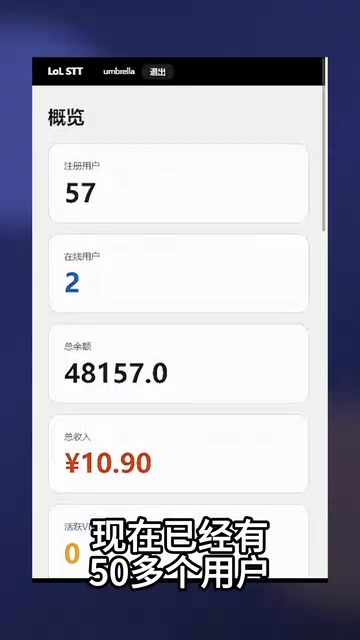
Real users, real feedback, real technical debt — this kind of project is the best stress test for a model's actual development performance. Technical debt refers to the hidden costs accumulated when shortcuts are taken to speed up short-term delivery. For micro-products with single-digit daily actives, this problem is especially acute: under traditional development, the time investment required for a refactor far outweighs what a product of this scale can justify — leaving countless small tools with real users stuck in a "works but looks rough, usable but hard to modify" state indefinitely.
Before and After the Restructure
Here's what it looked like before. Login, registration, and all the core components were there — functionally complete, but visually it had that classic "hacked together by a developer" aesthetic. It worked, but screamed amateur at first glance.

This time I used both versions of GPT-5.6 — Terra and Soul — to rebuild the entire UI from scratch, while also adding several features I'd been meaning to implement but never had time for.

After the restructure, the overall visual design and interaction logic leveled up significantly. Worth noting: the vast majority of the UI code was generated directly by the model. My role was more like "critic + assembler" — reviewing output, adjusting details, and stitching modules together.
This kind of human-AI collaboration is what the engineering world calls AI-assisted development, sometimes jokingly referred to as Vibe Coding. Its core value isn't replacing engineers — it's freeing engineers from repetitive boilerplate writing so they can focus on higher-value work: system design, edge case judgment, and quality control. In practice, this approach delivers the biggest efficiency gains at the UI layer and for CRUD-type features, while complex business logic, security design, and performance tuning still require meaningful human involvement. This division of labor — models mass-producing code, humans governing quality and architecture — is rapidly becoming the dominant paradigm in AI-assisted development.
Terra vs. Soul: Real-World Feel for Both Versions
The most valuable part of this experience was the head-to-head comparison between the two GPT-5.6 versions.
Terra: Same Capability, Half the Price
In practice, Terra performs comparably to GPT-5.5 — it handles everyday tasks like code generation and UI building without issue. But the key difference is price: Terra is a straight 50% cheaper.

For solo developers and small teams, this is a highly practical signal. No meaningful capability regression, half the cost — that means you can comfortably use AI for high-frequency, high-volume development tasks without constantly watching the bill.
Soul: More Reliable When Tackling Stubborn Bugs
That said, Terra isn't a silver bullet. During this project, I ran into a handful of stubborn bugs that Terra struggled with; switching to Soul resulted in noticeably more accurate problem diagnosis and solutions.
This reflects a strategy the LLM industry has broadly adopted: tiered pricing with tiered capability. Vendors like OpenAI and Anthropic typically maintain both a lightweight line (low cost, fast response) and a flagship line (high capability, higher cost) — think Anthropic's Haiku/Sonnet/Opus hierarchy, or Google's Flash/Pro lineup. The underlying idea is to decouple model capability from call cost, letting developers route tasks based on complexity. Terra/Soul follows exactly this logic: run high-volume everyday tasks with the cheaper Terra, then switch to the more capable Soul when you hit a hard problem. This "use what the task demands" approach is far more economical than always reaching for the most powerful model.
Cost-Effectiveness Compared to Fable 5
Taking the full experience together, my gut feeling is that the Terra + Soul combination is significantly better value than Fable 5.
For developers choosing between tools, model selection long ago stopped being as simple as "which one is strongest." The real question is how to balance capability, cost, and task fit. GPT-5.6's pricing strategy this time — offering near-previous-flagship capability at a lower price point, with a stronger version available as a safety net for complex tasks — hits exactly the cost-effectiveness pain point that solo developers care most about.
One caveat: everything above reflects my personal experience on a single real-world project, which is a limited sample. Different project types — especially those heavy on backend logic or large-scale engineering — may yield different conclusions. I'd recommend testing directly on your own project for the most direct sense of how these tools feel.
A Closing Thought: AI Is Lowering the Iteration Cost for Small Products
What struck me most about this experience wasn't how powerful the models are — it was that they allowed a product with just 7–8 daily active users, as small as it gets, to undergo a complete visual and functional overhaul in a single afternoon.
In the past, the dual pressure of technical debt and ROI meant products at this scale were rarely maintained — the labor cost of a refactor simply couldn't be "supported" by a handful of daily active users. Now, AI has dramatically lowered the time cost of UI refactoring, bug fixing, and new feature development, making "continuously polishing a small product" something with manageable costs. That might be the most tangible value the new generation of models offers to everyday developers — not replacing you on some grand ambitious project, but making it possible to seriously care for those small, easy-to-overlook things you've built.
Related articles
Alibaba Launches Happy Shrimp: AI-Powered One-Click Complete Song Generation
Alibaba launches Happy Shrimp, an AI music generation tool that creates complete songs with lyrics, melody, arrangement, and vocals from natural language descriptions. In-depth analysis of its core features, differentiation from competitors like Suno, and industry impact.
GPT Sol Ultra vs Grok 4.6: Real-World Task Completion Benchmark in Reasoning Mode
Developer benchmark reveals GPT Sol Ultra completes draw.io scientific diagrams in one iteration while Grok 4.6 fails to converge despite maximum reasoning mode, exposing that reasoning depth ≠ task delivery capability.
OpenAI Authorship Dispute: The Battle Over Academic Boundaries in the AI Era
OpenAI disputes authorship with mathematician Tristan Buckmaster over Navier-Stokes research, raising ethical questions about AI involvement in science.