GPT-5.6 Prompt Engineering in Practice: A Systematic Approach to Eliminating AI Verbosity

Use GPT-5.6's eight-dimension prompt framework to systematically eliminate AI verbosity through engineered constraints.
This article uses GPT-5.6's official prompt engineering guide to explain why AI models are verbose — tracing the root causes to RLHF training incentives and training data structure — and provides a practical, systematic approach using the eight-dimension framework (Role, Constraints, Stop Conditions, etc.) to constrain redundant output, including fixing inline vs. multi-line code block issues.
Where It All Started: A Comment Section Debate
Three months ago, a Bilibili creator posted a video on "curing" ChatGPT-5.4 and CodeX of their verbosity problem. One viewer pushed back in the comments, claiming that CodeX's redundancy issue was "unsolvable." The creator's response was blunt: you need the ability to keep solving problems. Since then, ChatGPT has iterated from 5.4 to 5.5 and now to 5.6, and the methodology around prompt engineering has evolved right along with it. This article is both a continuation of that debate and a validation of its outcome.
This piece draws on the official GPT-5.6 prompt engineering guide to walk through how you can use systematic techniques to constrain AI verbosity and bring responses back to being concise and precise. This isn't just a tips-and-tricks post — it's a deep dive into why AI gets so wordy in the first place.
Search Tip: Use English to Find Official Guides
A detail that's easy to overlook: when searching for GPT-5.6 prompt engineering resources, always use English keywords. Chinese-language searches often won't surface OpenAI's official prompt writing guides directly. The official documentation is English-only, but a translation tool can help you pull out the key points quickly.

GPT-5.6 Prompt Updates: Three Core Directions and an Eight-Dimension Framework
According to the official guide, GPT-5.6's prompt engineering updates center on three key directions:
- Goals: Clearly define what the task needs to accomplish
- Constraints: Set boundaries on AI behavior
- Evidence & Acceptance Criteria: Provide quantifiable success metrics
Looking at the bigger picture, OpenAI offers a comprehensive eight-dimension parameter framework that covers every essential aspect of prompt writing.
The Engineering Context Behind Prompt Engineering: Prompt engineering has evolved from its early "magic spell" phase — where practitioners accumulated tricks through trial and error — into a systematic engineering discipline. Organizations like OpenAI and Anthropic have published structured prompt design specifications. The core idea is to transform natural language instructions into something closer to a software requirements document. The eight-dimension framework borrows conceptually from User Stories and Acceptance Criteria in software engineering, converting vague intent into a verifiable set of constraints that reduces the model's room for "creative improvisation."
Breaking Down the Eight-Dimension Framework
- Role: The identity or persona the AI adopts
- Personality: The style and tone of responses
- Goals: A description of the core task
- Success Criteria: What a completed response looks like
- Constraints: What the AI must not do
- Tools: The capabilities the AI is allowed to use
- Output: The expected format and length
- Stop Conditions: When the task should end
The value of this framework is that it transforms an off-the-cuff prompt into a structured specification. Once all eight dimensions are filled in, the model can automatically select the appropriate execution path. Among these, Constraints and Stop Conditions are the most powerful weapons against verbosity.
Why Is AI So Wordy? A Cross-Model Analysis
Despite iterating through multiple versions of prompts, the redundancy problem proved stubbornly persistent. To get to the root cause, the creator ran an interesting experiment: having three different AI models independently analyze the same verbosity problem.
The Methodological Value of Cross-Model Validation: Using different AI models to cross-analyze the same problem is an important "meta-cognitive" approach in modern AI application practice. Because models differ in training data, alignment strategies, and architecture, they tend to offer complementary perspectives on the same issue. Claude, trained on Constitutional AI methods, emphasizes self-critique and correction, and tends to trace problems back to their root causes. Qwen has specialized optimizations for Chinese-language contexts and coding tasks. Cross-referencing conclusions from multiple models effectively reduces the blind spots any single model might have — a strategy analogous to multi-party code review in software engineering or ensemble learning in statistics.

Qwen's Explanation: A Side Effect of RLHF
Qwen attributed the verbosity to Reinforcement Learning from Human Feedback (RLHF). During training, human annotators tend to favor responses that are comprehensive and clearly structured with multiple bullet points. This causes the model to gradually develop a "more is better" bias — a systematic distortion baked in by the training mechanism itself.
A Closer Look at RLHF: Reinforcement Learning from Human Feedback is the core alignment technique used in today's leading large language models. The process has three stages: first, a base model is trained via supervised learning; next, human annotators rank the quality of model outputs, and those preferences are used to train a Reward Model that predicts human ratings; finally, the language model is fine-tuned using Proximal Policy Optimization (PPO) based on reward signals. The side effect, as Qwen pointed out, is that human annotators naturally give higher scores to longer, more "comprehensive" and "well-organized" responses — which means the reward function implicitly incentivizes redundancy.
Claude's Explanation: The Problem Starts in the Training Data
Claude's analysis goes even further upstream — it argues that the root cause lies in the training data itself. When AI learns to perform tasks described as "analyze" or "break down," the training examples it encounters are already structured as multi-point lists. In other words, the seeds of verbosity are planted during the training phase itself.
This cross-model validation is genuinely illuminating: the depth and angle of analysis vary noticeably across models. Claude proactively retrieves information by default, which tends to produce deeper analysis; Qwen shows more limitations in intent understanding and proactive information retrieval. Using AI to analyze the output patterns of AI is itself a shortcut to understanding how large language models actually work.
Practical Optimization: From Multi-Line Code Blocks to Inline Simplicity
With the root causes understood, it's time to look at solutions. Since the problem can't be fixed at the model architecture level, the approach is using prompt constraints as a form of containment.
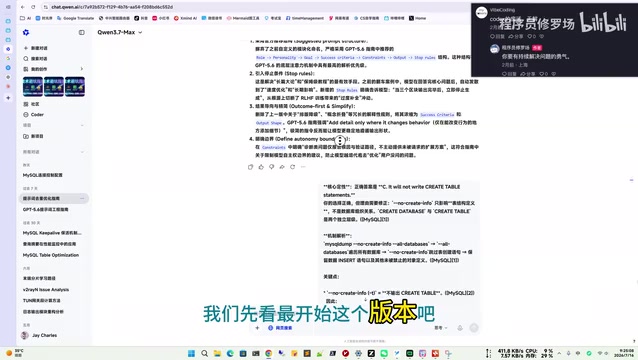
Round One: Rebuilding with the Official Eight-Dimension Standard
The first step was completely reconstructing the old prompt according to GPT-5.6's official framework, stripping out extensive positive and negative example annotations and making significant cuts throughout. But a problem emerged here — the original positive/negative analysis had been provided by Claude, and without a subscription, only an older model version was accessible. Optimization based on an older model naturally produces diminished results.
Round Two: Tackling Code Block Redundancy
After receiving the AI-optimized prompt, a new problem surfaced: the AI was stubbornly converting content that should be rendered as inline code into multi-line code blocks.
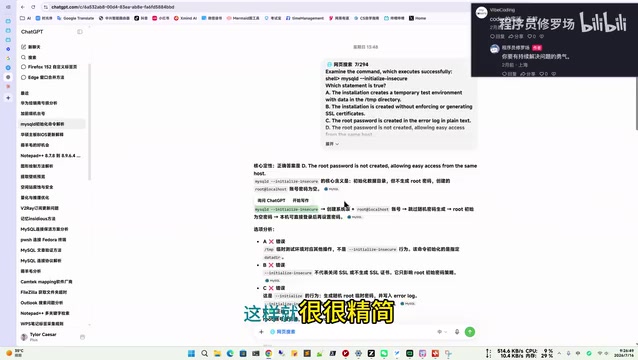
The Rendering Difference Between Inline and Multi-Line Code Blocks: Under Markdown rendering conventions, inline code (wrapped in a single backtick) and fenced code blocks (wrapped in triple backticks) are fundamentally different. Inline code sits within the text flow and is appropriate for short content like variable names or command arguments. Fenced code blocks occupy their own lines and trigger syntax highlighting, making them suitable for complete code snippets. When uncertain, AI models default to fenced code blocks because that's how code examples overwhelmingly appear in training data — but when the content is just a single parameter or short command, this creates significant vertical space waste and dramatically reduces information density.
This behavior creates obvious "spatial redundancy" — information density drops sharply, forcing users to scroll repeatedly just to reach the key content. The ideal presentation is compact inline code: immediately readable at a glance. After targeted prompt constraint optimization, the improvement was striking: the first round of conversation was bloated and verbose; the second round returned to the classic concise style.
Tool Selection: Let the "Strictest" Model Do the Optimizing
One recommendation from the original video that's worth highlighting: using Qwen to optimize prompts produces surprisingly good results.
Why Qwen for Prompt Optimization?
The creator offered a vivid analogy — if GPT and CodeX are the ones who need to be kept in line, then having the "strictest partner" optimize them actually works better. Qwen excels at this specific task of prompt optimization.
That said, it's worth being clear-eyed about the limitations: the Qwen 3.x series still has gaps in execution and intent understanding in practice. In coding IDE environments, it won't proactively retrieve new information, which makes the experience somewhat laborious. By contrast, Claude's default proactive retrieval capability gives it a clear advantage in deep analysis tasks.
The Core Takeaway: The Ability to Keep Solving Problems
Back to that original comment claiming CodeX's verbosity was "unsolvable." This article offers a practical response: even if you can't eliminate the problem at the model architecture level, engineering-driven prompt constraints can deliver real, meaningful improvement.
The key methodology comes down to three points:
- Use English to access the latest official prompt engineering guides and avoid information gaps
- Structure your prompts with the eight-dimension framework, focusing on Constraints and Stop Conditions to suppress verbosity
- Leverage different models for cross-analysis and optimization — choosing the right tool makes all the difference
As model versions keep iterating, prompts need to be updated alongside them — and that, in itself, is the best demonstration of what "continuously solving problems" really means.
Key Takeaways
Related articles

Felix Rieseberg Personal Homepage
Felix Rieseberg's personal homepage sparks attention on Hacker News. This article covers the Slack engineer's technical background, the rise and fall of nativefier, and the value of a developer homepage as a tech calling card.

@ai-sdk/vue 3.0.306 Patch Release Syncs with [email protected] Update
@ai-sdk/vue 3.0.306 released, synced with [email protected]. A routine patch release for the Vercel AI SDK ecosystem with no public API changes; the Vue adapter layer stays version-aligned with the core package.

Gemini 4 Argon API Launches: The Era of Million-Token Output Begins
Google launches Gemini 4 Argon with sparse MoE architecture, up to 1M output tokens, and a 68.90% Vals Index score, available across API, AI Studio, and the Gemini app.