GPT-5.6 Revealed: What a 54% Token Efficiency Boost in Agentic Coding Actually Means

GPT-5.6 claims 54% better token efficiency in agentic coding, potentially cutting API costs in half.
OpenAI CEO Sam Altman revealed that the upcoming GPT-5.6 improves token efficiency by 54% in agentic coding scenarios. This means completing the same programming tasks at roughly half the token cost, enabling longer agent work chains, faster responses, and broader economic viability for AI-assisted development. The article examines the technical sources of this gain and what it means for developers.
Overview
OpenAI CEO Sam Altman recently revealed that the upcoming GPT-5.6 delivers a 54% improvement in token efficiency for agentic coding scenarios compared to its predecessor. Public information remains sparse, but for developers who rely heavily on AI coding tools, this number carries significant technical implications worth unpacking.
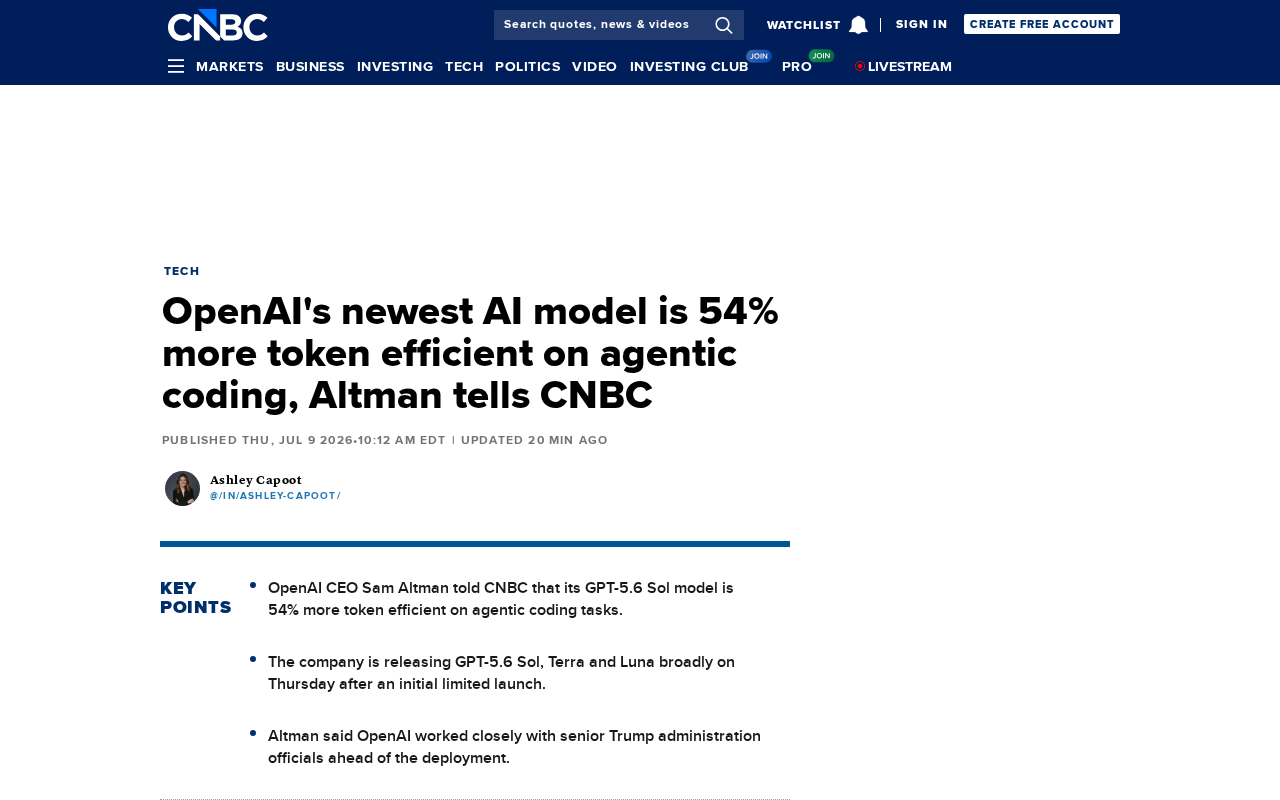
A "54% improvement in token efficiency" means, in plain terms, that the new model consumes roughly half as many tokens to complete the same programming task. This translates not only to lower API costs, but potentially faster response times and more headroom within the context window.
What is a Token? A token is the basic unit that large language models use to process text — it doesn't map directly to characters or words. In English, one token corresponds to roughly 4 characters or 0.75 words. Chinese characters, due to their encoding, typically map to 1–2 tokens each. OpenAI's GPT series uses BPE (Byte Pair Encoding) tokenization — an algorithm originally proposed by Philip Gage in 1994 as a data compression scheme, later adopted in NLP for subword segmentation. Its core idea is to iteratively merge the most frequently occurring byte pairs in a corpus, striking a balance between character-level and word-level representation. In practice, GPT models use the improved
tiktokentokenizer, which performs better across multilingual and code contexts. Understanding BPE helps developers optimize prompt design — for example, avoiding unnecessary special characters to reduce token consumption. Context window limits (e.g., 128K tokens), API pricing (billed separately for input/output tokens), and inference latency all tie directly to token count, which is precisely why token efficiency has become a core competitive metric.
Why Token Efficiency Matters for Agentic Coding
The Cost Problem with Agent Workflows
Unlike traditional one-shot code completion, agentic coding refers to a mode where the model autonomously plans, executes across multiple steps, calls tools, reads and modifies multiple files, and even debugs itself. Tools like Claude Code, Cursor Agent, and OpenAI Codex all fall into this category.
Architecturally, agentic coding is not a single model call — it's a complete "perceive-plan-act" loop. A typical architecture includes: a task decomposer (breaking complex requirements into subtasks), a tool-calling layer (reading/writing files, running commands, searching codebases), a memory management module (maintaining state across steps), and a self-verification mechanism (running tests, analyzing errors, iterating on fixes). The widely used ReAct (Reasoning + Acting) framework — proposed by Yao et al. in 2022 — is a canonical implementation of this pattern. Its key innovation is interleaving chain-of-thought reasoning with external tool calls in a single sequence, forming a "think → act → observe" loop. Compared to pure reasoning or pure tool-use, ReAct has the model articulate its intent in natural language before each tool call, significantly improving interpretability and fault tolerance in long-horizon tasks. However, each "thinking" step itself generates substantial token overhead — which is precisely one of the main targets for token efficiency optimization.
The fundamental problem with this working mode is staggering token consumption. At every execution cycle, the model must pack all historical action logs, current code state, and tool outputs into the context — this is why token usage compounds so rapidly. For a complex refactoring task, an agent may need to repeatedly read project files, analyze context, generate a plan, execute actions, and verify results, accumulating token costs at every step. For API calls billed by usage, costs can escalate quickly — many developers have experienced burning through tens of dollars in a single afternoon.
What a 54% Efficiency Boost Actually Means
If Altman's claim holds, the direct impact on developers would include:
- Near-halved costs: API fees for the same coding task could drop from $10 to under $5
- Longer effective work chains: Within the same context budget, an agent can handle larger codebases or execute more steps without "running over"
- Faster responses: Fewer generated tokens typically means shorter inference time
For teams that rely on AI coding tools in their daily workflows, this kind of efficiency leap could directly change both the economic viability and the practical boundaries of these tools.
Where the Efficiency Gains Might Come From
More Concise Output Expression
Token efficiency improvements often go beyond the model simply being "smarter" — they can stem from systematic training-level optimizations, such as teaching the model to express reasoning more concisely, trim redundant thinking steps, and avoid re-reading already-known information. Across iterations of its reasoning models, OpenAI has placed increasing emphasis on "effective reasoning" over "verbose reasoning."
Notably, OpenAI already introduced a "Thinking Budget" mechanism in its o-series reasoning models (o1, o3, etc.) that dynamically controls the length of internal reasoning chains. This mechanism essentially provides an adjustable dial between "reasoning depth" and "compute cost" — compressing the thinking chain for simple coding tasks while allowing full reasoning for complex architectural decisions. Anthropic similarly implemented an "Extended Thinking" mode in Claude 3.7 Sonnet, letting users set an upper limit on thinking tokens. This is technically consistent with the token efficiency improvements claimed for GPT-5.6, improving overall token utilization across the board.
More Precise Tool-Calling Strategies
A significant portion of token overhead in agentic coding comes from tool calls and result feedback. If the model can more accurately determine which files to read and how much to read at a time — avoiding indiscriminate full-project scans — it can substantially reduce wasted tokens. This is likely one of the key engineering improvements in GPT-5.6.
Upgraded Context Management
How an agent compresses, summarizes, and retrieves historical context during long tasks is another critical efficiency variable. Context compression is a hot research area in LLM engineering, with main technical approaches including: sliding windows (dropping the earliest history), summary compression (using a model-generated summary in place of raw conversation history), KV Cache reuse, and RAG (Retrieval-Augmented Generation) (retrieving relevant context on demand rather than passing everything).
KV Cache deserves special mention: in Transformer autoregressive generation, computing attention for each new token requires accessing the Key and Value matrices of all previous tokens. KV Cache stores already-computed K/V vectors in GPU memory, reducing inference complexity from O(n²) to O(n). In agentic scenarios, if an agent makes multiple calls sharing the same system prompt or code context, server-side Prompt Caching (available from both OpenAI and Anthropic) can reuse this KV Cache — translating directly to a token cost discount for the caller (typically 50%–90%), compounding with model-level token efficiency gains.
More ambitious research directions, like Mamba and other state space models (SSMs), attempt to solve the long-context efficiency bottleneck at the architecture level. Mamba, proposed by Albert Gu and Tri Dao in 2023, encodes sequence information through selective state spaces with O(1) computational complexity and memory usage during inference — compared to O(n) for Transformers. However, pure SSM architectures still lag behind Transformers in language modeling quality, and the industry is exploring Mamba-Transformer hybrid architectures (e.g., Jamba) to balance efficiency and quality. Better context compression strategies can allow models to dramatically reduce the token payload per call without losing critical information.
Reasons for Caution
Public information about this announcement remains limited, and community discussion has yet to fully develop. On the version naming: "GPT-5.6" is worth noting — historically, OpenAI has released intermediate versions like GPT-3.5-turbo, GPT-4-turbo, and GPT-4o, which typically optimize for inference efficiency, cost, or specific capabilities rather than representing a full base model upgrade. This "iterative cadence" aligns with Anthropic's Claude 3.5 series and Google's Gemini Flash series strategies, reflecting the growing emphasis among top AI labs on finding the optimal balance between "flagship capability" and "deployment economics." The specific version naming should be confirmed against official OpenAI announcements.
Furthermore, "54% token efficiency improvement" is a metric that warrants careful scrutiny:
- Was this measured on a specific benchmark, or is it an average across diverse scenarios?
- Does the efficiency gain come at the cost of code quality or task success rate?
- What is the baseline for comparison — GPT-5 or an earlier model?
Without a full technical report, none of these questions can be definitively answered. Vendors naturally tend to highlight their most favorable metrics when introducing new models — applying rational judgment to any single number remains essential.
What This Means for Developers
The AI coding tool market has formed a three-tier competitive landscape: the bottom model layer sets the intelligence ceiling and cost baseline (GPT series, Claude, Gemini, DeepSeek, etc.); the middle IDE integration layer defines the developer's daily interaction experience (GitHub Copilot, Cursor, Windsurf, etc.); and the top autonomous coding agent layer handles end-to-end complex engineering tasks (Claude Code, Devin, OpenHands, etc.). The boundaries between these three layers are increasingly blurring — Anthropic launched Claude Code to reach developers directly, bypassing IDE vendors; OpenAI's Codex CLI takes a similar direct command-line approach. Meanwhile, open-source projects like OpenHands and SWE-agent compete on standard benchmarks like SWE-bench, creating meaningful pressure on commercial products.
In this context, token efficiency is not just a technical metric — it's a core competitive lever. More efficient models can complete more complex tasks at the same cost, establishing a meaningful advantage on the dimension of "value delivered per dollar."
For developers, this trend means:
- The barrier to AI-assisted coding will keep falling, making complex agent workflows affordable even for individual developers
- When choosing tools, focus on "cost per task" rather than token unit price alone — a more efficient model, even at a slightly higher price per token, often works out cheaper in practice
- Automated processing of large codebases becomes more feasible, opening new possibilities for legacy system refactoring and large-scale migrations
If GPT-5.6's improvements hold up in real development scenarios, it will further cement AI coding tools' central role in software engineering workflows. We look forward to OpenAI releasing more detailed technical documentation and third-party evaluations to validate these claims.
Key Takeaways
Related articles
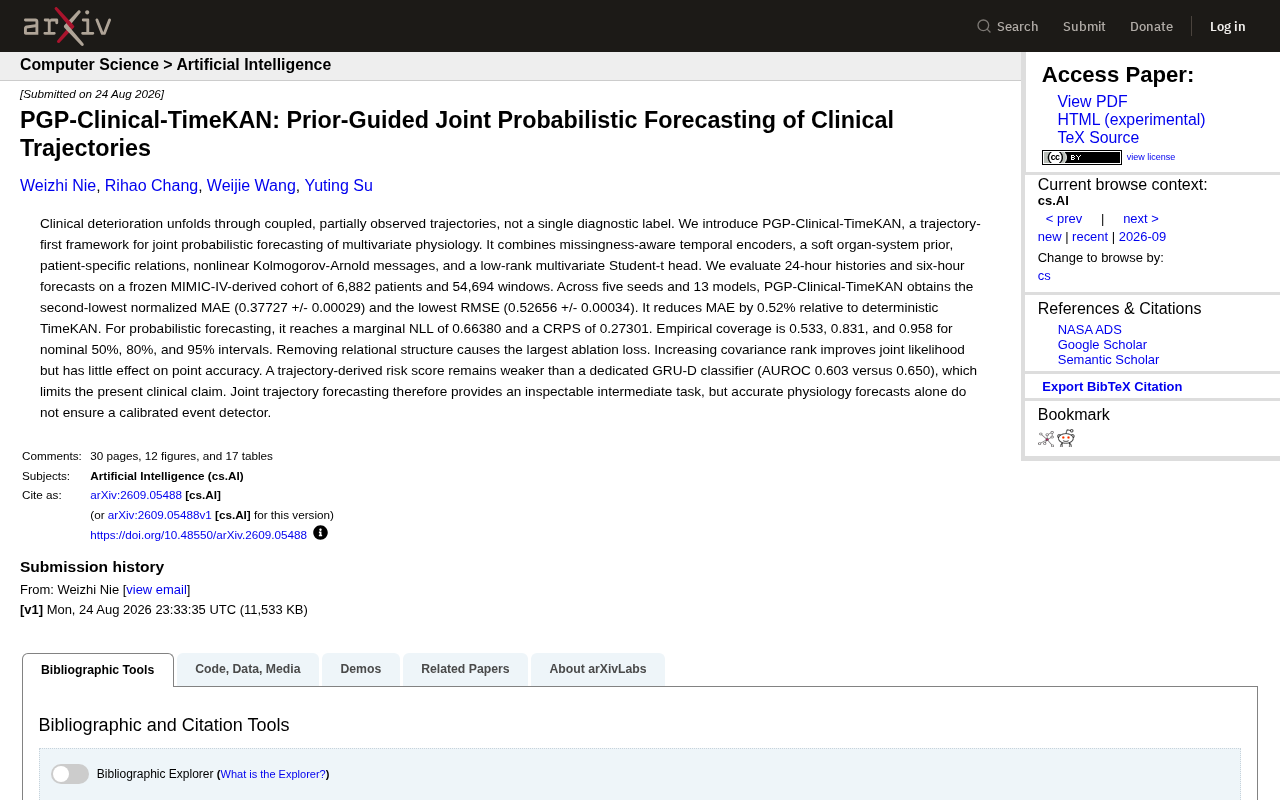
PGP-Clinical-TimeKAN: A Detailed Guide to the Multivariate Physiological Indicator Joint Prediction Framework
An in-depth analysis of the PGP-Clinical-TimeKAN framework for joint probabilistic prediction of multivariate physiological indicators, covering trajectory-first paradigm, KAN message passing, MIMIC-IV validation, and ablation studies.
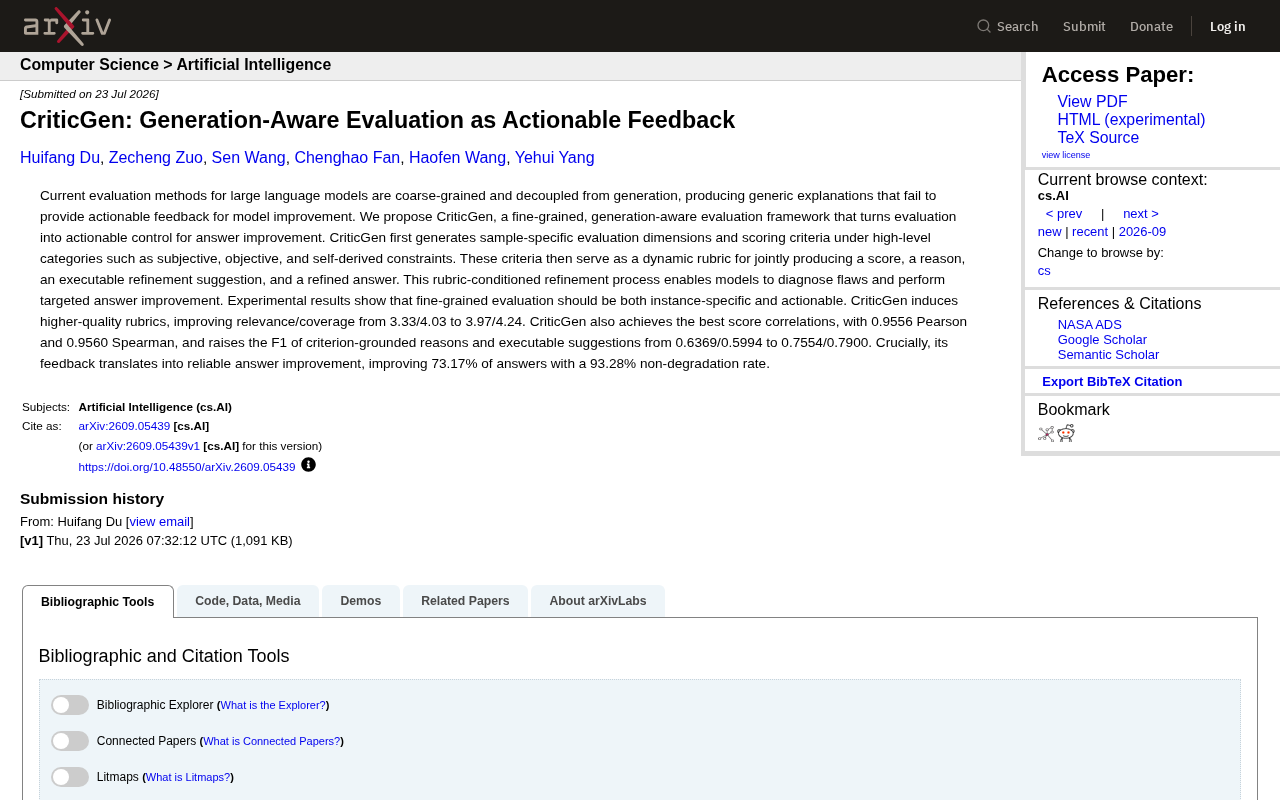
CriticGen: A New Framework That Transforms AI Evaluation into Actionable Improvement Feedback
CriticGen proposes a generation-aware evaluation framework that transforms AI assessment from passive scoring to an active optimization loop, achieving 73.17% answer improvement and 93.28% non-degradation rate.
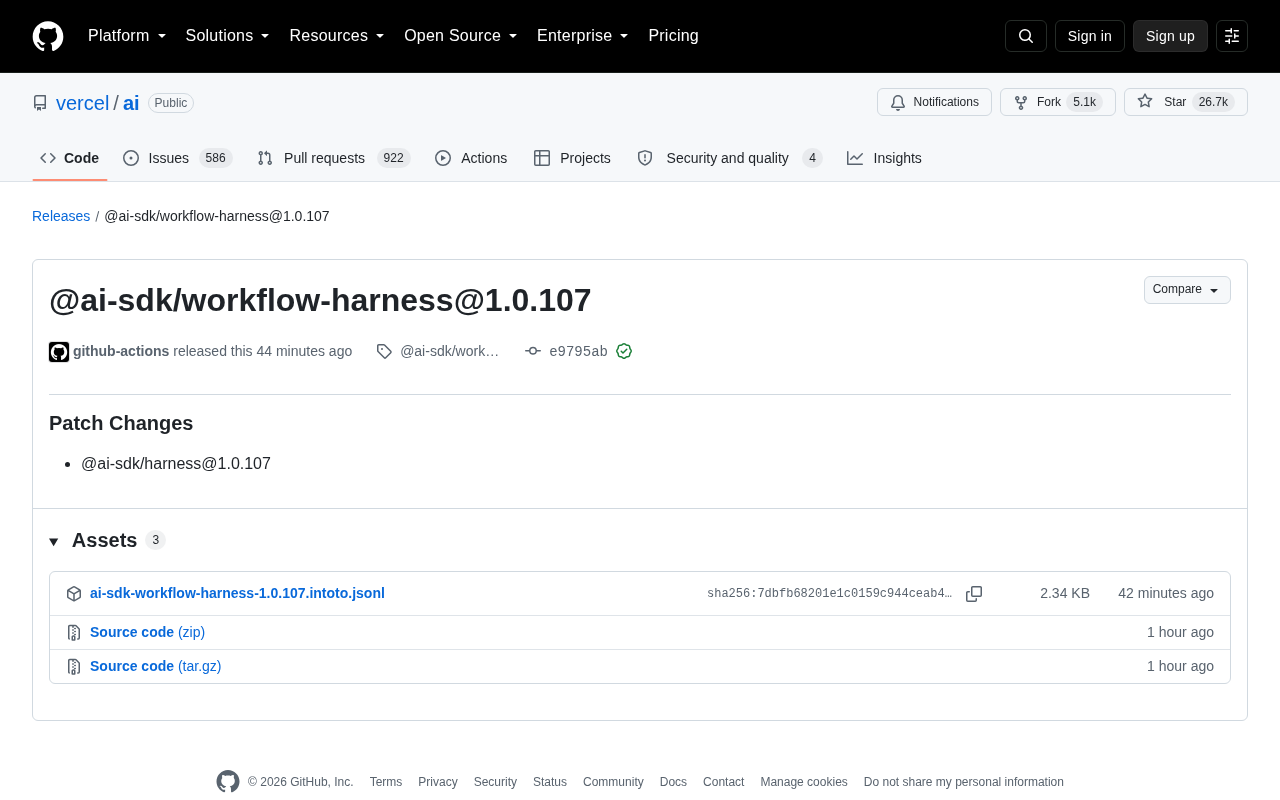
Vercel AI SDK workflow-harness Update Analysis
Deep analysis of Vercel AI SDK workflow-harness 1.0.107 update: architecture design, engineering practices, and developer value for building reliable AI apps.