GPT-5.6 Truth Check: Celestial Model Names and the Risks of Third-Party 'Direct Access' Services

Debunking the viral GPT-5.6 celestial naming claim and exposing third-party API risks.
A Bilibili video promoting 'GPT-5.6 Pro' with a celestial naming system (Sol/Terra/Luna) and domestic direct access shows clear signs of traffic-farming and misinformation. This article dissects the fake benchmark data, non-existent model names like 'Cloud Fable 5,' and the serious data security, identity, and payment risks posed by third-party API relay services.
A 'Launch' Worth Scrutinizing
A video circulating on Bilibili recently claimed that OpenAI has officially released a model called "GPT-5.6 Pro" with image generation capabilities, and promoted a so-called "direct access" interface for users in China. Using hooks like "come try it, no tricks, pay if it's good, freeload if it's not," the video directed viewers to DM the creator or check the pinned comment for access details.
Before diving into the technical analysis, a clear disclaimer is necessary: this type of content carries obvious signs of traffic-farming and account-selling. Neither the claimed "release date" nor the "official interface" can be verified. This article will analyze the technical concepts mentioned in the video to help readers distinguish between reasonable industry trends and marketing language that deserves serious skepticism.
Decoding the So-Called "Celestial Naming System"
The video's central selling point was that GPT-5.6 introduced a brand-new "celestial naming system," with dedicated model variants for different use cases:
- Sol (Sun): Positioned as the flagship core model, designed for professional coding, cutting-edge research, cybersecurity, and other demanding tasks — unleashing top-tier compute.
- Terra (Earth): A balanced, all-purpose model suited for everyday office work, content creation, and diverse scenarios. Claimed to match GPT-5.5 in performance at half the cost.
- Luna (Moon): A lightweight, cost-effective model built for ultra-fast responses and minimal cost in high-frequency, everyday tasks.

From a product design perspective, tiered naming is nothing new. OpenAI already has its mini/turbo series, and Anthropic uses a three-tier Haiku/Sonnet/Opus system — both reflect the same industry consensus: use differentiated model sizes to cover different cost-performance trade-offs.
The driving force behind this trend is the significant difference in inference costs — calling a flagship model once can cost 10 to 50 times more than calling a lightweight model. For high-frequency, low-complexity tasks, using a flagship model is wasteful. Anthropic's naming strategy is a good example: Haiku (light and fast), Sonnet (balanced), Opus (flagship) — a brand identity that's both intuitive and distinctive. Google Gemini similarly spans four tiers: Nano, Flash, Pro, and Ultra, guiding developers to choose the most cost-effective model for each task rather than always reaching for the "most powerful" one.
The tiered philosophy described in the video aligns with the direction the LLM industry is heading — but the specific "celestial naming" claim has no official source to back it up. Readers should treat it as unverified marketing packaging.
Obvious Red Flags in the Performance Claims
The video cited a flood of "third-party benchmark" data, claiming Luna achieves near-comparable reasoning scores at lower cost than "Cloud's Fable 5," and edges it out slightly in coding. At the same time, it acknowledged that "Cloud Mythos 5 / Fable 5" still holds an advantage in some software engineering and advanced math tasks, while GPT-5.6 Sol pulls ahead in agent operations and web search scenarios.

Several red flags stand out here.
First, names like "Cloud's Fable 5" and "Mythos 5" don't correspond to any real, mainstream models — they look like a mashup of Claude (misspelled as "Cloud") and made-up model names.
Second, the performance descriptions are internally contradictory: the model is "ahead" in one moment and "behind" in the next, with no consistent evaluation framework or reproducible data source.
In credible tech reporting, any performance claim should point to specific benchmarks (e.g., MMLU, SWE-bench, GPQA) and verifiable evaluation reports. Trustworthy AI model comparisons rely on standardized benchmark systems: MMLU tests knowledge breadth across 57 subjects; GPQA targets doctoral-level scientific reasoning; SWE-bench measures a model's ability to autonomously resolve real GitHub issues; HumanEval assesses code generation; and the MATH/AIME series evaluates mathematical reasoning. What these benchmarks share is fixed problem sets, objective scoring, and publicly accessible historical results — making comparisons across institutions and time points meaningful. When a piece of content claims a model "outperforms the competition" without naming the specific benchmark, version, or testing organization, that conclusion has no scientific basis and should be treated with deep skepticism. Evaluation claims missing these elements carry very little informational value.
"Direct Access" Interfaces: The Highest-Risk Element
The video demonstrated a third-party page, claiming it offers "fully domestic direct access," where users can click to select GPT Pro and switch between GPT-5.6 Pro, a Thinking mode, or even mix in Gemini and Claude. It then showed demos of generating a custom English learning plan and writing HTML/JavaScript code for a browser-based Super Mario game.
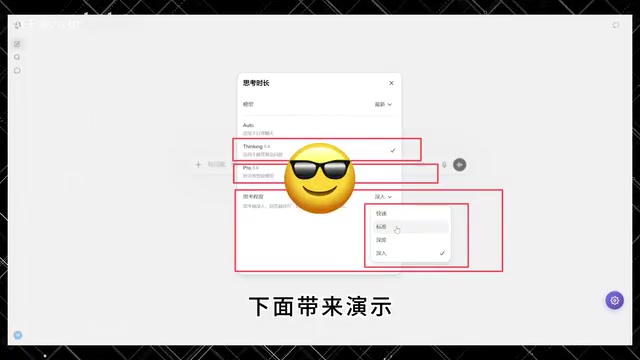
This is precisely where the risks are most concentrated. The typical technical setup behind third-party "aggregator" or "direct access" platforms is: the platform bulk-purchases official API keys from various providers, routes requests through its own servers, and resells call quotas to end users at a lower price or under a "free" hook. This model is technically feasible — but it introduces multiple layers of risk:
Data Security Risks
Every message a user types is routed through the third-party's servers, potentially including personal information, business data, and account credentials. The platform can log, analyze, and repurpose this data. Privacy policies either don't exist or can't be enforced — users have zero control.
No Way to Verify Which Model Is Actually Running
Users have no way to confirm what model is actually behind "GPT-5.6 Pro." A third-party platform could easily serve a cheap open-source model (like Llama or Qwen) whenever a user selects "GPT-4o," passing off a budget model as a flagship — and users would have no way to tell.
Payment and Account Security Risks
If the platform obtained its API keys through unauthorized means (e.g., abusing free-tier quotas, using others' accounts), those keys could be suspended at any time, causing sudden service outages. The distribution model of "check the pinned comment / DM for access," combined with lines like "pay if it works for you," is fundamentally designed to funnel payments or collect contact information — a classic social engineering entry point with real risks of financial loss and account compromise.

Even if the code demo in the video runs smoothly, it doesn't prove anything about the model's true identity. Generating working browser-based Super Mario code is a basic capability for any mainstream LLM today — it cannot be used to infer that the model is "GPT-5.6 Pro."
Peeling Back the Marketing: Which Trends Are Real?
Setting aside the marketing wrapper, some of the industry trends reflected in the video are genuine:
- Model tiering: Vendors are increasingly offering flagship, balanced, and lightweight options, letting users choose based on their needs and strike the right balance between performance and cost.
- Agent capabilities as a competitive frontier: "Agent capability" refers to an AI model's ability to autonomously plan, use tools, and execute multi-step tasks — currently one of the core competitive dimensions in LLM development. Unlike traditional single-turn Q&A, agent scenarios require models to call external tools, decompose complex tasks, and dynamically adjust strategies based on intermediate results. OpenAI's Operator, Anthropic's Computer Use, and Google's Project Mariner are all commercial attempts in this direction. Capabilities like web search, computer operation, and multi-step task execution are becoming the core yardstick for real-world model utility — but they're also the technical concepts most easily exploited by misleading marketing.
- Continuously declining inference costs: "Matching the last generation in performance at half the cost" is indeed a consistent pattern in recent LLM evolution.
But the reality of a trend doesn't validate any specific product's claims. The only reliable way to experience the latest models is through official channels — the OpenAI website, the official API, or the official app — not some third-party "direct access" service of unknown origin.
Closing Thoughts: Build Your Information Literacy
For AI enthusiasts, staying excited about new technology is great — but developing the ability to critically evaluate information is even more important. When you see a headline like "Latest GPT-5.6 Full-Power Version," it's worth asking a few questions: Where is the official release announcement? Are the benchmark results reproducible? Is the interface source trustworthy? Where is my data actually going?
In the fast-moving world of AI, caution isn't conservatism — it's taking basic responsibility for your own data and finances.
Key Takeaways
Related articles

How Big Can Stars Really Get? The Physical Limits of the Largest Stars
Red supergiants are the largest stars by volume, with radii up to 2,000 times the Sun, engulfing the inner solar system. But there is no precise upper limit on stellar size—models predict up to 15,000 solar radii. The most massive blue stars are far smaller than red supergiants—biggest and heaviest are two different things.

Apple HomeView Smart Display Full Feature Breakdown: Wall-Mount or Desktop, $299
Apple launches HomeView, a $299 smart display with wall-mount and desktop options, 12MP camera for facial recognition, smart home control, music playback, and recipe step-by-step cooking. Full breakdown of watch faces, apps, privacy, and cooking integration.

Where Did the Promised New Studio Go? Craft Computing Answers After Five Years
Craft Computing's host responds to viewer questions: the new studio promised five years ago was shelved as construction costs soared from $30,000 to $75,000, and was replaced by a 168-square-foot garage conversion.