GPT-6.1 Sol vs Sonnet 5.5: Inflated Benchmarks or the Token Efficiency King?

GPT-6.1 Sol matches Sonnet 5.5 in output quality while consuming 4–10x fewer tokens per task.
A four-part hands-on comparison of GPT-6.1 Sol and Anthropic Sonnet 5.5 — covering frontend design, JavaScript video generation, travel dashboards, and a browser tank game — finds the two models roughly equal in final output quality, with Sonnet showing an edge in detail and speed. However, GPT-6.1 Sol consumes dramatically fewer tokens across every test, sometimes as little as one-tenth of Sonnet's usage. Since both models carry identical API pricing, the gap is entirely in real-world token efficiency. The article also unpacks the controversy over OpenAI's subscription usage cuts and Anthropic's 5-hour window restriction, arguing that token efficiency is now a more actionable metric than raw benchmark scores.
One of the most talked-about announcements at OpenAI's developer conference was the release of GPT-6.1 Sol. The move caught many off guard — GPT-6 Astra, released just before it, had received a lukewarm reception, and it seemed like it had barely launched before a 6.1 version arrived with benchmark scores through the roof. That naturally raises a question: if OpenAI had a clearly superior 6.1 in hand, why bother releasing the underwhelming GPT-6 Sol first? This article, based on a hands-on comparison video, walks through a head-to-head evaluation of GPT-6.1 Sol against Anthropic's Sonnet 5.5 to get at the truth behind the benchmark numbers.
The Other Half of the Benchmark Story: Cost and Token Efficiency
Taking OpenAI's published benchmarks at face value, GPT-6.1 Sol is genuinely impressive. On the DeepSuite benchmark, 6.1 Sol overtook its sibling GPT-6 Astra at a fraction of the cost. But raw scores only tell half the story.
Looking at the Artificial Analysis index, the two models are neck and neck overall: Sonnet edges ahead slightly, with a roughly 7-point lead in the medical domain being one of the more notable gaps. On coding-heavy tests, 6.1 Sol leads by 4.2 points on DeepSuite, while Sonnet wins AutomationBench by a more significant 8.7 points. On paper, both models carry identical API pricing — $2 per million input tokens and $10 per million output tokens.
The real differentiator is token efficiency. Test data shows that in certain scenarios, 6.1 Sol costs about 10 times less to run than Sonnet. At maximum effort, Sol costs just $0.72 per task compared to Sonnet's $7.60. Even in a fair comparison where both models achieve a 50% score, Sol is still four times cheaper. The trade-off, however, is speed — Sonnet reportedly runs about twice as fast as Sol.
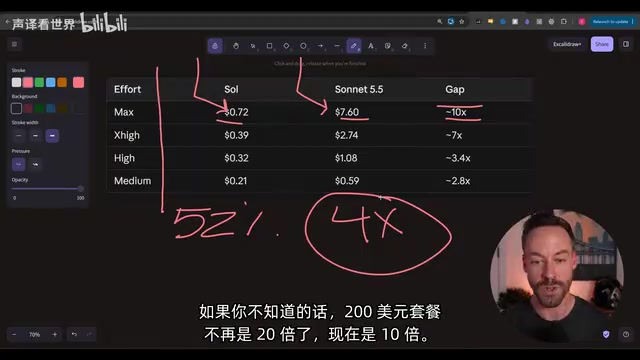
A word of caution: these are costs measured under benchmark conditions, not what everyday users will see in practice. And behind this extreme token efficiency lies the very real pressure of OpenAI adjusting its subscription tiers — the $200 plan has had its usage multiplier cut from 20x down to 10x, effectively halving available usage.
DeepSuite and AutomationBench are both third-party benchmark suites designed to evaluate large language models on complex tasks. DeepSuite focuses on software engineering tasks including multi-step code generation, debugging, and system design; AutomationBench leans toward automated workflow scenarios, testing how models handle browser operations, API calls, and multi-tool coordination. The Artificial Analysis index is a weighted ranking that aggregates scores across multiple sub-dimensions to enable cross-model comparisons — but its weighting scheme itself influences the final rankings, so winning on a single benchmark doesn't equate to leading in overall capability. Token efficiency (tokens consumed per task) has increasingly become a core evaluation metric for engineering teams, since identical API pricing means fewer tokens per call translates directly to lower real-world costs — a difference that becomes especially significant in high-frequency or long-context scenarios.
Frontend Design Showdown: Clean and Professional vs. Rich in Detail
The first test focused on frontend design, asking each model to build a landing page for a fictional boutique hotel called "Dune House." Since Sonnet — unlike 6.1 Sol — doesn't have built-in image generation, the test integrated the Higgsfield API to supply visual assets.
6.1 Sol delivered a page very much in line with the GPT family's signature style — clean, professional, unfussy but solid. The one weak spot was the room search functionality: it was overly simple, lacking the standard date and guest count filters users would expect. Building this page consumed roughly 10,090 tokens.
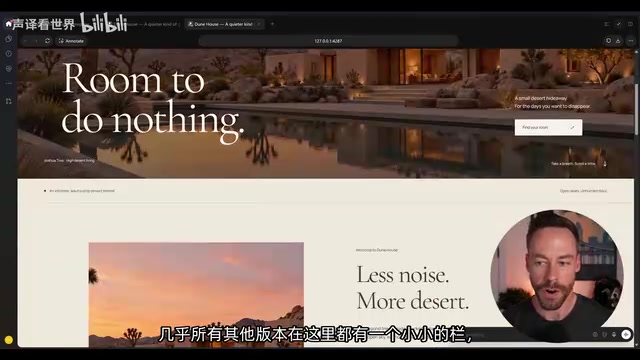
Sonnet 5.5's version came out ahead on functionality, with an availability search built right into the hero section, plus thoughtful touches like image cropping further down the page — the kind of refinement AI models don't usually attempt on their own. That said, the "Check Availability" button felt a bit cheap, and the font choices were debatable. Overall, the design preference is subjective, and the tester called it a draw — but Sonnet used roughly twice the tokens that Sol did.
Visual Spectacle and JavaScript Video: Split Verdict
In the JavaScript explainer video generation test, next-generation models can produce videos purely through code, without relying on AI video generation tools. 6.1 Sol's output was rated "mediocre" — visually acceptable, but the audio felt randomly selected rather than purposefully matched, costing 70K tokens. Sonnet 5.5 was noticeably better, with multiple scene transitions and tight audio-visual synchronization creating a coherent narrative — at the cost of roughly 300K tokens.
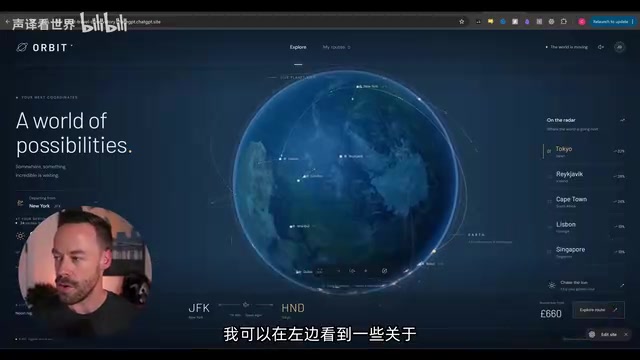
The travel dashboard test called for a "visual spectacle." 6.1 Sol produced a 3D globe displaying flight routes, destination weather, and golden hour information, though it had a minor flickering black-border bug and felt somewhat shallow in terms of data depth. Sonnet 5.5 had the edge visually, featuring audio, city imagery (via Higgsfield) and weather data that updated over time, with a particularly impressive globe-scrolling effect. The tester gave this round to Sonnet, but Sol used only about 150K tokens while Sonnet burned through 400K.
Generating video from pure JavaScript code — without calling services like Sora or Runway — has emerged as a notable capability benchmark in recent years. The approach involves having the model output a complete set of HTML/CSS/JavaScript code that uses the Canvas API or WebGL to render frames as animation in the browser, while the Web Audio API handles audio synthesis or scheduling, with the result captured as a video file via screen recording. This method offers a relatively pure test of a model's ability to coordinate complex logic, timing, and visual layout without depending on the quality of external generation tools. Three.js is the dominant JavaScript 3D rendering library built on WebGL, widely used for browser-based 3D scenes, globe visualizations, and game prototypes. Its API strikes a middle ground in terms of abstraction, requiring the model to understand 3D spatial concepts while correctly organizing rendering loops, cameras, lighting, and materials.
Browser Tank Game: Subjective Tie, Token Win for Sol
The final test asked each model to build a browser-playable clone of World of Tanks using Three.js. 6.1 Sol offered four tank choices, three ammo types, a live minimap, and health displays for both sides — a solid UI overall, though the lack of penetration mechanics was a missed opportunity. Sonnet 5.5 provided more detailed tank stats, a larger map, and smoother zoom controls, but the tanks themselves felt less atmospheric.
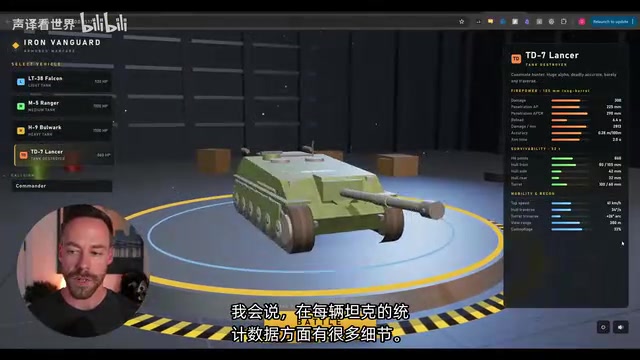
This kind of evaluation — UI feel, atmosphere, overall polish — is inherently subjective, and the tester called it roughly even. The token and speed comparison once again reinforced the pattern: Sol was significantly slower, taking over two hours to complete versus Sonnet's roughly one hour, but Sonnet used around 700K tokens while Sol used only about half that.
The Truth Behind the "20x" Pricing
In response to criticism about OpenAI cutting its plan's usage allotment, the tester offered some context that's easy to miss: Anthropic's "20x" plan was never a true 20x — it's tied specifically to a 5-hour window restriction, not a weekly cap, whereas OpenAI's plan has no 5-hour restriction. In other words, by the same logic, both companies have built in guardrails around usage; OpenAI has just been more upfront about adjusting its weekly limits.
This isn't a defense of OpenAI — it's a reminder that with both companies tightening usage, token efficiency has become a more meaningful metric to watch than raw benchmark scores.
Mainstream AI subscription services generally describe plan benefits in terms of "usage multipliers" rather than fixed token quotas, which makes cross-platform comparisons easy to get wrong. Anthropic's "20x" refers to the maximum usage multiplier within any rolling 5-hour window relative to baseline usage — not a daily or weekly total. OpenAI's "10x" corresponds to a cumulative usage cap that resets weekly, with no single-session time window restriction. The two billing models target different usage patterns: short bursts of high-intensity usage are more likely to trigger Anthropic's rate limits, while users who work steadily around the clock are more likely to hit OpenAI's weekly cap. Given that both companies are effectively tightening actual available usage, the number of tokens a model consumes to complete a given task is a more direct reflection of real-world user experience than the headline multiplier on a subscription plan.
Conclusion: A Solid Choice at Four Times Less
Across all tests, 6.1 Sol delivered final output quality roughly on par with Sonnet 5.5 — slightly behind in a few areas — but came out significantly ahead on token consumption in nearly every category. It's cheaper, more token-efficient, but slower.
For most real-world tasks, substituting 6.1 Sol for Sonnet — or even Opus or Astra — is entirely viable; it comes down to your specific use case and budget. If this extraordinary efficiency isn't just a launch-window benchmark optimization and holds up over time, it means the market now has an option that's both remarkably affordable and quite capable — matching scores on several of the same benchmarks at a quarter of the cost. That's not something to overlook.
Related articles

Chain of Thought Isn't Just for AI: How Humans Can Use CoT to Improve Thinking Quality
Chain of Thought isn't just a prompt trick for large models. Starting from a Hacker News discussion, this article analyzes why CoT works for human thinking too, breaks down actionable ways to transfer it, and highlights the key differences between human CoT and machine CoT.
Cloudflare Teams Up with OpenAI: Closi…
Cloudflare Teams Up with OpenAI: Closing the Loop from Vulnerability Discovery to Defense with AI
Cloudflare uses OpenAI Daybreak to investigate security vulnerabilities and generate reviewable remediation plans, while developers use Codex to boost coding efficiency and quality.

Orca Multi-Agent Orchestration in Practice: A Guide to Parallel Collaboration with Claude and Codex
Orca is Stable AI's free open-source agent workbench supporting 34 agents like Claude Code and Codex in parallel. Learn its Git worktree isolation, multi-model orchestration, and mobile management.