GPT 6.1 Terra Hands-On Test: Can It Beat the Domestic Gatekeeper?

GPT 6.1 Terra scores 78.4 in hands-on tests—great value, but behind the flagship in visual creativity and 3D modeling.
A Bilibili creator ran seven hands-on tests on GPT 6.1 Terra covering SVG animation, web design, full-stack systems, 2D/3D games, long text, and office processing. Positioned for speed and efficiency, it surpasses GPT 6.1 Sol in computer-operation benchmarks and matches the flagship GPT 6 Astro at far lower cost. It scores 78.4 overall, second only to GPT 6 Astro's 88 and on par with DeepSeek 4.1 Flash. It performs best on the full-stack dispatch system (94.8) and office processing (96), but is clearly weaker in visual creativity, game feel, and 3D modeling. It still trails Claude Sonny 5.5 by about 20% on Terminal Bench, and its improved writing ability needs verification. Overall, it is a cost-effective choice for everyday office work and multi-step computer tasks.
Model Positioning: Speed and Efficiency First
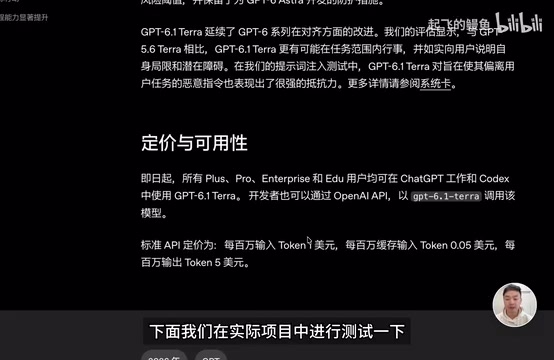
According to hands-on testing by a Bilibili creator, GPT 6.1 Terra (also written as Tero in the video) is positioned as a fast, highly efficient model, with the official release emphasizing improvements in visual understanding, computer operation, and writing expression. Compared with the previous generation GPT 5.6 Terra, the new model shows significant progress in everyday office tasks such as drafting proposals, interpreting blueprints, and video editing. The creator specifically noted that earlier GPT series models performed poorly at writing, and this improvement is worth acknowledging.
Official benchmark scores show that GPT 6.1 Terra surpasses the same-generation GPT 6.1 Sol in computer operation capability tests and is essentially on par with the flagship GPT 6 Astro, but at a much lower cost. Although its visual capabilities lag behind Sol, the gap is already very small. In multi-step desktop application tasks, it trails Sol by only a slight margin, while still lagging about 20% behind Claude Sonny 5.5—though with a clear cost advantage. On hallucination control, the creator says it can reach as high as around 4%, on par with GPT 6 Astro. In Terminal Bench scores, the GPT series as a whole lags behind Claude Sonny 5.5, and the creator believes more work is needed in this area.
Terminal Bench is a benchmark that evaluates a large language model's ability to execute command-line tasks in real terminal environments, covering scenarios such as file operations, system administration, and script writing. It requires the model not only to generate commands but also to understand execution results and iteratively correct them, thus reflecting the model's end-to-end capability as a "computer operation agent." The article mentions that the GPT series lags about 20% behind Claude Sonny 5.5 on Terminal Bench, indicating that its task completion rate and error-correction ability in pure command-line environments still have gaps—contrasting with its performance in graphical-interface computer operation.
Test Items: Seven Questions for Comprehensive Evaluation
The creator upgraded the "Teapot Test" from 1.0 to 2.0, increasing the number of questions from six to seven and adding assessments of everyday office work and computer operation. Each question is an independent project testing the model's delivery capability, covering dimensions such as aesthetics, SVG, business understanding, 3D games, long text, and office work, with each question scored and then ranked.
Question 1: SVG Animation Narrative
The task requires drawing an approximately 10-second SVG animation of a teapot riding a bicycle delivering pudding, getting a flat tire after hitting a speed bump, and then lifting the bike and walking forward. In GPT 6.1 Terra's work, key actions such as the rear wheel being damaged and the teapot getting off to lift the bike are present, but the foot layering and pedaling direction are wrong, and the bike-lifting lacks a sense of weight. Compared with GPT 6 Astro, the gap in effect is obvious. The creator gave 6.5 points for spatial relationships (due to the foot issue), 6 points for action transitions (slightly stiff), and 7 points for composition, for a total of 65.5.
Question 2: Static Webpage Design
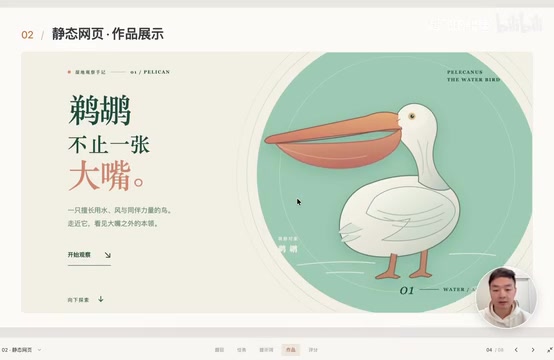
The task requires creating a static webpage with a 600-word introduction to the teapot. The work has a comfortable color scheme and minimalist design, but the page is entirely static and does not include the animations specified in the prompt. The creator pointed out problems with the teapot illustration in the "dive" section, but the SVGs for the three types of teapots correspond correctly. Visual impact and creativity scored 5, on-page animation and browsing experience scored 5 (there was basically no animation), and thematic content accuracy scored 5, for a total of 65.
Question 3: Full-Stack Dispatch System
The task requires developing the front end and back end of a teapot dispatch system. The work adopts a business admin-panel style; click transitions are stiff, the order-selection interface is rather ugly, and the search function has flickering issues, but adding and deleting delivery personnel works normally, and the logic preventing deletion of orders already out for delivery is correct. The API script tests received full marks—high-concurrency search, order-grabbing performance, and API correctness all passed. Business implementation with no omissions scored 10, page design consistency and completeness scored 10, and interaction experience scored 6.5, for a total of 94.8—the best-performing question.
Question 4: 2D Game Development
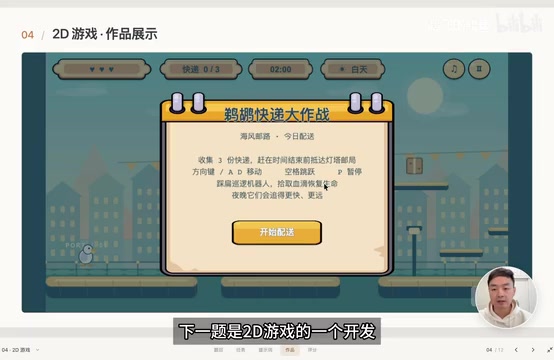
The creator upgraded the test by providing some game assets to assess visual understanding and asset usage. GPT 6.1 Terra used the provided pop-up and UI assets, the background music worked normally, and the jump feel was average. Basic features such as snow being replenished on snowy ground after stepping, updrafts, day-night switching, and lighting effects were all implemented, but design issues such as enemy stuttering and the character floating in midair were obvious. Compared with GPT 6 Astro, the latter was comprehensively superior in sound effects, visual richness, and operational feedback. Character control, platform collision, combat health, and the game loop were all correct. Visual presentation scored 4.5, feel and action feedback scored 4.5, and sound effects scored 4.5, for a total of 72.5.
Question 5: 3D Modeling and Game Construction
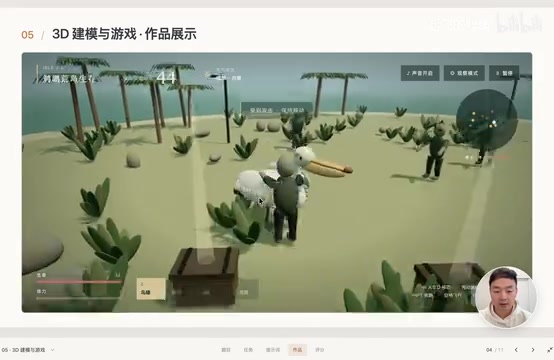
The task requires creating a "Teapot Desert Island Survival" game with a horror and tense atmosphere, testing the model's understanding of atmosphere and modeling ability. The work's modeling precision is average; flight works normally, zombie attacks have no visual effects, the rocket launcher explosion effect is bland, there is no AK weapon, and the level is cleared after 60 seconds. In observation mode, the model is assembled from various voxels and is rather rough. Compared with GPT 6 Astro, the gap in visual richness and musical atmosphere is considerable, and the attack effects and modeling precision are not on the same level. Modeling and texturing fundamentals are on the low side; materials and lighting scored 5, visuals and atmosphere scored 6.5 (complete but rough), sound effects scored 4, and action feel scored 4, for a total of 60.
Question 6: Long-Text Understanding and Reasoning
Fifty papers and the novel Death's End (from the Three-Body series) were provided, and 18 questions were designed to test long-text understanding and reasoning. GPT 6.1 Terra scored 94, getting wrong only one question about the novel's content. The creator believes it has a slight deficiency in long-text understanding and reasoning.
Long-text understanding and reasoning tests typically require a model to locate, integrate, and reason over information within contexts ranging from tens of thousands to hundreds of thousands of tokens, assessing the effective use of the context window rather than merely supported length. The test in the article provides 50 papers and a novel and designs 18 questions, including cross-document information comparison and narrative-detail reasoning. The model got only one novel question wrong, indicating that its information retrieval and logical integration in long contexts are close to a usable level, but the slight deficiency may stem from grasping implicit causal relationships in literary texts.
Question 7: Office Processing
The task requires completing data reports and calculation modifications based on Excel and PPT, and delivering spreadsheets, PPT, and PDF. It scored 96; the creator pointed out one incorrect item in the middle.
Ranking and Comparison: On Par with Domestic Models
Across the seven questions, GPT 6 Astro ranked first with 88 points, followed closely by GPT 6.1 Terra with 78.4, on par with DeepSeekAd 4.1 Flash. The creator said that in actual use the difference between the two is not significant. At the bottom was MiniMax M3.1 Flash.
From the hands-on test, GPT 6.1 Terra performs solidly in computer operation, API implementation, and office processing, but in dimensions requiring a "wow factor"—such as visual creativity, game feel, and 3D modeling—it is clearly inferior to the flagship GPT 6 Astro and sits in the same tier as the leading domestic model DeepSeek 4.1 Flash. Its core advantage lies in the balance between cost and efficiency—benchmark scores close to the flagship, but at a much lower price. For scenarios such as everyday office work and multi-step computer tasks, it is a cost-effective choice; but if you pursue visual presentation and game development quality, you still need the flagship model or a stronger domestic model.
The creator also noted that the GPT series still lags behind Claude Sonny 5.5 on Terminal Bench, and while writing ability has improved, its past weakness means more verification is needed to truly turn its reputation around.
Hallucination control refers to the degree to which a model avoids fabricating facts or producing information inconsistent with the input when generating content, usually measured by hallucination rate. The article mentions that GPT 6.1 Terra's hallucination control is around 4% at best, comparable to the flagship GPT 6 Astro. This metric is especially critical in long-text question answering and office data processing, because a low hallucination rate means the model is less likely to output erroneous data or fabricated citations. A level of 4% is relatively good among current models, but it still needs to be evaluated in the context of specific task types—for example, hallucination rates in open-domain question answering are usually higher than in closed-domain extraction tasks.
Related articles

Anthropic's IPO Crisis: Why $16.8B in Revenue Can't Buy a High Valuation
Anthropic posted $16.8B in Q3 revenue with 85% gross margin yet faces a cut to its IPO valuation. A deep dive into halved growth, the token price war, circular financing, and the clash between safety ideals and capital reality.

Anthropic Races Toward the Largest IPO in History: Can a $100 Billion Raise Ignite the AI Investment Boom?
Anthropic may file its prospectus as early as October 23, aiming to raise up to $100 billion at a valuation of up to $2 trillion, potentially the largest IPO ever. Q3 revenue hit $16.8 billion, up nearly 50% quarter over quarter, with adjusted profitability, but slowing growth has led some investors to cut valuation to $1.5 trillion. The IPO is a key test of whether the AI investment boom can continue.

Bessemer Partner on Anthropic IPO: The Public's First Direct Investment in AI Software
Bessemer partner Byron Theta on the Anthropic IPO: why it's called the moment everyone's been waiting for, the $650M four-round investment, the LP liquidity bind, and expectations of a 2027 IPO wave—plus open-source model pricing pressure, existential risk disclosures, and what the founders' 50.1% voting structure means for ordinary investors.