GPT-6.2 Dual Models Arrive: How Astra and Sol Reshape AI Cost-Effectiveness

OpenAI releases GPT-6.2 Astra and Sol, boosting capability while sharply cutting cost and time
OpenAI has launched GPT-6.2 Astra and GPT-6.2 Sol—Astra for difficult professional tasks, Sol for everyday high-frequency use. Astra beats Claude Faber 5.2 by 5.5 points on Agents Last Exam at about one-twentieth the cost; in AA evaluations, its intelligence index rises from 57 to 62, cost per task drops about 36%, and time falls from 20.4 to 10.4 minutes. Sol keeps its unit prices, rises to 57 to match the old flagship, cuts cost per task about 20%, and reduces time from 23.1 to 7.9 minutes. Sol's Ultra Fast mode is now available to the $200/month Pro plan at up to 4.5x standard speed and 6x quota consumption. Both models are in ChatGPT Work, Codex, and the API.
OpenAI has launched two new models at once—GPT-6.2 Astra and GPT-6.2 Sol. The former focuses on highly difficult professional tasks, while the latter brings high-level AI capabilities to cheaper, more everyday use cases. The core signal of this upgrade is clear: capability, cost, and speed are all changing simultaneously, and for users of the previous generation, there is concrete data to back up the savings and speed gains.
Astra: Raising the Ceiling for Professional Tasks
In OpenAI's published multi-step professional work benchmark Agents Last Exam, GPT-6.2 Astra scores 5.5 points higher than Claude Faber 5.2, while costing only about one-twentieth as much to complete tasks. Compared with its own predecessor GPT-6 Astra, the new Astra scores 5.2 points higher and costs less than one-third as much. This test focuses on whether AI can, after receiving a complex task, advance through multiple steps continuously and ultimately deliver results—higher scores at dramatically lower cost show that the new model's competitiveness is evident in both capability and cost.

On API pricing, in standard mode with short context, the price per million input tokens drops from $10 to $8, and per million output tokens from $50 to $40—a 20% reduction for both input and output. The cached input price drops by 60%. Tokens are the unit of measurement for content processed by AI; lower unit prices combined with improved model efficiency mean the cost of completing a piece of work has the potential to be pushed even lower.
Agents Last Exam is a benchmark used by OpenAI to evaluate agent capabilities. Its core focus is whether a model, after receiving a complex goal, can autonomously plan steps, call tools, process intermediate results, and ultimately deliver a complete outcome. Unlike traditional evaluations that only answer single-turn questions, it simulates real workflows: tasks often require multiple rounds of reasoning, information retrieval, and file operations, and any misstep affects the final delivery. Therefore, score gaps on this evaluation better reflect a model's practical usability in professional scenarios than ordinary Q&A leaderboards. Cost metrics matter equally—for the same task, a lower cost means more attempts can be run within a given budget, which is especially critical for real projects that require repeated iteration.
Speed and Cost: A Generational Leap in AA Evaluations
In the same comprehensive evaluation suite from third-party organization Artificial Analysis (AA), both generations of Astra run with Max mode enabled: the intelligence index rises from 57 to 62, the average cost per task drops from $6.24 to $4 (about a 36% decrease), and inference time per task shortens from 20.4 minutes to 10.4 minutes—nearly halved. For users who repeatedly handle complex work every day, the combination of higher scores, lower costs, and shorter time adds up to a very tangible experience improvement.
Artificial Analysis (AA) is an independent third-party AI model evaluation organization. Its distinguishing feature is publishing three metrics together—intelligence level, cost per task, and inference time—measured on the same standardized task set. This "three-dimensional" evaluation approach reveals trade-offs that official marketing tends to gloss over: some models score high but are extremely expensive per run, while others are cheap but slow. AA's "intelligence index" is a composite score derived from multiple benchmarks, and "cost per task" is typically calculated using the organization's unified pricing assumptions, making cross-vendor comparisons possible. The Max mode mentioned in this article refers to running the model at its highest reasoning intensity (more thinking tokens), so both scores and time are higher than at default settings.
Real-World Capabilities: Leading in Continuous Development and Scientific Research
In WAS's continuous development application test, the model first receives a working application, then continuously receives new requirements—it must implement new features while preserving existing ones. Astra 6.2 scores 55.16%, Gemini Carbon 49.73%, and Claude Opus 5.5 30.95%. Astra 6.2 tops the leaderboard, and its average test cost is less than half of Opus's. For people who want to build their own websites or small tools, whether the thing can still be modified later directly determines whether it can move from a demo to something people actually use long-term.
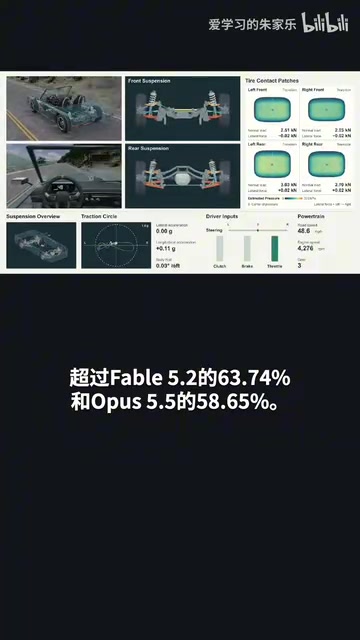
In scientific research, Astra 6.2 ranks first on WAS's science composite leaderboard at 68.44%, ahead of Fable 5.2's 63.74% and Opus 5.5's 58.65%. This leaderboard requires models to analyze real biological data, search for hidden patterns through simulated experiments, and complete research tasks with tools—actually conducting investigations, running experiments, and analyzing results after receiving data and a research environment. This capability is closer to what researchers need when advancing projects. In an official case, the model modified a CAD design based on a photo of a building, and staff ultimately hand-assembled a paper lamp, demonstrating the ability to connect form ideation with manufacturable structural details.
In office scenarios, Astra 6.2 can reference a template file or even a screenshot to match layout, color scheme, and font size when creating new PPT slides. Give it new material and an existing template, and the goal is a complete result where the content is clearly presented, the style is consistent, and further edits remain convenient.
Sol: More for the Same Price as the Everyday Workhorse
GPT-6.2 Sol, as the everyday workhorse, also deserves attention for its upgrades. Compared with the previous GPT-6.1 Sol, under AA's same evaluation suite in Max mode, the intelligence index rises from 55 to 57, matching the old flagship GPT-6 Astra's score. API unit prices have not increased: in standard short context, it remains $2 per million input tokens and $10 per million output tokens. With unit prices unchanged, the cost to complete tasks continues to fall—in AA evaluations, average cost per task drops from $1.27 to $1.01, about 20% cheaper.
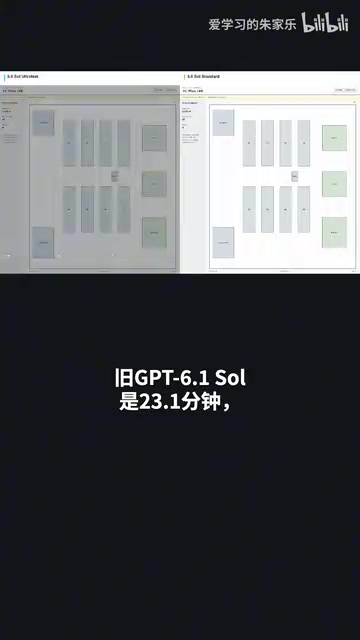
The speed improvement is even more pronounced: inference time per task drops from 23.1 minutes for the old Sol to 7.9 minutes—nearly two-thirds faster. For work that requires continuous revisions and back-and-forth communication, waiting time accumulates round after round. The faster the model delivers the next result, the faster you can check, adjust, and move forward.
In competitor comparisons, the new Sol's 57 points exceeds Sonnet 5.5's 55 and Gemini Hydrogen's 54; the cost gap is equally stark—Sol averages $1.01 per task versus Sonnet 5.5's $10.02, scoring higher at about one-tenth the cost. In Cognition's real code modification benchmark, Sol 6.2 and Astra 6.2 both run in Max mode; Sol 6.2 scores only 0.5 points lower, at about one-fifth the cost. For everyday development tasks, this means near-flagship performance at a much lower cost. On life tasks, the new Sol 6.2 outperforms the old GPT-6 Astra in OpenAI's LiveWork test, at about one-seventh the task cost. Such tasks include screening kindergartens after a move and finding housing based on family budget and commuting requirements.
Pro User Perk: Ultra Fast Mode Opened Up
Well-known user Teebo confirmed that GPT-6.2 Sol's Ultra Fast high-speed mode is now available to the $200/month Pro plan. He commented that Sol is already his go-to model for most everyday matters. According to the official description, Sol 6.2 in Ultra Fast mode can reach token speeds up to 4.5 times that of standard mode. For people rushing to modify code, adjust pages, or prepare reports, this option is very practical—the shorter the wait for generated results, the smoother the back-and-forth collaboration. Quota consumption in this mode is calculated at 6 times the standard tier. Use standard mode normally to control consumption, and spend more quota for faster generation when racing against deadlines.

Both new models are now available in ChatGPT Work, Codex, and the API. Users who frequently use Astra for complex projects should focus on verifying whether, with the same materials and requirements, the new model can deliver more mature results faster; users who repeatedly use AI every day to organize materials, modify code, and handle daily affairs should pay particular attention to this round of Sol upgrades. From the old Sol to the new Sol: unit prices unchanged, composite scores higher, task costs lower, inference time significantly shorter—plus Ultra Fast opened up to the Pro plan. The everyday workhorse's user experience has received a very concrete upgrade.
Those tasks that never quite satisfied you despite repeated revisions—reports that need a consistent style, websites that keep adding new features, work that requires analyzing lots of material before it can be completed—are exactly the right candidates to try again. Every time the model takes one less detour or makes you wait one less round, the time and money saved land in your own work.
Ultra Fast mode essentially trades higher inference service throughput priority for lower response latency, typically manifesting as multiplied tokens per second (TPS) rather than the model itself becoming smarter. The cost is a higher billing multiplier—in this article, quota consumption is calculated at 6 times the standard tier, meaning the same conversation will consume plan quota faster under Ultra Fast. This type of mode suits rhythmic "human-AI back-and-forth collaboration" work: when modifying code, adjusting pages, or preparing reports, waiting time accumulates round after round, and the experience gain from shortening single-round latency is often more direct than improving the quality of a single answer. For everyday use, you can switch back to standard mode to control costs, forming a fast-and-slow usage strategy.
One-line Summary
OpenAI releases GPT-6.2 Astra and Sol, with capability gains alongside sharp drops in cost and time
Paragraph Summary
OpenAI has launched two models at once, GPT-6.2 Astra and GPT-6.2 Sol—the former for highly difficult professional tasks, the latter for high-frequency everyday use. Astra scores 5.5 points higher than Claude Faber 5.2 on Agents Last Exam at about one-twentieth the cost; in AA evaluations, its intelligence index rises from 57 to 62, cost per task drops about 36%, and time shortens from 20.4 to 10.4 minutes. Sol's unit prices are unchanged, its intelligence index rises to 57 to match the old flagship, cost per task drops about 20%, and time is compressed from 23.1 to 7.9 minutes. Sol's Ultra Fast mode is now available to the $200/month Pro plan, up to 4.5 times standard speed at 6 times quota consumption. Both models are now available in ChatGPT Work, Codex, and the API.
Related articles

RePlan-VLA: Progress-Aware Replanning Breakthrough for Long-Horizon Robotic Manipulation
The RePlan-VLA framework converts VLA models' short-horizon capabilities into reliable long-horizon execution through progress-aware adaptive replanning, improving success rates by 21.9% and 10.4% on RoboCasa365 and CALVIN, and validating real-world deployment on a Franka Research 3 robot.

Geometric Bridge Flow Matching: A New Breakthrough in Blind Rigid Motion Correction
Geometric bridge flow matching enables blind rigid motion correction in head CBCT, achieving 37.1 dB PSNR and 0.27 mm RPE on simulated data in ~9.1 minutes, outperforming existing methods.

Google Releases Gemini 4 Hydrogen: 2.5x Faster Without Sacrificing Intelligence
Google releases the lightweight Gemini 4 Hydrogen: 2.5x faster task completion, AA Intelligence Index of 54 beating its flagship sibling, 7.3s single-step on Agent Arena faster than Claude and GPT rivals, four thinking levels with pay-as-you-need pricing, now available across AI Studio and more.