GPT-6.2 Officially Released: Astra Price Cut, Sol More Economical, Professional Work and 3D Upgrades
OpenAI releases GPT-6.2, adding two models Astra and Sol and upgrading 3D generation capabilities.
This article is compiled from a Bilibili creator's sharing. The brief introduces two new models in OpenAI GPT-6.2: Astra targets professional work scenarios and achieves a price reduction while maintaining professional capabilities, making it suitable for complex analysis and long-document tasks; Sol focuses on cost control and is suitable for batch processing and high-frequency calls, with the two complementing each other. In addition, this update also upgrades 3D generation capabilities, which is expected to shorten the path from text to three-dimensional content. The article also reminds readers that most of the original content was a ChatGPT membership recharge tutorial involving third-party recharge websites, and users need to evaluate account security on their own. Because the information comes from a single brief, specific prices and performance data have not yet been disclosed, and official releases should be taken as authoritative.
OpenAI has officially released GPT-6.2, and this update includes two new models: Astra and Sol. Astra focuses on professional work scenarios with a reduced price, while Sol goes further on cost control. At the same time, 3D generation capabilities have also been upgraded. This news brief is compiled from a Bilibili creator's sharing to help you quickly understand the core changes.
Astra: Professional Work Scenarios, Price Reduced
According to the sharing, Astra is a new model aimed at professional work scenarios that achieves a price reduction while maintaining professional capabilities. This means users who need to handle complex analysis, long documents, or professional tasks can obtain high-quality output at a lower cost. The creator mentioned that Astra performs stably on professional tasks and is suitable for daily in-depth use.

For professional users who need to call the model frequently, the price reduction directly lowers the barrier to use. However, the brief did not disclose the specific price reduction amount or performance comparison data, and actual experience still awaits more reviews.
Multimodal large models refer to models that can simultaneously process multiple input and output modalities such as text, images, audio, and video. The GPT series gradually introduced visual understanding starting from GPT-4, and subsequent versions have continued to expand modality coverage. The stronger the multimodal capabilities, the more the model can complete cross-format professional tasks, such as extracting data from charts, generating code from screenshots, or performing comprehensive reasoning by combining image and text information. This is also one of the technical foundations for positioning Astra as a "professional work scenario" model.
Sol: More Cost-Effective, Suitable for High-Frequency Calls
The core selling point of Sol is being "more economical." According to the sharing, Sol has been optimized for cost control and is suitable for scenarios that require large-scale, high-frequency model calls. If your workflow relies on batch processing or automated tasks, Sol may be a more economical choice.
The creator reminds users in the tutorial to choose a plan based on their own needs and avoid blindly pursuing high-end configurations. Sol and Astra complement each other: one focuses on saving money for high-frequency use, and the other focuses on professional depth, so users can flexibly switch according to task type.
Model call costs are usually determined jointly by the number of input/output tokens and the unit price. For batch processing or automated workflows, token consumption may far exceed that of daily conversations, so differences in unit token prices are significantly amplified. Model vendors often reduce inference costs through distillation, quantization, Mixture of Experts (MoE) architectures, and other methods, thereby launching lightweight versions for high-frequency scenarios. When choosing a model, it is necessary to weigh task quality against call cost rather than simply pursuing the highest configuration.
3D Generation Capabilities Upgraded
This update also upgraded 3D generation capabilities. Although the brief did not elaborate on the details, combined with the evolution of the GPT series in the multimodal direction, the improvement in 3D capabilities is expected to bring more direct help to design, modeling, and content creation.
For creators, the 3D generation upgrade means a shorter path from text to three-dimensional content, and the efficiency of prototyping and creative validation may be further improved. The specific effects still need to wait for actual testing.
3D generation is a direction in which generative AI extends from two-dimensional content to three-dimensional space. Typical tasks include text-to-3D model generation, single-image-to-3D mesh generation, and generation of 3D assets with textures and materials. Mainstream technical routes include Neural Radiance Fields (NeRF), 3D Gaussian Splatting, and diffusion models that directly generate 3D representations. Quality evaluation of 3D generation usually focuses on geometric accuracy, texture consistency, and topological usability. Whether the output can be directly imported into modeling software is also a key indicator of practicality.
Subscription and Recharge Reminder
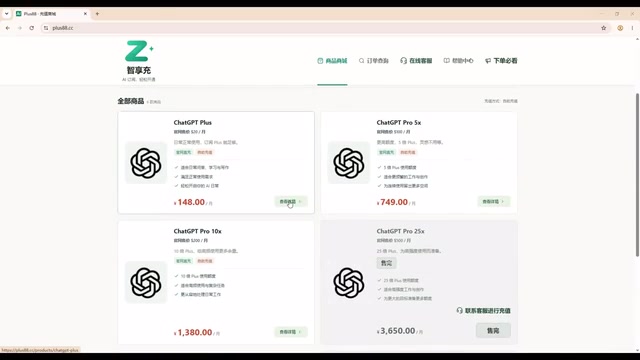
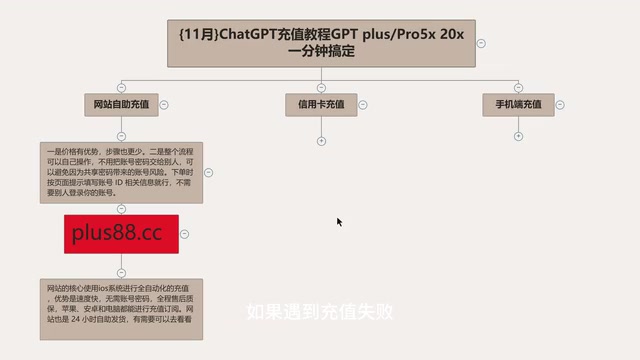
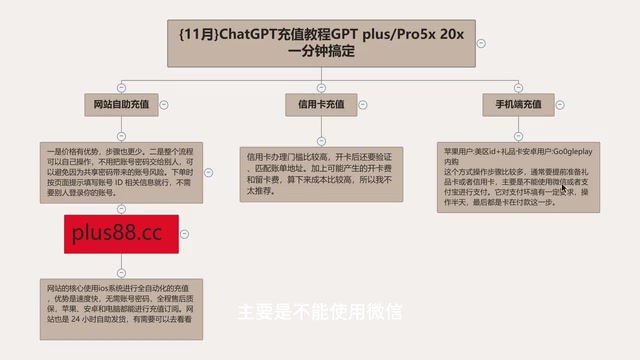
Most of the original content was a ChatGPT membership recharge tutorial. The creator compared three recharge methods: self-service recharge on a website, credit card recharge, and mobile recharge, and recommended self-service recharge on a website on the grounds that it has a price advantage, fewer steps, and does not require handing over account passwords, which can reduce account risks caused by password sharing.
It should be noted that this tutorial comes from the creator's personal sharing and involves third-party recharge websites. Users should evaluate account security and after-sales support on their own when choosing. When subscribing to Plus or Pro plans, it is recommended to first learn about plan differences through official channels, and then decide whether to use third-party services.
Conclusion
GPT-6.2's Astra and Sol approach from two directions: professional capability and cost efficiency, while the 3D generation upgrade expands multimodal application scenarios. For ordinary users, it is safer to pay attention to official updates and reviews before deciding whether to upgrade plans; for high-frequency users, Sol's cost-saving feature is worth noting. The information in this article comes from a single Bilibili news brief, and some details (such as specific prices and performance data) have not yet been disclosed. Please refer to official releases.
Related articles
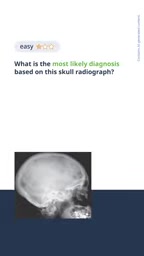
What Is the Most Likely Diagnosis for "Punched-Out" Lesions on a Skull X-Ray?
A skull X-ray shows multiple low-density, well-circumscribed radiolucent lesions with a classic "punched-out" appearance. This article explains this hallmark sign of multiple myeloma and how it differs from osteolytic metastases: metastatic lesions are usually fewer in number.

Pediatric Fracture Classification: Master the Salter-Harris System Quickly
Through a radiology quiz on a 12-year-old boy's wrist fracture, quickly understand the five Salter-Harris pediatric fracture types: how fracture lines traverse the growth plate, epiphysis, and metaphysis, and the key differences between types.

Gout X-ray Imaging Diagnosis: Overhanging Edges and Juxta-articular Erosions on Foot X-rays
Through a 58-year-old man's foot X-ray diagnostic question, this article explains the typical imaging findings of gout: juxta-articular erosion of the first metatarsophalangeal joint, overhanging edge features, and the clinical insight that imaging changes lag behind symptoms.