GPT-6 Astra vs Claude Fable 5.1: Head-to-Head Comparison Across 15 Real-World Work Scenarios

GPT-6 Astra beats Claude Fable 5.1 in 10 of 15 real-world work scenarios while costing $186 less overall.
A Bilibili creator spent thousands of dollars testing GPT-6 Astra against Claude Fable 5.1 across 15 real work scenarios including tax analysis, browser automation, sales copy, and consulting presentations. Astra won 10 rounds with stronger performance in finance, automation, and browser tasks, while costing $186 less overall. Fable won 5 rounds, excelling in creative writing, visual design, and brand-consistent presentations. The key takeaway: match models to specific scenarios rather than choosing one for everything.
When the intelligence of top-tier AI models approaches saturation, the real competition is no longer about "who's smarter" — it's about "who better understands what you need." A content creator on Bilibili put serious money on the line — burning through 3 Codex subscriptions, 4 Cloud subscriptions, and thousands of dollars in usage credits — to pit OpenAI's GPT-6 Astra (powered by Codex) against Anthropic's Claude Fable 5.1 across 15 real-world work scenarios. This evaluation, spanning design, finance, automation, browser operations, and more, delivered a conclusion with genuine practical value.
Methodology and Overall Results
What sets this comparison apart is that every test case came from the reviewer's actual daily work, covering consulting reports, sales copy, tax analysis, subscription audits, meeting insights, video editing, SaaS development, browser automation, and 15 other scenarios. Each scenario was scored across three dimensions: output quality, time spent, and cost.
The final result: Astra won 10 rounds, Fable won 5. But what's more noteworthy is the cost-time tradeoff — Fable took 9 hours and 35 minutes total, costing $513.36; Astra took 11 hours and 19 minutes total, costing $326.98. In other words, Astra was $186 cheaper overall but took nearly 1 hour and 43 minutes longer than Fable.
This data reveals the core difference between the two models: Astra is more cost-effective with more consistently stable output quality (especially with Codex subscriptions enabling unlimited use throughout the week), while Fable still has unique strengths in certain creative and design tasks.
It's worth noting that the cost difference doesn't just stem from model capabilities — it's closely tied to their fundamentally different business models. OpenAI's Codex platform positions itself as an "AI workstation" for developers and power users. Its subscription model allows users to make unlimited calls to GPT-series models for code generation, data analysis, browser operations, and other complex tasks within certain tiers. This "unlimited monthly" design significantly lowers per-task costs for high-frequency users. Anthropic's Cloud subscription follows a more traditional usage-based billing model, where users pay for tokens consumed per API call or agent run, meaning costs can spike dramatically during intensive tasks. Each pricing strategy has its tradeoffs: the former is friendlier for heavy users, while the latter is more economical for light users.
Astra's Strengths: Finance, Automation, and Browser Operations
Astra's most impressive performances were concentrated in scenarios demanding rigor and tool-operation capabilities.
Tax and Financial Analysis: Building Trust Through Proactive Questioning
In the tax analysis scenario, Astra proactively asked about 7 clarifying questions before starting, while Fable jumped right in. The reviewer stated clearly that this proactive questioning behavior gave him more confidence in Astra's output — after all, tax is a field with extremely low tolerance for error. Astra ultimately delivered a report containing monthly results, tax projections, a complete 3,739-line transaction ledger, and source verification, with clearer structure and better alignment with requirements.
In the subscription audit scenario, Astra provided a complete list of all subscriptions, next billing dates, and price change flags, while one of Fable's worksheets labeled "All Expenses" was completely blank. The cost gap was even more striking: Astra cost about $12.50, while Fable cost nearly $50.
Meeting Insights: Deeper Analysis at Lower Cost
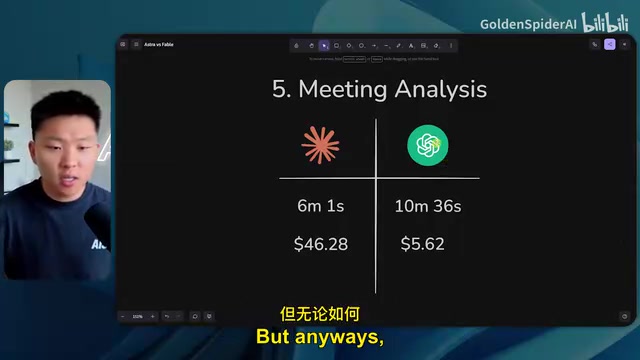
The meeting analysis scenario produced the most baffling data point of the entire evaluation. Astra analyzed 79 meetings at a cost of just $5.50; Fable analyzed 58 meetings but cost $46 — despite its active agent time being only 6 minutes. The reviewer checked the session logs and still couldn't explain where those tokens went.
This phenomenon points directly to a core pain point in the current AI services industry — the opacity of token consumption. Tokens are the basic units by which large language models process text; roughly each English word corresponds to 1–1.5 tokens, while each Chinese character corresponds to about 1.5–2 tokens. But in agent mode, the model doesn't just process the input and output visible to users — it also performs extensive behind-the-scenes "Chain of Thought" reasoning, tool-call log generation, context window maintenance, and other hidden consumption. Internal reasoning tokens for some advanced reasoning models can be several times the final output tokens, and whether and how these hidden consumptions are billed varies across platforms. Users often only discover they've far exceeded expectations when the bill arrives.
In terms of insight quality, Astra's recommendations on "leadership responsibilities and ownership" also resonated more with the reviewer.
Browser Operations: A Traditional Strength of GPT-Series Models
Two scenarios heavily dependent on browser operations and visual capabilities — recreating artwork in Canva and batch-creating course drafts in a Skool community — saw Astra win by overwhelming margins. In the Canva recreation task, Fable's results were described by the reviewer as "laughable"; in the Skool course creation task, Fable failed because it couldn't upload videos locally, while Astra fully completed the video uploads, text entry, and draft saving. The reviewer concluded: "Overall, Codex and GPT-series models are clearly stronger at browser operations."
The "browser operations" mentioned here aren't simple chat interactions but involve intelligent agent systems capable of autonomous planning, tool invocation, and multi-step execution. In modern AI architectures, an agent can decompose a complex task into multiple sub-steps, sequentially invoking search engines, code executors, browser controllers, and other external tools to accomplish objectives. Browser operation capability is a critical differentiator in agent ability — it requires the model not only to understand a webpage's DOM structure and visual layout but also to precisely simulate clicks, inputs, drag-and-drop actions, screenshots, and other human operations. OpenAI's advantage here partly stems from its early investment in multimodal capabilities and Computer Use-related technical development, making GPT-series models more reliable in scenarios requiring real-time web interface manipulation.
Fable's Stronghold: Copywriting, Presentations, and Visual Design
Despite trailing in the overall score, Fable's victories in 5 scenarios were no accident — they all point to the core dimension of creative expression and content presentation.
Consulting Presentations and Sales Copy: Better at "Storytelling"
In the scenario of creating a McKinsey-level consulting presentation, Fable's output was wordier and better suited as a "deliverable document" rather than a live presentation script, but its brand consistency and structural coherence were stronger, winning this round.
The term "McKinsey-level" here isn't vague hyperbole — it carries specific industry meaning. Presentation documents from top management consulting firms like McKinsey (commonly called "decks") follow extremely strict production standards: each slide needs a clear action title, data visualization follows a "less is more" principle, the overall narrative structure typically employs a "Situation-Complication-Resolution" (SCR) or Pyramid Principle framework, and brand colors and fonts must be highly consistent. The core challenge of such presentations isn't information volume but how to use minimal text and precise charts to help executives grasp key conclusions within 30 seconds. Fable's winning attributes of "brand consistency and structural coherence" in this scenario correspond precisely to the consulting industry's relentless pursuit of "professionalism" in deliverables.
In sales letter copywriting, Fable produced approximately 2,800 words of long-form content, addressing questions prospective students actually care about — such as "Can this help me find a job?" and "Am I technically qualified?" — along with segmented sections on tuition, faculty, and who the program is and isn't suited for. By comparison, Astra's 1,300-word copy was "higher-level and more generic." The reviewer argued that sales copy specifically needs sufficient detail to dissolve customer doubts, so Fable won.

An interesting detail: the reviewer mentioned an observation from within his team: "Claude used to dominate in writing, but recently the team has been favoring GPT-series models for writing." This shift reflects a deeper evolution underway in AI writing. The Claude series has long been known for its "more natural, warmer, less AI-sounding" writing style — Anthropic specifically emphasized calibration toward the "helpful, honest, and harmless" triad during the RLHF (Reinforcement Learning from Human Feedback) phase of training, giving its output a more conversational and empathetic tone. Meanwhile, OpenAI significantly improved instruction-following precision and format control capabilities in GPT-4o and subsequent models, making them more controllable in business writing scenarios requiring specific structure, tone, and length constraints. This preference shift isn't about one side becoming definitively stronger — rather, as models iterate, their respective advantage zones continue to overlap and be redrawn.
Knowledge Graph Visualization and Website Cloning
In the "Second Brain" knowledge graph visualization scenario, the reviewer originally "expected Astra to dominate" but ended up preferring Fable's version — Astra's nodes were too small, and the interface was more visually overwhelming, while what he wanted was simply a clean, intuitive brain visualization tool.
This scenario blends two concepts widely popular in the productivity space. "Second Brain" originates from the personal knowledge management methodology proposed by productivity expert Tiago Forte — PARA (Projects, Areas, Resources, Archives) — with the core idea of externalizing knowledge from the human brain into digital tools, forming a searchable, interconnectable knowledge system. Knowledge Graph is a networked data structure composed of nodes (concepts) and edges (relationships), first introduced by Google into its search system in 2012. When the two combine, users expect a visual interface that intuitively displays the relationships between pieces of personal knowledge — for example, a "Machine Learning" node connecting to sub-nodes like "Neural Networks" and "Data Preprocessing" that can be dynamically explored. The challenge for AI in this type of task lies in balancing information architecture design with visual hierarchy, and Fable demonstrated better "restraint" in this regard.
In the website cloning task, although Astra's finished product "felt smoother," Fable "more faithfully reproduced the original website" — and faithful reproduction was precisely the core requirement of the prompt. This reminds us: design preferences are highly subjective, and evaluation criteria must always come back to the specific requirements.
Key Takeaways: How to Choose Models in the Age of Intelligence Saturation
The most valuable insight from this evaluation isn't actually about who won or lost.
Intelligence Is Saturated — The Competition Is Now About "Presentation"
The reviewer repeatedly emphasized: "We're now at a stage where both Astra and Fable are incredibly intelligent — you no longer need to worry about whether they can send out an agent to do research. What matters now is how they take messy data and deliver it back as something that tells a story, something you can actually present." This assessment precisely captures the new focal point of competition among today's top AI models: shifting from "can it do it" to "does it do it beautifully and in a way that fits the scenario."
Don't Pick Just One — Match Models to Scenarios
The reviewer's final recommendation is highly pragmatic: don't use one model for everything. He currently leans toward using Astra for daily work, citing higher efficiency, unlimited weekly usage via the Codex subscription, and lower per-task costs. But he also pointed out that GPT 5.6 Sol is "sufficient or even overkill" for most knowledge work, and it may not be necessary to deploy an Astra-level model.
His conclusion: "I firmly believe they each have their strengths and weaknesses, their own unique value. That's why I love doing these kinds of tests — to discover how they perform across different use cases." He also plans to maintain multiple subscriptions from both providers long-term because "this field changes too fast."
Final Thoughts
For the average user, the greatest value of this evaluation isn't memorizing the "10 to 5" score — it's understanding a methodology: test with your real work scenarios and judge by your own standards. For the same video editing task, one person might prefer Astra's live-action footage while another favors Fable's rhythmic pacing — there's no standard answer.
As AI model intelligence converges toward homogeneity, the real moat is shifting from algorithms to understanding specific workflows. And for users, building a personal map of "which model fits which scenario" may be far more important than chasing leaderboard rankings.
Related articles

GPT-6 Astra vs. Claude Fable 5.1: A Full Comparison Across Four Real-World Tests
GPT-6 Astra vs. Claude Fable 5.1: benchmarks, cost, Fortnite clone, UI design, motion graphics, and 3D dashboard — four real-world tests compared.

Claude Code Team Interview: How Engineers Shift from Writing Code to Managing AI Goals
Anthropic Claude Code team deep dive: reveals how software engineers shift from line-by-line coding to AI goal management, covering Slack-native Agents, cloud-hosted Loops, workflow fan-out reviews, and AI's profound restructuring of development paradigms.
Claude Code Advanced Guide: 9 Overlooked Advanced Features Explained
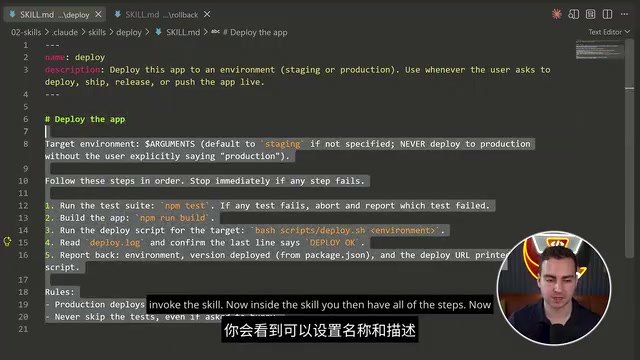
Deep dive into 9 advanced features of Claude Code: custom sub-agents, Skills workflow templates, Hooks event-driven automation, MCP integration, Git Worktree parallel development, Headless mode, and more. Level up from basic usage to efficient AI-powered collaborative development.