GPT-6 vs. Claude: Competing on Both Capability and Price

GPT-6 cuts API prices with Sol/Luna while Claude's Opus 5.5 fights back with data — but the comparison metrics don't fully line up.
GPT-6 launched Sol and Luna with API prices cut roughly in half versus the previous generation's promotional rate, competing on everyday value. Claude responded with Opus 5.5, claiming ~40% lower operational costs than its predecessor and benchmarking directly against GPT-6's flagship Astra — scoring slightly higher on a code-acceptance task at about one-fifth the cost. However, the comparisons aren't apples-to-apples: GPT-6's materials reference the older Opus 5, Claude targets the GPT-6 flagship rather than its everyday models, and the two "discount" figures use entirely different calculations. For users, the real measure is total cost and time to a usable result — not per-call sticker prices.
Two AI giants are at it again. GPT-6 launched two new models — Sol and Luna — while Claude fired back with Opus 5.5. This time, the competition isn't just about pushing capability ceilings. Both sides are now squarely addressing the most practical question: which one should you actually use every day? Capability and cost are both on the table.
GPT-6: Flagship Keeps Pushing, Everyday Models Get Cheaper
GPT-6's product lineup now shows a clear tiered structure. The existing Astra continues to handle the most demanding tasks, holding its position at the top. The newly introduced Sol and Luna bring this generation's technology down into faster, cheaper models.
Think of it this way: the flagship keeps chasing peak performance, while the everyday versions are built for better value. The most direct signal is in pricing — Sol's API rates have been cut in half compared to the previous generation's promotional price, for both input and output. Luna continues to see price reductions as well. Worth noting: these are API pricing changes for developers calling the models programmatically, not subscription fees for regular users.
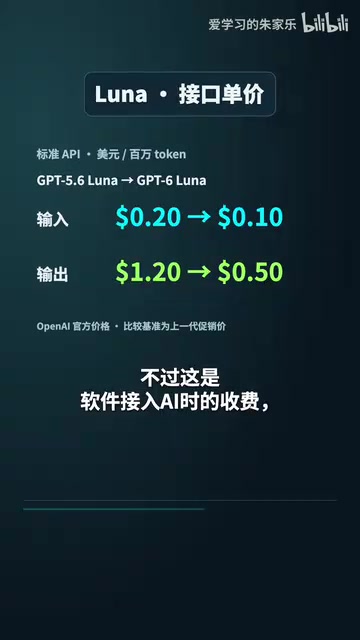
For developers, cutting API unit prices in half means a dramatic drop in operational costs — and that's GPT-6's core play for capturing the everyday use case market.
API (Application Programming Interface) pricing is the primary way AI companies charge developers, typically billed per million tokens — where a token is roughly a unit of text, with one English word equaling about one to two tokens. This is entirely separate from the monthly subscription plans regular users purchase. Subscriptions are flat fees; API costs scale with usage. For developers or companies embedding AI into their own products, API unit pricing directly determines operating costs — the more frequently the API is called, the more the per-unit price matters. So while API price cuts have limited direct impact on everyday consumers, they indirectly lower the barrier for more AI-powered features to appear in apps at lower costs.
Claude: Pairing Data with the "Hard Jobs Don't Have to Be Expensive" Argument
Claude's strategy is to put both price and data on the table at once. According to Anthropic's own benchmarks on representative tasks, Opus 5.5 cuts operational costs by roughly 40% compared to the previous Opus 5, while continuing to improve on capability.
The more pointed move: the Opus 5.5 launch page directly benchmarks against GPT-6's Astra. On a test measuring whether AI-generated code changes are accepted by a project, the official results show Opus 5.5 at default settings scoring slightly above Astra's highest publicly reported result — at roughly one-fifth the per-task cost.
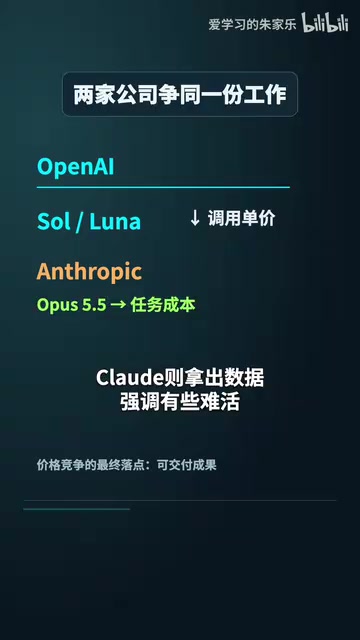
The intent is clear: GPT-6 is pushing the cheaper Sol and Luna to win the everyday market, while Claude is making a data-backed case that some demanding workloads don't require Astra-level spending.
Don't Rush to Declare a Winner: These Leaderboards Can't Be Directly Compared
It's worth staying grounded while watching this play out. The two companies are comparing apples to different apples — you can't simply stack their benchmarks side by side and declare a winner.
A few key discrepancies are worth calling out:
- Several comparisons in GPT-6's launch materials used the older Opus 5, not the latest Opus 5.5;
- Claude's benchmarks primarily target Astra, GPT-6's flagship, not Sol or Luna;
- As a result, these numbers cannot be stitched together into a direct "Sol vs. Opus 5.5" verdict.
The pricing percentages have a similar apples-to-oranges problem. When GPT-6 says "prices cut in half," it refers to API unit rates. When Claude says "costs reduced by 40%," it refers to task costs in official benchmark tests — two completely different calculations. Comparing those percentages head-to-head is exactly the kind of misleading framing that product launch events are prone to generating.
AI benchmark tests are standardized evaluation suites that measure model capabilities across areas like coding, mathematical reasoning, and language understanding. When launching new models, companies typically cherry-pick the benchmarks where they perform best, and results can also vary depending on parameters like temperature and sampling strategies. The distinction between "task cost" and "API unit price" is especially worth noting: the API unit price is the fixed rate a vendor publishes, while task cost is the unit price multiplied by the total tokens consumed to complete a specific task. A smarter model might finish the job in fewer conversation turns — meaning even with a higher unit price, the total cost could actually be lower. This is exactly why comparing "discount percentages" in isolation tends to mislead.
What This Actually Means for Regular Users
Setting aside the benchmark wars, this competition has real consequences for how people work day to day.
Imagine you run a small business. A client hands you a pile of documents, and you want an AI to organize the requirements, build out a quote sheet, and produce a submittable proposal. The first draft doesn't land — the client adds new requirements and wants revisions. What you actually care about is: did it miss any conditions? Are the numbers right? After the edits, does everything still add up?

A cheaper model that requires constant rework may not save you money in the end. A slightly more expensive model that gets it right the first time could actually be the better deal. The real metric is: to get a usable final deliverable, how much did you spend in total, and how much time did it take — not the per-call price tag.

This is where the real edge in this AI rivalry lies: whoever makes you feel comfortable enough to hand over your work more often — and more regularly — wins a spot as your everyday tool. Use it to organize documents today, revise a proposal tomorrow, build a small utility tool the day after. The more naturally it fits into your workflow, the more likely you are to reach for it the next time something comes up.
It's Too Early to Call
Whether this competition ends in a two-player market is far from settled. For regular users, there's no reason to "hold the line" for either company.
They're fighting to be number one — we just pick what works best. Whoever gets the job done and costs less gets the money. If you could only keep one paid AI subscription, would you prioritize raw capability, or the ability to use it affordably every single day? That might be the question worth actually answering.
Here's hoping both companies keep competing — but not just by shouting "we're the best" at launch events. Let users see it where it matters: fewer revisions, and a bill that makes sense.
Related articles

Python 3.15 New Feature: Is the sentinel Type Better Than None?
Python 3.15 adds the sentinel type, using named unique sentinel objects to replace None and bare object(), resolving confusion among missing values, explicit emptiness, and invalid input while avoiding type hint failures.

Deep Learning's Three Architectures and the Universal Approximation Theorem: A Complete Guide to MLPs, CNNs, and Transformers
Explaining the inductive bias differences among MLP, CNN, and Transformer, the existence meaning of the Universal Approximation Theorem (UAT), and the role of Taylor expansion in approximation analysis, while clearing up common misconceptions.

GitLab Emergency Patch Release: Analysis of Critical Security Fixes
GitLab releases critical patch 19.5.1, sparking 355 points of discussion on Hacker News. This article analyzes the background, upgrade steps for self-hosted instances, and verification points to help DevOps teams respond quickly to security updates.