Grace Hopper Celebration Suddenly Cancelled: The Fallout Over the World's Largest Women in Tech Event

The world's largest women in tech event, Grace Hopper Celebration, has been cancelled, sparking broad discussion and reflection in the tech community.
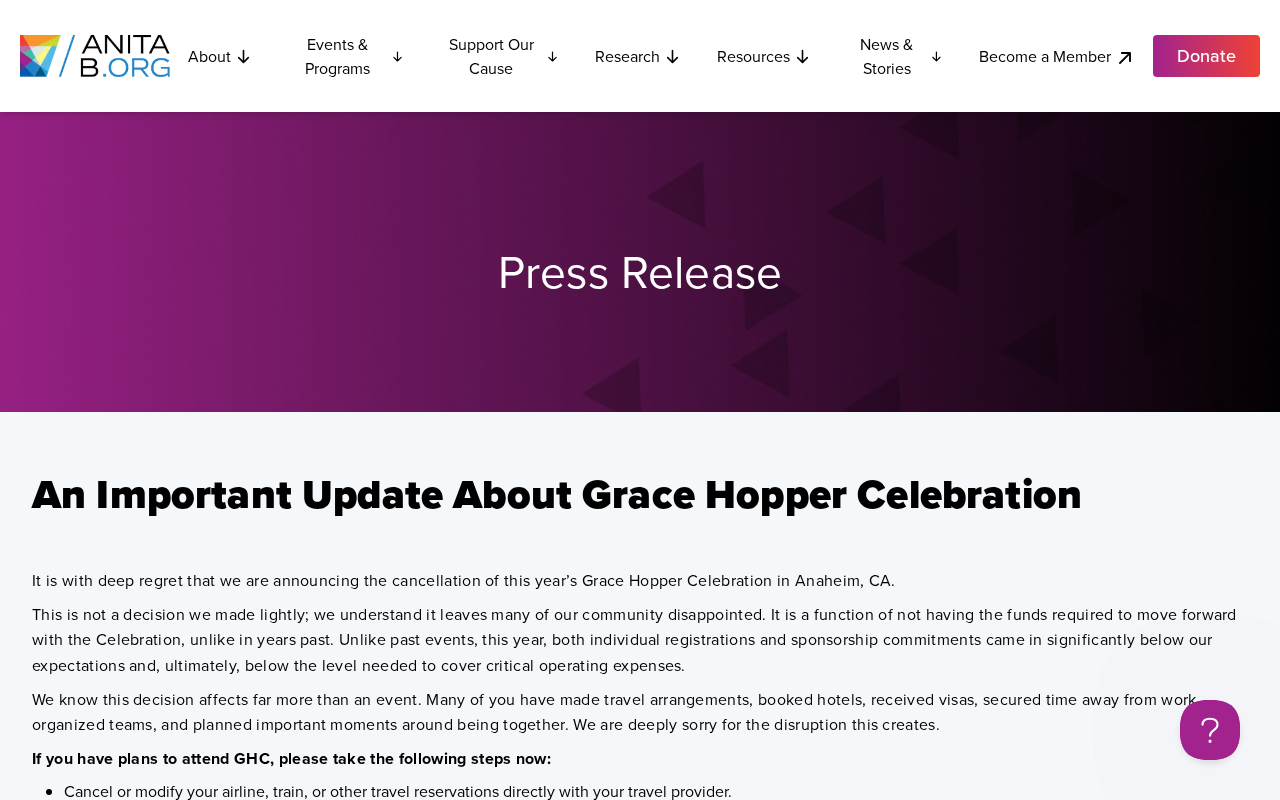
Grace Hopper Celebration (GHC), the world's largest women in tech event organized by AnitaB.org, has reportedly been cancelled, quickly igniting widespread discussion on Hacker News and other tech communities. Long seen as a key platform for networking, recruiting, and career growth for women in tech, its sudden shutdown surprised many participants. Reactions have centered on disappointment and speculation, with some also questioning the sustainability of large tech conferences amid rising costs, shifting sponsorship structures, and the politicization of diversity issues. The cancellation may affect recruiting pipelines, students' career plans, and women in tech networks, and is viewed as another signal of pressure on diversity progress in the industry. Organizers have yet to give a full explanation, and the next steps remain uncertain.
The tech industry's most influential event for women in technology, Grace Hopper Celebration (GHC), has reportedly been cancelled, quickly sparking widespread discussion across the tech community. As an annual conference named after computer science pioneer Grace Hopper, GHC has long been regarded as a vital platform for women and tech professionals to connect, seek jobs, and advance their careers. Its sudden shutdown has caught many longtime participants off guard.
The Sudden Halt of a Landmark Event
Grace Hopper Celebration is organized by AnitaB.org and has grown steadily over the years, once attracting tens of thousands of tech professionals, students, and companies from around the world. The conference not only offers technical talks and career development forums but also serves as a critical recruiting ground for tech companies competing for women in technical roles.
The news first circulated on tech communities like Hacker News, then triggered a chain of discussion. For many young women engineers who rely on GHC to find internships and full-time opportunities, the cancellation means losing an important career pathway.
Grace Hopper (1906–1992) was a U.S. Navy rear admiral, computer scientist, and one of the earliest programmers. She participated in the development of the early Harvard Mark I computer, invented one of the world's first compilers, and drove the standardization of the COBOL language. She is famous for popularizing the term "debugging"—legend has it that she once found a moth causing a malfunction in a relay computer, taped it into a logbook, and wrote, "First actual case of bug being found." The GHC conference named after her commemorates her pioneering contributions to computer science and her lifelong advocacy of the idea that "computing is not just a field for men."
AnitaB.org, formerly the Anita Borg Institute, was founded in 1997 by computer scientist Anita Borg to promote women's participation and advancement in technology. In addition to organizing GHC, the organization runs the Systers email community, the Grace Hopper Scholarship, and other programs, making it one of the most representative nonprofits in the women in tech community.
Community Reaction: Disappointment, Speculation, and Reflection
Among reactions in the tech community, disappointment has been the most widespread sentiment. Some developers pointed out that GHC is not just a conference but also the starting point of many people's professional identity and a source of belonging. Meanwhile, speculation about the reasons for the cancellation is spreading, but the organizers have yet to provide a full explanation.
Some voices have also begun to reflect on the sustainability of the large-scale tech conference model. In recent years, industry conferences of similar scale have faced multiple pressures, including rising costs, changing sponsorship structures, and the politicization of diversity issues in the industry. GHC's predicament is not an isolated case.
Hacker News is a tech news aggregation community operated by startup incubator Y Combinator, known for high-quality discussion and a minimalist interface. It has long been an important channel for Silicon Valley engineers, entrepreneurs, and researchers to keep up with industry developments, and a hot post can often spread across platforms within hours. The news of GHC's cancellation first fermented here, then spread to X (Twitter), LinkedIn, Reddit, and other platforms, forming a chain of discussion.
The business model of large tech conferences typically relies on corporate sponsorship. Over the past decade, GHC's sponsors have included giants such as Google, Meta, Apple, and Microsoft, with companies gaining access to women in tech through booths, dedicated recruiting sessions, and named segments. When sponsorship budgets shrink and diversity programs are deprioritized, conferences that rely heavily on a single revenue structure are the first to suffer.
Impact on the Women in Tech Talent Ecosystem
The cancellation of GHC has effects beyond the conference itself. Corporate recruiting pipelines, students' career planning, and women in tech community networks may all be affected. This is especially true for groups lacking other resource channels, for whom GHC had been a relatively concentrated window of opportunity.
From an industry analysis perspective, this event reflects the real resistance facing diversity efforts in the tech industry. Diversity topics have been deprioritized within some companies, and the cancellation of a landmark conference may be interpreted as yet another signal of this trend.
What Comes Next Remains to Be Seen
At present, there is no clear information on whether GHC will restart in another form or be permanently discontinued. The tech community broadly expects the organizers to provide a more transparent explanation, and some are discussing the possibility of community-organized alternative events.
Regardless of the final outcome, the fate of the Grace Hopper Celebration has become an important lens through which to observe changes in diversity in the tech industry and the broader ecosystem of large conferences.
One-line Summary
Grace Hopper Celebration, the world's largest women in tech event, has reportedly been cancelled, sparking widespread discussion and reflection in the tech community.
Paragraph Summary
Grace Hopper Celebration (GHC), the world's largest women in tech event organized by AnitaB.org, has reportedly been cancelled, quickly triggering widespread discussion in tech communities such as Hacker News. GHC has long been seen as a key platform for women in tech to connect, find jobs, and advance their careers, and its sudden shutdown has surprised many participants. Community reactions have been dominated by disappointment and speculation, with some also beginning to reflect on the sustainability of the large tech conference model amid rising costs, changing sponsorship structures, and the politicization of diversity issues. GHC's cancellation may affect corporate recruiting pipelines, students' career planning, and women in tech community networks, and is seen as another signal of mounting pressure on diversity progress in the tech industry. The organizers have yet to provide a full explanation, and what happens next remains to be seen.
Related articles

Claude Reportedly Able to Hide Secret Messages in Benign Images
A Reddit post claims Claude Fable 5.1 can hide secret messages in benign images. This article reviews the background, image steganography principles, and potential security risks, and suggests a testing path from rumor to verification.

Federal Government Awards $85 Million; CFS to Develop Fusion-Specific Semiconductors
The federal government awards $85 million to Commonwealth Fusion Systems to develop conductors and power semiconductors for fusion plants. This article analyzes the significance of this funding for the fusion supply chain and commercialization path.

When Should AI Assistants Proactively Suggest? Timing Is Everything
When should AI assistants proactively suggest? Reddit discussion reveals: the same suggestion feels different at different times. This article analyzes the dual nature of proactive suggestions, the boundary of user expectations, and design principles, exploring how to balance automation and user control.