Graphify: The 151K-Star Open-Source Sensation That Turns Your Entire Codebase into an AI Knowledge Graph
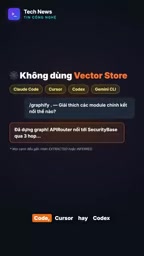
Graphify turns codebases into knowledge graphs for AI Agents to query directly—zero tokens and multimodal support.
Graphify is an open-source project that converts entire codebases into knowledge graphs, enabling AI coding assistants to query project structure directly instead of reading files one by one. It gained over 151,000 GitHub stars in 8 months, supports 40+ programming languages and 20+ AI assistants. Its core capability is completing syntax analysis, module clustering, and confidence annotation locally in about 30 seconds, outputting three interactive visualization reports, with zero token consumption during the build. Benchmarks show 82% factual coverage. Additionally, Graphify unifies Markdown, PDF, images, and audio into a multimodal graph, giving AI Agents more complete context. The article concludes by discussing the significance of this graph-based context supply for AI coding workflows and notes that it isn't perfect and still requires human judgment.
Graphify: The 151K-Star Open-Source Sensation That Turns Your Entire Codebase into an AI Knowledge Graph
AI coding assistants have to read code file by file every time, which is inefficient and prone to missing context. An open-source project called Graphify is changing that: it converts your entire codebase into a knowledge graph, letting AI Agents query your project structure directly instead of "scraping" every single file. The project has racked up over 151,000 GitHub stars in just 8 months, and it's fully open source.
From File-Level Retrieval to Graph-Level Understanding
Traditional approaches typically rely on vector stores for code retrieval, but Graphify takes a different path. You just type a slash command in your codebase (whether in Cursor or another editor) to invoke Graphify, and the Agent can directly query the pre-built code graph.
This approach eliminates the need to repeatedly read files. According to the project, Graphify supports over 40 programming languages and integrates with more than 20 AI assistants. More importantly, building the code graph consumes zero tokens—all analysis happens locally.
Vector Store vs. Knowledge Graph Retrieval: A vector store is the code retrieval approach commonly used by today's AI coding assistants. It converts code snippets into high-dimensional vectors and stores them in a database, then returns the most relevant snippets via semantic similarity matching when queried. This method excels at fuzzy matching but lacks explicit modeling of code structure (such as function call relationships and module dependencies), making it prone to returning scattered, incomplete context. A knowledge graph, on the other hand, uses entities (such as functions, classes, and files) and relationships (such as calls, inheritance, and references) as nodes and edges, precisely expressing the topological structure of code. Graphify adopts the graph approach, letting AI Agents query along relationship chains—for example, "find all modules that call a certain function"—yielding more coherent, structured context rather than relying on similarity guesses.
30-Second Local Generation of an Interactive Code Map
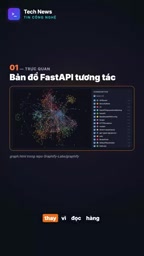
Graphify's core capability is running locally for about 30 seconds to complete syntax analysis, module clustering, and confidence annotation, then outputting 3 visualized report files. You can open the interactive map directly and browse the code structure like viewing an API panorama of the entire project, without having to read hundreds of scattered files one by one.
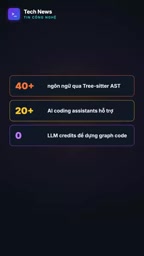
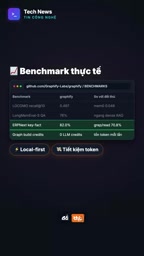
According to benchmarks in the Readme, Graphify achieves 82% factual coverage, and it also consumes zero tokens when building the graph. This means developers can gain a structured understanding of their codebase without increasing API costs.
Factual Coverage: In code graph benchmarks, factual coverage measures the proportion of code facts captured by the graph (such as function definitions, call relationships, and import dependencies) relative to the total number of real facts. 82% coverage means Graphify can automatically identify and include the vast majority of key structural information, but about 18% of facts may still be missed—for example, dynamically generated code, reflective calls, or certain edge-case syntax. This metric helps developers assess the completeness of the graph and signals that human review is still needed for critical decisions. Compared with approaches that rely entirely on vector retrieval, 82% coverage can already significantly improve AI's efficiency in understanding project structure.
Beyond Code: A Unified Multimodal Graph
Graphify's ambitions go beyond parsing source code. It can also unify Markdown documents, PDF files, images, and audio into the same graph. For projects with large amounts of documentation and design materials, this unified view helps AI Agents answer questions within a more complete context.
Multimodal Knowledge Graph: A multimodal knowledge graph refers to the unified representation of information from different modalities (such as text, images, and audio) as entities and relationships, stored in the same graph. In Graphify's context, source code, Markdown documents, PDF files, images, and audio are all extracted as nodes and connected through semantic or structural relationships. For example, an architecture diagram might be linked to the corresponding code module, and an audio meeting recording might be linked to the feature points discussed. This unified view lets AI Agents retrieve across modalities when answering questions, gaining more comprehensive context without having to process multiple data sources separately. Building multimodal graphs typically involves OCR, speech transcription, image description generation, and other techniques; Graphify performs these analyses locally, further lowering the barrier to entry.
Installation and Getting-Started Notes
Two things to note before installing: your machine needs Python 3.11 or higher, plus either UV or PipX. Also, when installing, make sure the package name is Graphify—with two Ys—since a typo might install a different package.
Implications for AI Coding Workflows
Graphify represents a trend: AI coding assistants are shifting from "reading file by file" to "structured understanding." By building a knowledge graph locally, it avoids token consumption while providing a more intuitive project view than vector retrieval. For large projects or cross-language codebases, this graph-based approach to supplying context may be more efficient than simply expanding the context window. Of course, the 82% factual coverage also shows it's not perfect, and human judgment is still needed in practice.
Which codebase would you analyze with Graphify first?
Related articles
When Stochastic Parrots Claim to Have …
When Stochastic Parrots Claim to Have Proven the Riemann Hypothesis
Scott Aaronson's 'stochastic parrots prove the Riemann Hypothesis' quip highlights the trust crisis in AI-generated math proofs and the promise of formal verification.

Gemini 4 Neon vs Claude Opus 5.5: Who Wins Across Five Real-World Tasks?
Bilibili creator tests Gemini 4 Neon vs Claude Opus 5.5 across 3D video, games, design, writing, and advice. Neon matches Opus daily, but 3D and design still lag.

Former Huawei Genius Youth Open-Sources AI Agent Guide: 90+ Hands-On Case Studies
Former Huawei Genius Youth Li Bojie open-sources AI Agent Book, the most systematic Chinese Agent learning repo on GitHub, with 90+ runnable examples covering context compression, memory frameworks, MCP tool calling, prompt injection attack and defense, and other enterprise-level hands-on content.