When Stochastic Parrots Claim to Have Proven the Riemann Hypothesis
When Stochastic Parrots Claim to Have …
The credibility crisis of AI-generated math proofs is trickier than capability gaps; formal verification may be the way out.
Scott Aaronson's headline 'The Stochastic Parrots Apparently Proved the Riemann Hypothesis' pokes fun at the trust crisis LLMs have triggered in mathematical proof. Model-generated proofs look fluent and well-formed but may embed hidden false assumptions, deceiving non-experts and taxing experts. Mathematics, being verifiable, is the touchstone for AI reasoning, yet AI's convincing wrong answers could raise verification costs and erode peer review. Combining AI with formal proof assistants like Lean and Coq—letting machines verify machine output—may improve trustworthiness, though formalization remains costly.
A "Boy Who Cried Wolf" Moment in Mathematics?
Computer scientist Scott Aaronson threw out a striking headline on his blog: "The Stochastic Parrots Apparently Proved the Riemann Hypothesis." "Stochastic parrots" is a well-known sardonic term in AI circles, used to describe large language models as machines that merely regurgitate content from their training data without any genuine understanding or reasoning ability.
Aaronson uses this as a hook, and what he's clearly discussing is not that someone actually used AI to solve this long-standing mathematical problem, but rather a jab at the crisis of trust that AI has triggered in the field of mathematical proof. When models can generate proof texts that look rigorous and properly formatted, how do we distinguish genuine mathematical insight from probabilistic bullshit that merely "sounds right"?
The Riemann Hypothesis is one of the most famous and important unsolved problems in mathematics, proposed by German mathematician Bernhard Riemann in 1859. It asserts that all non-trivial zeros of the Riemann zeta function lie on the line in the complex plane with real part equal to 1/2. This conjecture is intimately connected to the distribution of prime numbers: if true, it would enable precise estimation of the error term in the prime counting function, profoundly affecting number theory and the very foundations of mathematics. The Riemann Hypothesis is listed among the Clay Mathematics Institute's "Millennium Prize Problems," with a one-million-dollar reward for whoever solves it. For over 160 years, countless mathematicians have labored over it. Despite extensive numerical verification (the first several billion zeros have all been checked and conform), a rigorous proof remains elusive. Precisely for this reason, claiming to have "proven the Riemann Hypothesis" is always explosive in the mathematical community and highly prone to skepticism—history is full of cases where amateurs announced proofs only to be refuted. Aaronson's headline borrows this backdrop to ironically suggest that AI's "proof" is very likely another round of bluster.
Where Do the Mathematical Hallucinations of "Stochastic Parrots" Come From?
Large language models' performance on mathematical tasks has always been full of contradictions. They can fluently explain theorems and reproduce textbook-style proof steps, yet they frequently stumble on original problems requiring multi-step logical reasoning. This "fluent on the surface, hollow at the core" characteristic is exactly what the term "stochastic parrot" points to.
In the blog discussion, Aaronson continues his cautious attitude toward AI capabilities. The key issue is this: the correctness of a mathematical proof does not depend on whether the text reads smoothly, but on whether every step of logic holds rigorously. Model-generated proofs are often formally impeccable, yet somewhere in a hidden corner they introduce an unproven assumption or conflate similar but unrelated theorems. For non-expert readers, such errors are extremely deceptive; even for experts, quickly identifying them requires significant effort.
"Stochastic Parrots" is a term that comes from the famous 2021 paper "On the Dangers of Stochastic Parrots: Can Language Models Be Too Big?" by Emily M. Bender, Timnit Gebru, and other scholars. The paper criticizes large language models as fundamentally stitching together text based on statistical patterns, without understanding the meaning behind language—like parrots randomly repeating sounds. It also warns of the environmental costs, bias amplification, and disinformation risks brought by the ballooning scale of models. This concept has become an iconic metaphor in AI criticism, often used to question whether large language models possess genuine reasoning ability. Aaronson borrows this term to emphasize that even if a model generates a perfectly formatted mathematical proof, it may simply be a probabilistic imitation of proof patterns in its training data rather than rigorous logical deduction. Understanding the origin of this term helps grasp the foundational premise of the article's cautious stance on AI's mathematical abilities.
Why Mathematics Has Become the Touchstone for AI
Mathematical proof is regarded as the "gold standard" for testing AI's reasoning ability because it is verifiable. Unlike writing, translation, and other highly subjective tasks, a proof is either correct or incorrect—there is no middle ground. If AI could reliably produce verifiable mathematical proofs, it would mean it possesses some form of rigorous reasoning ability.
For this reason, whenever a model claims progress in math competitions or proof assistant tasks, it attracts intense attention. But behind the attention lies a deeper doubt: is the model actually reasoning, or did it just happen to piece together the correct result through pattern matching? Aaronson's headline hits exactly this sore spot—the phrase "apparently proved" is itself ironic, suggesting that the so-called "proof" may just be another successful impersonation by a stochastic parrot.
Formal verification and proof assistants (such as Lean and Coq) are cross-disciplinary tools at the intersection of mathematics and computer science. Based on type theory or higher-order logic, they require users to write mathematical proofs as machine-checkable code. Every step of reasoning must strictly follow formal rules, and any logical leap or hidden assumption will be rejected by the compiler. Lean has attracted much attention in recent years due to the mathematical community's push for "formalized mathematics"—for example, mathematician Kevin Buzzard's Xena project is dedicated to formalizing modern mathematics, and the "Liquid Tensor Experiment" completed in 2021 verified a complex theorem. These tools provide an objective standard for verifying AI-generated proofs: a model's output must pass the proof assistant's check to be deemed valid. However, the formalization process itself requires substantial expertise and time, and AI-generated candidate proofs often need manual conversion into formal language—this constitutes the current major bottleneck.
The Trust Crisis Is Trickier Than Lack of Ability
If AI simply couldn't do math problems, the problem would actually be simpler. What's more troublesome is that it gives wrong answers in a highly convincing way. In educational settings, students may take model-generated erroneous proofs as models to emulate; in research settings, researchers may be misled by seemingly reasonable derivations and waste time verifying a line of reasoning that simply doesn't hold.
This trust crisis also undermines the foundations of academic exchange. The value of mathematical proof is built on peer review and rigorous verification, and the low cost and large-scale nature of AI-generated content may flood discussion spaces with a mass of "plausible-sounding" proofs, raising the screening costs for the entire community. In Aaronson's blog discussion, many commenters also expressed concern about this trend: when generating proofs becomes cheap, the burden of verifying proofs becomes expensive.
Formal Verification May Be a Way Out
Faced with the unreliability of "stochastic parrots," one repeatedly mentioned direction is combining AI with formal proof assistants. Tools like Lean and Coq require every step of derivation to be machine-checked, and no logical leap can slip through. If model-generated proofs must pass verification by a proof assistant, then "looking right" is no longer enough.
This combination also brings new challenges: the formalization process itself is time-consuming and has a high professional threshold, and model-generated candidate proofs often require extensive manual rewriting before proof assistants will accept them. However, from the perspective of improving credibility, letting machines verify machine output at least provides an objective line of defense—far more reliable than relying solely on human reading. Although Aaronson's blog post opens with tongue-in-cheek humor, it points to a serious issue: in an era when AI participates in mathematical research, what we need is not more ornate text but stricter verification mechanisms.
The combination of AI and formal mathematics has become an active research direction. For example, systems such as OpenAI's GPT-f and Meta's HyperTree Proof Search attempt to automatically generate Lean proofs; in 2023, DeepMind's AlphaProof achieved near-gold-medalist results on International Mathematical Olympiad problems, with all its proofs verified through Lean. These advances show that combining the pattern-generation capabilities of large language models with the rigor of formal verification holds promise for improving the credibility of AI mathematical output. But challenges remain significant: the search space for formal proofs is enormous, and models need to understand mathematical semantics rather than merely matching textual patterns; moreover, existing formal mathematics libraries (such as Lean's mathlib) have limited coverage, and many frontier areas of mathematics have not yet been adequately formalized. Thus, while this path is highly anticipated, there is still a long way to go before AI can independently produce verifiable original mathematical proofs.
Conclusion
"Stochastic parrots proved the Riemann Hypothesis" is a joke, but the anxiety behind the joke is real. The boundaries of AI's capabilities in mathematics remain unclear, and the credibility problem of its generated content may be more worthy of attention than the capabilities themselves. For researchers and ordinary users alike, maintaining caution and relying on verifiable tools and processes may be the safest posture in this game of trust.
Related articles
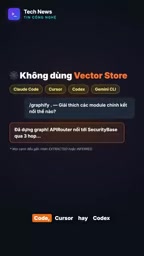
Graphify: The 151K-Star Open-Source Sensation That Turns Your Entire Codebase into an AI Knowledge Graph
Graphify, a 151K-star open-source tool, turns your entire codebase into a knowledge graph for AI Agents to query directly. Supports 40+ languages, 20+ AI assistants, local 30-second interactive code maps, zero-token builds, and unified Markdown, PDF, image, and audio ingestion.

Gemini 4 Neon vs Claude Opus 5.5: Who Wins Across Five Real-World Tasks?
Bilibili creator tests Gemini 4 Neon vs Claude Opus 5.5 across 3D video, games, design, writing, and advice. Neon matches Opus daily, but 3D and design still lag.

Former Huawei Genius Youth Open-Sources AI Agent Guide: 90+ Hands-On Case Studies
Former Huawei Genius Youth Li Bojie open-sources AI Agent Book, the most systematic Chinese Agent learning repo on GitHub, with 90+ runnable examples covering context compression, memory frameworks, MCP tool calling, prompt injection attack and defense, and other enterprise-level hands-on content.