Grasp-TAGS: Critic Distillation Enables Task-Aware Grasp Selection
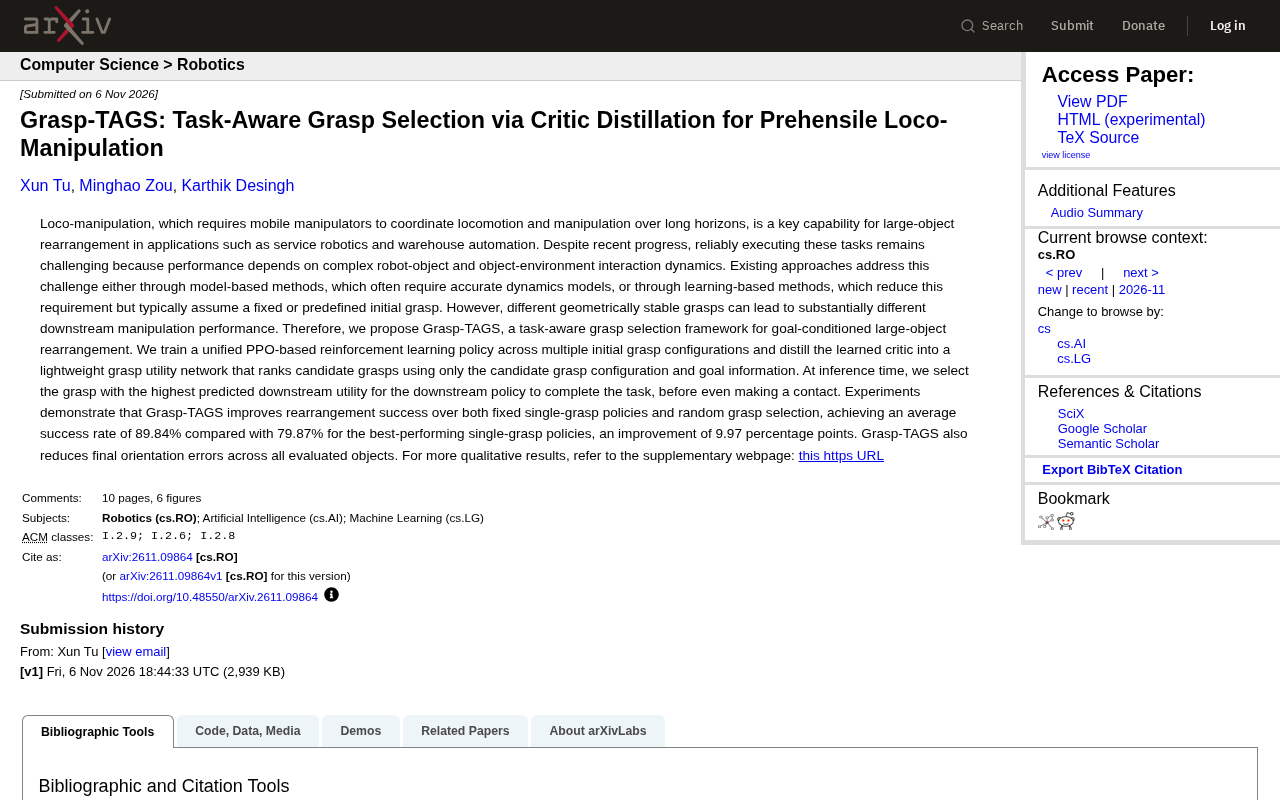
Grasp-TAGS uses critic distillation to learn a grasp utility network for task-aware grasp selection in loco-manipulation.
Grasp-TAGS is a task-aware grasp selection framework for large-object rearrangement in loco-manipulation. To address the shortcomings of fixed initial grasps or reliance on precise dynamics models, it first trains a PPO policy covering multiple grasps, then distills its critic into a lightweight grasp utility network that predicts downstream utility from candidate grasp and goal information alone. At inference, the robot ranks candidates and selects the highest-utility grasp before contact. Simulations show an average success rate of 89.84%, 9.97 points above the best single-grasp strategy, with reduced final orientation error. The method requires no precise model and is computationally efficient, but has not yet been validated on real robots.
Introduction
In service robotics and warehouse automation, mobile manipulation robots need to coordinate locomotion and manipulation to accomplish large-object rearrangement. These loco-manipulation tasks require the robot not only to grasp objects stably but also to maintain control of the object during subsequent movement and placement. However, real-world object-robot and object-environment interaction dynamics are highly complex, making reliable execution difficult. Existing methods either rely on precise dynamics models (model-based approaches) or adopt learning-based methods that typically assume a fixed or predefined initial grasp. But geometrically stable grasps can lead to significantly different downstream manipulation performance. To address this, researchers propose Grasp-TAGS, a task-aware grasp selection framework for goal-conditioned large-object rearrangement.
Problem Background: Why Grasp Selection Matters
In loco-manipulation tasks, grasping is the key link connecting locomotion and manipulation. Traditionally, many learning-based methods fix an initial grasp and then train a policy to complete the subsequent task. The limitation of this approach is that different grasps, while all stably holding the object, can lead to vastly different downstream motion trajectories, obstacle-avoidance difficulty, and placement precision. For example, grasping one side of an object may make the robot more prone to collisions in narrow passages, while grasping another side may facilitate more precise placement. Therefore, ensuring grasp stability alone is insufficient; the impact of the grasp on downstream tasks must also be considered.
Existing methods either require precise dynamics models to evaluate grasps or simply ignore the grasp selection problem. Grasp-TAGS attempts to learn the downstream utility of grasps in a model-free, data-driven manner.
Goal-conditioned reinforcement learning refers to policies that depend not only on the current state but also take a goal state or goal description as input, enabling them to accomplish diverse tasks. In loco-manipulation, the goal typically specifies the desired pose (position and orientation) of the object. Goal-conditioned formulation allows a single policy to generalize to different goals, but it also increases learning difficulty because the policy must understand the difference between the goal and the current state. Grasp-TAGS incorporates goal information into the input of the grasp utility network, aligning grasp selection with the specific task goal rather than pursuing only geometric stability. This task-aware grasp evaluation is realized through goal-conditioned learning and is the key to its superiority over fixed-grasp strategies.
The Grasp-TAGS Method: Critic Distillation and Task-Aware Grasp Selection
The core idea of Grasp-TAGS is to use the critic in reinforcement learning to guide grasp selection. Specifically, researchers first train a unified PPO-based reinforcement learning policy covering multiple initial grasp configurations. During training, the critic network learns to evaluate the value of states (including grasp configuration and goal information). Then, they distill the learned critic into a lightweight grasp utility network that predicts the downstream utility of a grasp based solely on the candidate grasp configuration and goal information.
At inference time, the robot first uses the grasp utility network to rank all candidate grasps, selects the grasp with the highest predicted utility, and then executes the downstream policy to complete the task. The entire grasp selection process is completed before contacting the object, avoiding trial-and-error costs.
The key advantages of this approach are:
- Task-aware: Grasp selection considers the target task, not just geometric stability.
- Lightweight and efficient: The distilled utility network has low computational overhead and is suitable for real-time applications.
- No additional models required: No precise dynamics model is needed; everything is learned from data.
PPO (Proximal Policy Optimization) is a policy-gradient-based reinforcement learning algorithm widely adopted for its simplicity and training stability. It limits the magnitude of policy updates by clipping the importance sampling ratio, preventing training collapse. In Grasp-TAGS, PPO is used to train a unified policy network that simultaneously takes grasp configuration and goal information as input, thereby covering multiple initial grasps. During training, the critic network estimates the state value, i.e., the expected return obtainable from the current state onward. Since the critic is aware of the grasp configuration and goal, its value estimate implicitly captures the impact of the grasp on downstream tasks. Distillation is a technique for transferring knowledge from a large critic network to a smaller network, typically by minimizing the difference between their outputs. Grasp-TAGS uses distillation to obtain a lightweight utility network that depends only on grasp configuration and goal, enabling fast evaluation of candidate grasps at inference time without running the full policy.
Experimental Results: Significant Improvement in Rearrangement Success Rate
Researchers evaluated Grasp-TAGS in a simulated environment. Experiments show that compared with fixed single-grasp strategies and random grasp selection, Grasp-TAGS significantly improves the rearrangement success rate. Specifically: the average success rate reaches 89.84%, compared with 79.87% for the best single-grasp strategy, an improvement of 9.97 percentage points. In addition, Grasp-TAGS reduces the final orientation error on all evaluated objects, indicating that grasp selection affects not only success rate but also manipulation precision.
These results validate the importance of grasp selection for downstream task performance and demonstrate the effectiveness of the critic distillation method.
Limitations and Future Directions
Despite its strong performance, the current work has some limitations. Experiments were conducted only in simulation and have not yet been validated on real robots. Real-world noise and uncertainty may affect the generalization ability of the grasp utility network. In addition, the method assumes that the set of candidate grasps is given in advance; how to generate high-quality candidate grasps still depends on other modules. Future work can extend the method to more diverse objects and tasks and explore deployment in real environments.
Conclusion
Grasp-TAGS achieves task-aware grasp selection through critic distillation, providing an efficient solution for large-object rearrangement in loco-manipulation. Its core innovation lies in using a reinforcement learning critic to evaluate the downstream utility of grasps and distilling it into a lightweight network, enabling selection of the optimal grasp before contact. Experimental results show that the method outperforms baselines in both success rate and orientation error, offering new ideas for future research.
More qualitative results can be found on the supplementary webpage: https://rpm-lab-umn.github.io/Grasp-TAGS-web-page/
Related articles
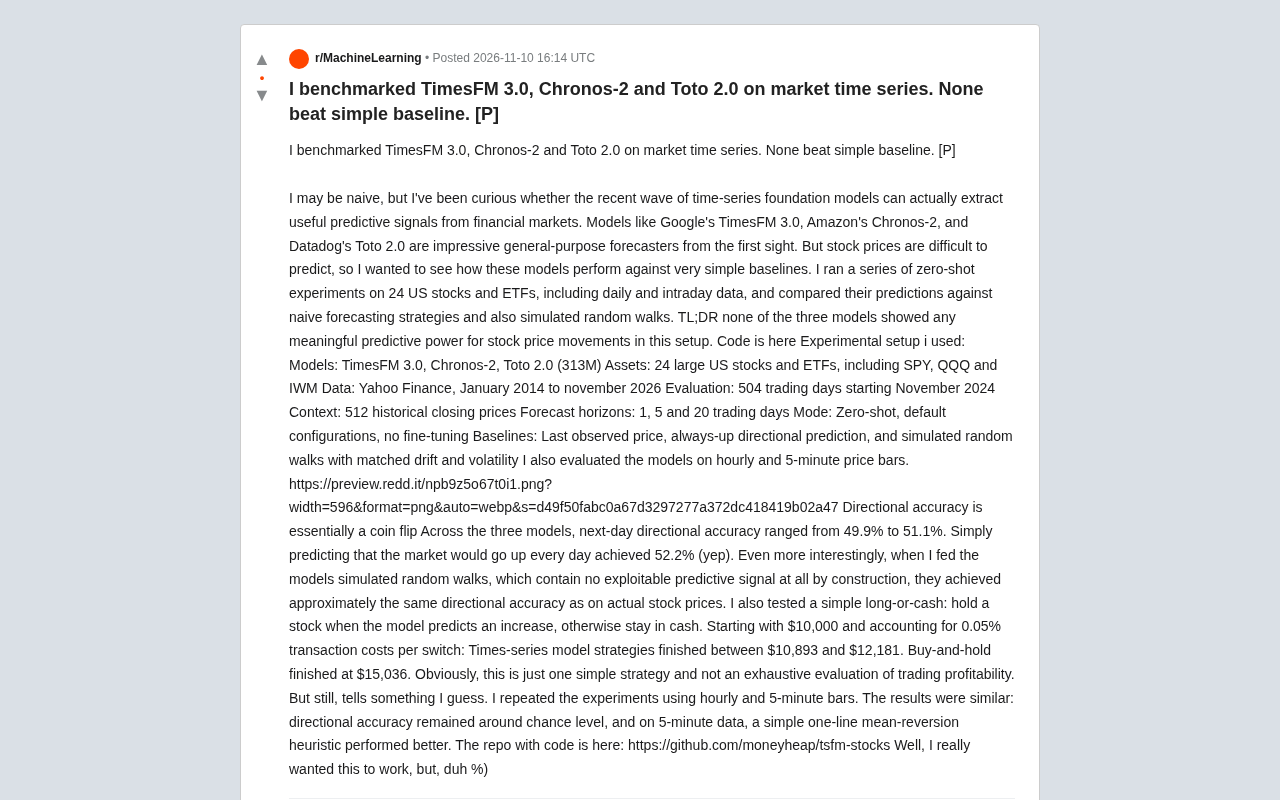
Putting TimesFM 3.0, Chronos-2, and Toto 2.0 to the Test: Time-Series LLMs Can't Beat Simple Baselines
A developer's zero-shot benchmark of TimesFM 3.0, Chronos-2 and Toto 2.0 on 24 U.S. stocks and ETFs: directional accuracy of just 49.9%-51.1%, and simulated trading underperformed buy-and-hold. Time-series foundation models show no edge over simple baselines on financial data.
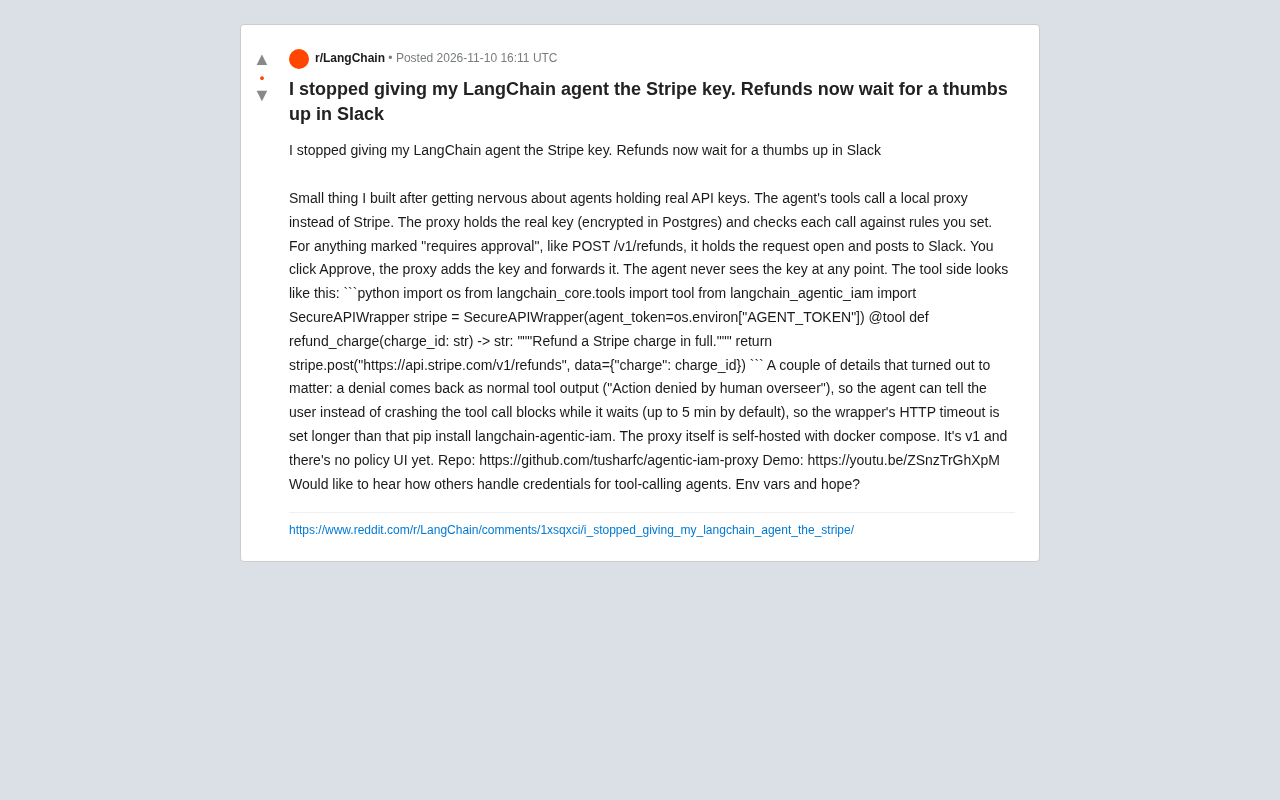
LangChain Agents No Longer Hold Stripe Keys: Refunds Require Slack Approval
A developer shares a credential management approach for LangChain agents: agents don't hold Stripe keys, and sensitive operations like refunds are forwarded through a local proxy and only executed after human approval in Slack, with code examples and engineering details.
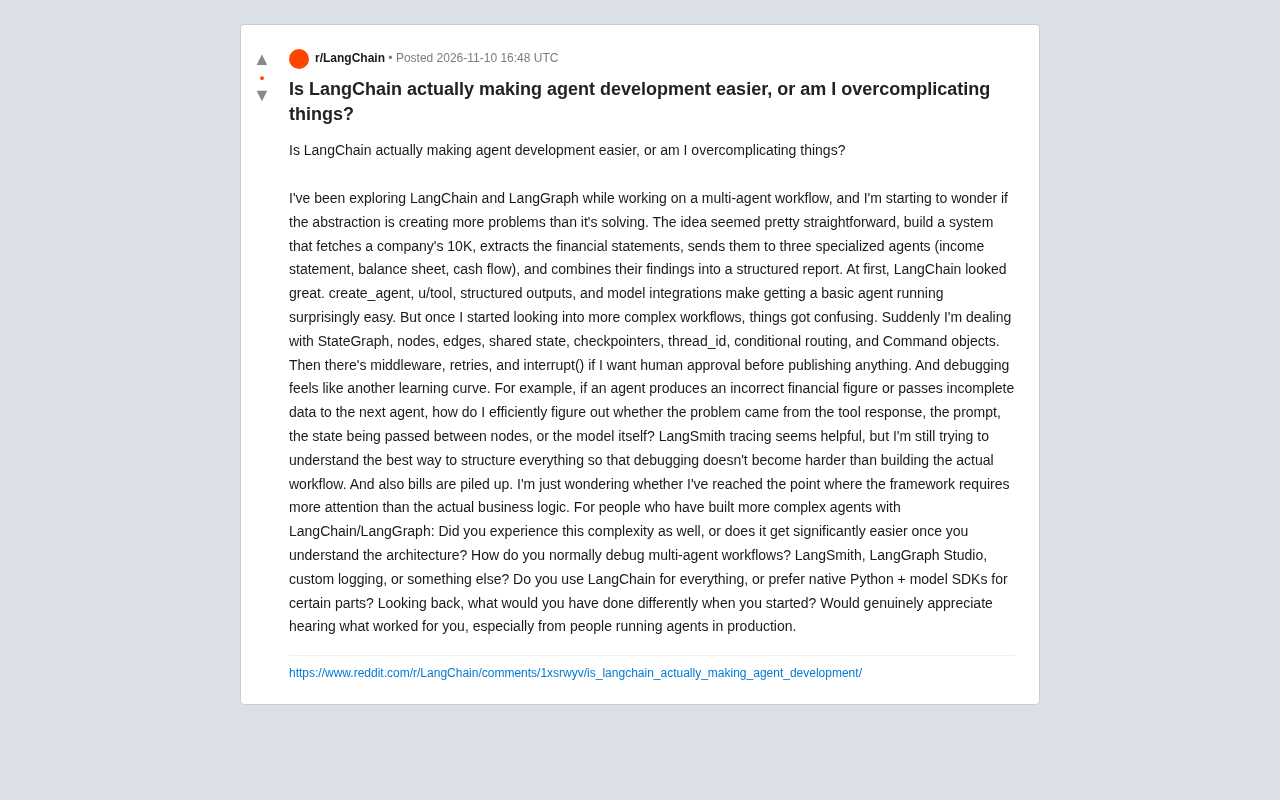
Does LangChain Really Make Agent Development Easier? A Developer Reflects on the Cost of Abstraction
A Reddit developer reflects on the abstraction cost of LangChain and LangGraph in multi-agent workflows: easy to start, but StateGraph, state management, debugging, and cost control add new complexity. The discussion covers debugging methods, whether to mix native Python + model SDKs, and production trade-offs.