Griddy McGridFace: A Free, Open-Source Offline Photo Collage Tool

A free, open-source offline photo collage tool built with Tauri + Rust for real-world print needs.
Griddy McGridFace is a free, open-source desktop collage tool built on Tauri 2 and Rust. It offers face detection, print-quality export (PNG/JPEG/WebP/PDF), batch import, color sorting, and per-photo controls—all processed offline with no watermarks, across Linux, Windows, and macOS.
A Tool Born from a Real Need
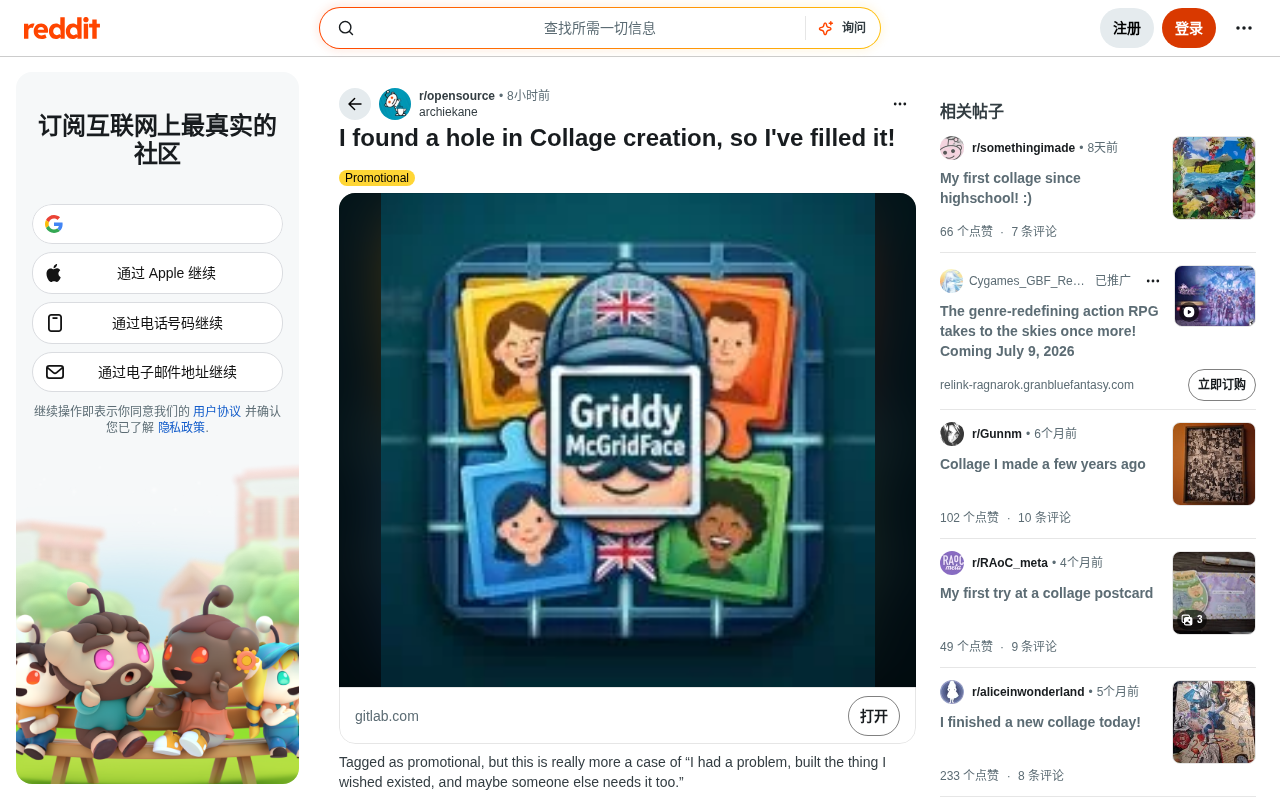
Many great open-source projects start with a simple personal pain point, and Griddy McGridFace is a textbook example. Its developer shared the origin story on Reddit: his wife wanted to make a sublimation-printed bar mat for her father's 70th birthday, which required arranging a bunch of photos into a grid, adjusting the alignment, and exporting it at print quality.
Sublimation printing is a printing process that uses special dyes vaporized under high heat to penetrate directly into polyester fibers or coated materials. Unlike ordinary inkjet printing, sublimation dye molecules transition directly from solid to gas at temperatures around 200°C, seeping into the material's surface to form saturated, wash-resistant, and scratch-resistant durable patterns—which is exactly why bar mats, mugs, custom T-shirts, and similar gifts often rely on this process. For this reason, sublimation printing has strict requirements for source files: typically a resolution above 300 DPI, the correct color mode (sRGB), and a canvas that precisely matches the dimensions of the target item. These requirements are exactly what ordinary online collage tools struggle to meet.
What sounds like the simplest of needs led the developer to a surprising realization: in today's software ecosystem, a truly "what-you-see-is-what-you-get" desktop collage tool is astonishingly hard to find.
An Overlooked Gap in the Market
The internet is flooded with all kinds of online tools, subscription-based services, watermark "trap" apps, and software that is "almost usable but always falls just short." Yet a pure, straightforward, local desktop tool that can generate print-ready collages was unexpectedly absent.
Over the past decade, the SaaS (Software as a Service) subscription model has swept through nearly every software category. Adobe converted Photoshop and Illustrator from perpetual licenses to the Creative Cloud subscription model, sparking widespread user dissatisfaction and directly fueling the explosive growth of perpetual-license alternatives like the Affinity suite. In the "lightweight tool" space, this trend is even more extreme: countless features that would have been perfectly suited to simple local programs are instead packaged as "AI-powered cloud solutions," forcibly tied to account registration and subscription payments. While this business strategy boosts a vendor's LTV (customer lifetime value), it creates a great deal of unnecessary friction in the user experience. This kind of market failure has given rise to a wave of "rage-driven development" open-source projects, and Griddy McGridFace is one of them—it was precisely this "gap that no one would fill" that motivated the developer to build the free collage tool he'd always wanted.
What Griddy McGridFace Can Do
This open-source collage tool's feature list revolves around three core principles: offline, high-quality, and easy to use.
Core Features
- Batch import: Drag in an entire folder of images at once, sparing you the hassle of adding them one by one.
- Custom page sizes: Support for any page size to meet different printing specifications.
- Smart layout shuffling: Randomly generate multiple collage layouts with one click, so you can quickly compare arrangement options.
- Print-quality export: Output at full print quality, with support for PNG, JPEG, WebP, and PDF formats.
Thoughtful Details
The most noteworthy feature is face detection. The tool can recognize faces in photos and keep them in reasonable positions when cropping—in the developer's words, it "won't cut anyone's head off."
Traditional auto-cropping algorithms typically rely on simple center-cropping or saliency detection, which can easily push a subject's face to the edge of the frame or even out of view. Modern face detection approaches are often based on Haar feature cascade classifiers, MTCNN, or lightweight deep learning models (such as MobileNet), which can perform inference in real time on a local CPU. Griddy McGridFace runs face detection locally, meaning all biometric data never leaves the user's device—a natural advantage for privacy protection. This "smart crop-aware" design makes portrait compositions in the resulting collages look much more natural, and it's one of the key experiential differences that sets this tool apart from simple tiling collage scripts.
In addition, users can lock image positions, individually scale and adjust each photo, swap cell positions, and set a larger center image as a visual focal point. The project supports saving project files, making it easy to continue editing at any time.
Latest Version Highlights
The latest update further improves usability:
- Drag-and-drop import
- Faster layout generation for large numbers of images
- Per-photo fit controls
- Autosave/recovery
- Color sorting, including dark-to-light ordering and rainbow gradient arrangements across pages
Color sorting is a rather creative feature—it turns a photo collage into more than just a stack of images, giving it an orderly visual aesthetic.
Tech Stack and Cross-Platform Support
Griddy McGridFace is built on the Tauri 2 framework, with a Rust backend and a SvelteKit frontend—following a modern, lightweight approach.
Why Tauri + Rust
Compared to the traditional Electron framework—which renders its interface by bundling a full Chromium browser engine, causing even simple apps to consume hundreds of MB of memory and produce installers over 100MB—Tauri takes a completely different strategy: it calls the operating system's built-in WebView component (WebView2/Edge on Windows, WKWebView on macOS, WebKitGTK on Linux) solely to render the UI, while the core logic is handled by the Rust backend. This means Tauri app installers are typically just a few MB, with dramatically lower memory usage.
For a tool like Griddy McGridFace that needs to process large volumes of high-resolution images, Rust's zero-cost abstraction and memory safety model effectively prevent memory leaks while fully leveraging multi-core CPUs to process image tasks in parallel—a very sensible choice. SvelteKit's compile-time optimizations, meanwhile, make the interface interactions even smoother.
Full Platform Coverage
The project provides builds for all three major platforms: Linux, Windows, and macOS, delivering truly cross-platform offline use. All photo processing is done locally, with no need to upload anything to a server—making it especially friendly to privacy-conscious users.
An Embodiment of the Open-Source Spirit
Griddy McGridFace is fully open source, and the developer sincerely welcomes feedback, bug reports, feature suggestions, and help from users who "likewise miss good offline collage software."
"I ran into a problem, so I built the tool I wished existed—and maybe others need it too." This mindset is exactly what makes the open-source community so moving. It isn't about monetization or traffic; it stems purely from a real-life scenario: making a birthday gift for a father-in-law.
Real Value for Everyday Users
- Free and watermark-free: No need to pay for a one-off collage or put up with watermark interference.
- Privacy first: Photos stay local the entire time, so sensitive family photos never have to be uploaded to the cloud.
- Professional output: Print-quality export truly suited to professional scenarios like sublimation custom printing.
Conclusion
The story of Griddy McGridFace is a microcosm of the open-source spirit: a specific need overlooked by mainstream commercial software, filled by a technically capable user with his own hands. It may not be the most fully featured collage software, but it's honest, straightforward, and genuinely respects its users.
In an era dominated by subscriptions and cloud services, a desktop tool that stubbornly stays offline, open source, and cross-platform feels all the more precious. If you've ever been frustrated at not being able to find a hassle-free free collage tool, it's worth giving this project—with its slightly silly name but rock-solid functionality—a try on GitHub.
Key Takeaways
Related articles
ajisai: A Preset Management Tool for Unifying Rules and Prompts Across AI Coding Assistants
ajisai is a Go-based preset manager for AI coding assistants like Cursor and Claude Code. Package rules and prompts once, deploy everywhere. Early-stage but promising.
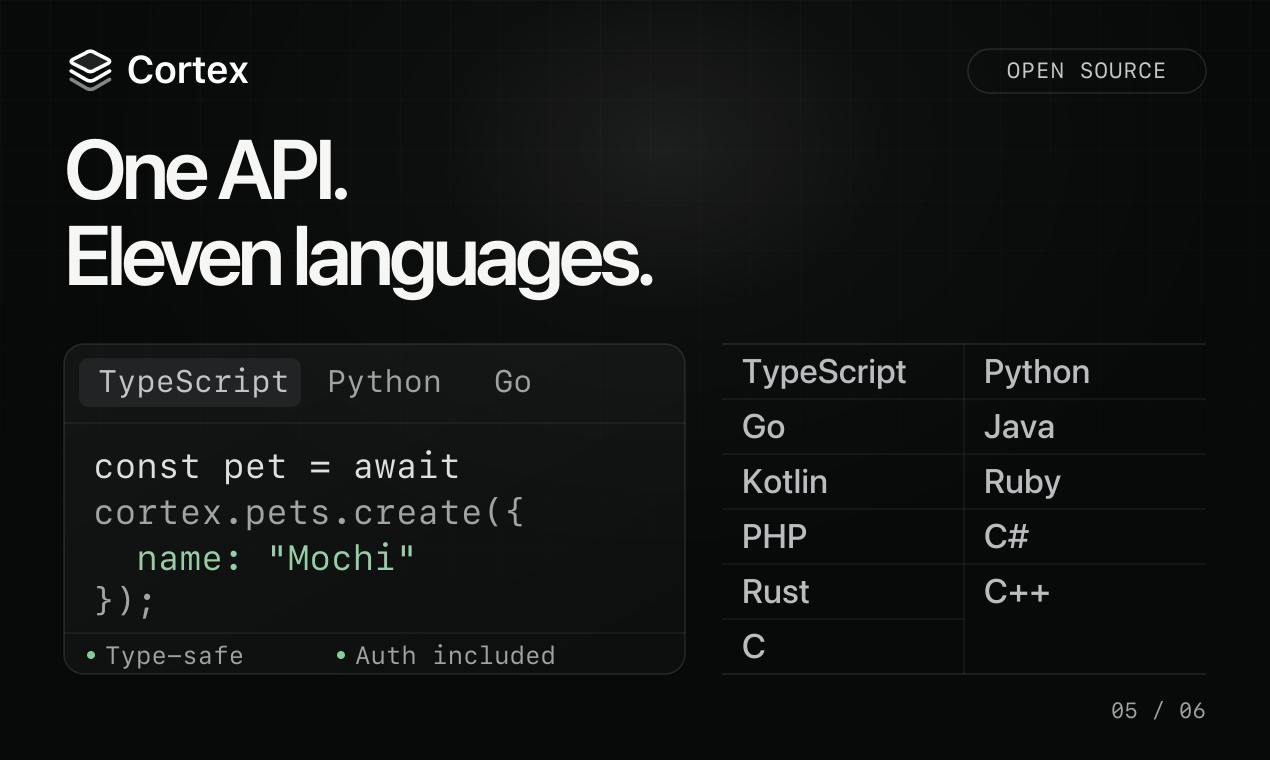
Cortex: Convert API Specs into Docs, SDKs, and MCP Servers in One Click
Cortex is an open-source tool that converts OpenAPI, GraphQL, gRPC and more into interactive docs, typed SDKs in 11 languages, and MCP servers for AI agents.
ABrush: An AI Studio Built for Digital Artists
ABrush is an AI studio for digital artists, ranked #4 on Product Hunt. It embeds leading AI models into existing workflows to remove repetitive tasks, speed up iteration, and keep artists in control.