Grok 4.1 vs GPT-5 vs Claude 4.5 Real-World Comparison | 2025 Model Selection Guide

2025's top four AI models battle it out as multi-model collaboration becomes the new efficiency paradigm
AI model competition reaches fever pitch in 2025, with GPT-5, Grok 4.1, Claude 4.5, and Gemini 3 Pro each bringing unique strengths. This article provides a head-to-head comparison of each model's core advantages, proposes multi-model collaboration as a more efficient approach than relying on any single model, warns about security and compliance risks of free aggregation platforms, and recommends users choose the right tool based on specific scenarios.
2025 AI Model Battle Royale: Grok 4.1 Officially Enters the Arena
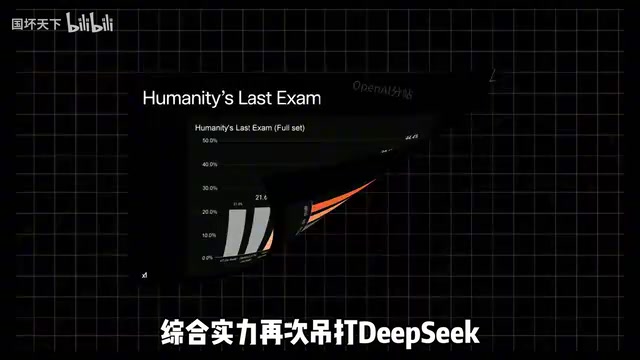
2025's AI landscape can be summed up in one phrase — a clash of titans. Early in the year, DeepSeekAd burst onto the scene, forcing OpenAI to rush out GPT-5 overnight, crushing DeepSeek across various benchmarks and reclaiming the top spot. But before the dust could settle, Musk dropped another bombshell — Grok 4.1 officially launched, with claims of overall superiority over all competitors.
DeepSeek is an open-source large language model developed by the Chinese AI company DeepSeek. Its DeepSeek-R1, released in early 2025, achieved reasoning capabilities approaching GPT-4 levels at extremely low training costs, sending shockwaves through the entire AI industry. This event, dubbed the "DeepSeek Moment," not only triggered massive volatility in US tech stocks but also forced leading companies like OpenAI to accelerate their product iteration cycles. DeepSeek's success proved that through technical approaches like Mixture of Experts (MoE) architecture and reinforcement learning, high-performance models can be trained with limited compute resources, shattering the industry consensus that "more compute is everything."
Meanwhile, Google's Gemini 3 Pro and Anthropic's Claude 4.5 have continued their iterative upgrades. Competition among top-tier AI models has reached a fever pitch, and for everyday users, how to access these models at low cost or even for free is the most practical question.
GPT-5, Grok 4.1, Claude 4.5, Gemini 3 Pro: Head-to-Head Comparison
GPT-5: OpenAI's Powerful Counterattack
Under pressure from DeepSeek, OpenAI rapidly launched the GPT-5 series, including multiple versions such as GPT-5 Pro. Based on real-world testing data, GPT-5 shows significant improvements in reasoning ability, code generation, and multimodal understanding, firmly reclaiming its throne in the large model space.
GPT-5's Core Strengths:
- Major leap in reasoning and logical analysis capabilities
- Code generation accuracy among the industry's top tier
- More mature and stable multimodal understanding (text-image, audio)
Grok 4.1: Musk's xAI Ambition Realized
The Grok series is the flagship product of xAI, Musk's AI company. Founded by Musk in 2023 and headquartered in San Francisco, xAI's core mission is to "understand the true nature of the universe." Its technical team brings together researchers from top institutions including DeepMind, OpenAI, and Google Research. The Grok model series has undergone rapid iteration from 1.0 to 4.1, and xAI has built a supercomputing cluster called "Colossus," reportedly equipped with over 100,000 NVIDIA H100 GPUs to provide massive computational power for model training.
The release of Grok 4.1 marks another capability leap for xAI. The company claims its overall performance surpasses multiple competitors, with particularly impressive results in real-time information retrieval and long-text processing.
Grok 4.1's Core Strengths:
- Real-time web access for the latest information with exceptional timeliness — can directly tap into X platform's real-time data stream to access the latest social media discussions, news events, and public opinion
- Excellent long-text processing and summarization capabilities
- Deep integration with X platform (formerly Twitter), offering unique advantages in social data analysis
Claude 4.5: The Benchmark for Safety and Long Context Processing
Anthropic's Claude 4.5 has secured its position with outstanding safety features and ultra-long context processing capabilities. The context window refers to the maximum text length a large language model can process in a single conversation, typically measured in tokens (1 token ≈ 0.75 English words or 0.5 Chinese characters). Early GPT-3.5 had a context window of only 4K tokens, while top models in 2025 commonly support 100K tokens or more. The Claude series has consistently led in this area — a larger context window means the model can read an entire book, analyze a complete codebase, or process extensive meeting notes in one go without "forgetting" earlier content.
In scenarios requiring processing of large documents and maintaining narrative coherence, Claude 4.5 often outperforms its competitors. For enterprise applications involving privacy-sensitive data, Claude 4.5 is also the safer choice — Anthropic is known for its "Constitutional AI" methodology, which constrains model behavior through an explicit set of principles, balancing safety and helpfulness.
Gemini 3 Pro: Pioneer in Multimodal Fusion
Google's Gemini 3 Pro continues to push forward in multimodal fusion, demonstrating unique advantages in cross-modal tasks such as image understanding and video analysis. Backed by the Google ecosystem, Gemini 3 Pro also performs impressively in Retrieval-Augmented Generation (RAG) and knowledge retrieval scenarios.
RAG (Retrieval-Augmented Generation) is a technical architecture that combines information retrieval with text generation. Traditional large language models derive all their knowledge from training data, leading to outdated knowledge and "hallucination" issues (generating content that sounds plausible but is actually incorrect). RAG works by first retrieving relevant document fragments from external knowledge bases before generating answers, injecting the retrieved information as context into the prompt so the model generates responses based on real data. Google, with the world's largest search engine and knowledge graph, has a natural advantage in practical RAG applications — this is a key reason why Gemini 3 Pro excels in knowledge-intensive tasks.
With four major models competing head-to-head, 2025 has become the most intensely competitive year in AI model history.
Multi-Model Collaboration in Practice: More Efficient Than Sticking to a Single Model
A key trend in current AI applications is multi-model collaboration — different models have different strengths, and combining them often yields results far superior to any single model.
The core concept of Multi-Model Orchestration originates from microservices architecture in software engineering — breaking complex tasks into subtasks, assigning each to the most capable model, and then integrating the outputs. In technical implementation, this is typically managed through an API orchestration layer (frameworks like LangChain, AutoGen, etc.) that handles the calling sequence and data flow between different models. This approach not only lets each model handle only the task types it excels at, but also provides cost optimization opportunities — use lightweight models for simple tasks, and only invoke premium models for complex ones.

Case Study: GPT-5 + Claude 4.5 Collaborative Novel Writing
Taking novel writing as an example, you can first have GPT-5 generate original character designs — it produces highly dimensional and distinctive characters, laying out personality, background, motivations, and other elements in full. Then switch to Claude 4.5 and have it write a complete novel chapter based on the character designs and a given story direction.

The core advantages of this workflow:
- GPT-5 excels at creative divergence: Tasks requiring imagination like character design and world-building are best suited to it
- Claude 4.5 excels at long-text coherence: It perfectly inherits contextual memory and maintains narrative consistency; its ultra-long context window ensures no contradictions across tens of thousands of words
- Grok 4.1 excels at real-time information integration: Content creation requiring the latest news and information is its forte, such as writing commentary or news analysis on current events
In one sentence: assign the right task to the most capable model, and you'll maximize each AI's strengths. This is the key approach to efficient AI usage in 2025.
Channels for Free Access to Top AI Models & Pitfalls to Avoid
Several aggregation platforms have emerged that claim to let users access full-featured DeepSeek, all GPT models, Grok 4.1, Claude 4.5, and other top models from a single site.

However, there are several pitfalls you should be aware of:
- Questionable security: Free aggregation sites often lack adequate data security and privacy protection — never enter sensitive information
- Poor service stability: Response speed and availability of free nodes typically don't match official channels
- High compliance risk: Some platforms may connect through unofficial APIs, risking sudden shutdowns
- Reduced functionality: Free versions may have limitations on context length, generation speed, and other features
The risks of unofficial API access deserve special attention: this refers to third-party platforms accessing model capabilities without formal authorization from the model provider, through reverse engineering, shared account pools, or gray-market channels. User input data may be intercepted or stored by intermediary platforms, causing privacy breaches; these services violate model providers' terms of service and may be blocked at any time causing service interruptions; some platforms may even tamper with model outputs or inject advertising content. For enterprise users, using such services may also violate data compliance requirements (such as GDPR, China's Data Security Law, etc.), creating legal risks.
If you're just doing light experimentation and learning, these platforms can serve as an entry point. But for professional work scenarios, it's recommended to use each model's official channels to ensure output quality and data security.
2025 AI Model Selection Guide: Choosing Right Matters More Than Choosing Expensive
2025's AI model competition has evolved from comparing individual model capabilities to a comprehensive battle of ecosystems. GPT-5, Grok 4.1, Claude 4.5, and Gemini 3 Pro each have their own strengths — no single model dominates across all dimensions.
Quick Reference Table for Best Use Cases:
| Model | Best Suited Scenarios |
|---|---|
| GPT-5 | Reasoning analysis, code generation, creative divergence |
| Grok 4.1 | Real-time information, long-text processing, social data analysis |
| Claude 4.5 | Long document processing, coherent writing, safety-sensitive tasks |
| Gemini 3 Pro | Multimodal tasks, image/video understanding, knowledge retrieval |
For everyday users, the smartest strategy isn't to bet on a single model, but to choose the most appropriate tool for each task scenario. Multi-model collaboration will become the mainstream paradigm for future AI applications, and knowing how to efficiently switch between and combine different models will become an increasingly important form of digital literacy. From a broader perspective, AI competition in 2025 is essentially a multiplicative effect of "model capability × data ecosystem × application scenario" — raw model parameter scale is no longer the decisive factor. Whoever can provide the optimal end-to-end solution in specific scenarios will win users.
Key Takeaways
- Musk launches Grok 4.1, joining the top-tier AI model battle alongside GPT-5, Claude 4.5, and Gemini 3 Pro
- Multi-model collaboration emerges as a new trend, with different models excelling in creative divergence, long-text coherence, and real-time information integration
- While free aggregation platforms lower the barrier to entry, they carry security, stability, and compliance risks
- AI competition in 2025 has evolved from single-model capability comparison to a comprehensive ecosystem battle — users should choose tools based on specific scenarios
Related articles
 Product Reviews
The Programmer's Desk Setup Guide: Building a Workspace That Feels Like Home
Discover how programmers build productive, comfortable workspaces. From multi-monitor setups to ergonomic design, explore the desk philosophy that drives focus and flow.
 Product Reviews
Qoder vs Cursor Real-World Comparison: Which $20/Month AI IDE Is Better?
Hands-on comparison of Qoder vs Cursor AI IDEs: Agent autonomy, human interaction count, and architecture decisions. Qoder needed only 2 interactions vs Cursor's 8.
 Product Reviews
Cursor Cloud Agent Demo: Eliminating Bottlenecks Across the Entire Software Development Lifecycle
Deep analysis of Cursor's Cloud Agent demo showing how cloud VMs, automated test artifacts, and a full-chain control plane systematically eliminate human bottlenecks across the software development lifecycle.