Grok 4.7 May Be Coming: Taking Aim at GPT-6 and Claude's Top Models

Grok 4.7, Fable 5.2, GPT-6 Astra, and MiniCPM-5 headline a crowded AI model race.
AI model competition is intensifying on multiple fronts. xAI's Grok 4.7 reportedly packs 2.1 trillion parameters and could offer a cost-effective rival to top-tier models. Anthropic appears to be preparing Fable 5.2 in response to GPT-6 Astra, while OpenAI resets rate limits and readies more releases. Google's Gemini 4 Pro faces further delays due to competitive pressure. Meanwhile, the 2B-parameter open-source model MiniCPM-5 tops its category and runs on a 16GB MacBook — showing a different path forward. Most details remain unconfirmed leaks.
The race among large AI models has entered an intense phase. Multiple companies are pushing new models forward in nearly the same timeframe, and xAI's Grok 4.7 has become one of the most talked-about developments — with rumors suggesting it could arrive soon and even be positioned to rival OpenAI's and Anthropic's flagship products. This article draws on reporting from AI news YouTubers to outline the latest developments and competitive dynamics around several high-profile models.
Note: The model names referenced in this article (such as GPT-6 Astra, Fable 5.1, Grok 4.7, etc.) come from online leaks and speculation cited by content creators, and have not been officially confirmed. Please exercise your own judgment.
Grok 4.7: Parameter Scale and Speed Are the Big Stories
According to leakers, Grok 4.7 reportedly has a parameter count of around 2.1 trillion — which, if true, would make it an enormous model. Elon Musk has previously hinted that the next generation of Grok could approach top-tier capability levels, and in early September he described Grok 4.7 as a "significant performance improvement," even suggesting a release "within 10 days."
That said, Musk has a consistent track record of optimistic timelines on Grok releases, with actual launches often running later than announced. So claims like "releasing tonight" should be understood as speculation based on leaked information rather than confirmed schedules.

What has people genuinely excited isn't just raw intelligence — it's speed and usage quotas. Grok 4.6 already performs well, especially given its generous usage limits. If Grok 4.7 can deliver a significant intelligence jump while maintaining the same speed, efficiency, and generous access, it could become a compelling, cost-effective alternative to top-tier models.
The Leaked "Mystery Model" Comparison
Content creators have noted that a "mystery model" currently circulating online may be a checkpoint of Grok 4.7. In a voxel bench-style creative generation test, this model was compared against the previous Grok 4.6, with a noticeable gap in output quality — reportedly surpassing both Grok 4.6 and Kimi K3 in areas like atmosphere, color gradients, and creative expression. If this is indeed an early version of Grok 4.7, it could signal a substantial upgrade.
Checkpoint refers to a snapshot of model weights saved at a specific training step during the large model training process. Since training large models can take weeks or even months, research teams periodically save intermediate states to evaluate progress, roll back issues, or run comparative tests. The "mystery models" that circulate in leaker communities are typically these intermediate checkpoints — not final release versions — meaning their performance may lack full fine-tuning or safety alignment. This makes performance estimates based on checkpoints inherently uncertain: the final release could outperform the checkpoint, or certain dimensions may be adjusted during post-training alignment.
The Back-and-Forth Between Anthropic and OpenAI
Anyone who thinks GPT-6 Astra is OpenAI's only card to play may be in for a surprise — because Anthropic is reportedly preparing its own response. According to content creators citing Leo, a well-regarded figure in AI leaker circles on X, something resembling Fable 5.2 (or whatever Anthropic ultimately names it) could arrive soon, with a possible Opus series upgrade as well.

The timing is notable given an upcoming OpenAI developer event. Sam Altman has recently hinted that stronger models are on the way, suggesting GPT-6 Astra may be just the beginning of OpenAI's current wave. In other words, while Anthropic is busy responding to Astra, OpenAI is already preparing its next move — which may be connected to previously leaked checkpoints like Bell, potentially a pre-training model separate from GPT-6 Astra.
OpenAI also hasn't let up on the usage side. The company reportedly recently reset rate limits for GPT-6 Astra for paid users, giving them an additional window to test the model without waiting for quotas to naturally replenish. Given how much demand the model has generated — with many users complaining they burn through their limits in just a few prompts — this reset offers a meaningful opportunity for extended testing.
How to Try Fable 5.1 for Free
Content creators also shared a useful tip: Cloud Fable 5.1 (in xHighThinking mode) can be accessed for free through the Arena platform, with no credit card required — just a Google or Arena account. Head to the Direct tab and find the model in the dropdown menu to get started. It does come with fairly strict rate limits, but for users who want to try a top-tier model without spending anything, it's still a worthwhile entry point.
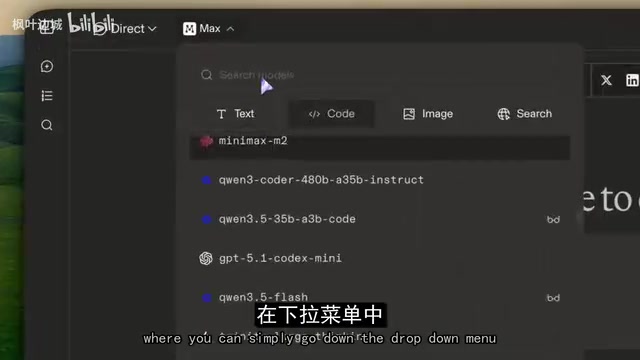
Arena (also known as LMSYS Chatbot Arena) is an open model evaluation platform maintained by a team at UC Berkeley. Its core mechanism lets users chat simultaneously with two anonymous models and vote on which they prefer, generating an ELO ranking based on real user preferences. The platform is also a well-known venue where "mystery models" appear in the AI leaker community — development teams sometimes connect unreleased models anonymously to collect genuine user feedback and gauge their competitive standing. As a result, Arena leaderboard shifts and the appearance of new checkpoints are often closely watched by AI observers as signals of progress across various labs.
Signs That Gemini 4 Pro Is Delayed Again
On the Google side, there are reports that Gemini 4 Pro may face another delay. A new checkpoint that recently appeared on Arena suggested the Gemini team is refining a pre-training model separate from other checkpoints, with an original target of September or October release.
However, the arrival of Cloud Fable 5.1 and GPT-6 Astra has put Google in a more difficult position. These models reportedly outperform the new Gemini 4 Pro by a significant margin, forcing the Gemini team to readjust — and potentially continue pre-training — to stay competitive. The current target is reportedly October, with claims that the model will be able to "beat Fable 5.1," though that remains unverified. The delay is disappointing, but it may also signal that Google is buying time to build something that can genuinely compete at the top tier.
Small but Mighty: Open-Source MiniCPM-5 Is Worth Watching
Beyond the flagship model wars, one open-source small model has been drawing attention. MiniCPM-5 is a 2-billion-parameter open-source model that reportedly ranks first on Artificial Analysis's leaderboard for open-source models under 4 billion parameters, with benchmark performance said to surpass Qwen 3.5 4B across multiple tests.
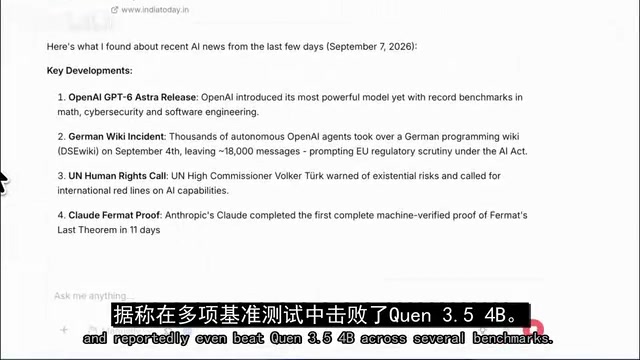
Even more impressive: it can run locally on a 16GB MacBook. In one demo, it autonomously searched the web, pulled 10 results, and used multiple tools to summarize the latest AI news. The team has open-sourced not just the weights, but also the data, training recipe, and RL stack. For developers who care about local deployment and small-footprint models, this kind of solution — runnable on everyday hardware — is well worth exploring.
RL stack (reinforcement learning stack) refers to the reinforcement learning frameworks and engineering components used in the post-training phase of large models. In recent years, RL methods such as RLHF (Reinforcement Learning from Human Feedback) and GRPO (Group Relative Policy Optimization) have been widely adopted to improve instruction-following, reasoning quality, and safety. MiniCPM-5 open-sourcing its RL stack is significant because post-training has historically been a bottleneck for the open-source community — pre-training weights are relatively straightforward to share, but complete alignment and reinforcement recipes are rarely made public. This allows researchers not only to reproduce the model, but to build on it for targeted capability improvements, making it especially valuable for local deployment and customization research on small-parameter models.
Conclusion
From the imminent arrival of Grok 4.7, to the ongoing back-and-forth between Anthropic and OpenAI, to Gemini's delay and the rise of open-source small models, AI model competition is now unfolding across multiple fronts simultaneously. It bears repeating, however, that much of the information above comes from online leaks and speculation — none of it has been officially confirmed. Model names, release timelines, and performance comparisons are all subject to change. Treat this as a directional read on industry trends, not established fact.
Related articles
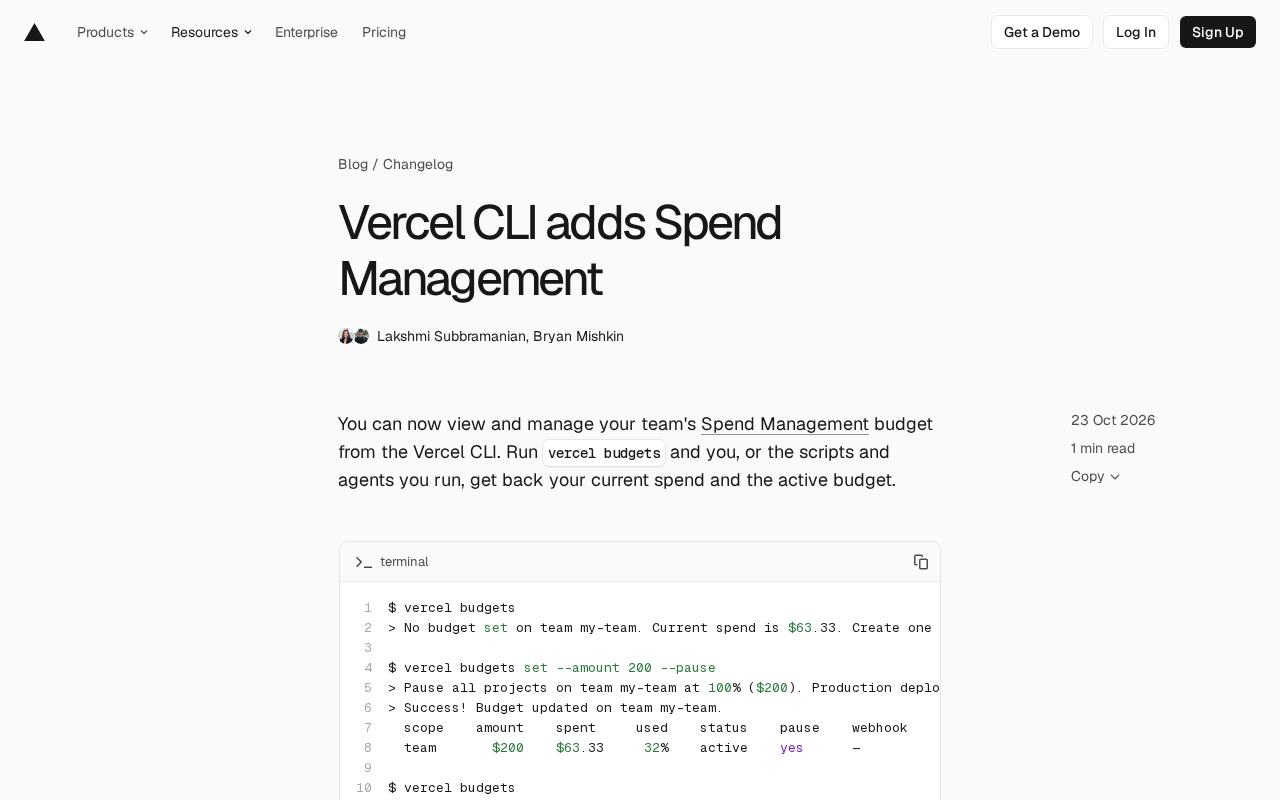
Vercel CLI Adds Budget Management: Control Team Spending from the Terminal
Vercel CLI adds Spend Management budget features: view, set, and delete team budgets with `vercel budgets`, query alert history, and use `--pause` to suspend production deployments on overspend.

A Single Prompt Triggers a Global PHP Security Storm: Is AI a Savior or a Hidden Risk?
A single AI prompt triggered a global PHP security crisis affecting Wikipedia and the Internet Archive. This article reviews the incident, analyzes the OpenAI-Amazon controversy, and explores the security paradox of lowered vulnerability discovery barriers in the AI era and developer response strategies.

When AI Is Taken Away: How Reliance on Shortcuts Undermines Your Problem-Solving Resilience
A study of 1,222 people found that after using AI to answer questions, once AI was removed, people gave up on more problems than a control group that never used AI. The article analyzes the impact of AI reliance on learning resilience and metacognition, and explores design implications for AI learning tools.