Grok 4.7 Real-World Analysis: How Is Musk's Catch-Up Game Going?

Grok 4.7 prioritizes value over frontier dominance — close but not quite there on benchmarks.
xAI's Grok 4.7 is positioned as its strongest model for coding and knowledge work, holding the same low price as its predecessor ($2/M input tokens) while competitors charge two to five times more. Benchmark results show a consistent "one step behind the frontier" profile: 71% on DeepSuite and top marks in legal work, but only 38% on Terminal Bench, lagging well behind Fable 5.1 and Astra in agentic coding. Musk's prediction of "surpassing all models" didn't hold up; performance is roughly on par with Fable 5. A 500k context window and higher per-task token costs are real practical limitations. Overall, Grok 4.7 is a highly cost-competitive option — just not the new frontier benchmark.
Grok 4.7 Launch: An Iteration That Prioritizes Value
Grok 4.7 is officially live, positioned by xAI as its strongest model for coding and knowledge work. The official blog is straightforward: it can work longer on difficult tasks, check its own outputs more carefully, and comes with the best-calibrated safety guardrails the company has shipped to date. Crucially, the price is identical to the previous Grok 4.6 — $2 per million input tokens and $6 per million output tokens.
That pricing is the key to understanding Grok 4.7. It's not a frontier model, but it sits just one step behind the frontier at a price far below its competitors. For context, GPT 5.6 Sol costs more than twice as much, Fable 5.1 is over five times the price, and GPT 6 Astra reaches five times as well. As the video's author puts it, plenty of industries are willing to pay several times more for the best possible answer — but an equally large number of industries simply want to automate knowledge work and aren't chasing that last fraction of a percentage point in performance.
One important backdrop: xAI has stockpiled enormous compute capacity, having over-invested early while struggling to ship a frontier model capable of driving demand. That supply-demand imbalance actually gives it the flexibility to keep prices lower.
Did Musk's Predictions Pan Out?
One interesting angle in this discussion is Musk's prior public predictions. About a week ago he tweeted that Grok 4.7 should be roughly on par with Opus 5.0 (not 5.1). In an even bolder earlier statement, he claimed Grok 4.7 would "surpass all current models."
Looking at real-world results, Musk's "on par with Opus" prediction holds up reasonably well, but "surpassing all models" clearly didn't happen. The author's read: Grok 4.7 is roughly close to Fable 5 in capability, but nowhere near Fable 5.1. The pattern of aggressive timelines and aggressive predictions is quintessentially Musk — and while this one didn't fully land, the author also admits he "wouldn't bet against him in the long run."
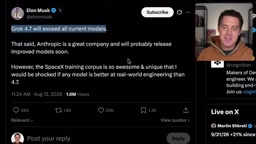
The delay itself has a story. Grok 4.7 was originally slated to launch about a week and a half earlier, with Musk explaining it needed "a few more days in the oven" because the model was potentially "doing too much on the penalty side or something," still showing issues with abandoning hard problems prematurely rather than working through them, and with insufficient self-verification. The author is supportive of letting the model bake a bit longer.
Benchmarks: Near the Frontier, but Not Across the Board
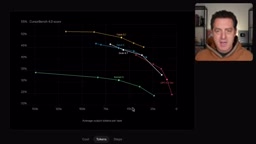
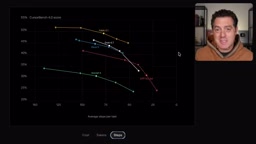
Grok 4.7 shows a clear "close but not the top" profile across multiple benchmarks. On CursorBench 4.0 (note that Cursor is now owned by xAI, creating a potential conflict of interest), Grok 4.7 scores 46.3% at maximum thinking intensity — slightly below Opus — but running the same test costs roughly half as much. A notable detail: the gap between low-intensity thinking at 33% and ultra-high intensity at 46.3% is massive, one of the steepest scaling curves aside from GPT 5.6 Sol.
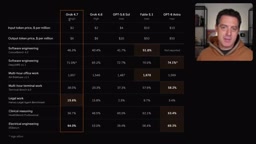
On DeepSuite, widely considered the closest approximation to real engineering productivity, Grok 4.7 scores 71%, with GPT 5.6 Sol at 72.7% and Fable 5.1 at 70%. The author flags a notable omission here: the blog's comparison table deliberately leaves out Astra — even though Astra appears in other charts — which feels like cherry-picking. The author had Astra reconstruct the table itself, and Astra Max came out on top at 74.1%.
Breaking down by domain reveals sharper contrasts. On Terminal Bench 4.0 — a critical measure of agentic coding ability — Grok 4.7 scores only 38%, well behind Fable 5.1's 57.9% and Astra's 58.2%. But on the legal work benchmark, Grok 4.7 dominates the field at 19.6% — though the real dark horse is MuseSpark 1.2, which tops that category at 25.42%. On GDP Val, OpenAI's own real-world knowledge work benchmark, Grok 4.7 posts an impressive 16.95 ELO, second only to Fable 5.1's 17.35.
CursorBench, DeepSuite, and Terminal Bench are three distinct benchmarks in the current AI coding evaluation landscape, each with its own focus. CursorBench is designed by the Cursor code editor, simulating real multi-step programming tasks with different "thinking intensity" levels — good for measuring a model's ceiling when compute is not a constraint. DeepSuite is closer to what software engineers actually do day-to-day — covering code generation, debugging, refactoring, and other typical workflows — and is considered more reflective of production usability than pure algorithmic challenges. Terminal Bench focuses specifically on agentic coding ability: the model's capacity to autonomously plan, execute, and verify multi-step tasks in a terminal environment, which is arguably the most critical dimension for the "AI programmer" use case. Grok 4.7's 38% on Terminal Bench signals a meaningful gap in scenarios requiring long-horizon autonomous engineering work — precisely where Fable 5.1 (57.9%) and Astra (58.2%) excel.
Cost, the Open-Source Trend, and the On-Device Landscape
On Artificial Analysis's intelligence index, Grok 4.7 (at ultra-high thinking intensity) currently ranks fifth with a score of 46. The top four are Fable 5.1, Astra, Cloud Opus 5, and — somewhat surprisingly — MuseSpark 1.3 Max. You might not have noticed that several high-scoring models ranked around Grok — MuseSpark 1.3, GLM 5.3 Max, Kimi K3 — are open or open-weight models.
The author cites Gavin Baker's observation of a structural trend: enterprise-side total token usage is shifting toward open-weight models, with open-source now at 62% and closed-source at 38%, driven by greater efficiency, controllability, lower cost, and privacy advantages. But real value concentration still flows to OpenAI and Anthropic — you can't charge frontier-tier prices without delivering frontier-tier answers.
Two practical limitations of Grok 4.7 are worth flagging. First, Artificial Analysis notes that its performance gains come with higher token consumption, meaning the cost per completed task rises accordingly. Second, its context window is only 500k tokens, while virtually every other frontier model has reached 1 million. For most users this won't matter, but it becomes a real constraint for high-context professional workloads.
Open-weight models differ slightly from "open source" in the traditional sense: they release model weights for download and local deployment, but don't necessarily publish training code or datasets — whereas fully open-source releases include both. The models mentioned here — MuseSpark 1.3, GLM 5.3 Max, Kimi K3 — all fall into the open-weight camp. Core enterprise motivations for adopting open-weight models include: keeping data on-premises (privacy compliance), controlling inference costs, fine-tuning on proprietary data, and avoiding lock-in to a single API provider. Gavin Baker's "62% open-source" figure reflects a structural migration of enterprise-scale usage toward these models — not a consumer-level preference shift. That said, in high-stakes decisions requiring absolute output quality, OpenAI and Anthropic's closed frontier models still command a meaningful premium.
Conclusion: A Good-Enough Value Option
Grok 4.7 is not a new frontier king, and Musk's prediction of "surpassing all models" didn't materialize. But it occupies a position just one step behind the frontier and offers a highly competitive price. Musk's own reaction is characteristically competitive — claiming Grok 4.7 puts xAI in third place in agentic coding, behind Anthropic and OpenAI.
For end users, this level of competition is a net positive. The author's hope is that Grok genuinely reaches the frontier at version 4.8 or 4.9. For now, the one-line verdict is: close enough, and extremely cost-effective.
Related articles

How Big Can Stars Really Get? The Physical Limits of the Largest Stars
Red supergiants are the largest stars by volume, with radii up to 2,000 times the Sun, engulfing the inner solar system. But there is no precise upper limit on stellar size—models predict up to 15,000 solar radii. The most massive blue stars are far smaller than red supergiants—biggest and heaviest are two different things.

Apple HomeView Smart Display Full Feature Breakdown: Wall-Mount or Desktop, $299
Apple launches HomeView, a $299 smart display with wall-mount and desktop options, 12MP camera for facial recognition, smart home control, music playback, and recipe step-by-step cooking. Full breakdown of watch faces, apps, privacy, and cooking integration.

Where Did the Promised New Studio Go? Craft Computing Answers After Five Years
Craft Computing's host responds to viewer questions: the new studio promised five years ago was shelved as construction costs soared from $30,000 to $75,000, and was replaced by a 168-square-foot garage conversion.