Grok 4.7 vs MiMo V2.6 Pro/Flash: A Three-Model Hands-On Comparison

Real-world tests show MiMo V2.6 Flash beats Pro in most tasks, while Grok 4.7 disappoints on speed and token cost.
Creator KatenGlock ran Grok 4.7, MiMo V2.6 Pro, and V2.6 Flash through demanding real-world tasks. Despite matching AA leaderboard scores, the models diverged sharply in practice. Grok 4.7 underdelivered due to high token usage and slow reasoning, only excelling at 3D origami. The biggest surprise: the lighter, faster, cheaper Flash consistently outperformed Pro across 3D modeling, gaming, and interactive tasks — with Pro only winning the writing challenge. Leaderboard scores and real-world feel are structurally misaligned; task fit and cost-efficiency matter far more.
Three New Models Go Head-to-Head
Grok 4.7 and Xiaomi's MiMo V2.6 series were both released recently, and Bilibili creator KatenGlock put all three models through a demanding set of real-world tasks. According to the Artificial Analysis leaderboard, Grok 4.7 scores 46 — tied with MiMo V2.6 Pro — but the actual experience between the two is far more nuanced than a single score can capture.
Grok 4.7 offers multiple reasoning intensity levels and is priced the same as its predecessor, 4.6. However, it has one notable weakness: it consumes an enormous number of tokens per task. During testing, the creator selected X-High reasoning intensity with Fast mode enabled in Grok Build. While throughput wasn't slow, the thinking process was verbose, making overall task completion sluggish. The creator admitted that for many tasks, he'd rather fall back to Grok 4.6 High.
MiMo V2.6 comes in two variants: Pro and Flash. Pro has 1.02T total parameters with 42B activated; Flash has 310B total with 15B activated, making it nearly twice as fast. Xiaomi also offers an ultra-speed mode and has launched a MiMo desktop client. Notably, V2.6 Pro's AA score matches Grok 4.7's, but at a dramatically lower price — making it a standout in terms of cost-effectiveness.
Artificial Analysis (AA) is a third-party AI evaluation platform focused on model benchmarking and performance tracking. It uses a composite Intelligence Index to score models across reasoning, coding, math, language comprehension, and other dimensions. This score isn't based on a single task — it's an aggregated result across multiple standardized benchmarks. That's why two models with identical scores can still perform very differently on specific tasks. It's also worth noting that AA measures "peak capability" in controlled environments. Real-world factors like token consumption, inference latency, and context window utilization all affect user experience but fall outside the scoring framework — which helps explain why Grok 4.7 and MiMo V2.6 Pro share the same score yet feel so different in practice.
MiMo V2.6 Pro uses a Mixture of Experts (MoE) architecture. MoE models have a large total parameter count, but only activate a small subset of "expert" sub-networks during each inference pass. This allows the model to maintain high capacity while dramatically reducing per-inference compute costs. V2.6 Pro's 1.02T total parameters with only 42B activated means the actual computation is equivalent to a 42B dense model — which is the core reason it can undercut the cost of a comparable dense model. Flash also uses MoE, with just 15B activated parameters, nearly doubling its speed. Understanding this architecture helps explain why Flash can sometimes match or even surpass Pro on certain tasks with lower latency — fewer activated parameters means faster inference, and whether the routing mechanism selects the right experts for a given task is the key variable determining quality differences.
3D Modeling: Along the River During the Qingming Festival & Mechanical Butterfly
The first task was generating a scene from the classic painting Along the River During the Qingming Festival. Grok 4.7's output had relatively few buildings, boats with clipping issues, decent riverside willows and signboards on the right side, and a reasonably shaped arch bridge — but precision was visibly lacking overall. The creator rated it "mediocre, below expectations."
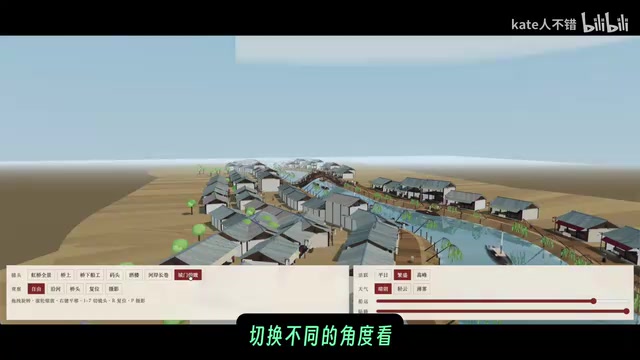
Interestingly, V2.6 Flash delivered a surprisingly strong result here — higher building density, a well-crafted bridge surface — though the awnings looked too modern, pedestrian directions were off, and some clipping was present. Still, impressive given its parameter scale. V2.6 Pro's result was unexpectedly disappointing: a mediocre bridge, sparse shops, and flat rooftops — actually worse than its smaller sibling Flash. The creator speculated that the model should perform better when paired with its own toolchain, making Pro's underperformance genuinely puzzling.
In the "mechanical butterfly" task, the reference Extra model performed best. Grok 4.7 produced a nice texture quality; V2.6 Flash had decent structure but gear rotation that defied physics; V2.6 Pro was again underwhelming.
Gaming & Interactive Tasks: Clipping Bugs as Entertainment
In the obstacle-course challenge task, Grok 4.7 produced a flood of slapstick, humanlike movements. Clipping was frequent, but the level design was colorful and visually entertaining. The creator felt the "bugs" actually made it more fun.
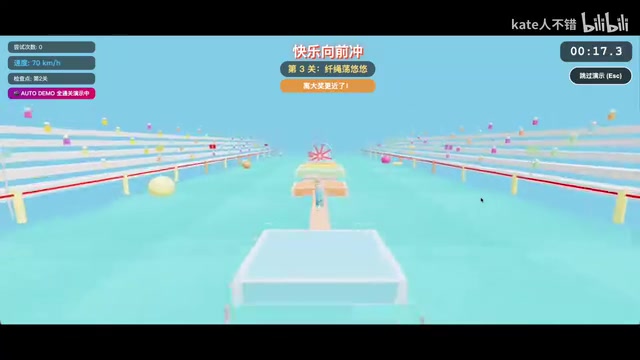
V2.6 Flash's level was more minimal, but failed to meet the prompt's requirement of clearing the course in one attempt — the character fell into the water multiple times. V2.6 Pro's character ran at breakneck speed, but props were missing, level transitions were broken, and it also failed to complete the course.
In the "claw machine Blender modeling" task — which required building a model from scratch and implementing coin insertion, movement, grabbing, and dropping mechanics — Grok 4.7 held up reasonably well, while V2.6 Flash once again outperformed V2.6 Pro, further reinforcing the surprising Flash > Pro pattern.
Web Pages & Reconstruction Tasks
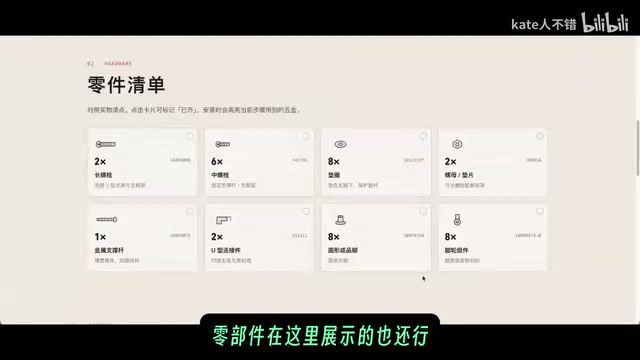
All three models were asked to generate a web page from an IKEA assembly guide PDF. Grok 4.7 produced output in a single prompt, rendering about 60% of the assembly animations along with a hardware parts list below. V2.6 Pro's page looked clean at first glance, but the sofa preview image on the right was clearly wrong, the animations confused more than they helped, and it required a second prompt to fill in missing parts.
In the "mechanical watch reconstruction" task, all three models underperformed: Grok 4.7's dial strayed too far from the original; V2.6 Flash had a decent dial but was missing the strap; V2.6 Pro's dial was clean but the internal mechanical structure was completely misplaced. High-fidelity reconstruction tasks remain a challenge for current models across the board.
3D Origami & Writing
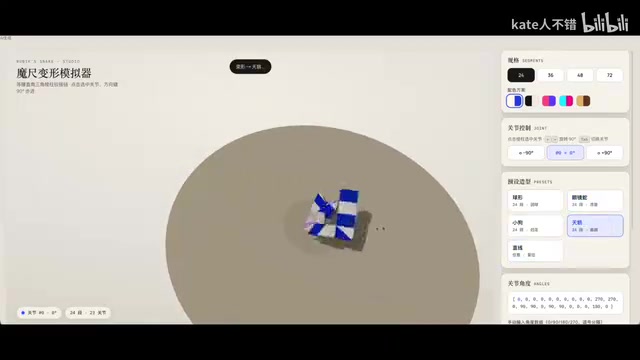
The 3D origami task demands strong algorithmic and spatial reasoning. Grok 4.7's cobra, dog, double-sphere, and camel shapes were all fairly recognizable — the camel in particular looked quite convincing when flipped. By comparison, V2.6 Pro's sphere, cobra, and swan were all low on recognizability. Grok 4.7 had a clear edge here.
Finally, the writing test asked models to write a 500-character first-person interior monologue weaving together three messages — from a hospital, a landlord, and a family member — into a single afternoon. The creator felt Grok 4.7's version fell short of the DeepSeekAd series; V2.6 Flash's prose was a bit stiff. Surprisingly, V2.6 Pro came out on top, with phrases like "four words, clean to the point of cruelty" and "three things like three kinds of weather folding into the same cloud" showing genuine literary sensibility — outclassing both Grok 4.7 and Flash.
Conclusion: Cost-Effectiveness Is MiMo's Ace Card
Overall, the creator's feelings about Grok 4.7 were conflicted — long-anticipated, yet underwhelming due to high token consumption and slow throughput, with most tasks performing no better than Grok 4.6. Grok 4.7 does have an edge in specialized knowledge, office work, electrical engineering, and reasoning-intensive tasks like 3D origami.
On the MiMo side, the biggest surprise was Flash outperforming Pro across multiple tasks — and Flash is cheaper, faster, and more cost-effective. For budget-conscious users who prioritize response speed, MiMo V2.6 Flash is a serious contender worth considering. Real-world performance and leaderboard rankings don't always align, and hands-on feel for specific tasks is what really matters when choosing a model.
Flash outperforming Pro is actually not unusual in MoE models. A smaller activated parameter count can sometimes lead to more focused expert routing, avoiding the "overthinking" or attention diffusion that larger models can fall into on simpler tasks. Additionally, training data composition, instruction fine-tuning strategy, and any task-specific optimizations Xiaomi may have applied to Flash could all contribute to its over-performance. This serves as a reminder: in an era of widespread MoE adoption, the instinct that "more parameters = better results" deserves skepticism. Hands-on testing against your target tasks remains the most reliable basis for model selection.
Related articles

Chain of Thought Isn't Just for AI: How Humans Can Use CoT to Improve Thinking Quality
Chain of Thought isn't just a prompt trick for large models. Starting from a Hacker News discussion, this article analyzes why CoT works for human thinking too, breaks down actionable ways to transfer it, and highlights the key differences between human CoT and machine CoT.
Cloudflare Teams Up with OpenAI: Closi…
Cloudflare Teams Up with OpenAI: Closing the Loop from Vulnerability Discovery to Defense with AI
Cloudflare uses OpenAI Daybreak to investigate security vulnerabilities and generate reviewable remediation plans, while developers use Codex to boost coding efficiency and quality.

Orca Multi-Agent Orchestration in Practice: A Guide to Parallel Collaboration with Claude and Codex
Orca is Stable AI's free open-source agent workbench supporting 34 agents like Claude Code and Codex in parallel. Learn its Git worktree isolation, multi-model orchestration, and mobile management.