Grok and Cursor Share a Usage Pool: Is the New Subscription Worth It?

xAI bundles Grok, Cursor, and more into a unified subscription with shared credits — but third-party models are excluded.
xAI has launched a unified subscription plan integrating Grok, GrokBot, Cursor, and X Premium with a shared usage pool, weekly credit refreshes, and team seats priced the same as individual plans. The key limitation is that third-party models in Cursor aren't included in the pool and require separate top-ups at API list prices. It suits users who primarily use Grok or Cursor's own models, potentially benefiting from double coding credits and bundle discounts; developers relying on third-party models need to calculate top-up costs first, or their total spending could end up higher. In the trend of subscription consolidation, users should choose carefully based on their own usage structure.
The way we subscribe to AI coding tools and chat assistants is changing. According to an announcement from xAI, Grok, GrokBot, Cursor, and X Premium have been consolidated into a unified subscription plan, with users sharing usage credits from a single pool. The plan is currently open for new users to sign up, but there are several key details you need to understand upfront.
One Subscription, Four Products
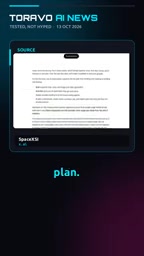
The core idea behind this new plan is to bundle multiple AI products that were previously sold separately. Grok serves as xAI's chat assistant, GrokBot handles automation tasks, Cursor provides AI coding capabilities, and X Premium covers premium features on the social platform — they now share a single pool of usage credits.
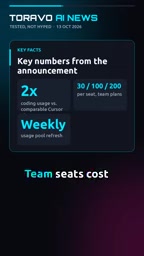
Looking at the pricing structure, the company claims that Grok's coding usage is at least twice that of a comparably priced Cursor plan. Credits refresh weekly rather than monthly. For developers with fluctuating usage, weekly refreshes mean a faster recovery cycle, but could also lead to running out of credits over the weekend.
Another notable detail is that team seats are priced the same as individual plans. This is unusual in AI tool subscriptions — most products charge a premium for team versions. If this pricing strategy holds, it genuinely reduces collaboration costs for small teams.
The Usage Pool mechanism is key to understanding this kind of bundled subscription. In traditional subscriptions, each product has its own independent quota cap, and unused portions typically can't be transferred; a usage pool merges the consumption of multiple products into a single unified counter, where any product's usage reduces the remaining balance in the pool. The advantage of this model is flexibility — you can concentrate on Cursor coding one month and use more Grok conversations the next, without having to buy excess quotas for each product separately. But the trade-off is reduced transparency and predictability: when multiple products are used heavily at the same time, credits can be depleted faster than expected, and it's hard for users to precisely track which type of call consumed how much. Additionally, "weekly refresh" shortens the credit reset cycle compared to "monthly refresh," which is friendlier for users with volatile usage — but if the weekend happens to be your development peak, you might find yourself in the awkward position of running out.
Key Limitation: Third-Party Models Aren't in the Pool
The most important thing to note about this subscription plan: third-party models in Cursor are not included in the shared usage pool.
In other words, if you're calling non-Grok models in Cursor — such as large language models from other vendors — that usage needs to be topped up separately at API list prices, through a completely separate billing channel.
This creates a fork in the road:
- Primarily using Grok or Cursor's own models: The subscription plan could be a good deal, since you benefit from the bundle pricing and double coding credits.
- Relying on third-party models: You need to calculate top-up costs first, then compare against your existing plan's expenses — otherwise you might find your total spending is actually higher.

Why are third-party models excluded from the usage pool? This comes down to the underlying cost structure of AI tools. Cursor itself is a code editor shell whose AI capabilities can call model APIs from different vendors. When Cursor uses its own or Grok-series models, xAI absorbs the internal inference cost, which can be bundled into the subscription fee; but when calling models from other vendors (such as OpenAI, Anthropic, etc.), xAI must pay those vendors real API fees per token. If this were also included in the shared usage pool, xAI would face uncontrollable external costs. Therefore, third-party model calls must go through an independent API billing channel at list prices. For users, this means "subscription fee" and "third-party model top-ups" are two completely separate expenses — when calculating total cost, you must add both together rather than just looking at the subscription price.
Who Should Switch, Who Should Wait
Based on the information available on the public pricing page, the design intent of this plan is clear: lock in users who are already using Grok or Cursor within a single ecosystem.
If you were already subscribed to both Grok and Cursor, the merged plan will likely save you money. If you only use one of them, you need to evaluate whether the other product's features have real value for you — paying for things you don't need isn't saving money.
For developers who primarily rely on third-party models, I'd suggest pulling up your last month's API consumption bill and recalculating based on the new plan's top-up prices. Third-party model API pricing is typically per-token, and at high usage frequency, this cost could far exceed the subscription fee itself.
It's worth noting that the above analysis is based on official announcements and pricing page information, and hasn't been tested in practice. Before subscribing, I'd recommend carefully reading the full terms on the pricing page, especially regarding usage caps, overage billing methods, and specific rules for third-party model top-ups.

API per-token billing is the core concept when evaluating third-party model costs. Large language model APIs typically charge by the number of input and output tokens, where a token is the smallest unit of text a model processes — roughly equivalent to one English word or half a Chinese character. Per-unit prices vary dramatically between models, and input and output prices are often different. At high usage frequency, token consumption accumulates rapidly — for example, a continuously running code completion or automation script might consume millions of tokens per day. Therefore, for developers relying on third-party models, looking at the subscription fee alone isn't enough — you must pull your actual API consumption bill and recalculate based on the new plan's top-up unit prices. If third-party model calls account for a high proportion of total usage, the cost of independent top-ups could far exceed the subscription fee itself, and the bundled plan's appeal would drop significantly.
Decision Logic in the Era of Subscription Consolidation
The AI tool market is undergoing a wave of subscription consolidation. The model of subscribing to multiple individual products, each with independent quotas, has high management costs for users and high customer acquisition costs for vendors. Bundled plans appear to simplify choices, but the real test is: whether the credit allocation after bundling is reasonable, and whether the portions outside the bundle become hidden costs.
This integration of Grok and Cursor is essentially a redistribution of user value. For users deeply invested in the Grok ecosystem, this is an option worth considering. For developers with diversified toolchains, staying on the sidelines and subscribing on demand may still be the safer strategy.
Subscription Bundling is becoming a trend in the AI tool market, driven by the business logic that vendors reduce customer acquisition costs and increase user stickiness through bundling, while users get simpler bills and potential price discounts. But this model also introduces new choice risks. Bundled plans often pair high-value products with low-value ones, and users may end up paying for features they don't need; meanwhile, the shared usage pool mechanism can obscure the true cost of individual products, making it hard for users to judge whether they're actually saving money. For developers with diversified toolchains, staying on the sidelines and subscribing on demand — while having higher management costs — ensures every dollar spent corresponds to actual usage. The final decision should be based on your personal usage structure: if your main workflow is concentrated in the bundled products, the integrated plan is worth considering; if you frequently call external models or use multiple competitors, you need to carefully calculate the costs.
One-line Summary
xAI bundles Grok, Cursor, and more into a unified subscription with shared credits — but third-party models are excluded.
Paragraph Summary
xAI has launched a unified subscription plan integrating Grok, GrokBot, Cursor, and X Premium with a shared usage pool, weekly credit refreshes, and team seats priced the same as individual plans. The key limitation is that third-party models in Cursor aren't included in the pool and require separate top-ups at API list prices. It suits users who primarily use Grok or Cursor's own models, potentially benefiting from double coding credits and bundle discounts; developers relying on third-party models need to calculate top-up costs first, or their total spending could end up higher. In the trend of subscription consolidation, users should choose carefully based on their own usage structure.
Related articles

Chain of Thought Isn't Just for AI: How Humans Can Use CoT to Improve Thinking Quality
Chain of Thought isn't just a prompt trick for large models. Starting from a Hacker News discussion, this article analyzes why CoT works for human thinking too, breaks down actionable ways to transfer it, and highlights the key differences between human CoT and machine CoT.
Cloudflare Teams Up with OpenAI: Closi…
Cloudflare Teams Up with OpenAI: Closing the Loop from Vulnerability Discovery to Defense with AI
Cloudflare uses OpenAI Daybreak to investigate security vulnerabilities and generate reviewable remediation plans, while developers use Codex to boost coding efficiency and quality.

Orca Multi-Agent Orchestration in Practice: A Guide to Parallel Collaboration with Claude and Codex
Orca is Stable AI's free open-source agent workbench supporting 34 agents like Claude Code and Codex in parallel. Learn its Git worktree isolation, multi-model orchestration, and mobile management.