Grok Bot Alternative: Open-Source DeepSeek Harness Bot Enables Multi-Bot Relay Work
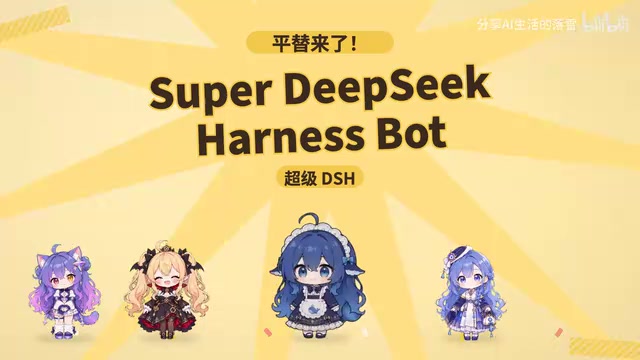
Open-source Super DeepSeek Harness Bot offers low-cost multi-Bot collaboration as an alternative to expensive Grok Bot.
This article introduces Super DeepSeek Harness Bot, an open-source project by a Bilibili creator built on DeepSeek Harness as a low-cost alternative to Grok Bot, letting individuals and companies afford a swarm of collaborating Bots. Its core is the Task Board Relay mechanism: tasks posted to the board are automatically handed off between Bots, with each next Bot continuing from the previous handoff note rather than re-describing requirements from scratch. Human intervention points are retained—Bots pause to ask users when decisions are needed. The task board is also open to Codex, Claude Code, Grok, and Gemini, which can claim tasks and return results. Open-sourced on GitHub, it suits individual developers and small teams exploring multi-Bot automation.
Grok Bot's pricing has deterred many users who want to "raise a swarm of Bots." A Bilibili creator has chosen to open-source the alternative they use themselves—Super DeepSeek Harness Bot—built on DeepSeek Harness, with the pitch "affordable for everyone," enabling individuals and companies alike to cheaply own a swarm of Bots that get work done for them.
Core Positioning: A Low-Cost Multi-Bot Collaboration Solution
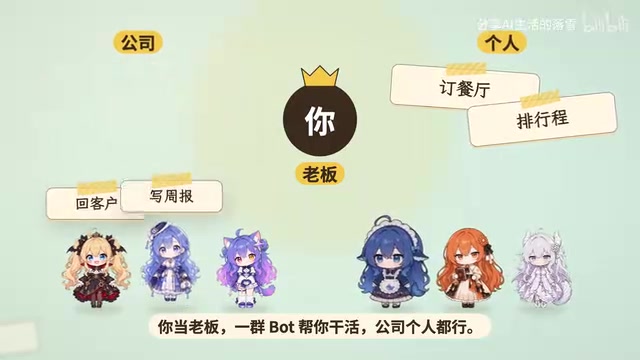
The project's starting point is straightforward: wanting a swarm of Bots but finding Grok Bot too expensive, so the creator canceled the subscription and went self-hosted. Super DeepSeekAd Harness Bot runs on DeepSeek Harness, pushing costs down to a level both individuals and companies can bear. It's not just a single chat Bot—it's a "Super Agent" framework supporting multiple Bots working in coordination: you're the boss, and a swarm of Bots does the work for you.
For individuals, this means building an automation assistant suite at very low cost; for companies, it means assigning repetitive tasks to multiple Bots for parallel processing.
DeepSeek Harness is a runtime framework built around the DeepSeek series of large models, responsible for encapsulating model capabilities into schedulable, orchestrateable Bot instances. Compared with calling model APIs directly, the Harness layer typically handles session management, tool invocation (function calling), multi-turn context maintenance, and multi-instance concurrent scheduling, making it better suited to scenarios like "multiple Bots working in coordination."
Super Agent framework refers to layering orchestration logic on top of a single agent: a scheduling layer splits tasks, dispatches them to multiple specialized Bots, and aggregates their results. What distinguishes it from a monolithic Agent is that each Bot can have its own persona, toolset, and responsibility boundaries, breaking complex workflows into parallelizable subtasks—reducing the context pressure on any single Agent and making it easier to tune each stage separately.
Task Board Relay: Automatic Handoff Between Bots
The project's most distinctive design is "Task Board Relay." Once a requirement is posted to the task board, Bots complete the work like a relay race, one baton pass after another. You can assign a task to a specific Bot, or let a Bot pick it up itself—the entire handoff process is fully automated.
The key mechanism is the "handoff note": when the next Bot takes over, it continues with the note left by the previous one rather than starting from scratch. This lets multi-step tasks flow seamlessly between different Bots, reducing the cost of manually re-describing requirements.
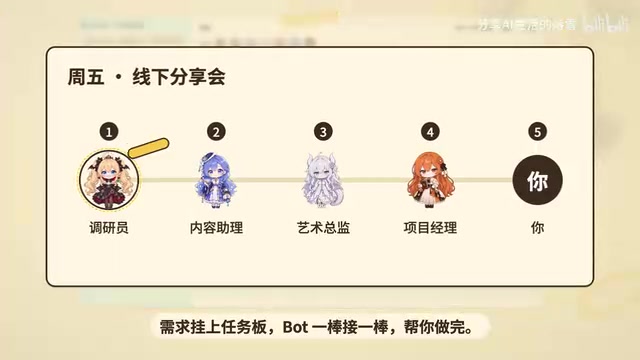
Task Board plays the role of shared state storage in multi-Agent systems—essentially a public task queue that all Bots can read from and write to. Compared with direct point-to-point messaging, the task board decouples "tasks" from "executors": tasks are posted as entries carrying status, assignee, and handoff notes, and any Bot with permission can claim or transfer them. This design naturally supports asynchronous execution and parallel processing, and also makes task progress externally visible and auditable, allowing humans to step in at any time to inspect or reassign.
Stop and Ask When Needed: Retaining Human Intervention Points
Automation doesn't mean letting go entirely. When a Bot encounters a question that requires your decision, it stops and asks you rather than acting on its own.

This design is especially important in task relay: handoff notes can carry context, but judgment calls and trade-offs are still handed back to humans. For tasks that need directional control, this is more practical than "fully automatic but off track."
Human-in-the-loop is a common pattern in automated system design, referring to handing control back to humans at key decision points rather than letting the system run automatically to the end. In Agent orchestration, it's typically implemented through a "pause—ask—resume" mechanism: the Bot presents the current context and pending question to the user, then continues the task after receiving an answer. Compared with correcting errors after the fact, this upfront confirmation significantly reduces the cost of long-running tasks going off track, making it especially suitable for tasks involving resource allocation, external publishing, or irreversible operations.
Compatible with Other Tools: The Task Board Is Open for Claiming Tasks
The task board isn't limited to DeepSeek Harness Bots. According to the creator, tools like Codex, Claude Code, Grok, and Gemini can also come to the task board to claim tasks and return results when done. This makes the task board a universal task distribution hub—different tools can plug in as needed, rather than binding all work to a single Bot.
Codex and Claude Code are Agent tools for coding scenarios: the former originates from OpenAI's code model family, while the latter is Anthropic's command-line programming assistant; both can read and write codebases, execute commands, and complete multi-step development tasks. Their integration with DeepSeek Harness Bots on the same task board means the task distribution layer and execution layer are decoupled—the scheduler need not be tied to a single model or vendor, and can match the most suitable execution tool by task type, cost, or capability. This is also a common architectural choice as multi-Agent systems move toward practical use.
How to Use: Getting Things Done Through Chat
In daily use, what you mainly do is chat with the Bots you've configured. The scenario the creator describes is "before you know it, a lot of things are done"—tasks are posted to the task board through chat, then Bots relay them forward, and you only need to answer Bot questions when necessary.
The project is open-sourced on GitHub, and the creator invites interested users to download and test it. Given the limited information available, specific installation and configuration steps, the task board's actual interface, and details of each tool's integration should be based on the actual documentation in the GitHub repository.
Who It's For
If you've hesitated because of Grok Bot's price, or want to use multi-Bot collaboration to handle repetitive tasks, this open-source solution offers a low-cost starting point. Its Task Board Relay mechanism suits scenarios where long workflows are split into multiple stages completed by different Bots in sequence; and the retention of human intervention points keeps it from spiraling out of control on tasks that need human oversight. For individual developers and small teams looking to try Bot automation, it's worth a look on GitHub.
Related articles

Michael Nielsen Takes Down His Classic Neural Network Textbook, Sparking Community Discussion
Michael Nielsen's classic free textbook Neural Networks and Deep Learning has been taken offline, sparking discussion on Hacker News about the reasons and impact.

Inside the AI Training Data Market: The Trade-off Between Exclusivity and Discounts
G2i founder Gabe Greenberg reveals the dual-track pricing of the AI training data market: labs pay a premium for exclusive data or accept discounts that allow others to buy it.

SessionGraph: Unifying All Coding Agent Sessions in One Interactive Graph
SessionGraph aggregates coding agent sessions into an interactive graph, helping developers review, debug, and manage AI coding workflows across sessions. This article examines its positioning, value, and open questions.