Grok Uploads User Home Directory Without Permission: A Security Warning on AI Agent Privilege Boundaries
Grok Uploads User Home Directory Witho…
Grok uploaded users' entire home directories to xAI servers, exposing critical risks in AI Agent permission boundaries.
A developer revealed on Hacker News that xAI's Grok uploaded their entire user home directory — including SSH keys, credentials, and config files — to xAI's servers. This incident highlights the growing security risks posed by AI Agents with broad local file access, and underscores the urgent need for least-privilege principles, network monitoring, and proper credential management.
Incident Overview: Grok Unexpectedly Uploads Entire User Directory
A developer recently posted on Hacker News revealing that Grok, the AI product from xAI, had uploaded their entire user directory to xAI's servers during normal use. The post quickly gained traction, accumulating 52 upvotes and 20 comments, becoming a hot topic in the developer community.
For developers who routinely store SSH keys, configuration files, code repositories, and personal data under their home directory, this is a serious red flag. The user home directory is the most private and data-dense area on a development machine. Having it uploaded to a third-party server without explicit authorization carries significant potential for harm.
The full technical details have yet to be disclosed, but the incident cuts to the heart of a growing tension in AI tooling: when an AI Agent gains local file access, how much control over their data does the user actually give up?
The Permission Boundary Problem in the Age of AI Agents
From Conversational Assistants to System-Level Agents
Over the past two years, the capability boundaries of AI assistants have expanded continuously. Early chatbots operated in sandboxed environments with highly restricted permissions, handling text only. But as the concept of "AI Agents" has gone mainstream, more and more tools are being granted the ability to read local files, execute system commands, and access external networks in order to handle increasingly complex automated tasks.
An AI Agent is an AI system capable of autonomously planning and executing multi-step tasks — fundamentally different from a single-turn chatbot. Its core architecture typically consists of three layers: a perception layer (reading files, screen content, and network data), a reasoning layer (a large language model handling task planning), and an execution layer (invoking tools, writing files, and making network requests). It is the introduction of the execution layer that transforms an AI Agent from an "advisor" into an "operator" — it no longer just provides answers, but takes direct action on the user's system. This architectural shift turns the permission boundary question from a theoretical debate into a real-world security threat.
This expansion of capability brings efficiency gains, but it also quietly changes the trust model. When an AI tool can scan project files, read configurations, and upload context to "better understand your needs," the flow of data becomes opaque. Users can no longer easily answer: Which files were read? Which were uploaded to the cloud? How are they stored and used afterward?
The Data Cost Behind "Personalized Experiences"
Many AI products justify collecting local data by framing it as "providing more accurate context" or "optimizing personalized experiences" — which is functionally valid. But the problem is that a massive gap often exists between the scope of data collection and what users have actually consented to.
The Grok incident is a textbook example of this gap. Users might reasonably expect an AI to read relevant files in their current working directory, but they did not expect their entire home directory to be uploaded wholesale. Whether this behavior stems from a default product design decision or an unintended bug, it exposes the crude approach to permission management that currently plagues many AI tools.
Why a Home Directory Leak Is Especially Dangerous
High-Value Data Hidden in the Home Directory
On Unix-like systems (Linux/macOS), the user home directory (~, typically /home/username or /Users/username) is the operating system's default root for user data. Originally designed to isolate private user spaces in multi-user systems, this directory has evolved into the central repository for high-value credentials as the developer tooling ecosystem has matured. The SSH protocol specification requires that private keys be stored in ~/.ssh/, the AWS CLI writes access keys to ~/.aws/credentials by default, and Git stores signing credentials in ~/.gitconfig. This convention-driven centralized storage pattern makes the home directory the single most valuable target for attackers.
In practice, the ~ directory typically contains a wide range of highly sensitive content:
- Credential files: Private keys in
.ssh/,.aws/credentials, various API tokens - Configuration files:
.gitconfig,.npmrc,.envenvironment variable files - Browser and application data: Cached session tokens, cookies, local databases
- Personal documents and code: Unpublished projects, trade secrets, private files
Once this data is bulk-uploaded to a third-party server, the attack surface expands dramatically — even if the service provider has no malicious intent. A data breach on their end would directly expose a user's core assets.
Once Trust Is Broken, Recovery Is Costly
For developer tools, trust is the hardest asset to replace. The Hacker News community has always been highly sensitive to privacy and data security. Even an isolated incident like this can rapidly erode overall confidence in a product. In the comments, multiple developers expressed broad concern about the trend of "AI tools silently uploading local data" — Grok isn't the first, and won't be the last.
A Practical Self-Protection Guide for Developers
Faced with AI tools that are gaining increasingly broad permissions, developers cannot rely entirely on vendor self-regulation. The following measures are worth taking seriously:
Enforce the Principle of Least Privilege
The Principle of Least Privilege (PoLP) is a foundational concept in information security, first systematically articulated by Jerome Saltzer and Michael Schroeder in a 1975 paper. Its core idea is: any program or user should only have the minimum permissions strictly necessary to complete their current task.
In the practical deployment of AI tools, this principle can be implemented through a variety of technical means: using Linux's seccomp to restrict the scope of system calls, configuring mandatory access control policies via AppArmor/SELinux, using Docker container filesystem mount points to precisely control which directories are visible, or using macOS's sandbox mechanisms to restrict file access paths. In practice, don't grant AI tools unrestricted filesystem access at the system level — constrain them to run within a controlled working directory rather than exposing the entire home directory. Using containers, virtual machines, or dedicated sandbox environments to isolate an AI Agent's runtime is currently the most reliable protective approach.
Actively Monitor Network Behavior
Security-conscious developers can use mature toolchains to audit the network behavior of AI tools in real time. On macOS, Little Snitch and Lulu provide per-process visualized management of outbound connections. Linux users can perform full packet capture analysis with Wireshark, or use eBPF-based tools (such as Cilium or Falco) for kernel-level network behavior tracing with near-zero performance overhead. A lighter-weight option is to configure a local proxy (such as mitmproxy) to force all traffic through the proxy, providing a complete log of HTTP/HTTPS requests. Any abnormal bulk data uploads should prompt immediate process termination and investigation.
Store Sensitive Credentials Separately
Storing sensitive credentials in plaintext files under the home directory is a legacy engineering habit that has become particularly fragile now that AI Agents routinely access the local filesystem. Modern key management solutions offer safer alternatives:
- Hardware security keys (such as YubiKey) use FIDO2/PIV protocols to ensure private keys never leave the hardware device
- System-level keychains (macOS Keychain, GNOME Keyring) encrypt stored credentials at the OS level, exposing them only when needed through a controlled API
- Professional secrets management services (HashiCorp Vault, AWS Secrets Manager) issue dynamic short-lived credentials, fundamentally eliminating the risk of long-term credential exposure
- SSH Agent forwarding ensures private keys never need to be distributed to remote machines
Adopting these professional solutions is strongly recommended to fundamentally reduce the risk of credential leakage.
Conclusion: The More Powerful the AI, the Clearer the Permission Boundaries Must Be
Regardless of whether the Grok incident is ultimately classified as a bug or a design oversight, it serves as a classic warning sign in AI Agents' march toward system-level integration. As we hand over more and more local control to AI, permission transparency, visibility into data flows, and explicit informed user consent must become non-negotiable baselines in product design.
The convenience of technology should never come at the cost of users' control over their own data. For vendors, rebuilding trust is not complicated: default to least privilege, clearly communicate data flows, and give users genuine choices. For developers, maintaining clear awareness of permission boundaries while enjoying the efficiency gains of AI may be the most essential form of self-protection in this era.
Related articles
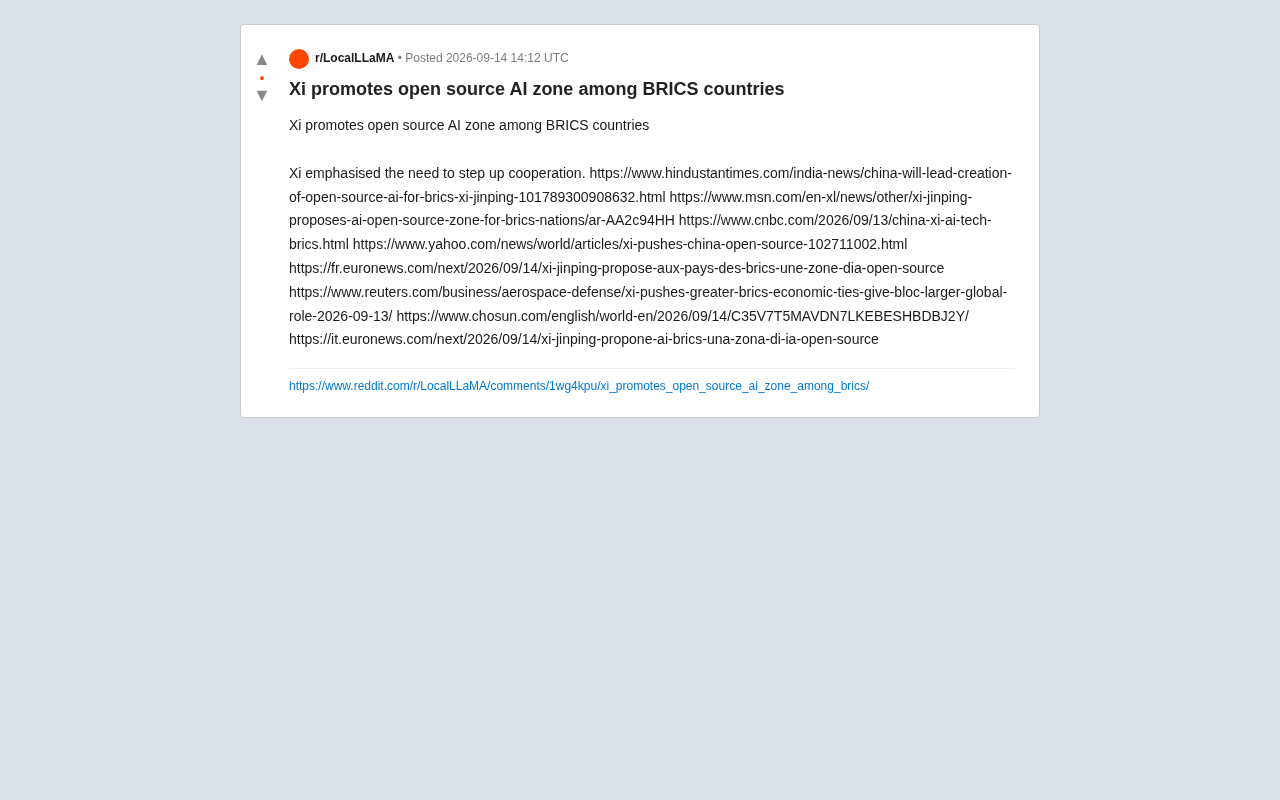
Xi Jinping Proposes Open Source AI Cooperation Zone Among BRICS Nations
Xi Jinping proposed an open source AI cooperation zone at the BRICS summit. Analyzing the strategic intent, open source rationale, and global AI governance implications.
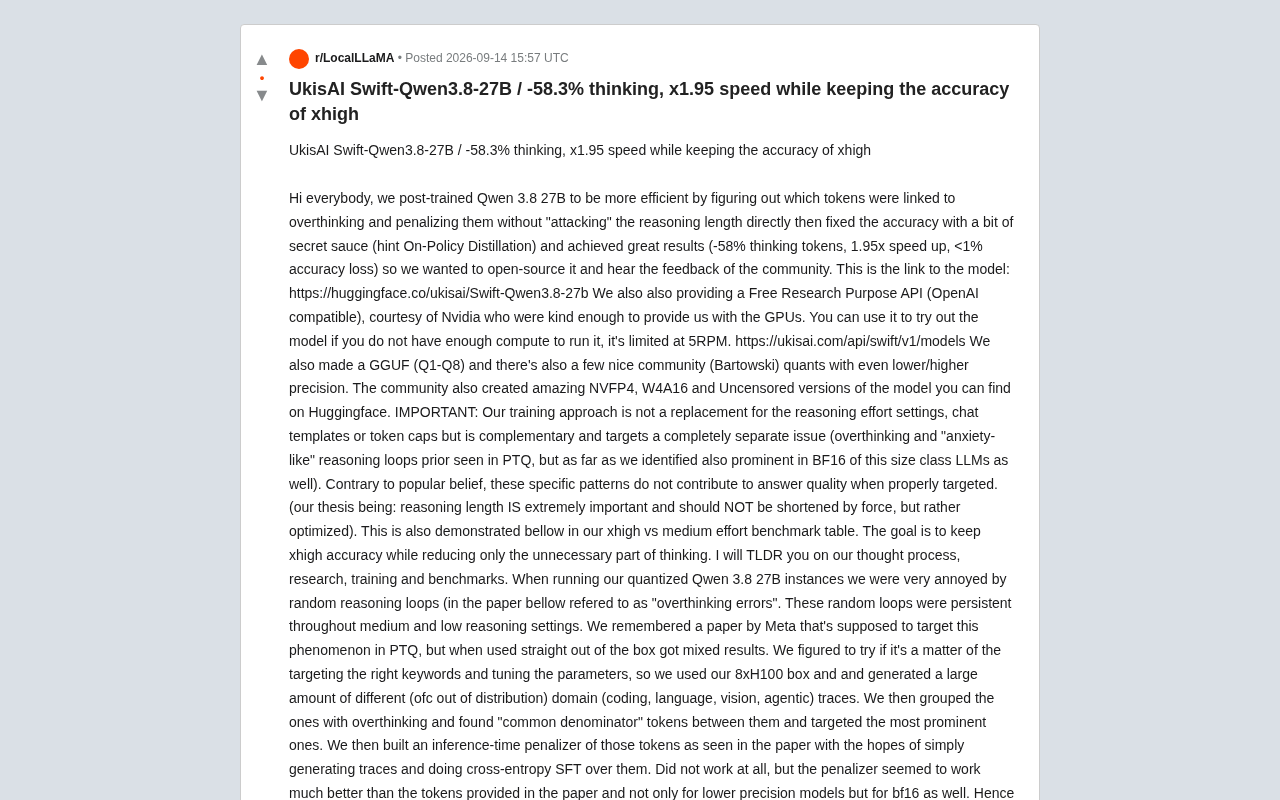
Swift-Qwen3.8-27B: 58% Fewer Thinking Tokens, Nearly 2x Faster Inference
UkisAI open-sources Swift-Qwen3.8-27B, cutting thinking tokens by 58% and boosting inference speed 1.95x via overthinking token penalties and on-policy distillation — with under 1% accuracy loss.

Netflix Partners with Sega: Crazy Taxi Movie and New Sonic Animated Series on the Way
Netflix announces three Sega game adaptations: a Crazy Taxi movie, a new Sonic animated series with edge, and a live-action film based on RGG Studio's Stranger Than Heaven.