GrokBot Clinical Data Management AI Agents: Build a 10-Expert Team in 5 Minutes

GrokBot uses templates and MCP to deploy 10 clinical data management AI agents with one sentence, but compliance is questionable.
The article presents a demo of the AI agent platform GrokBot for clinical data management: after installing the platform, adding a template creator, and connecting to the MCP server, a single natural-language instruction deploys a coordinator plus ten specialist agents within five minutes to handle data validation, query tracking, compliance checks, and report generation. The author notes that templated multi-agent orchestration lowers deployment barriers and is reusable elsewhere, but points out that the content is essentially product promotion and avoids key regulated-industry questions: whether AI-generated reports pass GxP and 21 CFR Part 11 audits, whether the validation logic is qualified, and how patient privacy and data-leakage risks from MCP connections are controlled. The takeaway: such tools show a viable direction, but should be used cautiously until compliance and accuracy are third-party validated, with audit capability prioritized over speed.
GrokBot Clinical Data Management AI Agents: Build a 10-Expert Team in 5 Minutes
Clinical trial data management has always been a grind—validating data, handling queries, ensuring compliance, and finally writing reports by hand. Now, a tool called GrokBot claims it can automate all of this with a team of AI agents. How exactly does it work?
The Pain Points of Clinical Data Management and AI's Entry Point
The daily work of a Clinical Data Manager revolves around data validation, query management, and compliance checks. Once these processes are complete, a summary report often still needs to be written. These tasks are highly repetitive yet demand extreme accuracy.
This is exactly where GrokBot comes in: using preset templates and AI agents to package this workflow into a reusable automation solution.
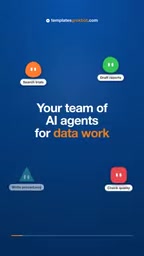
What Is GrokBot: A Templated AI Agent Platform
According to the official description, GrokBot is a "simple AI agent" platform whose core selling point is "ready in five minutes." Users don't need to write code—just install GrokBot itself, add a template creator bot, and connect to the template's GrokBot MCP server to deploy quickly.

MCP (Model Context Protocol) is the key here—it lets agents access external tools and data sources, while templates define the agents' role assignments and workflows.
MCP (Model Context Protocol) is an open standard proposed and open-sourced by Anthropic in late 2024 for establishing a unified connection between AI models (or agents) and external tools, data sources, and services. Think of it as the "USB-C port of the AI world": before this, every AI application that wanted to connect to a database or API needed its own adapter code; with MCP, you only need to run an MCP server that conforms to the protocol, and any MCP-compatible client (such as Claude Desktop or various agent platforms) can discover and invoke the tools and resources it exposes in a standard way. MCP servers typically exist as local processes or remote services, declaring a set of tools (executable actions) and resources (readable data) that agents call on demand during reasoning. For platforms like GrokBot, the MCP server is the channel through which agents obtain clinical data, execute validation logic, and write query records—so the step of "connecting to the template's MCP server" actually determines the boundaries of what the agents can do, and is directly tied to the data-leakage risk mentioned in this article.
The Hands-On Process for Building a Team in Five Minutes
The official demo flow is quite straightforward: after installing GrokBot, add the template creator bot, connect to the MCP server, then enter a single natural-language instruction: "I'm a clinical data manager—find and install all relevant bots."

The system then automatically deploys a coordinator bot to orchestrate the entire team. It's said that within five minutes you can have 10 specialist agents plus 1 coordinator.

How the Agent Team Divides the Work
Although the demo doesn't detail the specific responsibilities of each of the 10 agents, the "coordinator + specialists" architecture suggests: the coordinator handles task distribution and result aggregation, while the specialist agents correspond to data validation, query tracking, compliance checks, report generation, and similar steps.
The advantage of this model is reusability—the templates aren't only for clinical data management. The company says "there's a template for any job," and users can search by profession at templates.grokbot.com.
The coordinator–specialist architecture in multi-agent orchestration is one of the mainstream designs for today's AI agent systems. Its thinking derives from "divide and conquer" in software engineering and the division-of-labor principle in organizational management: a coordinator (orchestrator) agent doesn't directly perform business operations; instead, it parses user intent, breaks tasks into subtasks, dispatches them to specialist agents equipped with specific tools and prompts, and finally aggregates each agent's results into a unified output. The benefit is that each specialist agent's context window is more focused, its prompts leaner, and its tool permissions can be granted on a least-privilege basis, reducing the likelihood of hallucinations and unauthorized actions. The downside is that the coordination layer itself can become a bottleneck, and multi-hop calls amplify errors—one specialist agent's misjudgment may be aggregated by the coordinator into the final report as fact. In regulated settings, this means audit trails must record not only the final output but also each subtask's inputs, the tools invoked, and intermediate results; otherwise, reproduction and accountability become impossible.
A Reality Check: The Gap Between Marketing and Reality
A quick note: this content is essentially product promotion. Several key questions go unanswered:
- Compliance: Clinical trial data is subject to strict regulations such as GxP and FDA 21 CFR Part 11. Can AI-generated reports pass an audit?
- Accuracy: Medical data has an extremely low tolerance for error. Have the agents' validation logic been validated?
- Data security: Connecting to an MCP server means data-leakage risk. How is patient privacy protected?
For practitioners in regulated industries, when evaluating tools like this, validation and audit-trail capabilities should take priority over the convenience of "going live in five minutes." GrokBot demonstrates one viable form of AI agent orchestration, but the core of clinical data management remains a rigorous, traceable, auditable process.
GxP and 21 CFR Part 11 are regulatory frameworks you can't avoid when evaluating such tools. GxP is the umbrella term for the Good Practice family of regulations, covering GLP for nonclinical drug research, GCP for clinical research, GMP for manufacturing, and more—all sharing requirements for controlled processes, complete records, and traceable changes. The U.S. FDA's 21 CFR Part 11 specifically sets out the conditions for the validity of electronic records and electronic signatures, including: systems must have a reliable audit trail that records who created, modified, or deleted which data and when, and the trail itself must not be alterable by ordinary users; access must have permission controls and identity verification; and electronic signatures must be bound to records and verifiable. For AI agents, the difficulty is that an agent's "operation" is often a tool call following natural-language reasoning, and the intermediate process doesn't produce form-level records in the traditional sense. How to turn these call chains into auditable electronic records that meet Part 11 requirements is a question with no mature industry consensus yet. In addition, GCP requires computerized system validation (CSV)—documented evidence proving that a system consistently fulfills its intended use—and a "five-minute launch" tool has clearly not gone through that process.
Conclusion
With its template + MCP + multi-agent collaboration approach, GrokBot lowers the barrier to deploying AI agents to the level of a natural-language instruction. For process-driven work like clinical data management, it offers an automation direction worth watching—but until compliance and accuracy are validated by third parties, cautious trial use is the safer choice.
One-line Summary
GrokBot uses templates and MCP to deploy 10 clinical data management AI agents with a single sentence, but compliance remains questionable.
Paragraph Summary
This article introduces a demo of the AI agent platform GrokBot in a clinical data management scenario: after installing the platform, adding the template creator, and connecting to the MCP server, users need only enter a single natural-language instruction and the system automatically deploys, within five minutes, a team of one coordinator agent plus ten specialist agents handling tasks such as data validation, query tracking, compliance checks, and report generation. The author acknowledges that templated multi-agent orchestration lowers the barrier to AI deployment and is reusable across other professional scenarios, but points out that the content is essentially product promotion and sidesteps the questions most critical to regulated industries: whether AI-generated reports can pass GxP and 21 CFR Part 11 audits, whether the agents' validation logic has been qualified, and how the patient-privacy and data-leakage risks of connecting to an MCP server are controlled. The conclusion: such tools show a viable direction, but should be tried cautiously until compliance and accuracy are validated by third parties, and audit-trail capability should take priority over speed of deployment.
Related articles
Microsoft Fabric Database Agent in Action: From Reactive Firefighting to Intelligent Detective
A deep dive into the Microsoft Fabric Database Agent: how to enable it, supported monitoring scenarios, a blocking-issue demo, and the roadmap from reactive to autonomous operations.

Zendesk Uses ChatGPT Enterprise to Build a Sales Agent with 1,000 Daily Active Users
Zendesk opened ChatGPT Enterprise to all employees, who built about 600 apps themselves, including a sales expansion agent with about 1,000 daily active users. This article analyzes how it turns internal data into sales opportunities and its "don't wait" implementation strategy.
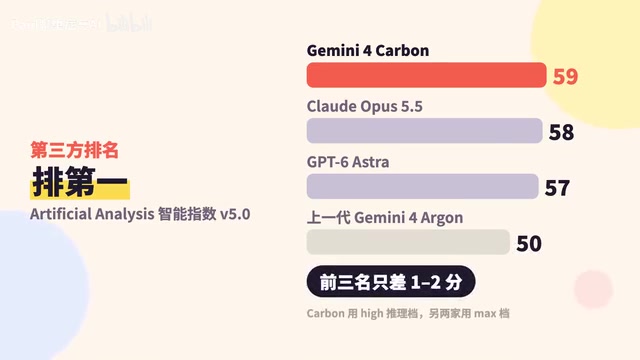
Google Releases Gemini 4 Carbon: Its Strongest Model Yet, Debuting with a Cybersecurity Focus
Google releases Gemini 4 Carbon, calling it its strongest model, with a cybersecurity focus. It tops the third-party composite ranking at 59 points but leads by only one or two. This article analyzes its security test results, staged rollout, token pricing, and the divergence between self-reported and third-party tests on hallucinations.