#MCP
448 related articles

GoHighLevel Conversational AI Adds MCP: Agents Can Call 40+ External Apps
GoHighLevel's conversational AI now supports MCP, enabling agents to call 40+ external apps during chats to book appointments, send payments, and write to spreadsheets. Learn about limitations, configuration, and launch timing.

Build an MCP Server in 30 Lines of Python and Connect It to Claude Code
Package finance tools into an MCP server in about 30 lines of Python and connect it to Claude Code via stdio. This article breaks down MCP's three roles and its Tools, Resources, and Prompts capabilities, explains decorators and type hints, the MCP Inspector self-test workflow, and the claude mcp add command format and scope settings.
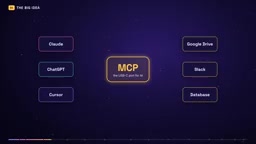
What Is MCP? The Open Standard That Connects AI to Every Tool
MCP (Model Context Protocol) is the open standard that lets AI apps connect to tools uniformly. This article explains MCP's Host, Server, and Client roles, the Tools, Resources, and Prompts building blocks, the full path of a tool call, plus two-way use in n8n and security risks.
MCP Explained: How AI Agents Connect t…
MCP Explained: How AI Agents Connect to Your Apps
Using an e-commerce support bot scenario, this visual guide explains how MCP solves the M×N AI-tool integration problem, why raw REST calls fall short, the Tools/Resources/Prompts primitives, and Host-Client-Server security.

Analyzing Stock Portfolios with AI Agents: Zerodha Kite MCP + NSE MCP in Practice
Based on a YouTube demo, this guide explains how to connect Zerodha Kite MCP and NSE MCP in Google Antigravity so an AI agent can read holdings, diagnose risk, compare indices, and generate investment plans—all while keeping a read-only security boundary.

Vercel Sandbox Adds stdin Support: Opening Interactive Command Channels for AI Agents
Vercel Sandbox now supports stdin, letting running commands receive standard input. This article explains TypeScript and Python SDK usage, and what it means for stdio MCP servers, agent-browser, and other Agent toolchains, plus caveats.
Podia Integrates ChatGPT and Built-in Agent: A Hands-On Guide to Creator AI Tools
Podia launches MCP connections and a built-in AI Agent, letting creators link accounts to ChatGPT or use built-in tools to query products, generate course drafts, and build email sales funnels. This hands-on guide, based on the official demo, walks through both paths, quota limits, and usage boundaries.

Open-Source Sky Camera: Claude Code Automatically Catches Meteors, Spotting 17 in One Night
Open-source sky camera openskycam lets Claude Code autonomously run nighttime meteor detection: auto frame extraction, classifying meteors vs. planes, retraining the model to cut star false positives from about half to 7%, catching 17 meteors in one night and auto-pushing results.

Do Larger LLMs Handle Errors Better? MCP Fault Injection Experiment Says No
A study using MCP-Injector fault injection shows tool-calling LLM Agents drop ~60% in task scores under real MCP faults, while 20B and 120B models show no significant difference in fault tolerance (p=0.96), making framework-level error handling more critical than model scale.
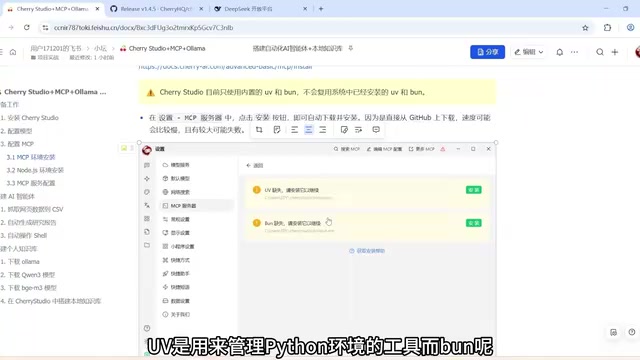
Hands-On: Building Automated AI Agents and a Local Knowledge Base with Cherry Studio + MCP
A hands-on guide to configuring MCP servers in Cherry Studio with DeepSeek V3 for file and web automation, plus a private local knowledge base using Ollama and bge-m3.

How AI Agents Call GitHub Tools: Secure Automation Under the MCP Protocol
A deep dive into how AI Agents call GitHub tools via the MCP protocol: from model tool selection and human confirmation to API execution and JSON communication, revealing the full secure automation workflow.

MCP Protocol Explained: Giving AI Agents Tools and Memory
MCP lets AI agents securely connect to Gmail, Slack, and other tools with persistent memory. This article explains the three-step loop—connect tools, add memory, define goals—and how it eliminates repetitive work, turning AI from a chat tool into a practical productivity system.

Building Jarvis with Claude + MCP: Smart Home Access Without Hardware Modifications
A creator used Claude Code to generate an MCP Server and connect directly to a smart bulb via the Tuya Smart Life API, bypassing Alexa and Google Home for a Jarvis-style voice-controlled light experience. This article breaks down the four-step setup, technical principles, and limitations.
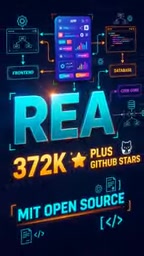
REA: Reverse Engineering Any Software with AI Agents
REA is an MCP server and skill pack for AI coding agents like Claude Code and Cursor that reverse engineers JavaScript, Electron, binaries, Android apps, and firmware. This article covers its workflow, supported platforms, local analysis benefits, limitations, and lawful use.

REA: Five-Step Reverse Engineering of Any App with AI Agents
REA is an open-source tool that lets AI agents like ClaudeCode connect to and drive reverse engineering tools such as Ghidra and IDA via MCP, completing analysis of binaries, Electron apps, .NET programs, or websites in five steps with evidence-backed reports—all running locally.
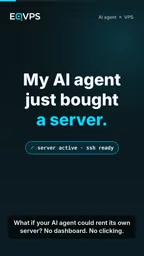
AI Agents Buying Their Own Servers: The Automation Revolution of MCP and VPS
Explore how AI agents autonomously buy VPS servers via MCP: ClaudeCode connects to EQVPS, prepaid crypto top-ups, autonomous ordering, and confirmation before destructive ops.

Nike Builds Self-Healing Telemetry System with MCP and AI Agents
Nike's former observability platform director Panos Tsilopoulos shares how to build a closed-loop telemetry control system with OpAMP, MCP, and AI agents, managing 100K OpenTelemetry Collectors and enabling safe human-AI collaborative operations through code-based guardrails.

MCP vs A2A: The Agent Interconnection Showdown Between Salesforce and ServiceNow
Salesforce AgentForce packages agents as MCP server tools; ServiceNow opens agent access via A2A. We compare design differences, permission models, and selection logic for enterprise AI agent interconnection.

MCP vs A2A: The Fundamental Difference Between AI Tool Invocation and Agent Collaboration
A customer service order query scenario explains the difference between MCP and A2A: MCP handles discovery and invocation of tools, resources, and prompts for AI applications, while A2A handles task delegation and coordination between independent agents. The two can be layered.

API vs MCP: Why Do AI Agents Need the MCP Protocol?
Explains the core difference between API and MCP: APIs are low-level software interfaces; MCP is a standardized protocol connecting AI apps and tools. MCP doesn't replace APIs—it eliminates repeated AI integration costs.