gstack Explained: A Complete Breakdown of Garry Tan's 23 Open-Source Claude Code Tools

YC CEO Garry Tan open-sources gstack: 23 role-based AI tools redefining software development.
Y Combinator CEO Garry Tan open-sourced gstack, a Claude Code configuration on GitHub that quickly earned 97K+ stars. The project includes 23 tools covering six roles—CEO, Designer, Engineering Manager, Release Manager, Doc Engineer, and QA—elevating AI from simple code assistance to a "virtual professional team" collaboration model. Its popularity reflects developers' strong demand for mature AI-native workflows and marks a paradigm shift in AI programming tools from assistance to role-based collaboration.
When a Top Silicon Valley Investor Open-Sources His AI Workflow
Garry Tan—current CEO of Y Combinator and one of Silicon Valley's most influential tech investors—recently open-sourced a project called gstack on GitHub, quickly igniting the developer community. The project amassed over 97,000 Stars and 14,000 Forks in a short period, generating remarkable buzz.
gstack's positioning is crystal clear: it's Garry Tan's personal Claude Code configuration, containing 23 carefully designed tools that play various roles including CEO, Designer, Engineering Manager, Release Manager, Doc Engineer, and QA. This isn't just a toolset—it's a practical paradigm for redefining the software development process with AI.
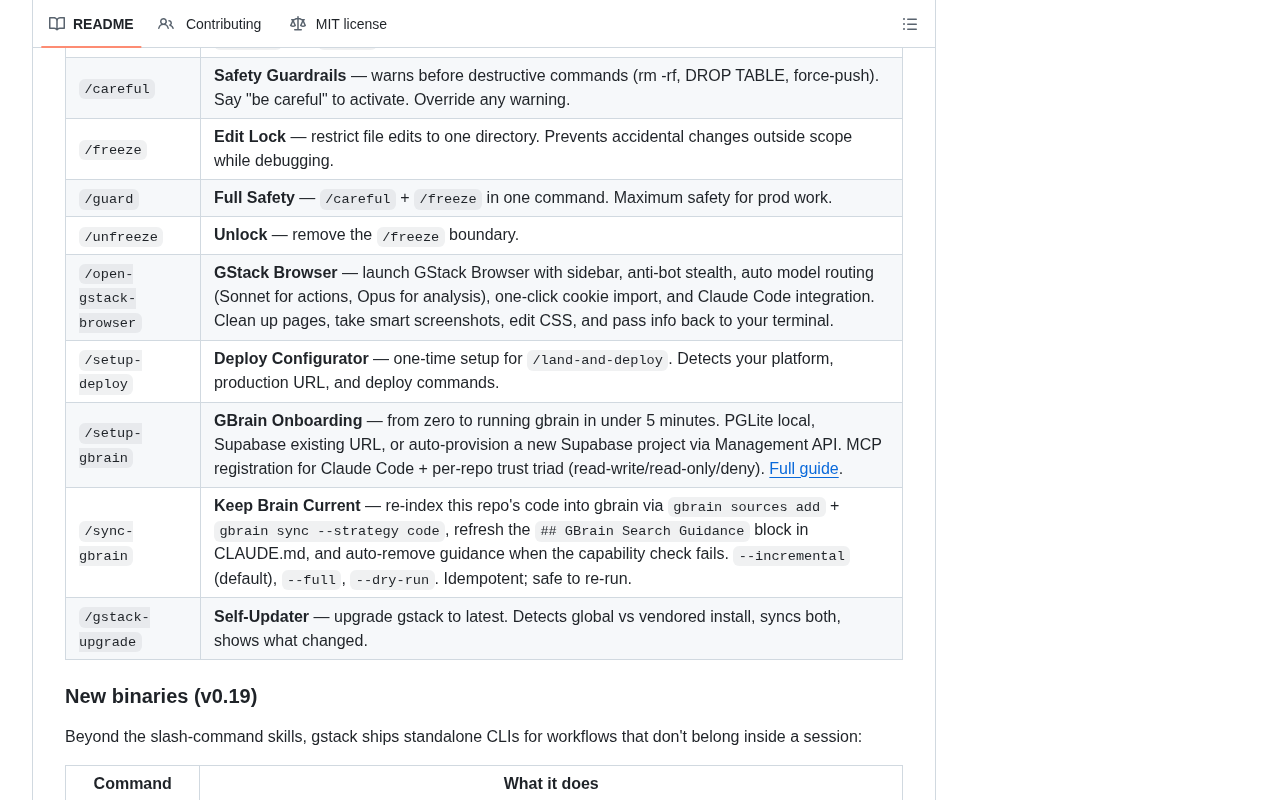
What Is gstack: 23 Tools Covering 6 Development Roles
Core Philosophy—Delegating Development Team Roles to AI
gstack's design philosophy abstracts key roles in software development into independent AI tools. Traditional software teams require multiple specialists collaborating to complete the entire pipeline from requirements analysis to production deployment. gstack leverages Claude Code's capabilities to cover the core functions of these roles:
- CEO: Strategic decision-making and priority setting
- Designer: UI/UX design decisions
- Engineering Manager: Code architecture and technical decisions
- Release Manager: Version management and release processes
- Doc Engineer: Documentation writing and maintenance
- QA (Quality Assurance): Testing and quality control
These 23 tools are defined as "opinionated," meaning they aren't generic one-size-fits-all solutions, but configurations carefully tuned based on Garry Tan's personal work philosophy and best practices. Each tool embeds specific prompt engineering, workflow logic, and decision frameworks.
In software engineering, "opinionated" is a design philosophy with deep roots, contrasted with "unopinionated" (flexible) design. The most classic opinionated framework is Ruby on Rails, which uses the "Convention over Configuration" principle to make numerous technical decisions upfront—developers simply follow conventions to rapidly build applications. The core value of this design philosophy lies in: crystallizing expert experience into default options, freeing users from choosing among countless possible configuration combinations, thereby dramatically reducing cognitive load and onboarding costs. gstack extends this philosophy from web frameworks into the domain of AI workflow configuration.
Tech Stack: TypeScript + Structured Prompts
The project is written in TypeScript, offering strong type safety and maintainability. As a Claude Code extension configuration, gstack is essentially a set of structured system prompts and tool definitions that enable Claude to work in different professional role identities across various scenarios.
Some technical background on Claude Code is worth explaining here. Claude Code is a command-line AI programming tool from Anthropic that allows developers to interact directly with the Claude large language model in the terminal, executing tasks like code writing, debugging, and refactoring. Unlike traditional IDE plugin-style AI assistants (like GitHub Copilot), Claude Code adopts an Agent architecture that can autonomously read project files, execute Shell commands, perform multi-step reasoning, and extend its capabilities through a tool use mechanism. gstack leverages precisely this extensible architecture of Claude Code, using custom tool definitions to assign different professional role identities to AI.
System Prompts are the core configuration layer in large language model applications, pre-setting the model's behavioral boundaries, role identity, output format, and decision logic before user conversations begin. High-quality system prompt engineering has become an independent technical practice, involving role setting, chain-of-thought guidance, constraint definition, few-shot example embedding, and other techniques. Each role tool in gstack is essentially a carefully designed set of system prompts, combined with tool definitions and workflow orchestration, enabling Claude to demonstrate professional-grade judgment and execution capability in specific roles.
Why gstack Earned 97,000 Stars
Paradigm Shift: From "AI-Assisted Coding" to "AI-Driven Virtual Teams"
Most developers using AI coding assistants treat them as generic code completion or Q&A tools. gstack takes a completely different approach—it views AI as virtual team members capable of assuming multiple professional roles.
This "AI virtual team" concept aligns closely with the current Multi-Agent architecture trend in AI. In Multi-Agent systems, multiple AI agents each take on different responsibilities, collaborating to complete complex tasks. Stanford University's 2023 "Generative Agents" research demonstrated the possibility of 25 AI agents autonomously collaborating in a virtual town, while Microsoft's AutoGen framework and the open-source CrewAI project are actively exploring this direction. What makes gstack unique is that it's not an academic experiment or proof of concept—it comes from the real workflow of a top CEO who handles massive volumes of actual business daily. A battle-tested solution like this offers reference value far exceeding theoretical frameworks.
The practical value of this paradigm shift is straightforward: a single developer paired with gstack can theoretically achieve collaboration effects approaching those of a small team. For independent developers and early-stage startup teams, this is a genuine productivity multiplier.
Garry Tan's Dual Identity Brings a Unique Perspective
As YC's CEO, Garry Tan encounters thousands of startup projects annually, giving him extremely sharp judgment about software development efficiency and quality. He's also an engineer-turned-entrepreneur (having co-founded Posterous and Initialized Capital), so gstack blends an investor's strategic perspective with an engineer's hands-on experience.
Some additional context about Y Combinator and Garry Tan is worth noting. Y Combinator (YC) is the world's most influential startup accelerator. Since its founding by Paul Graham in 2005, it has incubated over 5,000 startups, including tech giants like Airbnb, Stripe, Dropbox, Reddit, and Coinbase, with portfolio companies valued at over $1 trillion combined. Garry Tan officially became YC CEO in early 2023. His previously co-founded Initialized Capital managed over $4 billion in venture capital funds and made early investments in standout companies like Coinbase and Instacart. His engineering background led him to push a stronger technology-oriented culture within YC, and open-sourcing gstack is a natural extension of that culture—he's not just telling founders "AI matters" but personally demonstrating "how AI should be used."
This also explains why the toolset includes a "CEO" role—in Garry Tan's view, technical decisions and business decisions are inseparable, and AI should provide support simultaneously across both dimensions.
The Developer Community's Strong Demand for AI-Native Workflows
The 97,000 Star count speaks for itself. For reference, many well-known open-source projects take years of accumulation to reach this level—Vue.js took about 8 years to break 200,000 Stars, and TensorFlow has around 180,000 after nearly 10 years. gstack's rapid attention surge partly benefits from Garry Tan's personal influence, but also reflects a massive demand gap in the developer community for mature AI-native workflow solutions.
While the current AI coding tool market is bustling, most products remain at the level of "code completion" and "conversational Q&A," lacking systematic coverage of the entire software development lifecycle. Developers crave not just a smarter code generator, but a complete methodology that can truly transform how they work—gstack fills precisely this gap.
Three Key Insights from gstack for AI Programming Tools
Insight 1: Role-Based AI Is the Next Stop for Programming Tools
gstack represents an important direction in AI programming tool evolution: moving from single-purpose code generation toward role-based AI systems covering the entire software development lifecycle. We can expect more similar role-based AI toolsets to emerge, customized for different development scenarios and team sizes.
The underlying logic of this trend is that software development is fundamentally a complex activity requiring multi-role collaboration, where different roles need different knowledge systems, decision frameworks, and evaluation criteria. A generic AI assistant can hardly excel across all dimensions simultaneously. Splitting it into multiple specialized roles, each equipped with targeted system prompts and toolchains, enables higher professional standards in their respective domains. This mirrors the division-of-labor principle in human organizations.
Insight 2: "Opinionated Tools" Are More Practical Than "Universal Tools"
In the open-source community, "opinionated" tools are often more popular than "flexible" ones for a simple reason—they dramatically reduce decision costs. gstack's popularity confirms this pattern: developers don't need to configure AI workflows from scratch; they can get started quickly by directly adopting a solution validated by a top practitioner.
Behind this lies a psychological phenomenon called "Decision Fatigue": when people face too many choices, decision quality drops significantly, potentially leading to decision paralysis. In the AI tool configuration space, the combination space of adjustable parameters and available options is virtually infinite. A validated opinionated solution helps developers skip this exhausting exploration process and jump straight into productive work.
Insight 3: Methodology Itself Is the Best Open-Source Product
By open-sourcing his personal work methodology, Garry Tan blurs the boundary between "tool" and "methodology." Using gstack, you gain not just a software configuration, but also the thinking patterns and work habits of a top CEO. This form of knowledge sharing is itself worth emulating for every developer.
In traditional knowledge dissemination systems, top practitioners' work methodologies typically spread through books, talks, or consulting, requiring recipients to independently translate abstract concepts into concrete practices. gstack pioneers a new knowledge dissemination paradigm: methodology is directly encoded as executable software configuration, and users practice this methodology simply by running the tools. This form of "executable knowledge" may become an important trend in knowledge sharing during the AI era.
gstack Installation and Usage Guide
Developers looking to get started with gstack can follow these steps:
- Environment Setup: Ensure Claude Code is installed and configured. Claude Code currently requires access through official Anthropic channels, supports macOS and Linux systems, and needs a Node.js 18+ runtime environment. After installation, you'll need to configure an API key or authenticate through an Anthropic account.
- Clone the Repository: Clone the gstack project code from GitHub
- Configuration Integration: Follow the project's README documentation to complete integration with Claude Code
- Enable as Needed: Selectively enable different role tools based on your development scenarios
Tip: Since gstack adopts an "opinionated" design philosophy, it may not perfectly match everyone's work habits. It's recommended to first read through each tool's design documentation, understand the philosophy behind it, then decide whether to use it directly or make personalized adjustments on top of it. For experienced developers, gstack also serves as an excellent learning resource—even without direct use, studying its prompt design and role definition approaches can provide abundant inspiration for building your own AI workflows.
Conclusion: From AI-Assisted Coding to AI Role-Based Collaboration
gstack's emergence marks AI programming tools moving from "assistance" to "collaboration," from "generic" to "role-based." Whether or not you'll directly use this toolset, the concept it represents—building virtual professional teams with AI—deserves serious consideration from every developer.
When Silicon Valley's most influential investor personally builds and open-sources his AI workflow, that itself is a clear signal: AI-native software development isn't a future trend—it's a reality happening right now. For every developer, the question is no longer "whether to use AI" but "how to systematically integrate AI into your entire workflow." gstack provides an exceptionally valuable answer.
Related articles
 Product Reviews
The Programmer's Desk Setup Guide: Building a Workspace That Feels Like Home
Discover how programmers build productive, comfortable workspaces. From multi-monitor setups to ergonomic design, explore the desk philosophy that drives focus and flow.
 Product Reviews
Qoder vs Cursor Real-World Comparison: Which $20/Month AI IDE Is Better?
Hands-on comparison of Qoder vs Cursor AI IDEs: Agent autonomy, human interaction count, and architecture decisions. Qoder needed only 2 interactions vs Cursor's 8.
 Product Reviews
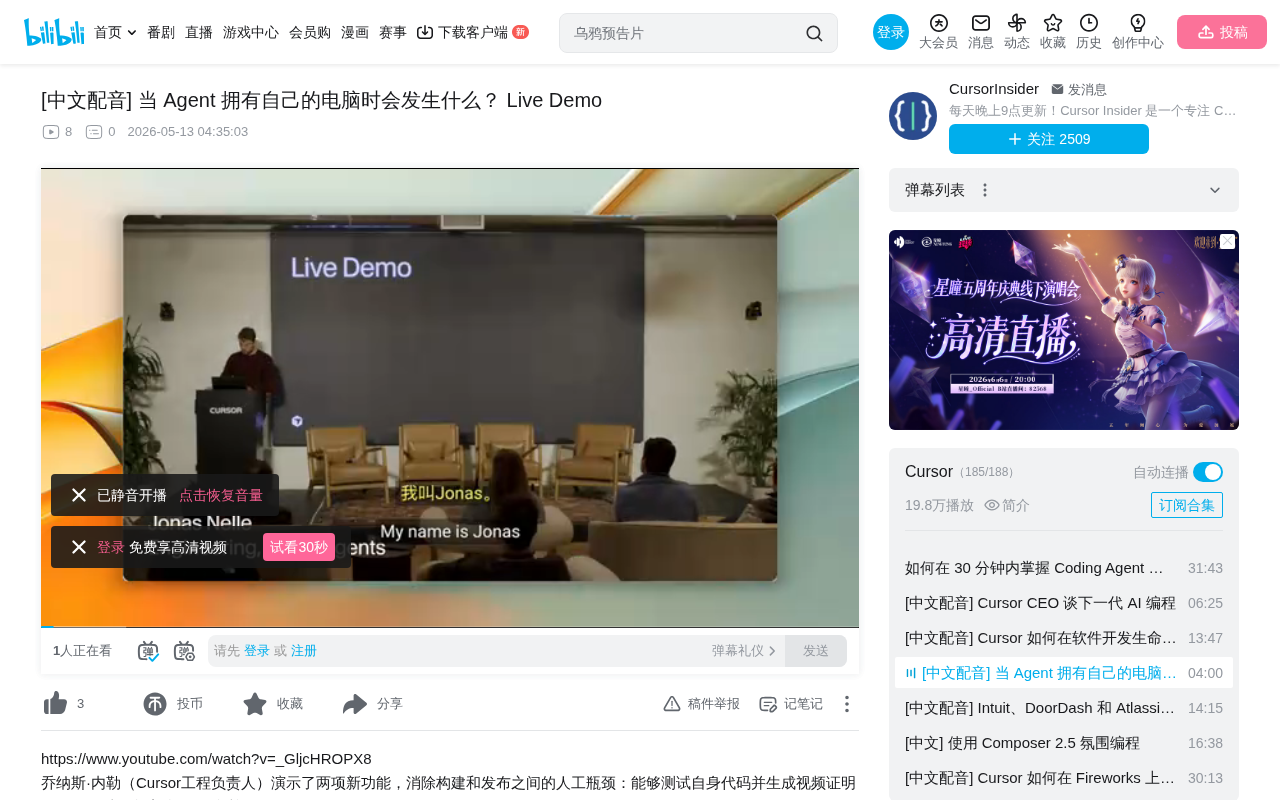
Cursor Cloud Agent Demo: Eliminating Bottlenecks Across the Entire Software Development Lifecycle
Deep analysis of Cursor's Cloud Agent demo showing how cloud VMs, automated test artifacts, and a full-chain control plane systematically eliminate human bottlenecks across the software development lifecycle.