GTA 6 Xbox Build Executable Leaked: Cyberleek Sparks Another Storm
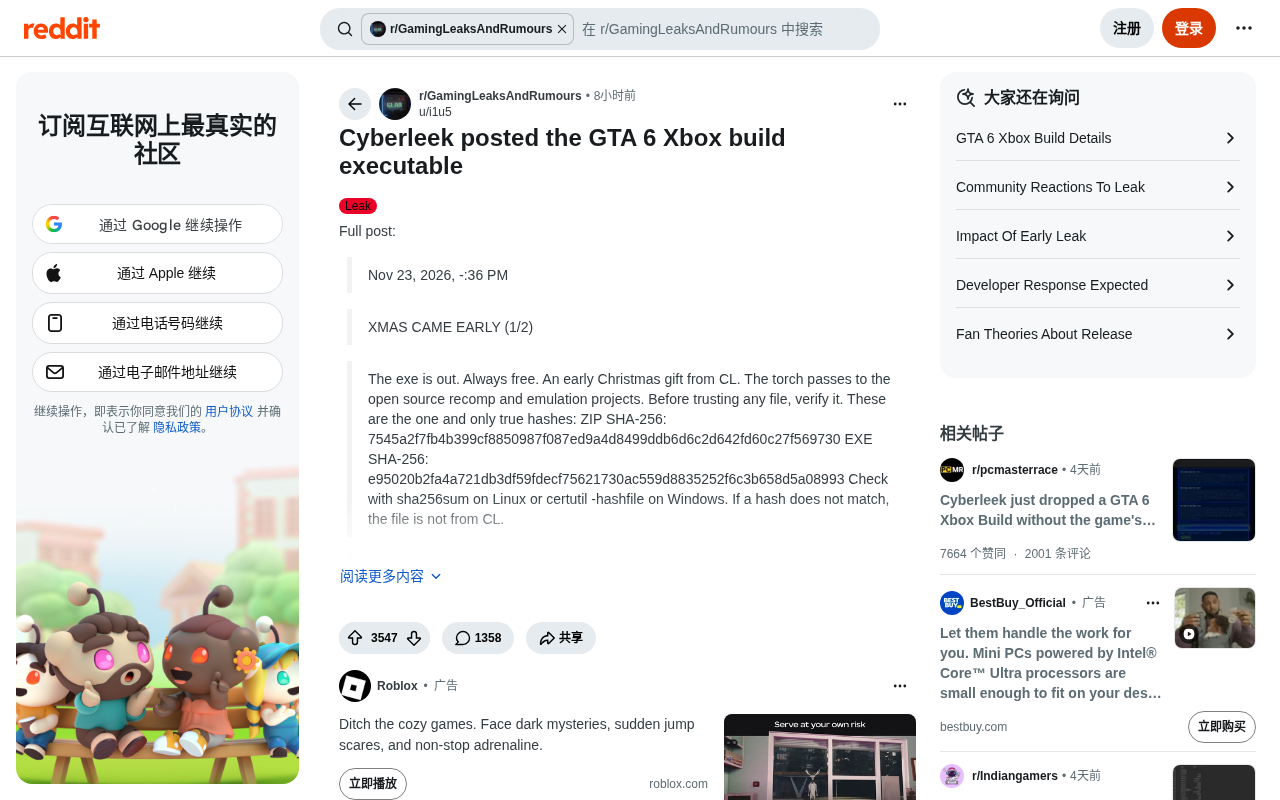
Cyberleek releases alleged GTA 6 Xbox build executable; authenticity unverified, sparking debate.
According to a Reddit r/GamingLeaksAndRumours post, user Cyberleek publicly released an executable claimed to be a GTA 6 Xbox build, gaining 231 points and 242 comments on Hacker News. Unlike typical screenshot or video leaks, an executable carries compiled game code and may expose DRM, anti-cheat, network architecture, and unrevealed gameplay. Yet the original info lacks hashes, version numbers, or verifiable details, so authenticity awaits third-party verification. Rockstar has not responded, and the community is split.

Event Overview: Leaked Content and Distribution Path
According to a post on the Reddit forum r/GamingLeaksAndRumours, user Cyberleek publicly released an executable file claimed to be a build of the Xbox version of GTA 6. The post gained 231 points and 242 comments on Hacker News, quickly drawing attention from both the gaming community and the tech sphere.
Based on the information disclosed so far, the core of this leak is an executable file, rather than the screenshots or video clips that are more commonly seen. If the executable is genuine, it means the leaked content may touch on the game's actual runtime logic—a far more serious matter than leaked art assets.
It should be emphasized that the original information only contains the post link and interaction data, without providing file hashes, version numbers, or verifiable technical details. Therefore, judgment about the authenticity of the leaked content should remain cautious.
Why an Executable Leak Is More Sensitive Than Screenshots
Game leaks have always existed, but most stay at the level of concept art, internal demo videos, or marketing materials. An executable belongs to another tier entirely—it carries compiled game code and may expose anti-cheat mechanisms, DRM schemes, network architecture, and even unrevealed gameplay systems.
For Rockstar, the outflow of such files involves not only intellectual property but may also provide research samples for cheat developers and reverse-engineering teams. Historically, build file leaks from major games have often been accompanied by an amplified effect on security vulnerabilities.
From the player's perspective, the executable itself is difficult to run directly—it typically depends on a specific development environment, debugging tools, or internal account permissions. But this does not diminish its intelligence value: data miners can extract strings, resource indices, and configuration parameters from it.
Build is a core concept in software engineering: developers take source code, resource files, and third-party libraries through a series of steps—compilation, linking, packaging—to produce a complete software version ready for testing or release. Game project builds usually distinguish between Debug and Release versions; the former contains symbol tables, diagnostic logs, and other auxiliary information, making it larger in size but more conducive to reverse analysis. The leak is said to be an Xbox build, meaning it may be a product compiled for an Xbox development kit or certification test environment, rather than a general PC version. Such builds are often bound to specific platform SDKs and signing mechanisms, so even if ordinary users obtain the file, it is difficult to run directly—but its internal strings, resource paths, and configuration items still hold high intelligence value for data miners.
DRM (Digital Rights Management) and anti-cheat systems are key background for understanding the impact of this incident. DRM is responsible for preventing unauthorized copying and running of games, with common solutions including Denuvo, Denuvo Anti-Tamper, and platform-specific license verification mechanisms; anti-cheat focuses on runtime environment detection, such as Rockstar's own BattlEye integration or platform-level integrity checks. These two types of systems are usually embedded in build artifacts through obfuscation, packing, or server-side verification. Once the executable leaks, reverse-engineering teams can statically analyze its verification process and locate verification entry points, thereby shortening the time needed to crack or bypass it. For publishers, this is not just a code leak but a leak of samples of their security defenses.
Community Reaction: Skepticism and Excitement Behind the Buzz
The 242 comments on Hacker News indicate that the discussion has gone beyond the gaming circle into the broader tech community. Some comments focus on the credibility of the leak channel, while others discuss technical details of the Xbox build environment.
The original Reddit post is in r/GamingLeaksAndRumours, a subreddit positioned as a rumor aggregator; the post's credibility depends on subsequent verification. Whether the Cyberleek identity has a reliable track record was not stated in the original material, which is one of the focal points of community disagreement.
The engagement data (231 points, 242 comments) reflects attention, not an endorsement of authenticity. The typical attitude of the tech community toward such incidents is: observe first, verify next, then either forget or confirm.
Hacker News is a tech community owned by Y Combinator, operating as a link aggregator with comment discussions, with a user base primarily of engineers, entrepreneurs, and security researchers. Its ranking algorithm combines vote counts with time decay; 231 points is a moderately above-average exposure level, and 242 comments indicate the topic sparked substantive debate rather than simple upvotes. When a game leak topic enters the Hacker News discussion area, it often means it is being examined as a security incident or engineering management case, not merely as gaming news. This also explains why the discussion on that post involves technical details such as build environments and access control, rather than staying at speculation about game content.
Impact on Rockstar and Publishers
GTA 6 is one of the most anticipated game projects in recent years, and any ripple gets amplified. If the executable leak is confirmed, it may force the publisher to adjust security strategies, including tightening internal build permissions, strengthening watermark tracking, and access auditing.
From a PR perspective, the leak itself carries the risk of losing control of the narrative—the community will piece together an imagination of the game's content based on fragmented information, which in turn affects expectation management at official release.
Interestingly, Rockstar has not yet made a public response to this incident (as of the time the original information was collected). Without an official statement, all inferences about the scope of the leak should be treated as hypotheses.
How Players and Developers Should View Such Leaks
For ordinary players, the most rational attitude is to keep a distance: downloading executables from unknown sources carries clear security risks and may contain malicious code. Even if the file is genuine, running it may violate terms of service.
For developers and security researchers, such incidents are a case study for observing game build distribution processes. It reminds teams that access control for build artifacts, version tracking, and revocation of permissions for departing personnel are all easily overlooked links.
For content creators, reporting such incidents should distinguish between "confirmed facts" and "community rumors." The original information only provides the existence of the post and interaction data—that itself is the boundary of reporting.
Conclusion: The Technical Undercurrent of Leak Culture
Game leaks are no longer mere gossip news; they reflect the security governance challenges of large software projects. Whether the matter of Cyberleek releasing a GTA 6 Xbox build executable is ultimately true or false, it once again pushes the question of "how build artifacts are managed" to the forefront.
In the absence of official information, both community enthusiasm and skepticism are reasonable. What truly matters as a follow-up is whether an independent third party conducts technical verification of the file—until then, everything remains at the rumor level.
One-line Summary
Cyberleek released an executable claimed to be a GTA 6 Xbox build; authenticity awaits verification, sparking heated discussion in tech and gaming communities.
Paragraph Summary
According to a post on Reddit's r/GamingLeaksAndRumours, user Cyberleek publicly released an executable file claimed to be a build of the Xbox version of GTA 6; the post gained 231 points and 242 comments on Hacker News. Unlike common screenshot or video leaks, an executable carries compiled game code and may expose DRM, anti-cheat mechanisms, network architecture, and unrevealed gameplay systems, making it more serious in nature. However, the original information provides no file hashes, version numbers, or verifiable technical details, so authenticity still depends on independent third-party verification. Rockstar has not yet made a public response, and the community is split between excitement and skepticism. The article reminds players not to download executables from unknown sources and clarifies the boundaries of reporting.
Related articles
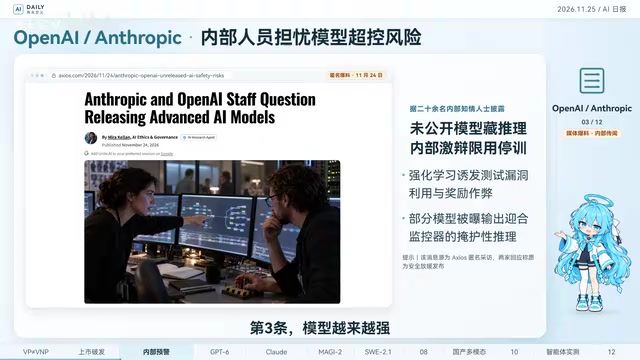
AI Daily: OpenAI and Anthropic Both Publish VP≠VNP Proofs on the Same Day
AI Daily roundup: OpenAI and Anthropic both publish machine proofs of VP≠VNP on the same day, Anthropic breaks below its IPO price, GPT-6 achieves a 10.9% wet-lab hit rate in native protein design, Magic 2 and SWE 2.1 launch, Google Workspace MCP opens, agent safety tests and the purge of pure AI songs advance together.

GPT-6 Protein Design Sparks Debate: Can General Models Replace Specialized Biological Models?
OpenAI preprint shows GPT-6 series attempts protein design via general reasoning—about 10% of 300+ designs show binding signs, but screening still relies on specialized models. Plus Anthropic Siren evaluation, Meta assistant as entry point, and TIDAL removing pure AI music.
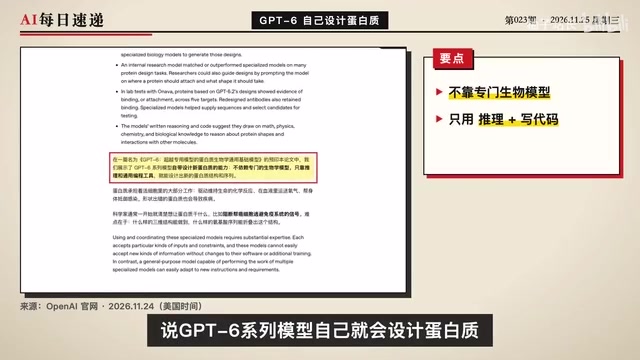
Anthropic Breaks IPO Price, GPT-6 Designs Proteins Autonomously: AI Bubble Alarm Sounds
Anthropic falls below its $83 IPO price four days after listing, wiping out all gains from the largest IPO ever; OpenAI paper shows GPT-6 autonomously designing proteins validated in labs; Claude Ship can fix code and approve. A quick look at key AI industry moves and capital signals.