Hackers Breach 440 Servers Using Codex and DeepSeek Agents

Attackers used Codex and DeepSeek agents to automate breaches of 440 internet-exposed servers, commoditizing AI attack tools.
The article reports a landmark security incident: attackers used Codex and DeepSeek AI coding agents to automate scanning and exploitation of internet-exposed servers worldwide, breaching 440 devices. It analyzes how agents can autonomously write scripts, probe services, generate tailored payloads, and adapt strategy, scaling manual penetration work and lowering the attack barrier. Meanwhile, Novi AI's multi-agent desktop app and NVIDIA's built-in MCP server show agents integrating deeper into computing environments. The article closes with defense recommendations: audit exposed servers, monitor anomalous agent behavior, apply least privilege, and include AI agents in threat models.
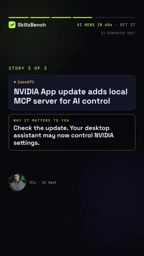
According to a Cybersecurity News report, attackers used Codex and DeepSeek AI agents to breach 440 servers exposed to the public internet worldwide. This incident marks a shift: AI coding agents are evolving from developer productivity tools into automated penetration tools in attackers' arsenals.
Attack Overview: AI Agents as a Breach Weapon
According to disclosed information, attackers used the same AI coding agents developers rely on (Codex and DeepSeekAd) to perform automated scanning and vulnerability exploitation against internet-exposed servers, ultimately compromising 440 devices. Although the report does not detail the specific attack chain, security experts note that such agents can autonomously write scripts, probe services, and exploit known vulnerabilities, dramatically lowering the technical barrier to attack.

The core warning of this incident is clear: attackers are automating, and they are using the very agent tools you depend on daily. While developers use these tools to boost efficiency, attackers use the same capabilities to find your weaknesses.
AI coding agents are AI systems built on large language models that can understand natural-language instructions and autonomously write, modify, and execute code. Typical examples include OpenAI's Codex and coding assistants derived from DeepSeek models. Unlike traditional code completion tools, these agents have multi-step reasoning capabilities: they can accept high-level goals (such as "scan this subnet and find exploitable services"), break them down into subtasks, invoke tools (such as shells or HTTP clients), observe execution results, and iteratively adjust strategy. In development scenarios, this capability is used for automated refactoring, test case generation, and vulnerability remediation; but when the same capability is maliciously exploited, it becomes an automated penetration testing engine. Crucially, an agent's "tool-calling" interface essentially grants it the ability to execute arbitrary commands in the target environment, so once it is pointed at external targets, its behavior is nearly indistinguishable from manual attacker operations—only the speed and scale increase exponentially.
Why Do AI Agents Make Attacks More Dangerous?
Traditional attacks require manually writing exploit code and testing targets by hand, whereas AI agents can automate this process. They can quickly analyze target server responses, generate tailored attack payloads, and even bypass simple defensive rules. More importantly, these agents have a degree of reasoning ability and can adjust strategy based on environmental feedback, thereby filtering out the most vulnerable links among a large number of targets.
In this attack, 440 servers were breached, indicating that attackers can already use AI agents at scale for broad "spray-and-pray" style attacks. For any service exposed to the public internet, this means a sharply expanded risk window.
Known Vulnerability Exploitation is one of the most common intrusion methods used by attackers. It refers to exploiting publicly disclosed CVE vulnerabilities that have patches available against systems that have not been updated in time. Traditionally, attackers need to obtain exploit payloads from vulnerability advisories and exploit code repositories (such as Exploit-DB and Metasploit modules), then manually adapt them to the target environment. AI agents can automate this workflow: they can parse CVE descriptions, retrieve corresponding exploit code, adjust payload parameters based on the target service's version fingerprint, and try variants upon failure. This greatly improves the hit rate of broad scanning—agents no longer blindly send fixed payloads but dynamically generate exploitation attempts based on each target's response. Behind the breach of 440 servers, it is very likely that this "scan—identify—adapt—exploit" loop was running at scale; and if defenders still rely on the assumption that "a few days of patch lag is no big deal," the risk window will be further compressed by the speed of agents.
The "Commoditization" of Attacker Toolkits
Another alarming trend is that AI agents are becoming readily available. Codex and DeepSeek, originally intended to assist programming, are now being used directly by attackers for intrusion. This reflects a reality: attackers and developers share the same tool ecosystem, and defenders can no longer assume attackers lack advanced technical capabilities.
Security teams need to reassess their exposure management strategies. Relying on the assumption that "attackers won't automate" is outdated; proactive auditing and continuous monitoring have become necessary.
Concurrent Developments: AI Agent Management Tools and Ecosystem Evolution
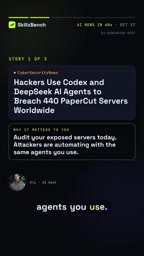
At the same time the attack was exposed, new tool developments also emerged in the AI agent space. According to SiliconANGLE, Novi AI launched a desktop application that allows users to collaborate on and control multiple AI coding agents in a single interface. For developers running multiple agents simultaneously, this provides a centralized management approach.
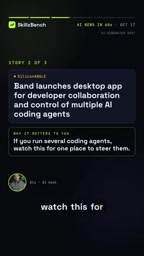
On another front, the latest NVIDIA app update includes a built-in MCP server that allows third-party AI assistants to control graphics and game settings (reported by GameGPU). This means the capability boundary of desktop AI assistants is expanding toward system control.
These developments indirectly show that AI agents are becoming more deeply integrated into computing environments. The incident in which attackers used agents to breach servers sounds a security alarm for this integration.
MCP (Model Context Protocol) is an open protocol proposed by Anthropic that aims to standardize how AI assistants connect to external tools and data sources. You can think of MCP as the "USB-C interface" of the AI world: AI assistants (clients) discover and invoke resources such as file systems, databases, APIs, and even system settings through standardized interfaces exposed by MCP servers, without needing to write separate integration code for each tool. NVIDIA's app including a built-in MCP server means third-party AI assistants can read and modify graphics and game settings through this protocol, marking an expansion of desktop AI assistant capabilities from "conversation" to "system control." From a security perspective, an MCP server essentially exposes system capabilities to AI in a structured way; without fine-grained permission controls, it could become a stepping stone for privilege escalation or lateral movement when exploited by malicious agents. Therefore, while the spread of MCP improves interoperability, it also requires developers to design strict least-privilege controls for every exposed "tool endpoint."
Defense Recommendations: Audit Your Exposure Immediately
Faced with automated attacks driven by AI agents, security teams should take the following measures:
- Immediately audit exposed servers: Check all publicly reachable services and close unnecessary ports and interfaces.
- Monitor anomalous agent behavior: Watch for unusual script execution and frequent vulnerability probing requests on servers.
- Apply least privilege: Ensure AI agents in development environments have only the permissions necessary to complete their tasks, to avoid greater damage if exploited.
- Update security baselines: Include AI agents in threat models and reassess whether existing defenses are sufficient to counter automated attacks.
The breach of 440 servers is not an isolated case but a microcosm of the changing security landscape in the AI era. Attackers have learned to use your tools against you, and defenders must move faster.
One-line Summary
Attackers used Codex and DeepSeek agents to automate the breach of 440 internet-exposed servers, showing the commoditization of AI attack tools.
Paragraph Summary
The article reports a landmark security incident: attackers used Codex and DeepSeek AI coding agents to perform automated scanning and vulnerability exploitation against internet-exposed servers worldwide, successfully breaching 440 devices. The analysis notes that AI agents can autonomously write scripts, probe services, generate tailored payloads, and adjust strategy based on feedback, scaling what traditionally required manual penetration work and greatly lowering the attack barrier. Meanwhile, developments such as Novi AI's multi-agent collaboration desktop app and NVIDIA's built-in MCP server show AI agents integrating more deeply into computing environments. The article concludes with defense recommendations: immediately audit exposed servers, monitor anomalous agent behavior, follow least privilege, and include AI agents in threat models.
Related articles

JobRunner MCP Server: AI Agents Can Now Fix Failed Java Jobs
JobRunner launches an open-source MCP server enabling AI agents to view cluster status, diagnose failures, and recover Java jobs—incident response from any cloud coding environment or existing agent.

MLAI Digital Launches 9 Security Agents: MCP Server Safeguards the Full Lifecycle of Agentic AI
MLAI Digital launches Security MCP Server with nine built-in specialized security agents covering vulnerability discovery, attack simulation, prompt injection detection, API and infrastructure assessment, and accelerated remediation—embedding security validation across the full Agentic AI lifecycle from development to production.

Running Isaac Lab on H100 GPUs: Exploring Better Approaches
Exploring optimization methods for running Isaac Lab on NVIDIA H100 GPUs, including MIG configuration, mixed precision, TensorRT acceleration, and community experience to improve robotics simulation and reinforcement learning efficiency.