Hallucination Detection for Local LLMs in Practice: Low-VRAM Approaches from 1.5B to 120B

Practical low-VRAM hallucination detection for local LLMs, tested across models from 1.5B to 120B parameters.
This article tackles hallucination detection for locally deployed LLMs under a key constraint: consumer GPUs can't afford to load heavyweight verification models on top of the primary model. Drawing on cross-scale testing from 1.5B to 120B parameters, three low-overhead detection strategies emerge: leveraging token probability and entropy signals from inference, self-consistency checking via multiple samples, and lightweight classifiers far smaller than the main model. The shared principle is reusing existing inference resources rather than stacking more compute. The article also notes that small models fabricate facts more readily, while large models are harder to catch when wrong due to their fluency — making cross-scale validation especially valuable.
When deploying large language models (LLMs) locally, hallucination remains one of the most persistent challenges. Models confidently output incorrect information, and local environments typically lack the robust monitoring and validation infrastructure available in cloud deployments. The practical constraint is even tighter: VRAM is already stretched thin, and loading a separate heavyweight verification model on top just to detect hallucinations is simply out of reach for most consumer-grade hardware.
This hands-on writeup, originating from a Reddit community discussion, centers on a single core question — how to detect hallucinations in local models without consuming significant additional VRAM. Testing spanned a wide range from 1.5B small models all the way to 120B large models, seeking patterns that hold broadly.
Why Hallucination Detection Is So Hard in Local Deployments
Cloud services can call on dedicated judge models, retrieval-augmented systems, or even multi-model voting ensembles for cross-validation, since compute is effectively unlimited. Local deployers face a completely different reality: a single GPU has to run the primary model, maintain context space, and leaves almost no headroom for a dedicated detection model.
The most straightforward traditional approach to hallucination detection — running a comparably sized model to cross-check outputs — effectively doubles VRAM requirements, which is impractical for most people. That's precisely what makes this testing effort valuable: it explores lightweight, low-overhead detection paths rather than defaulting to throwing more compute at the problem.
Key Observations Across Model Scales
The testing range from 1.5B to 120B provides a degree of generalizability to the findings. Small and large models typically differ significantly in how they hallucinate: small models have limited knowledge capacity and are more prone to "fabricating" answers on factual questions, while large models achieve higher overall accuracy but are often harder to catch when they do err — their outputs are more fluent and more persuasive.
This is precisely why cross-scale validation of local detection approaches matters. A detection mechanism that only works well within a specific size range has limited practical value. An ideal approach should adapt across model scales — from small models running on a laptop to multi-GPU, billion-parameter deployments.
Viable Approaches for Low-VRAM Detection
Within the constraint of not consuming significant additional VRAM, several low-cost detection signals are worth attention:
- Confidence-based signals from the model's own outputs (token probabilities / entropy): Directly leverages the probability distributions already computed during primary model inference, adding almost zero overhead. Monitors output uncertainty to flag potential hallucinations.
- Self-consistency checking: Samples the model's response to the same question multiple times and compares whether answers remain stable — greater divergence generally signals lower reliability. This approach consumes inference time but does not increase peak VRAM usage.
- Lightweight validator models: Uses a classifier or small model much smaller than the primary model, dedicated solely to judging whether a given output is trustworthy, keeping VRAM overhead to a minimum.
What these approaches share is a principle of reusing existing inference resources rather than simply stacking a heavyweight verification system on top.
Implications for Local Deployers
For developers and enthusiasts running LLMs locally, the core takeaway from this cross-scale testing is clear: hallucination detection doesn't have to mean piling on more VRAM. By making intelligent use of the intrinsic signals in model outputs, combined with lightweight validation mechanisms, it's entirely possible to establish a basic reliability layer under constrained hardware conditions.
One caveat worth noting: since the original material is primarily experiential in nature, specific detection accuracy figures and quantitative comparisons across different model sizes remain to be fleshed out. Readers interested in going deeper are encouraged to consult the original thread discussion and relevant open-source tools to validate which approaches best fit their own use cases.
Conclusion
The growing availability of local LLMs has brought real improvements in privacy, cost, and control — but it also places the burden of reliability squarely on individual users. Under the hard constraint of limited VRAM, identifying hallucinations at minimal cost is becoming an important challenge for the local AI community. The hands-on experience spanning 1.5B to 120B parameters offers a valuable starting point for this ongoing exploration.
Related articles

Altman: Taking OpenAI Public This Year Would Be 'Ill-Advised'
OpenAI CEO Sam Altman says going public this year would be 'ill-advised,' even as the company has confidentially filed IPO paperwork. Here's what it means for AI.

An Open Letter to Dario: If AI Safety Is Real, Open the Model Weights
Developer Jacob's open letter to Anthropic CEO Dario Amodei went viral on Hacker News, challenging the contradiction between AI safety rhetoric and closed-source models: if safety truly matters, why not open the weights?
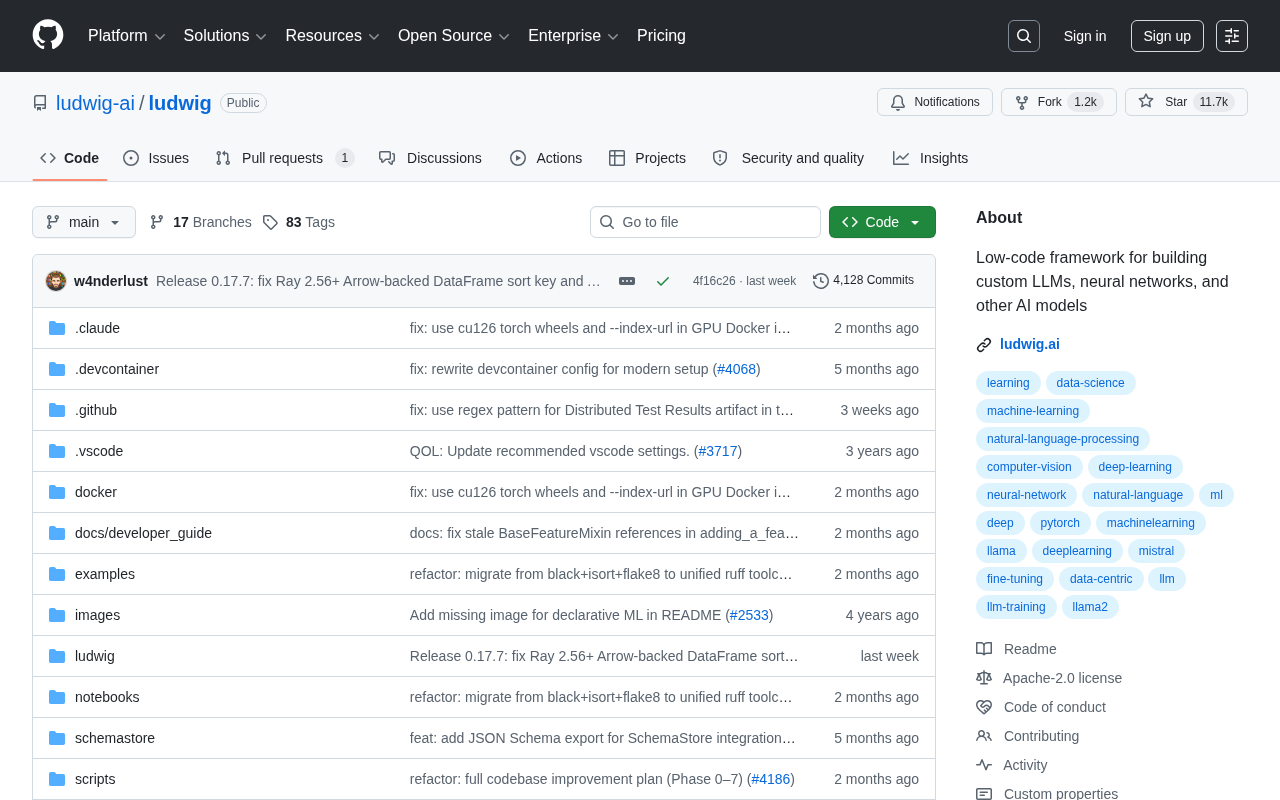
Ludwig: Building Custom LLMs and Neural Networks with Declarative Low-Code Configuration
Ludwig is an open-source low-code ML framework that builds custom LLMs and neural networks via declarative YAML config — no boilerplate training code required.