Hands-On with GPT-Image-2: One Prompt Generates Stunning Images — Where Does This Leave Designers?

GPT-Image-2 generates professional-grade images from a single prompt, redefining AI image generation.
OpenAI's GPT-Image-2 lowers the barrier to AI image generation to its minimum — users need only a single natural language sentence to produce professional-grade commercial posters, photorealistic portraits, logos, comics, and more. Its aesthetic quality rivals professional designers, and its human portraits are virtually indistinguishable from real photos, raising concerns about the end of the "seeing is believing" era. The model directly threatens execution-level design work, while high-level creative roles still require human leadership.
OpenAI's newly released GPT-Image-2 model is redefining the boundaries of AI image generation in a truly jaw-dropping way. A single prompt can produce work rivaling professional designers — from commercial posters to photorealistic portraits, brand logos to Japanese-style fashion lookbooks, it can do nearly anything. Based on actual testing, this article shows you exactly where this model excels.
GPT-Image-2: One Prompt, One Image — The Barrier to Entry Has Never Been Lower
In the past, using AI image generation tools required users to painstakingly craft lengthy prompts and repeatedly tweak parameters just to get a barely satisfactory result. So-called "Prompt Engineering" was once the core skill in AI image generation — with early tools like Midjourney and Stable Diffusion, users needed to master specific syntax structures, such as weight markers (e.g., "masterpiece:1.5"), Negative Prompts to exclude unwanted elements, and even technical parameters like Sampler and CFG Scale. A mature prompt often ran hundreds of English words, covering subject description, style references, lighting conditions, lens parameters, and more.
But GPT-Image-2 has completely changed the game. At its core, the model's underlying architecture integrates the semantic understanding capabilities of large language models, automatically "translating" users' natural language descriptions into precise visual generation instructions — eliminating the need for manually crafted complex prompts.
In testing, a single short Chinese sentence successfully generated high-quality images like a "Musk vs. Cook PK" comparison poster and smartphone brand website pages. The model's ability to understand user intent is remarkably strong — you don't need to describe every detail of the scene like you're writing an essay; it accurately captures the effect you're looking for.
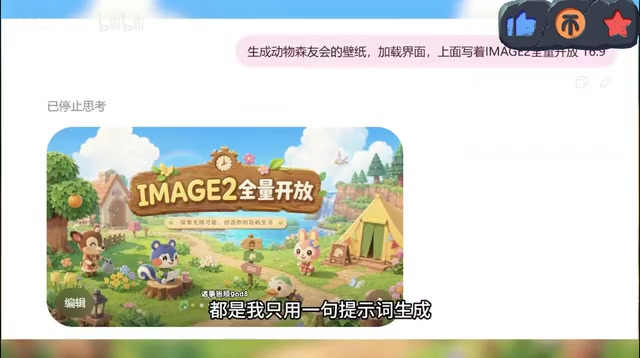
This means the barrier to entry for AI image generation has been drastically lowered. Where you once needed time to learn prompt engineering techniques, now you just describe what you want as naturally as talking to another person.
Aesthetics On Point: Japanese-Style Fashion Lookbook Steals the Show
Many people's stereotype of AI-generated images is "usable but not beautiful" — aesthetic quality has always been a weak point. GPT-Image-2's performance in this regard is genuinely impressive.
An AI model's "aesthetics" fundamentally derive from the quality and diversity of its training data. Earlier image generation models (like the GAN-based StyleGAN series) could produce realistic images but lacked systematic understanding of composition, color palettes, and layout as design dimensions. GPT-Image-2's aesthetic breakthrough likely stems from OpenAI incorporating a large volume of professionally curated design works, photography, and layout examples into its training data, while using techniques like RLHF (Reinforcement Learning from Human Feedback) to teach the model human preferences for "beauty." Additionally, its multimodal architecture enables the model to simultaneously understand the correspondence between text and visuals, automatically following design principles during generation — such as rule-of-thirds composition, complementary color matching, and clear visual hierarchy.
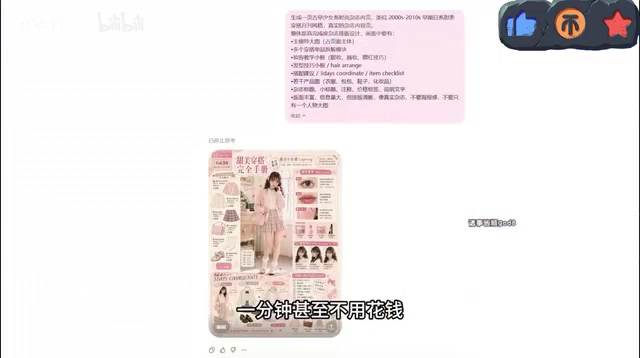
Testers attempted to generate an image in the style of a Japanese fashion lookbook. With just one prompt, the model output a design draft with refined layout, harmonious tones, and an irresistible urge to flip through it. From color schemes to layout, font choices to whitespace — every detail exudes the aesthetic sensibility of a professional designer.
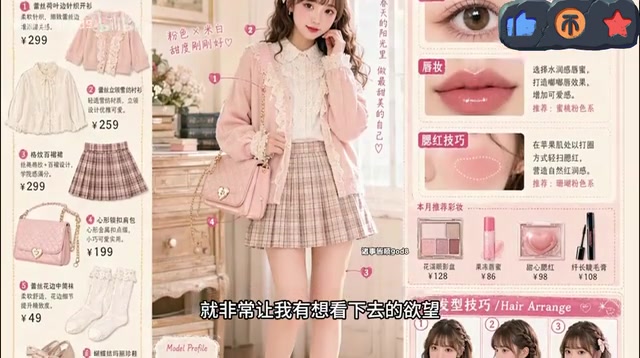
Consider this: using traditional methods (what the tester jokingly called "artisanal creation") to produce images of equivalent quality, a designer would need to go through multiple stages — sourcing materials, compositing, refining details, and layout — costing at least several hundred yuan in labor. Now, one sentence, one minute, and the cost is essentially zero.
AI-Generated Portraits Are Indistinguishable from Real Photos: The Era of "Seeing Is Believing" Is Ending
If the breakthrough in design-oriented images was somewhat expected, GPT-Image-2's performance with photorealistic human portraits is genuinely unsettling.
During testing, the model generated a photo of a woman, along with "screenshots from a variety show interview." The tester admitted that despite three years of experience with AI image generation tools, they still couldn't determine whether these images were AI-generated. Skin texture, light and shadow relationships, subtle facial micro-expressions — every detail approaches reality.
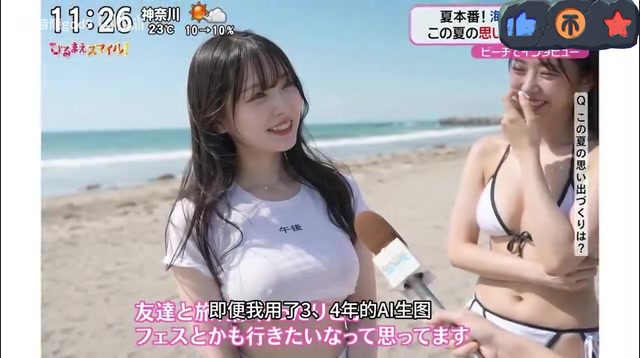
This points to a stark reality: The era of "seeing is believing" is coming to a definitive end. When AI-generated portrait photos are indistinguishable from real ones even to professional users, the credibility of images as evidence faces unprecedented challenges. Fake news, identity fraud, online scams, and other deepfake problems may intensify further.
Deepfake technology, which first captured public attention in 2017, has evolved from crude face-swap videos to today's nearly undetectable static image generation. GPT-Image-2's breakthrough in photorealistic portraits pushes this issue to new heights. Currently, global approaches to combating deepfakes fall into three main directions: first, technical detection — tools like Microsoft's Video Authenticator and Adobe's Content Authenticity Initiative (CAI) identify AI-generated content by analyzing pixel-level features; second, standards development — C2PA (Coalition for Content Provenance and Authenticity) is working to embed tamper-proof provenance metadata into digital content; third, legal regulation — the EU AI Act has classified deepfakes as high-risk applications, requiring generated content to be clearly labeled as AI-generated. However, the pace of technological iteration far outstrips regulatory efforts, and this "sword and shield" battle continues.
An All-in-One AI Design Assistant: Illustrations, Logos, Comics, and Memes All Covered
Beyond the scenarios above, GPT-Image-2 demonstrates remarkable adaptability across multiple use cases:
- Commercial illustrations: A single sentence produces stylistically consistent, detail-rich illustrations
- Brand logo design: Rapidly generates logo concepts with clean composition and high recognizability
- Comic creation: Automatically understands narrative logic, generating panel-ready comic frames
- Meme creation: Precisely captures emotional expression, generating memes with built-in viral potential
Each category requires just one prompt, and the model automatically matches the corresponding visual style and design conventions. This "all-in-one" performance means it's not merely an image generation tool — it's more like an AI design assistant with a massive built-in knowledge base of design principles.
While OpenAI has not publicly disclosed the complete technical details of GPT-Image-2, based on its performance, the model likely employs a Natively Multimodal architecture — where text understanding and image generation share the same Transformer backbone network, rather than the earlier DALL·E series' design of separating text encoders and image decoders. The advantage of this architecture is that the model can process language and visual information in a unified representation space, achieving more precise semantic-visual alignment. From a competitive landscape perspective, GPT-Image-2's release directly challenges Google's Imagen 3, Midjourney V6, and Stability AI's Stable Diffusion 3. But its greatest differentiator lies in deep integration with the ChatGPT ecosystem — users can iteratively modify images within a conversation, enabling a truly "conversational design" workflow.
What Does GPT-Image-2 Mean for the Design Industry?
Facing GPT-Image-2's capabilities, an unavoidable question emerges: Where does the designer's value lie?
After generating a smartphone brand website page, the tester remarked: "What can we designers still do besides fixing the text for it?" While somewhat tongue-in-cheek, this genuinely reflects widespread anxiety in the industry.
In fact, the design industry facing technological disruption isn't new. Looking back, during the Desktop Publishing (DTP) revolution of the 1980s, the emergence of PageMaker and QuarkXPress rendered traditional typesetters largely obsolete; in the 2000s, the rise of online design tools like Canva enabled non-professionals to create basic design materials, squeezing the survival space for junior designers. Each technological shift follows a similar pattern: low-skill execution work gets automated, while high-level creative strategy and brand thinking become even scarcer. The current AI disruption of the design industry is essentially an acceleration of this trend — according to a 2024 McKinsey report, approximately 60% of design roles have over 30% of their work content that can be automated by generative AI, but for higher-order work involving user research, brand strategy, and cross-media creative integration, AI's replacement rate is less than 5%.
Objectively, GPT-Image-2's greatest impact is currently on execution-level design work — tasks primarily involving asset compositing, basic layout, and simple photo editing are being replaced by AI at extremely low cost and high efficiency. But in areas requiring deep thinking — brand strategy, user experience design, creative direction — human designers remain irreplaceable.
The real change may be this: designers' roles will shift from "executors" to "reviewers" and "creative directors." The future design workflow will likely be — AI rapidly generates numerous options, while humans are responsible for selection, refinement, and final decision-making.
Final Thoughts
The emergence of GPT-Image-2 marks AI image generation's official entry into the "one-prompt era." It represents not only a qualitative leap at the technical level but also demonstrates disruptive productivity in practical applications. On the other hand, it raises profound societal questions — when anyone can easily generate photorealistic fake images, how do we rebuild trust in visual information? This question may be even more worthy of deep reflection than the technology itself.
Related articles
 Product Reviews
The Programmer's Desk Setup Guide: Building a Workspace That Feels Like Home
Discover how programmers build productive, comfortable workspaces. From multi-monitor setups to ergonomic design, explore the desk philosophy that drives focus and flow.
 Product Reviews
Qoder vs Cursor Real-World Comparison: Which $20/Month AI IDE Is Better?
Hands-on comparison of Qoder vs Cursor AI IDEs: Agent autonomy, human interaction count, and architecture decisions. Qoder needed only 2 interactions vs Cursor's 8.
 Product Reviews
Cursor Cloud Agent Demo: Eliminating Bottlenecks Across the Entire Software Development Lifecycle
Deep analysis of Cursor's Cloud Agent demo showing how cloud VMs, automated test artifacts, and a full-chain control plane systematically eliminate human bottlenecks across the software development lifecycle.