HarmonyOS Hits 90 Million Devices: Mate 90 and Ascend Ecosystem Breakthroughs

HarmonyOS hits 90M devices, Kirin 9050 Pro debuts, and DeepSeek open-sources Ascend AI components.
China's domestic tech ecosystem saw a wave of major milestones this week. HarmonyOS surpassed 90 million installed devices, adding 10 million in just 40 days. DeepSeek open-sourced a full Ascend foundational toolkit to rival NVIDIA's CUDA, providing a replicable blueprint for migrating large models to domestic hardware. Huawei launched the Mate 90 series featuring the Kirin 9050 Pro with a first-of-its-kind logic-folded architecture, earning praise from CCTV for sidestepping process-node constraints through architectural innovation. The modular XMAGE Z10 camera and building-block cases hint at a hardware platform strategy for flagships. HarmonyOS also expanded into in-flight connectivity, smart parks, smartwatches, and intelligent vehicles, evolving from a single OS into a full-stack digital foundation.
HarmonyOS Reaches a Scale Inflection Point
At its National Day product launch, Huawei announced a milestone figure: as of September 29, the combined installed base of HarmonyOS 6 and 7 has surpassed 90 million devices. Even more striking is the growth rate — it took HarmonyOS just over 40 days to add the last 10 million devices, going from 80 million to 90 million.
At this pace, the 100 million mark is now a matter of when, not if. The HarmonyOS ecosystem already boasts over 450,000 apps and services, 35,000 games, and more than 11 million developers worldwide, firmly establishing it as China's second-largest mobile operating system. With the Mate 90 series now on sale, this momentum is only set to accelerate. Reaching mass scale is the critical threshold that determines whether an OS ecosystem can achieve a positive feedback loop — 90 million devices signals that HarmonyOS has crossed the tipping point where developers are genuinely motivated to invest.
DeepSeek Open-Sources Full Ascend Toolkit, Accelerating China's AI Stack
The most industrially significant event of the week came on September 30, when DeepSeekAd open-sourced a complete set of foundational components for Huawei's Ascend platform — positioning them as a counterpart to NVIDIA's CUDA. The toolkit includes a programming language and five core compute components, all battle-tested with large model workloads.
Huawei was deeply involved throughout the process, co-optimizing the stack end-to-end. The Ascend 950's 128-card supernode configuration now delivers performance approaching the hardware's theoretical ceiling. For China's domestic AI ecosystem, this open-source release carries two key implications: first, it dramatically lowers the cost of migrating and adapting large models from NVIDIA platforms to Ascend; second, it fills a long-standing gap in the domestic AI software toolchain at the foundational level.
For years, the real bottleneck for domestic AI compute hardware hasn't been the chips themselves — it's been the software ecosystem moat that CUDA represents. By open-sourcing these Ascend components, DeepSeek — as a leading large model team — has effectively provided a battle-validated, replicable blueprint for domestic software-hardware co-development. This carries significant symbolic weight in challenging NVIDIA's ecosystem lock-in.
Background: What Is CUDA and Why Does It Matter? CUDA (Compute Unified Device Architecture) is a parallel computing platform and programming model launched by NVIDIA in 2006, enabling developers to directly harness GPU compute power. Over nearly two decades, CUDA has cultivated a massive ecosystem of software libraries, toolchains, and developer communities. Mainstream deep learning frameworks like PyTorch and TensorFlow are deeply dependent on CUDA. This dependency creates an extremely high switching cost — even when competing hardware from AMD, Intel, or Huawei Ascend offers competitive raw performance, developers often cannot migrate because no equally mature software toolchain exists. This has been Ascend's core challenge: the chips themselves aren't the weakest link; the missing piece is a battle-proven programming infrastructure that developers can readily adopt. DeepSeek's open-sourced Ascend components effectively give domestic compute platforms a CUDA-equivalent software entry point — a breakthrough no less significant than the hardware itself.
Mate 90 Series Launch: Kirin Chips Take a Different Lane
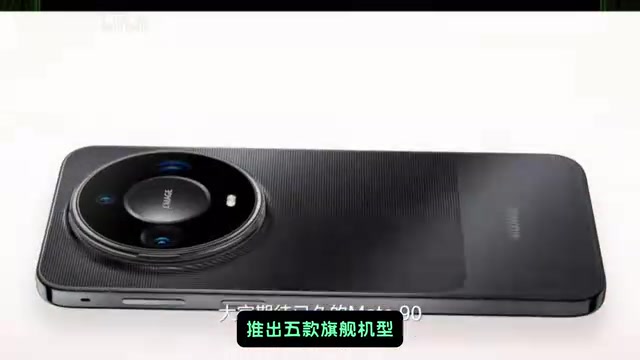
On October 1, Huawei held the Mate 90 series launch event, unveiling five flagship models that went on sale immediately, starting at RMB 5,999. All models are powered by the new Kirin Tao series chips, with the top-tier configuration featuring the Kirin 9050 Pro — claimed to be the world's first chip with a logic-folded architecture — delivering a 31% overall performance improvement over its predecessor.
On October 2, CCTV's flagship commentary segment Zhubo Shuo Lianbo praised the Mate 90 series, colorfully describing the Kirin 9050 Pro as "putting a steam-powered heart into a steam engine." CCTV noted that by leveraging its logic-folded architecture, the chip sidesteps the traditional race to shrink process nodes, charting a new development path for China's semiconductor industry.
The key phrase here is "a different lane." Constrained by access to advanced manufacturing processes, Huawei has chosen architectural innovation over raw process scaling as its performance lever — and the logic-folded architecture is the direct product of that strategy. The Mate 90 ships with HarmonyOS 7 pre-installed, adding new capabilities in broadcast media, live streaming, and AI-powered interaction, further reinforcing the flagship-tier carrying capacity of the HarmonyOS ecosystem.
Background: What Is a Logic-Folded Architecture? A "logic-folded architecture" refers to a chip design approach that improves performance density per unit area by vertically stacking or restructuring computational logic units — rather than relying on ever-smaller transistors through advanced lithography. Conventional performance gains depend heavily on process node iteration (e.g., 7nm → 5nm → 3nm), but this path demands increasingly stringent manufacturing equipment and processes. Facing export controls on advanced nodes, Huawei has pivoted to architectural-level breakthroughs — extracting performance gains by reorganizing how compute units are structured, not by shrinking their physical size. This strategy shares underlying logic with Apple's Chiplet packaging and AMD's 3D V-Cache technology; all belong to the "packaging and architectural innovation" school of thought, representing a common direction the semiconductor industry is exploring as traditional process scaling approaches its ceiling.
Imaging and Accessories: A Modular Hardware Experiment
The Mate 90 series also brings an upgraded imaging brand identity, with the official launch of Huawei XMAGE Sharp Image, positioning it as a world-class imaging culture brand. The new devices feature a variable aperture, a third-generation Red Maple original color camera, and a 200-megapixel telephoto lens, delivering across-the-board improvements in portrait, telephoto, and video capture.
Perhaps more intriguing is the hardware modularity angle. Huawei unveiled the XMAGE Z10 modular camera at RMB 5,999, featuring a 1-inch sensor and 24–240mm 10x continuous optical zoom, connecting to the phone via a Super Mount for professional-grade shooting and continuous-zoom video. Also launched is the Mate 90 modular protective case starting at RMB 139, supporting free mix-and-match modular customization.
From modular camera to building-block cases, Huawei is experimenting with turning the smartphone from a monolithic terminal into an extensible hardware platform. If this approach gains traction, it could carve out meaningful new territory in flagship differentiation.
Background: A Brief History of Modular Phones The concept of the modular smartphone is not new — Google's Project Ara (2013–2016) was the most prominent early attempt, envisioning a phone where users could swap out cameras, batteries, and processors like building blocks. It was ultimately cancelled due to structural complexity, cost, and performance trade-offs. Huawei's approach is fundamentally different: the XMAGE Z10 doesn't fully decompose the phone; instead, it uses an "add-on expansion" model via the Super Mount, preserving the phone's structural integrity while offering professional-grade imaging extensions. This lighter modular approach — closer in spirit to Sony's Xperia modular accessories or the Leica M system — sidesteps the structural challenges of full modularity and is commercially more viable. Whether it can cultivate a critical mass of users, however, remains to be seen.
HarmonyOS Expands Across Scenarios
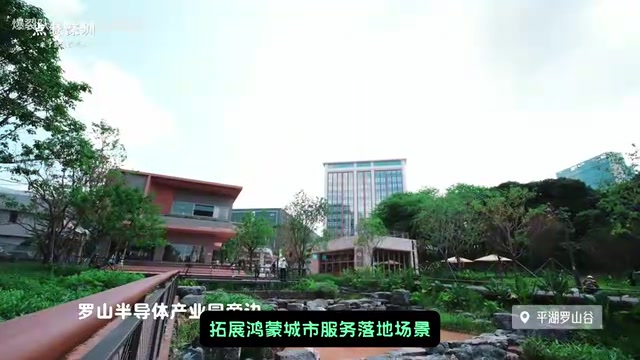
This week saw HarmonyOS roll out across multiple new use cases simultaneously. On September 28, QQ Pet launched on HarmonyOS, bringing lightweight virtual companion interactions and enriching the social entertainment experience on-device. In Shenzhen, the Longgang Luoshanguyu HarmonyOS Park officially opened, using OpenHarmony as its foundation to enable device interconnection and AI-powered smart operations across the entire park, piloting a new "park + economy" model.

Huawei also announced a system-level in-flight connectivity partnership with China Eastern Airlines. HarmonyOS 7 phones can connect to China Eastern's in-flight Wi-Fi in a single tap — no app download or page redirect required. Mate 90 series users receive one year of high-speed in-flight Wi-Fi as a benefit. Meanwhile, Bilibili officially launched a HarmonyOS app for Huawei Watch, allowing users to watch videos, view live bullet comments, and download cached content directly on the watch, tailored for fragmented usage moments.
On the automotive front, the Harmony Intelligent Mobility launch event introduced several new models including the AITO R7, new AITO vehicles, and the享界 V8. AITO models come equipped with an 800V high-voltage platform and L3-ready architecture. Huawei also signed a new five-year cooperation agreement with SERES, with AITO adopting an exclusive dedicated retail model and both parties forming a dedicated AITO joint team.
Closing Thoughts: HarmonyOS Is Evolving from an OS into a Digital Foundation
Looking at this week's developments as a whole, HarmonyOS has clearly transcended the role of a standalone operating system. From open-sourcing Ascend AI components to architectural innovation in Kirin chips, from 90 million devices in the field to simultaneous deployments across travel, urban infrastructure, imaging, and consumer electronics — HarmonyOS is becoming a full-stack digital foundation connecting chips, terminals, AI, and urban governance. A new paradigm of breaking through via technology and sustaining growth through real-world use cases is injecting lasting momentum into China's domestic technology ecosystem.
Related articles

Chain of Thought Isn't Just for AI: How Humans Can Use CoT to Improve Thinking Quality
Chain of Thought isn't just a prompt trick for large models. Starting from a Hacker News discussion, this article analyzes why CoT works for human thinking too, breaks down actionable ways to transfer it, and highlights the key differences between human CoT and machine CoT.
Cloudflare Teams Up with OpenAI: Closi…
Cloudflare Teams Up with OpenAI: Closing the Loop from Vulnerability Discovery to Defense with AI
Cloudflare uses OpenAI Daybreak to investigate security vulnerabilities and generate reviewable remediation plans, while developers use Codex to boost coding efficiency and quality.

Orca Multi-Agent Orchestration in Practice: A Guide to Parallel Collaboration with Claude and Codex
Orca is Stable AI's free open-source agent workbench supporting 34 agents like Claude Code and Codex in parallel. Learn its Git worktree isolation, multi-model orchestration, and mobile management.