Harness Architecture Explained: The Next-Generation Design Paradigm for Agent Development

Harness architecture is the emerging standard for production-grade AI agents, combining models with execution infrastructure.
Harness architecture splits an AI agent into the model itself and everything around it — sandboxes, feedback loops, memory, and orchestration. Sitting above prompt engineering and context engineering, it enables agents to run continuously, safely, and in a controlled manner. Understanding Harness is now a key differentiator in LLM developer interviews.
In the field of large language model (LLM) application development, a design paradigm known as Harness Architecture is rapidly entering the mainstream. More and more technical interviewers are focusing on whether LLM application developers have hands-on experience with complex Agent projects — and projects built on Harness architecture are among the most valued. This article provides a systematic overview of what Harness is, how it relates to the evolution from prompt engineering to context engineering, and why it is becoming the standard architecture for modern AI agents.
What Is Harness Architecture
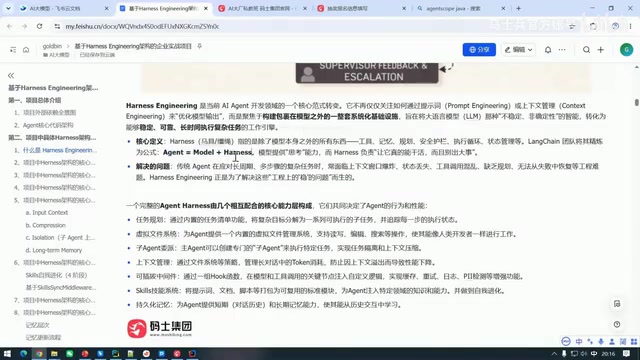
First, let's clear up a common misconception: Harness is not a technology or a framework (like LangChain) — it is an architectural design paradigm for agents. The word "harness" literally refers to the gear used to control and guide a horse, which vividly captures the core idea: constraining and directing agent behavior. This naming reflects a fundamental tension in agent engineering — large language models possess powerful generative capabilities, but without external structural constraints and support, that power can easily go off the rails or fail to sustain, much like a wild horse that needs a harness to be ridden.
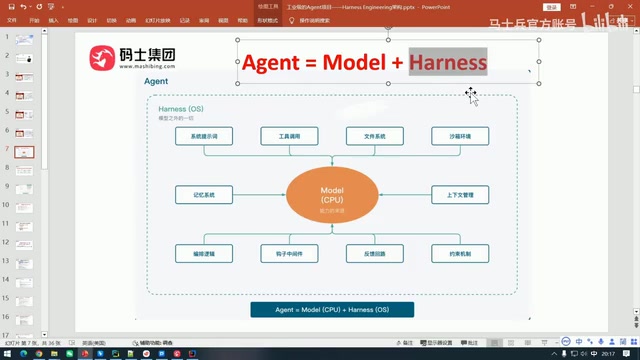
In the simplest terms, Harness architecture splits an agent into two parts:
- The large language model itself (analogous to a CPU)
- Everything else around the model (collectively called the Harness, analogous to an operating system)
This analogy is not arbitrary. Just as a CPU only handles instruction execution while the operating system manages resource scheduling, process management, and security isolation, Harness architecture follows the same principle of separation of concerns — the model focuses on cognitive decision-making, while the Harness focuses on the execution infrastructure. This decoupled design allows the model to be swapped or upgraded at any time while the rest of the system remains stable, resulting in strong maintainability and extensibility.
A modern agent can be expressed as: Agent = Model + Harness. The Harness includes components such as system prompts, tool calling, file systems, sandbox environments and sandbox management, memory systems, task orchestration, hooks, feedback loops, and constraint mechanisms. The model handles thinking and decision-making; the Harness ensures those decisions can be executed safely, continuously, and in a controlled manner.
This concept has surged in prominence recently for an important reason: virtually all of today's mainstream, high-performing agents use this architecture. Frequently discussed community projects like Hermes Agent and OpenCode, as well as the widely popular Claude Code, are all practitioners of Harness architecture. After seeing the real-world results of this architecture, enterprises are also beginning to adopt it in their own products.
Important distinction: Harness and Hermes are two completely different concepts. Harness is an architectural design paradigm; Hermes is a general-purpose agent tool built on the Harness architecture — one you can install and use locally. The two should not be confused.
The Evolution of Three Engineering Paradigms
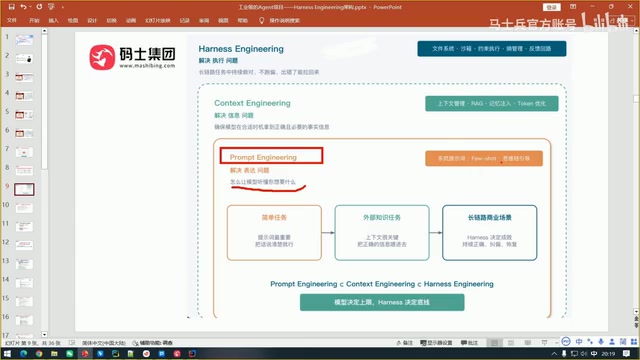
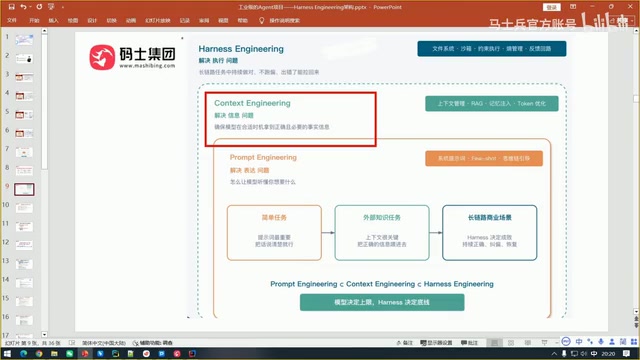
To truly understand the value of Harness, it helps to place it within the broader evolution of agent engineering. There is a clear containment relationship: Prompt Engineering ⊂ Context Engineering ⊂ Harness Engineering.
Prompt Engineering: Getting the Model to Understand You
Prompt engineering addresses the core challenge of "getting the model to understand what you want it to do," using techniques like few-shot examples and chain-of-thought (CoT) prompting. It rose to prominence in the GPT-3 era, when researchers discovered that carefully crafted natural language instructions could dramatically improve model output quality without modifying model weights. Techniques like Zero-shot CoT (simply adding "let's think step by step"), Self-Consistency (multi-path sampling with the most consistent answer), and Tree of Thoughts (tree-structured multi-path reasoning) followed in succession, elevating prompt engineering into a systematic methodology.
However, this paradigm gradually hit its ceiling: if all logic is packed into prompts, they grow longer and longer, eventually exceeding the model's maximum context window — a dead end. The deeper limitation is that prompt engineering is fundamentally a "single-turn or few-turn" optimization approach, ill-suited for complex agent scenarios that require continuous operation and dynamic decision-making.
Context Engineering: What the Model Gets to See
To overcome these limitations, Context Engineering emerged. It focuses on "providing the model with the right, necessary context at the right time," including memory injection in RAG (Retrieval-Augmented Generation), token optimization, context summarization, and context pruning.
RAG is the most representative real-world application of context engineering. Its core idea is: rather than baking all knowledge into model parameters, dynamically retrieve relevant snippets from an external knowledge base via vector search at inference time and inject them into the model's context. This approach breaks the static limitations of parametric knowledge, allowing the model to access continuously updated enterprise documents, databases, or internet information. The RAG tech stack includes vector databases (such as Pinecone, Weaviate, Chroma), embedding models, and reranking techniques. In fact, the much-discussed RAG is essentially a subset of context engineering.
Yet context engineering also has a ceiling: it can ensure the model receives accurate factual information, but it cannot monitor whether the model makes errors during decision-making, whether tool calls fall into infinite loops, or whether file operations cross safety boundaries. Context engineering remains an "input-side" optimization and lacks control over the execution process.
Harness Engineering: How the System Keeps Running
Harness Engineering (also called "Harness Architecture") is precisely designed to address these gaps. It builds on prompt engineering and context engineering, further introducing file systems, sandboxes, constrained execution, context management, and crucially, a Feedback Loop.
The core role of the feedback loop is error correction — when an agent encounters an error or deviation, the system drives it to re-evaluate its intent and re-plan its tasks. From a control theory perspective, the feedback loop gives the agent system closed-loop control capability: observe the current state → compare with the target state → calculate deviation → drive corrective action → repeat. This enables the system to continuously converge toward its goal even in the presence of disturbances and uncertainty. This is fundamentally different from the early open-loop "question-answer" model. In other words, Harness engineering is no longer just about "what to say" and "what to see" — it's about "how the system keeps executing, how it observes, how it corrects errors, and how it recovers." This is the truly difficult part of building complex agents.
Key Elements of Enterprise-Grade Multi-Agent Collaboration
A complete enterprise-grade Harness agent typically integrates the following core capabilities:
- Multi-Agent Collaboration: Multiple agents divide labor to complete complex tasks, rather than relying on a single model to do everything. In practice, this is typically implemented as an Orchestrator-Worker pattern: a top-level agent is responsible for task decomposition and scheduling, while multiple sub-agents execute specific subtasks in parallel or in series, with the orchestrator consolidating the results. This architecture improves parallel efficiency while keeping each agent's responsibilities focused, reducing the risk of single points of failure.
- Sandbox Environment: Provides secure isolation for high-risk actions such as code execution and file operations, maintaining safety boundaries. Sandbox technology (typically based on containerization solutions like Docker, or lighter-weight WebAssembly runtimes) limits the side effects of an agent to a controlled virtual environment — even if the model produces harmful output or erroneous operations, it will not affect the host system or real data. This is one of the prerequisites for enterprise-grade agents to move from "lab prototypes" to "production deployments."
- Self-Evolving Skill System: The agent can accumulate and optimize its own skill library during operation.
- Human-in-the-Loop: Retaining human review and intervention interfaces at critical nodes to ensure controllability. Human-in-the-loop is not a compromise on automation but a risk tiering strategy: delegate low-risk, high-frequency standard operations to the agent for autonomous execution; mandate human confirmation for high-risk, low-frequency critical decisions (such as deleting data, sending external emails, or financial approvals). This design preserves automation efficiency while providing a final safety net.
- Feedback Loop and Error Correction Mechanisms: Enabling the agent to recover from errors and re-plan.
These elements together form an agent system that can "run continuously, safely, and in a controlled manner" — rather than a prototype toy that spirals out of control or gets stuck in an infinite loop after a few steps.
Why Interviewers Favor Harness Project Experience
Today, when evaluating LLM application developers, interviewers particularly value candidates who have one or two complex agent projects under their belt. The reason is straightforward: Harness architecture covers the most challenging aspects of engineering deployment — multi-agent orchestration, sandbox security, feedback-based error correction, human-in-the-loop design, and more — thoroughly testing an engineer's system design and engineering execution capabilities.
From the hiring perspective, an engineer who can independently design and deploy a Harness architecture demonstrates not only an understanding of LLM capability boundaries, but also multi-dimensional engineering competencies spanning distributed systems, security engineering, and state management — precisely the composite talent profile that is currently scarce in the market.
If a resume clearly presents a complete project built on Harness architecture, interviewers will often dive deep into that single project and may not even need to assess anything else. For developers currently job hunting, putting a solid Harness project on the resume is an extremely cost-effective preparation strategy.
Additionally, it's worth noting: Python remains the preferred language for LLM agent development. More than 80% of LLM-related job postings require Python, and its ecosystem advantages are especially evident in agent development — whether it's agent frameworks like LangChain and LlamaIndex, or infrastructure libraries like Hugging Face Transformers, vector database clients, and sandbox runtimes, Python's ecosystem depth and community activity far surpass other languages.
Summary
Harness architecture represents a conceptual leap in agent development — from "tuning the model" to "governing the system." It doesn't replace prompt engineering or context engineering; instead, it encompasses both and fills in the critical gaps of execution, observation, constraint, and error correction. This evolutionary path — from optimizing single outputs (prompt engineering) to managing dynamic context (context engineering) to controlling a fully running system (Harness engineering) — reflects the industry's deepening understanding of LLM applications: truly production-grade agents are never just a carefully crafted prompt, but a rigorously engineered human-machine collaborative operating system. For engineers who want to establish themselves in the LLM application development space, understanding and practicing Harness architecture is both a demonstration of technical capability and a pragmatic choice in the face of current hiring trends.
Key Takeaways
Related articles
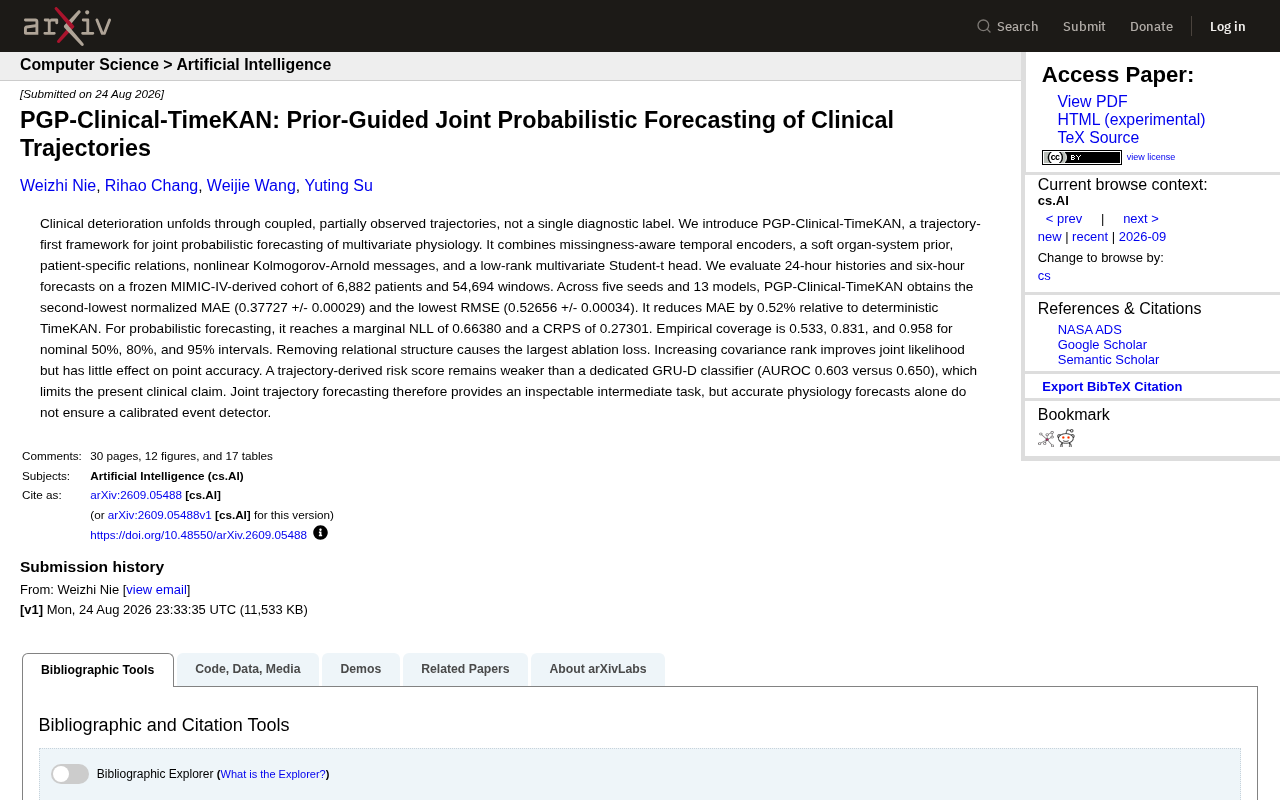
PGP-Clinical-TimeKAN: A Detailed Guide to the Multivariate Physiological Indicator Joint Prediction Framework
An in-depth analysis of the PGP-Clinical-TimeKAN framework for joint probabilistic prediction of multivariate physiological indicators, covering trajectory-first paradigm, KAN message passing, MIMIC-IV validation, and ablation studies.
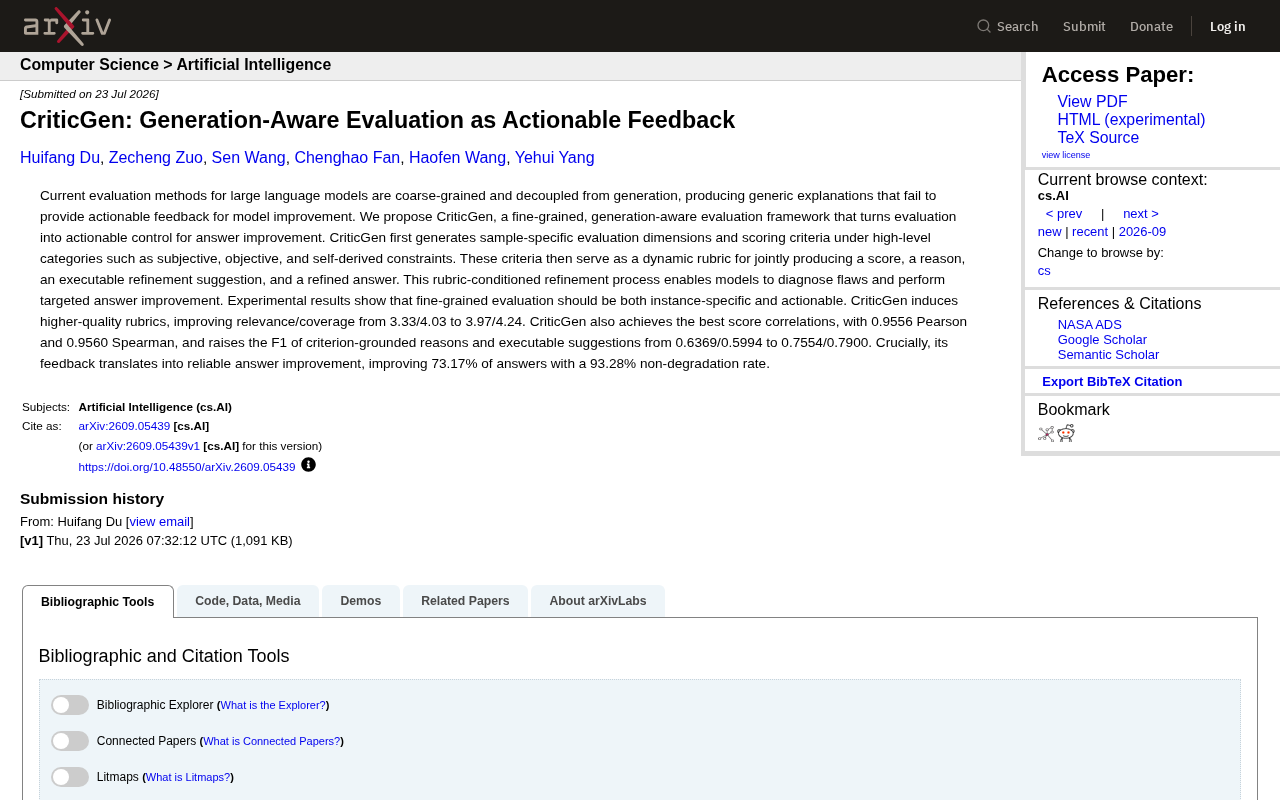
CriticGen: A New Framework That Transforms AI Evaluation into Actionable Improvement Feedback
CriticGen proposes a generation-aware evaluation framework that transforms AI assessment from passive scoring to an active optimization loop, achieving 73.17% answer improvement and 93.28% non-degradation rate.
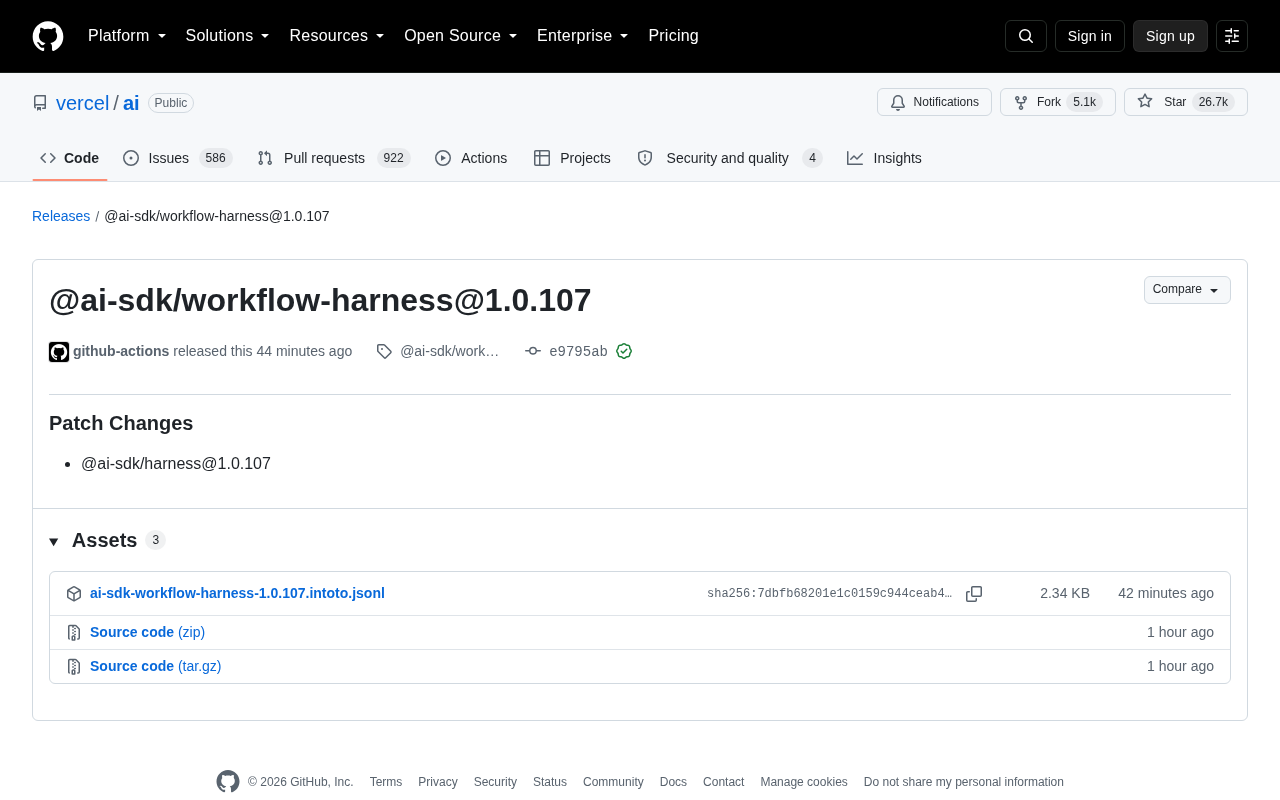
Vercel AI SDK workflow-harness Update Analysis
Deep analysis of Vercel AI SDK workflow-harness 1.0.107 update: architecture design, engineering practices, and developer value for building reliable AI apps.