Has Meta Caught Up with Anthropic? A Hands-On Analysis of Muse Wonder

Meta's Muse Wonder Full ranks third but has clear strengths and weaknesses.
Meta's Muse Wonder comes in base and Full versions. The Full version beats all OpenAI models to rank third on Artificial Analysis but is subscription-only with no public pricing; the base version trails by over 30%. Hands-on testing shows strong orchestration and readability but poor 3D and frontend performance. The creator calls it "frontier-ish" — a third real player in the frontier race.
Has Meta Caught Up with Anthropic? A Hands-On Analysis of Muse Wonder
What Makes Muse Wonder Worth Watching
For a long time, the top tier of frontier large models has been almost exclusively occupied by OpenAI and Anthropic. Meta has been iterating on the Spark series, but never quite managed to earn a seat at the "same table." This time, however, things seem to have changed.
A YouTube creator who has long tracked model performance gave surprisingly high marks after several days of hands-on testing with Meta's newly released Muse Wonder. What he saw on Artificial Analysis was this: Muse Wonder Full Max didn't just far outperform the earlier Spark 1.3 — it beat every OpenAI model and landed at third place overall. That kind of result would have been almost unimaginable in the past.
But he also stressed that he hadn't taken a cent from Meta — he just got early access. What really won him over wasn't the benchmark score, but the kind of experience in everyday coding work that "can't be quantified by benchmarks."
Artificial Analysis is a widely cited third-party large model evaluation platform in the industry. It aggregates multiple public benchmarks (such as MMLU, GPQA, coding ability, mathematical reasoning, etc.) and computes a composite score to rank models across vendors. Unlike vendor self-reported scores, its value lies in a unified evaluation methodology that allows cross-model comparison, which is why it's often used to judge whether a model has truly entered the top tier. That said, it's worth noting that such composite leaderboards depend heavily on the weights and coverage of the selected benchmarks, and reflect limited insight into hard-to-quantify dimensions like long-task stability, instruction-following quality, and output readability. This is precisely why the creator in this article emphasizes that "what really won him over wasn't the benchmark score" — a leaderboard can tell you roughly where a model stands, but it can't replace hands-on experience in a real workflow.
Naming and Pricing: Meta's Old Habits
Meta once again exposed its immaturity in product naming and pricing transparency this time around.
Muse Wonder actually comes in two versions: Muse Wonder and Muse Wonder Full. The latter runs at roughly 50 tps, while the base version runs at about 120 tps. The problem is that only the base version of Muse Wonder has an open API with published pricing — $4 per million input tokens and $20 per million output tokens. The Full version is available only through a Muse Code subscription, with no public pricing at all.
This directly leads to a serious consequence: you can't do any price-versus-performance comparison for the Full version. And it's precisely the Full version that shows the strongest results across various benchmarks. The creator described this approach as "cringe," arguing that Meta still hasn't gotten used to having a model that's actually good enough.
Performance in Real Coding Scenarios
Orchestration Abilities Are Surprisingly Strong
In everyday testing, the creator found that Muse Wonder performs excellently as a "commander" directing other models. It can clearly describe task scope, requirements, and constraints to sub-agents — "don't reference files you haven't opened," "don't edit any files, just analyze" — a quality of prompting rarely seen in models from labs other than Anthropic and OpenAI.
He built a compiler project called TS Rust, running Muse and Opus side by side for comparison. Through collaboration involving over 115 agents, Muse handled most of the routine fixes while Opus took on high-risk design decisions. In the end, Opus gave Muse a B+ and itself an A-.
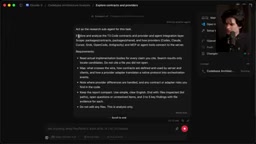
Sub-agent orchestration is a popular architecture in current agentic programming: a "main control model" is responsible for understanding high-level goals, decomposing tasks, and dispatching them to multiple specialized sub-agents for parallel execution, while acting as the scheduler and reviewer itself. This approach can break through the limitations of a single model's context length and single-threaded reasoning, splitting complex engineering into a large number of parallelizable subtasks. Its success often hinges not on the sub-agents themselves, but on whether the main control model can write high-quality delegation instructions — such as clearly defining task boundaries, prohibiting overreach, and requiring references to real files. Vague instructions cause sub-agents to go off track or even produce hallucinated modifications; clear ones can multiply overall efficiency. That's why "orchestration ability" is gradually being seen as one of the core indicators of a frontier model's engineering practicality.
Readability and Practicality
In a specific debugging task, the creator had Muse, Sol, and Opus each tackle the same bug involving a broken remote update. The contrast was striking: Sol completely misdiagnosed the problem, Opus wrote at great length but was overly verbose, while Muse delivered a clear root-cause analysis and fix recommendation in an extremely concise format — and even found a more elegant fix PR that another developer had already submitted.
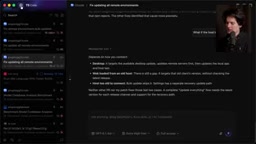
This kind of "readability" is, in the creator's view, Muse Wonder's most underrated advantage — and a capability no benchmark can measure.
Benchmark Scores and Hands-On Data
In the creator's self-made code audit benchmark, the Full version performed close to Astra and Fable, while the base version of Muse Wonder scored barely half of the Full version — a gap of over 30%. This means that if you call the base version through the API for complex tasks, the experience will be significantly degraded.
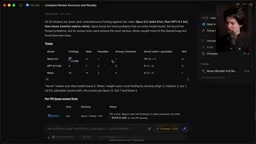
A PR review comparison showed that Opus found 23 valid issues (including 8 nits), Sol found only 9, and Muse landed in the middle with 16 findings — striking a good balance between noise control and coverage.
tps (tokens per second) is a core metric for measuring model inference speed and directly determines the interactive experience. Generally speaking, models below 30 tps make users noticeably wait, 60–100 tps satisfies most conversation and coding needs, and 100 tps or above feels quite smooth. The difference between the base Muse Wonder at about 120 tps and the Full version at about 50 tps in this article is worth noting: the Full version is stronger on benchmarks but lacks pricing transparency because it's slower and only available via subscription. This reminds us that model selection can't focus solely on the intelligence level of a single response — throughput speed, cost, and stability must all be factored in. For long tasks requiring extensive agent collaboration, the speed disadvantage gets significantly amplified.
The Weaknesses Are Just as Obvious
A Disaster for 3D and Frontend
Muse Wonder performs poorly in 3D modeling and frontend UI. When testing its ability to generate 3D games and Blender models, the creator bluntly called it "garbage." Meta itself acknowledges in its model limitations documentation that visual and spatial reasoning — especially 3D tasks — is a known weak spot.
He used this to offer a broader observation: the recent leaps in 3D capabilities across models don't stem from models "getting smarter," but from certain labs specifically adding 3D environments during post-training. This is the result of targeted training, not emergent intelligence.
Targeted environment injection during post-training is key to understanding the recent capability leaps in some models. Post-training refers to shaping model behavior through supervised fine-tuning, reinforcement learning, and other methods after pre-training. If a vendor introduces a large number of specific environments (such as 3D scenes, Blender scripts, game engine interfaces) as interactive feedback signals during the reinforcement learning stage, the model will get heavily "trained up" on those specific tasks. This kind of improvement is targeted optimization, not the natural emergence of general intelligence. It explains why certain models make dramatic progress in 3D generation while showing no improvement elsewhere, and it reminds us: when evaluating a model, we need to distinguish which capabilities come from specialized training and which come from transferable general reasoning — the former often has clear boundaries and poor transferability.
The Base Version Isn't Worth Choosing
Overall, the creator believes the base version of Muse Wonder is completely uncompetitive at its current pricing. Many people online who've had poor experiences after integrating the base version via API are likely misleading the public's overall assessment of Meta's release.
Why This Still Matters
Setting aside the product-level roughness, the real significance of Muse Wonder Full is this: a third player has emerged in the frontier model race. The creator describes it as "frontier-ish" — not perfect, but qualified in long-form tasks, multi-agent orchestration, and stability.
He's even willing to make it his daily driver, calling in Opus only for critical tasks as a reviewer. This kind of shift in the landscape is far more valuable to competition and cost optimization across the AI industry than one or two benchmark scores.
One-line Summary
Meta's new Muse Wonder Full jumps to third place in benchmarks, strong in real-world orchestration but with clear weaknesses.
Paragraph Summary
Meta's Muse Wonder comes in base and Full versions: the Full version beat all OpenAI models to take third place on Artificial Analysis but is subscription-only with no public pricing; the base version has an open API but trails the Full version by over 30%. Hands-on testing shows Muse Wonder excels at sub-agent orchestration and output readability — clearly delegating tasks and concisely identifying root causes in everyday coding — but performs poorly at 3D modeling and frontend UI. The creator believes the Full version has reached "frontier-ish" status and can serve as a daily driver, marking the emergence of a third substantive player alongside OpenAI and Anthropic in the frontier model race.
Related articles

Cursor Can Now Control Your Computer: AI Agents Can Drive Desktop Apps for Testing
Cursor adds desktop control: AI agents can drive desktop apps like the iOS Simulator to test their own features. We analyze the impact on dev workflows, possible technical approaches, and reliability concerns.

Vibecoding a Custom Inference Engine: High Hopes, Harsh Reality
A Reddit developer shares the real experience of vibecoding a custom inference engine: running GGUF Q4 models in the browser with WebGL2 and GLSL, only to fall into tokenizer debugging hell. This article analyzes the engineering challenges of browser-side LLM inference and why cloning llama.cpp is the more rational choice.

How High Are Anthropic's Early Investor Paper Returns Ahead of IPO?
Anthropic's early investor paper returns draw attention ahead of IPO. This article analyzes sources of book gains, capital structure, pre-IPO games and risks, and implications for the AI startup ecosystem.