Headphones as Stage: How Auracast Is Reshaping the Live Performance Experience
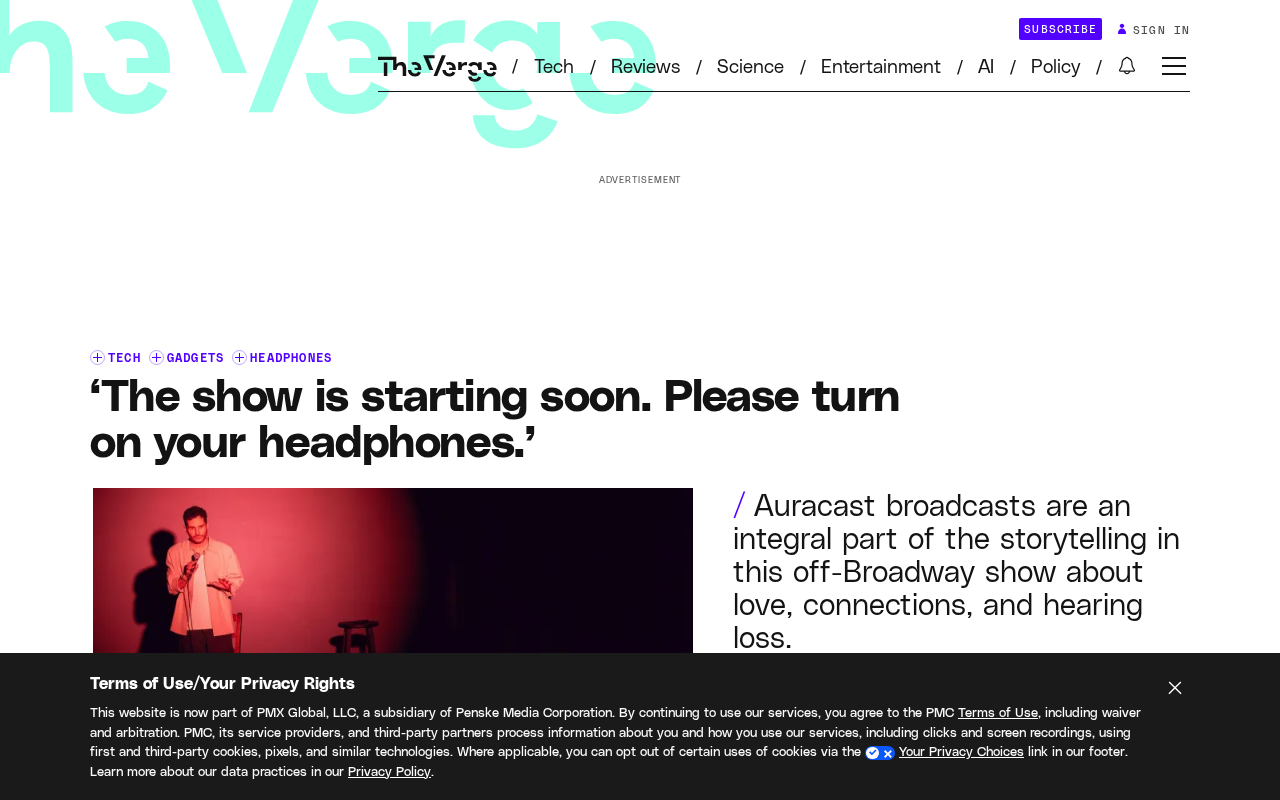
SoHo Playhouse uses Auracast broadcast audio to let audiences watch performances through headphones, exploring a new form of live entertainment sound.
A performance at New York's SoHo Playhouse distributed wired earphones connected to Auracast devices to 178 audience members, enabling synchronized audio reception across the venue. Auracast is a Bluetooth SIG broadcast audio feature that lets one transmitter send audio to multiple receivers simultaneously. It was initially used to improve hearing aid connectivity, but its potential goes far beyond that. The wired earphones ensure low latency and stability, balancing cost and experience. This model changes the traditional audience-performer relationship: audiences get near-studio-level clarity, actors can move through the seating area, and multilingual performances can offer different audio tracks. But headphones also block ambient sound and weaken the physical connection to the live atmosphere, and operations must consider headphone distribution, cleaning, charging, and signal coverage.
In a 200-year-old townhouse in New York's SoHo district, I followed the crowd up a few steps, through the front door, and into the 178-seat SoHo Playhouse. Audience members were taking their seats, and ushers handed each person a black drawstring bag containing a pair of wired earphones connected to a small Auracast-enabled device. The scene hinted at a quiet revolution: the sound experience of live performance is being redefined by wireless audio technology.
When the Show Requires You to Wear Headphones
In traditional theaters, audiences are asked to turn off their phones and stay quiet, with sound coming only from the actors on stage or the sound system. But at this performance, headphones are a mandatory part of entry. Each audience member receives audio through their headphones, which means sound can be delivered in a more private, more controllable way. For small and mid-sized venues like the 178-seat SoHo Playhouse, this shift is not just a technical upgrade—it's an innovation in the form of performance itself.
The design of wired earphones connected to an Auracast device is also worth pondering. Auracast is a broadcast audio feature introduced by the Bluetooth SIG that allows a single transmitter to send audio to multiple receivers simultaneously. The wired earphones ensure low latency and stability, avoiding the pairing and latency issues that wireless earbuds can introduce. This combination strikes a balance between cost and experience, making it especially suited to scenarios that require large-scale synchronized listening.
Auracast: From Hearing Assistance to Full-Audience Audio Infrastructure
Auracast first drew attention because it can improve the connectivity experience of hearing aids, allowing them to receive broadcast audio in public spaces directly. But its potential goes far beyond that. In theaters, guided tours, sporting events, and similar settings, Auracast can push the same audio source to a large number of listeners at once, without additional spectrum licensing or complex wiring.
According to the original description, the device audiences received is a small Auracast transmitter/receiver unit used with wired earphones. This means venues only need to deploy a small number of transmitters, and audiences can bring their own or pick up receiving devices. For production teams, this opens up new creative space: actors can move through the audience while their voices remain clear; multilingual performances can offer different audio tracks simultaneously; and even ambient sound effects can be mixed directly into the audience's ears.
Bluetooth SIG is the industry organization responsible for developing Bluetooth technology standards, and Auracast is one of its flagship initiatives. The feature is based on the Broadcast Isochronous Stream (BIS) mechanism in the Bluetooth Low Energy (BLE) audio protocol. Unlike traditional point-to-point Bluetooth connections, it allows a single audio source to synchronize an audio stream to an unlimited number of receiving devices via broadcast. Receivers do not need to pair with the transmitter—they simply scan for and select the corresponding broadcast channel to join the listening session. Auracast also supports encrypted broadcasts, allowing venues to set access keys for specific performances and prevent unauthorized devices from joining. This characteristic makes it naturally suited to public settings such as theaters, stadiums, and airport announcements, and provides a standardized technical foundation for synchronized distribution of multiple audio tracks and languages.
Regarding hearing aid compatibility and audio broadcasting, Auracast is widely seen by the industry as the next universal solution for hearing devices to access public audio after telecoil. Traditional hearing aids rely on venues installing induction loop systems, whereas Auracast lets compatible hearing aids receive audio directly via standard Bluetooth broadcast without additional hardware modifications. For theaters, this means the same set of transmitting equipment can serve both ordinary audience headphones and hearing aid users, lowering the barrier to deploying accessible audio services. However, the range of Auracast-compatible hearing aid models is still limited, and the ecosystem is still maturing, so venues need to consider device compatibility and user guidance when promoting it.
Reconstructing the Live Experience—and Its Challenges
Wearing headphones to watch a performance first changes your auditory focus. Audiences are no longer constrained by the sound field of a fixed seating area; instead they get near-studio-level clarity. But this also brings new problems: headphones block out some ambient sound, weakening the physical connection between the audience and the live atmosphere. How to find a balance between private audio and the sense of being present is a challenge creators need to explore.
From an operational perspective, headphone distribution, cleaning, and charging (if batteries are involved) add labor and material costs. SoHo Playhouse's approach of distributing wired earphones in drawstring bags hints at the possibility of reuse, but hygiene management still needs standards. In addition, for large venues, Auracast's coverage range and signal stability need to be verified through real-world testing.
Conclusion
With a simple black drawstring bag and a pair of wired earphones, this performance at New York's SoHo Playhouse demonstrates a viable path for bringing Auracast technology to live entertainment. It doesn't chase spectacle—it solves real problems: letting every audience member hear clearly and giving performances more freedom in form. As the Bluetooth broadcast audio ecosystem matures, we may see more venues turn headphones from an "accessibility tool" into a "standard configuration."
One-line Summary
SoHo Playhouse uses Auracast broadcast audio to let audiences watch performances through headphones, exploring a new form of sound for live entertainment.
Paragraph Summary
A performance at New York's SoHo Playhouse distributed wired earphones connected to Auracast devices to 178 audience members, enabling synchronized audio reception across the entire venue. Auracast is a broadcast audio feature introduced by the Bluetooth SIG that allows a single transmitter to send audio to multiple receivers simultaneously. It was initially developed to improve hearing aid connectivity, but its potential goes far beyond that. The wired earphones ensure low latency and stability, striking a balance between cost and experience. This model changes the traditional audience-performer relationship: audiences get near-studio-level clarity, actors can move through the seating area, and multilingual performances can offer different audio tracks at once. But headphones also block ambient sound and weaken the physical connection to the live atmosphere, and operations must account for headphone distribution, cleaning, charging, and signal coverage.
Related articles
Hermes Agent's Self-Evolution Mechanism: Markdown Skills That Understand You Better Over Time
Explaining Hermes Agent's self-improvement mechanism: how Markdown skill files capture task experience, support manual or automatic storage, cross-task reuse, and feedback-based skill correction for an increasingly personalized experience.
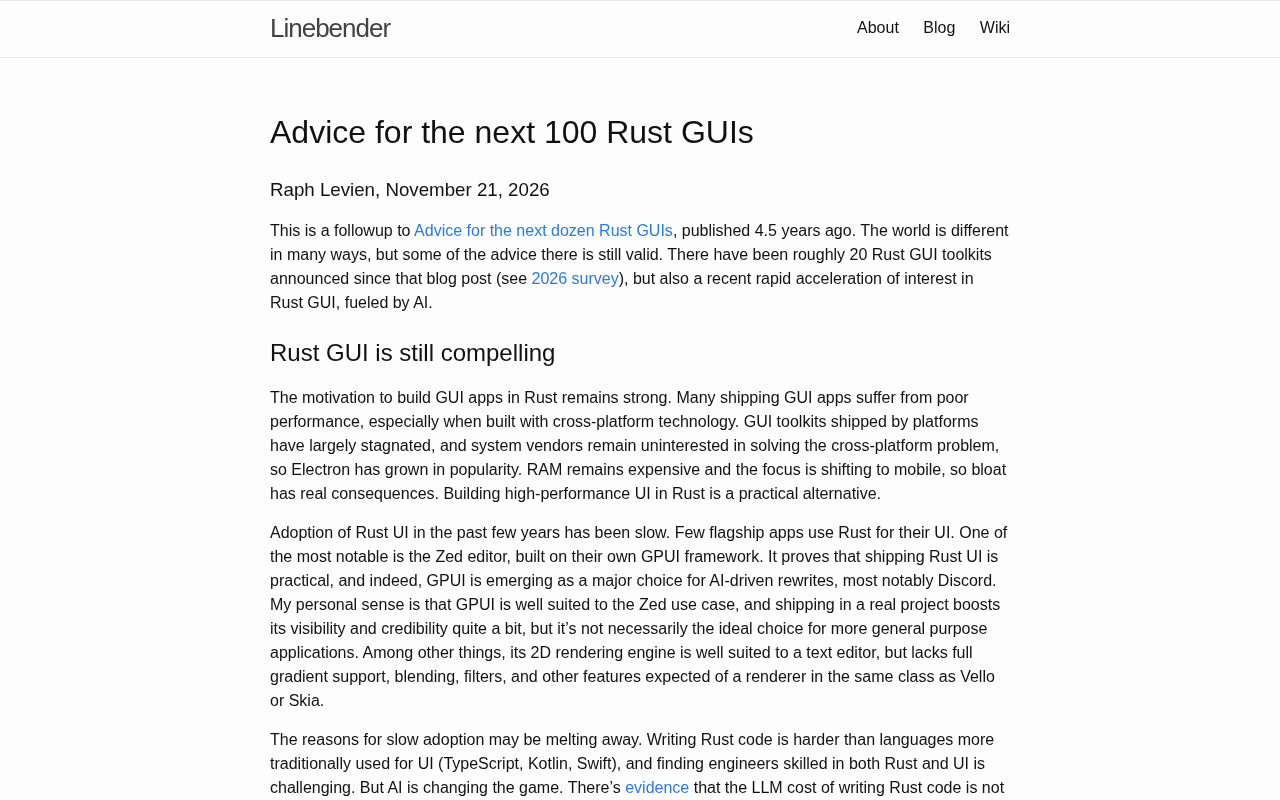
The Next Hundred Rust GUIs: Practical Advice from Linebender
Linebender shares practical Rust GUI advice on architecture design, state management, rendering performance, and ecosystem tooling for the next 100 Rust GUIs.
Tamagotchi: Lessons from the Virtual Pet's Rise and Fall
A look back at the Tamagotchi's rise and fall, how its emotional design hooked users, and what it teaches today's AI companionship products.