Hermes Agent's Self-Evolution Mechanism: Markdown Skills That Understand You Better Over Time
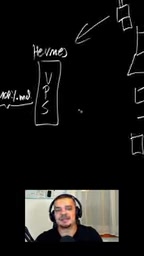
Hermes Agent uses Markdown skill files for readable, reusable, iterable self-improvement.
Hermes Agent's self-improvement mechanism doesn't rely on model fine-tuning—it captures experience as Markdown skill files, optionally with scripts. In the demo, a user works through multiple rounds of communication to have the Agent generate a stock briefing, then either explicitly instructs it or lets the Agent automatically recognize the pattern to solidify the process as a skill; next time with another company, it's reused directly, and if results are unsatisfactory, the skill itself can be corrected. The article breaks this down into user profile (memory) and task capability (skills), noting that the text-based approach is low-barrier, readable, editable, and version-controllable, at the cost of skill quality depending heavily on clear user feedback. Trigger boundaries for automatic accumulation and skill conflict handling remain unaddressed, and real-world effectiveness awaits validation.
Hermes Agent's core highlight isn't how smart it is in a single conversation—it's that it gradually "grows" skills tailored to you as you use it. The vehicle for this self-improvement mechanism is surprisingly simple: Markdown files.
1. Skills as Files: The Underlying Design of Self-Improvement
According to a YouTube channel's breakdown of Hermes Agent, the Agent's "learning" isn't about retraining the model—it's about accumulating experience through a mechanism called skills. Each skill is essentially a Markdown file, which in theory can also come with some scripts attached.
This design crystallizes abstract capabilities into readable, editable text assets. Skills aren't black-box vectors—users can open the files and see exactly what processes the Agent has remembered. Compared to self-improvement approaches that require fine-tuning parameters, the barrier to entry for Markdown skills is almost zero.
Model fine-tuning refers to continuing to train an existing pre-trained model on data from a specific domain or task, shifting its parameters toward that target. It typically requires building high-quality datasets, configuring training pipelines, and consuming considerable compute, producing a weight file that is difficult to inspect item by item. Hermes Agent's Markdown skills take a different path: rather than modifying model parameters, they write "what to do in what situation" as readable instructions injected into context at inference time. The difference is that fine-tuning compresses knowledge into parameters that are hard to modify locally or audit, while text skills can be opened, edited, rolled back item by item, and even brought under Git version control. The trade-off is that text skills are limited by the context window and the model's ability to follow instructions, so complex processes may have omissions; fine-tuning is more stable on specific tasks but costly to update. Understanding this contrast is key to seeing that Hermes's so-called "self-improvement" isn't about training models—it's about maintaining an external, human-readable operations manual.
2. How a Complete Interaction Becomes a Skill
The demo scenario is concrete: a user connects to Hermes Agent from their laptop and asks it to generate a briefing on a certain stock. The request goes beyond a summary—it needs to include the 10-K report, various key statistics, and a large amount of supplementary information.
The user and Agent go back and forth, gradually clarifying exactly what's wanted—for example, adding visualizations. The requirement-clarification process itself is the "teaching" of the Agent.

The key insight here is that skills originate from high-value, multi-turn real tasks, not one-off questions. The preferences and constraints exposed during back-and-forth communication are exactly what the skill file needs to record.
3. Two Paths for Accumulation: Manual and Automatic
After a task is completed, users have two ways to have the Agent solidify the experience:
- Explicit instruction: Directly tell the Agent "remember what we just did" and save it as a skill.
- Automatic accumulation: Without the user saying anything, the Agent judges on its own that "when this person asks for a briefing on a certain stock, I should follow this process" and writes it into a skill.

The significance of automation is that it shifts the memory burden from the user to the Agent. Users don't have to remember "what to teach it"—the Agent identifies reusable patterns on its own during interactions.
Agent memory and skills are often conflated, but in this design the division of labor is clear. Memory typically refers to stable facts and preferences about the user extracted from conversations—such as "cares about dividend yield" or "prefers charts over tables"—stored long-term as short entries that influence the Agent's understanding and default choices for each request. Skills, on the other hand, are executable processes for a certain type of task, including steps, data sources, output formats, etc., answering "how should this kind of work be done." The former shapes "who you are and what you want," while the latter shapes "how this thing gets done." The two can reference each other: skills read preferences from memory to adjust output during execution; memory may also gain new entries from a particular task. Distinguishing the two helps identify which layer a problem lies in—if results don't suit your taste, you should usually change memory; if the process is wrong, you need to change the skill file.
4. Skill Reuse and Self-Correction
Once a skill is on disk, the next request becomes lightweight. When the user switches to another company, ABC, and asks for a briefing, the Agent directly invokes the accumulated skill to deliver results without redoing the requirement clarification.

More noteworthy is the feedback loop: if the user is dissatisfied with the result, the Agent can adjust the skill itself so it performs better next time. This means skill files are alive—not one-time snapshots, but assets that iterate with feedback.
Few-shot prompting is similar to retrieval-based skill invocation: both place examples or instructions into context before LLM inference so the model follows them without updating weights. Hermes's skill reuse can be understood as a persistent form of few-shot context—the skill file itself is a structured "operation examples plus rules" that gets retrieved and injected on the next request. Compared to temporarily assembled few-shot examples, skills have the advantage of being storable long-term, iterable, shareable across multiple tasks, and able to include scripts for deterministic steps. The limitations also come from context: the more skills there are, the more critical retrieval and injection accuracy becomes, and if instructions conflict between skills, the model may waver. This explains why the trigger boundaries for automatic accumulation and skill conflict handling become key issues in practical use.
5. The Cumulative Effect of Personalized Memory
The source video's summary is direct: the more you use it, the more information the Agent remembers about you, and the more skills it accumulates for specific tasks.
This mechanism breaks "self-improvement" into two levels:
| Level | Content | Vehicle |
|---|---|---|
| User profile | Your preferences and habits | Memory |
| Task capability | Execution process for specific tasks | Skills (Markdown + optional scripts) |
For developers, this text-based self-improvement path is quite inspiring: capability accumulation doesn't necessarily require complex model pipelines—readable, version-controllable files can equally serve the role of memory and skills. The trade-off is that skill quality depends on the clarity of user feedback—if you don't say what you're dissatisfied with, the Agent has no way to correct it.
The source material doesn't elaborate on the trigger boundaries for automatic accumulation or how skill conflicts are handled, and actual effectiveness still needs validation across more usage scenarios.
Related articles
The Next Hundred Rust GUIs: Practical Advice from Linebender
Linebender shares practical Rust GUI advice on architecture design, state management, rendering performance, and ecosystem tooling for the next 100 Rust GUIs.
Tamagotchi: Lessons from the Virtual Pet's Rise and Fall
A look back at the Tamagotchi's rise and fall, how its emotional design hooked users, and what it teaches today's AI companionship products.
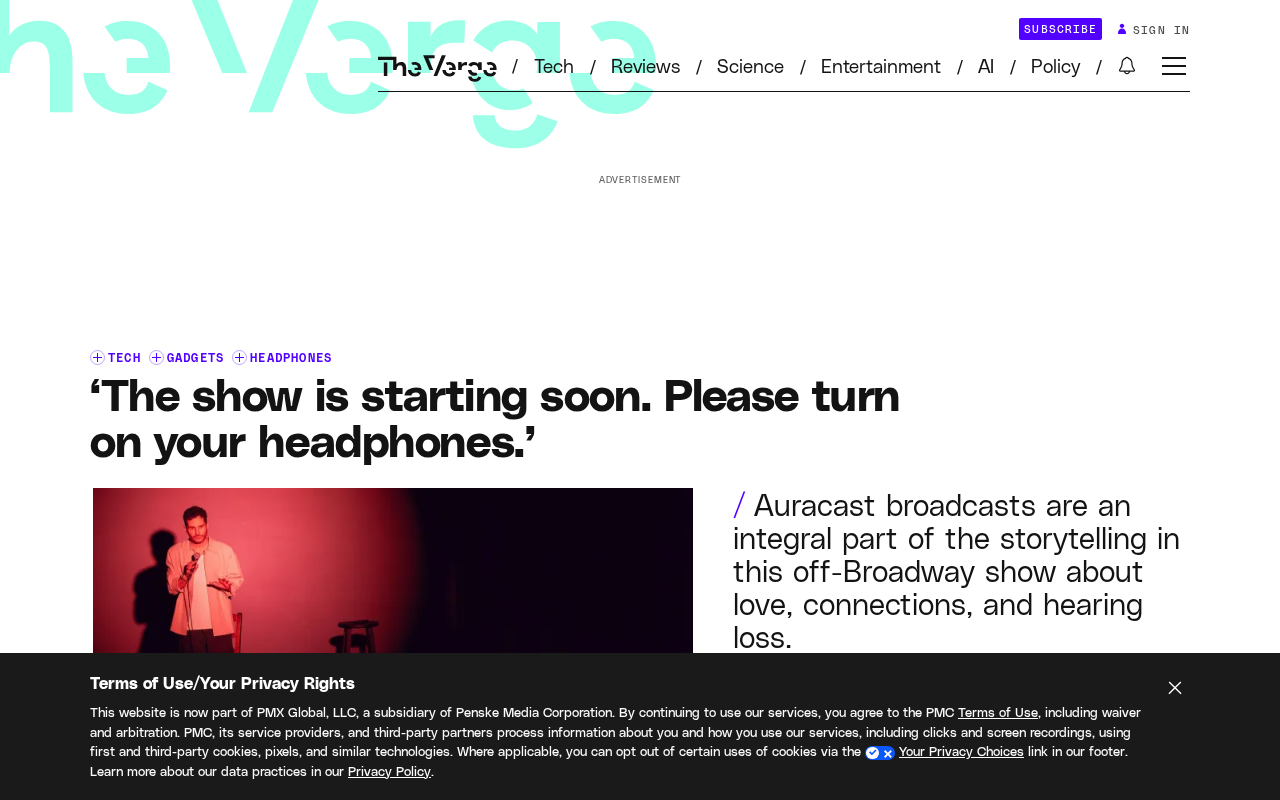
Headphones as Stage: How Auracast Is Reshaping the Live Performance Experience
A New York SoHo Playhouse performance required audiences to wear Auracast-connected headphones. This article examines how Bluetooth broadcast audio is changing the sound experience and operating model of live performance.