Hermes Agent Natively Integrates with WeChat: A Self-Evolving AI Agent

Hermes Agent turns AI into an accumulable automation system through native WeChat connection and a self-learning loop.
Hermes Agent has recently gone viral in the AI community, with its core selling point being native direct connection to personal WeChat: no public IP required, support for private and group chats and all-modality parsing of images, videos, files, and voice, and 24/7 silent background operation. The article notes that its breakthrough lies in "native channel" and "persistent memory," and through a four-step self-learning loop of executing tasks, triggering reflection, distilling skills, and reusing workflows, it shifts AI capabilities from one-off answers to accumulable skill assets. Practical scenarios cover daily briefings, stealth web monitoring, multi-agent collaboration, and autonomous quantitative trading. The technical foundation is the MCP protocol, enabling one configuration shared across multiple endpoints; the common deployment pitfall is tool call hallucination, which can be diagnosed with Hermes Doctor. The article reminds readers that while native WeChat integration brings convenience, users need to assess privacy and permission security boundaries themselves.
Hermes Agent has recently been blowing up in the AI community, with multiple Bilibili creators and YouTube tech channels discussing it. Its core highlight is singular: native direct connection to personal WeChat—no public IP required, no switching between apps, full support for private and group chats, all-modality parsing of images, videos, files, and voice, and 24/7 silent background operation.
Behind this lies a complete agent architecture, not a simple chatbot. Based on an in-depth breakdown by a Bilibili creator, this article walks through the product logic, the learning engine, automation use cases, and deployment pitfalls to help you decide whether it's worth trying.
From Command Line to WeChat: What Exactly Did Hermes Break Through
The creator compared the experience of traditional AI tools to a rusted, forgetful vending machine. You have to insert a coin (type a prompt) before it dispenses an answer; start a new conversation and it forgets you entirely.

Hermes breaks through on two fronts: native channel and persistent memory. It runs directly inside your WeChat with no extra client required, and it remembers your complete workflow rather than the context of a single conversation. The growth curve past 50,000 stars shows that this product approach—dragging cutting-edge AI out of the command line—has struck a real need.
Compared with early ChatGPT-style interaction, Hermes feels more like an always-on digital assistant—you don't need to actively "open" it; it's just there on standby.
The Self-Learning Loop: Why It "Grows Its Own Brain"
Compared with Claude Code, which can only run in local code repositories, or the evolved OpenCore, which only handles basic context, Hermes differs not only in platform coverage (spanning 15+ platforms including WeChat and Feishu) but also in having a self-learning loop.
This loop has four steps:
- Execute the task—do the normal work
- Trigger reflection—after the task, review on its own what went well and what failed
- Distill skills—extract experience into public, transparent code files
- Reuse workflows—directly call upon them the next time a similar problem arises

According to the creator, after running this loop continuously for thirty days, its output formatting style and way of thinking become highly aligned with your own. This claim has some exaggeration to it, but the direction is clear: AI capabilities shift from "one-off answers" to "accumulable skill assets."
Skill Distillation and What "Code Files" Mean
The "skill distillation" mentioned in the article is not retraining at the model weight level, but abstracting the successful path of a task into reusable external assets—usually stored as structured documents, prompt templates, or executable scripts, presented as plain-text/code files, hence "public and transparent," open to human review and modification. The academic background for this approach is the "procedural memory" concept in the agent field: separating the "how" from the volatile conversation context and storing it as a persistent operations manual, which is then retrieved and injected into context when a similar task arises. Its advantages are controllability, auditability, and version management; its drawback is heavy dependence on distillation quality—if the reflection step makes a wrong judgment, erroneous experience gets solidified and repeatedly reused. Understanding this helps in objectively assessing claims like "after thirty days of running it's like you"—it's closer to imitation of style and process than genuine personified learning.
Automation Use Cases: From Daily Briefings to Autonomous Quant Trading
Hermes's practical value shows in several concrete scenarios:
Automated daily briefing: Connects to calendars, email, and specified topics, pushing to WeChat on schedule every day.
Stealth web monitoring: Built-in solutions for bypassing anti-scraping mechanisms, able to monitor competitor price changes and push a deduplicated comparison summary every morning, telling you only what changed overnight.
Multi-agent collaboration: In traditional setups, marketing outreach, community follow-up, and briefing writing require five different agents, and within 48 hours they often suffer from context mismatch and talk past each other. Hermes breaks through with a unified memory layer—one brain directing all limbs, so outreach can directly call on the marketing department's memory.
Geek use cases: Some have let Hermes autonomously run A/B tests to optimize email open rates; others boldly handed over their brokerage API keys, and it built four quantitative trading strategies on its own, achieving fully autonomous real-time trading on the Solana blockchain.
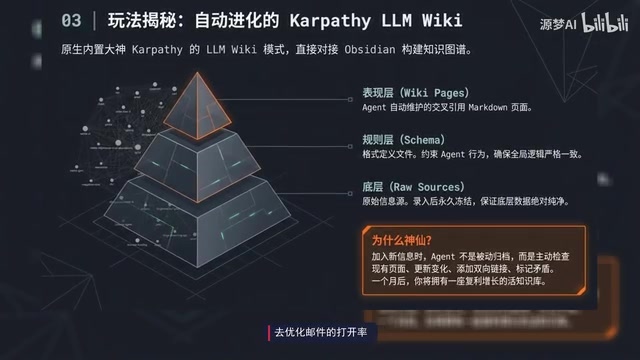
It should be noted that cases like quantitative trading are single-source anecdotes with extremely high risk, and are not recommended for imitation.
Technical Foundation and Deployment Pitfalls
All functionality is built on the MCP protocol (Model Context Protocol). MCP is a universal infrastructure: whether connecting to Google Workspace or a company's private database, everything is configured at zero cost through a unified protocol—one infrastructure shared across multiple endpoints, with no need to develop separate plugins for each platform.
The most common pitfall during deployment is tool call hallucination—when the model's capability is insufficient, it hallucinates a nonexistent tool to call, causing a freeze. Many beginners mistake this for a framework bug, but the root cause is on the model side.

When you run into problems, don't guess—just type Hermes Doctor in the terminal, and it will automatically troubleshoot environment configuration. Deployment itself has three steps: one-click environment installation on Mac or Linux, binding a large model and starting the service, and one-click authorization to connect to WeChat. The creator claims it can be done in under two minutes.
What Is the MCP Protocol
MCP (Model Context Protocol) is a standardized protocol proposed and open-sourced by Anthropic in late 2024, aiming to unify how large language models connect to external tools and data sources. Before MCP, every time you connected an external service (calendar, email, database, third-party API), developers had to write a separate set of adapter code and tool descriptions for the model, creating N×M redundant work. MCP abstracts this layer into a "client—server" structure: the model side only needs to implement one MCP client, and various services provide unified tool, resource, and prompt template interfaces as MCP servers, achieving one integration and reuse in many places. It does not conflict with traditional Function Calling but is a protocol-layer wrapper on top of it, emphasizing discoverability, permission control, and cross-platform interoperability. Hermes's claimed "one infrastructure shared across multiple endpoints" is precisely built on the premise that MCP standardizes platform adaptation work.
Causes of Tool Call Hallucination
Tool Call Hallucination refers to the model fabricating nonexistent tool names, parameter structures, or return results during reasoning, commonly manifesting as repeatedly calling an unregistered function, passing fields that don't conform to the schema, or inventing tool return content out of thin air. Its root usually lies not in the orchestration framework but on the model side: first, models with weaker tool-selection capabilities (especially small-parameter models) easily get confused when faced with many tool descriptions; second, vague tool descriptions and similar naming increase the probability of misjudgment; third, overly long context dilutes tool definitions. Mitigation measures include streamlining and clarifying tool descriptions, limiting the number of tools available at once, adding a validation layer before calls, retrying and degrading failed calls, and choosing models with stronger tool-calling capabilities. This also explains the misjudgment mentioned in the original text that "many beginners mistake it for a framework bug."
Objective Assessment: Opportunities and Risks Coexist
Cross-referencing multiple sources, Hermes's native WeChat connection and self-learning loop are its two most widely agreed-upon selling points, with reviews across platforms acknowledging the breakthrough nature of its product approach. But there is also disagreement: security boundaries. Handing personal WeChat over to an agent with autonomous execution capabilities carries non-negligible privacy and permission risks; the quantitative trading case further highlights the contradiction that "the higher the autonomy, the greater the cost of losing control."
Hermes is essentially not a chatbot but an automation system that continuously learns how you think. The vision of a zero-employee super-individual is indeed approaching, but before deploying, thinking clearly about permission boundaries and data flows is more important than rushing to try it out.
One-line Summary
Hermes Agent turns AI into an accumulable automation system through native WeChat connection and a self-learning loop.
Paragraph Summary
Hermes Agent has recently gone viral in the AI community, with its core selling point being native direct connection to personal WeChat: no public IP required, support for private and group chats and all-modality parsing of images, videos, files, and voice, and 24/7 silent background operation. The article points out that its breakthrough lies in "native channel" and "persistent memory," and through a four-step self-learning loop of executing tasks, triggering reflection, distilling skills, and reusing workflows, it shifts AI capabilities from one-off answers to accumulable skill assets. Practical scenarios cover daily briefings, stealth web monitoring, multi-agent collaboration, and autonomous quantitative trading. The technical foundation is the MCP protocol, enabling one configuration shared across multiple endpoints; the common deployment pitfall is tool call hallucination, which can be diagnosed with Hermes Doctor. The article reminds readers that while native WeChat integration brings convenience, users need to assess privacy and permission security boundaries themselves.
Related articles

Claude Code + Agent: Building a Fully Automated AI Testing Loop
Bilibili course breakdown: how test developers can use Claude Code terminal-based Agents to build a fully automated AI testing loop. Compares permission boundaries of terminal vs. device Agents, explains why enterprise projects choose Claude Code over Open Claude-type tools, and outlines the Node.js environment setup and DeepSeek model integration path.

Working with AI Agents Requires Nerves of Steel
The more autonomous AI agents become, the heavier the user's psychological burden. Drawing from a Hacker News discussion, this article analyzes black-box anxiety, behavior drift, and monitoring fatigue in agent collaboration, and offers practical approaches like sandbox isolation, permission control, and task granularity management to reduce cognitive load.

To Replace Adobe Acrobat, I Built My Own Open-Source PDF Reader Folio
A developer unhappy with Adobe Acrobat's bloat built Folio, a lightweight open-source PDF reader. Learn the design philosophy and use cases of this alternative.