High-Performance, Low-Cost AI: The Critical Inflection Point of the Technology Democratization Era

How converging technical and market forces are making high-performance AI affordable for everyone.
This article examines how the AI industry is achieving the dual goal of high performance and low cost through architectural innovations like MoE, quantization and distillation techniques, hardware advances, and intense market competition. It explores what falling AI costs mean for developers and enterprises, while cautioning readers to verify marketing claims with actual benchmarks and data.
Introduction: The Balancing Act Between AI Performance and Cost
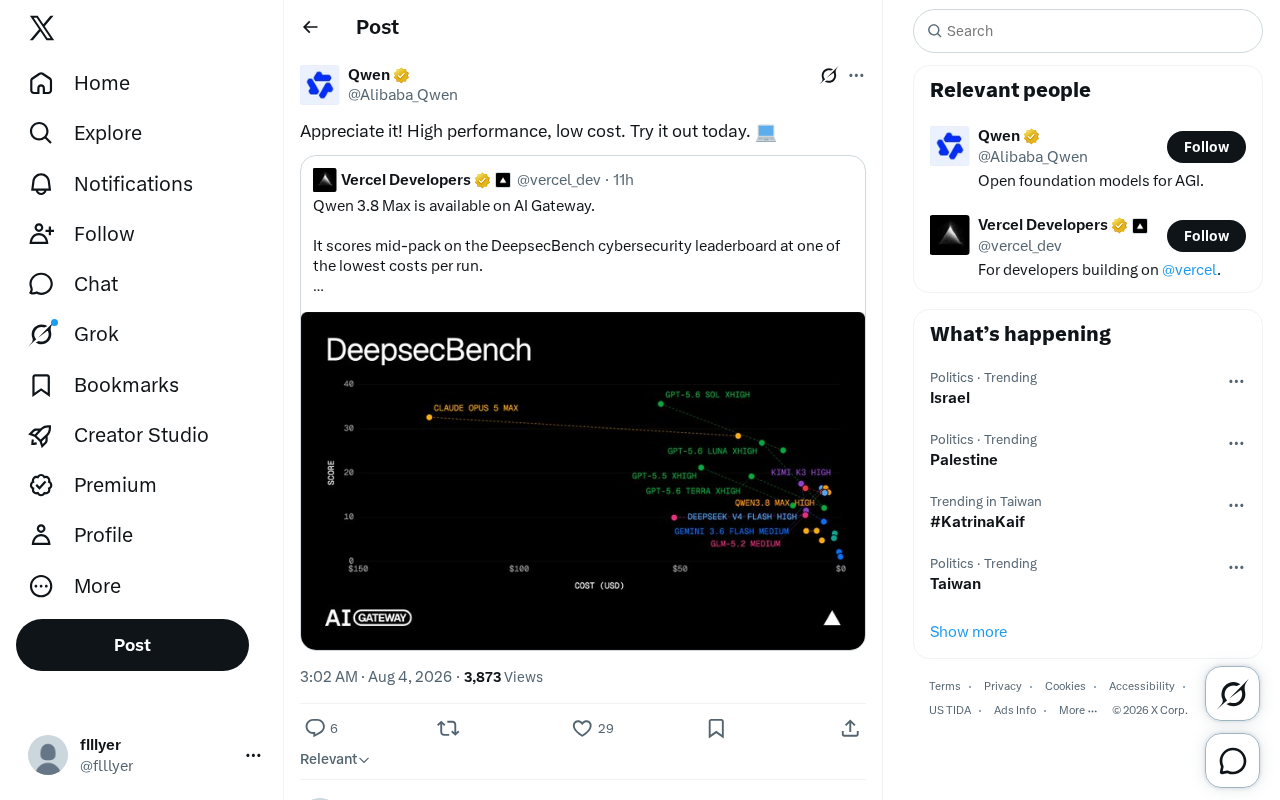
In the rapidly evolving AI landscape, a brief tweet — "High performance, low cost. Try it out today." — may be short in length, but it precisely captures the core proposition of current AI product competition: how to maintain powerful performance while minimizing the barrier to entry and cost.
What this statement reflects is a profound transformation taking place across the entire AI industry. Over the past few years, improvements in AI capabilities have typically been accompanied by exponential increases in compute costs, with only a handful of tech giants and well-funded institutions able to afford the training and deployment of cutting-edge models. Now, "high performance, low cost" is becoming the core selling point of an increasing number of AI products, signaling the accelerating arrival of the technology democratization era.
Why High Performance and Low Cost Has Become the AI Industry's Dominant Theme
The Technical Drivers Behind Falling Compute Costs
Multiple factors are driving down AI costs. First is model architecture optimization — the shift from dense models to Mixture of Experts (MoE) architectures, which activate only a subset of parameters during inference, dramatically reducing the computational overhead per call. Second is the maturation of quantization and distillation techniques, which "compress" the capabilities of large models into smaller ones, significantly reducing deployment costs with virtually no performance loss.
Advancements at the hardware level have also been indispensable. The iteration of specialized AI chips, optimization of inference engines, and more efficient memory management solutions have collectively compressed the per-token inference cost to levels previously unimaginable. These technologies combined have ultimately transformed "high performance" and "low cost" from a contradiction into achievable goals.
Market Competition Forcing an AI Price War
Beyond technical drivers, intense market competition is another important catalyst. As open-source models continue to approach — and in some tasks surpass — closed-source models in capability, commercial API providers face enormous pricing pressure. To compete for developers and enterprise customers, major vendors have successively slashed API prices, with some experiencing "prices cut in half every few months."
This competition is healthy for the entire ecosystem — it lowers the barrier to innovation, enabling more small teams and independent developers to build products on top of powerful AI capabilities, thereby spawning richer application scenarios.
What High-Performance, Low-Cost AI Means for Developers and Enterprises
Dramatically Lowered Barriers to AI Application Innovation
For developers, the most direct impact of "high performance, low cost" is making the business models of AI applications more viable. In the past, an application relying on large models might struggle to be profitable due to high API call costs; now, cost reductions make it possible for more creative ideas to be realized. Whether it's intelligent customer service, content generation, code assistance, or data analysis, developers can achieve scaled deployment within manageable budgets.
Accelerating Enterprise AI Adoption
For enterprises, cost predictability and controllability are key factors in deciding whether to adopt AI at scale. When the unit cost of AI capabilities drops below a certain threshold, enterprises become significantly more willing to integrate it into core business processes. This is why an increasing number of traditional industries are beginning to view AI as a strategic tool for improving efficiency and reducing operational costs, rather than merely an experimental "nice-to-have."
A Rational Perspective on High-Performance, Low-Cost AI Marketing Claims
It's worth noting that "high performance, low cost" as a marketing slogan requires verification against specific product data. What benchmarks is "high performance" measured on, and against which competitors? What is "low cost" relative to? These are questions users should carefully evaluate before they "try it out today."
A mature technology decision should not be swayed solely by brief promotional phrases, but should be based on actual performance testing, cost accounting, and alignment with one's own business needs. Truly excellent AI products can withstand scrutiny in transparent third-party evaluations, rather than relying solely on slogans to win over users.
Conclusion: Democratized AI Is an Irreversible and Inevitable Trend
Although this tweet is limited in information, the trend it represents is clear and irreversible. AI is moving from being the exclusive domain of a few to becoming a tool accessible to everyone. The combination of high performance and low cost is not only a result of technological progress but also an important signal that the industry is maturing toward true democratization.
For developers, enterprises, and everyday users riding this wave, maintaining an open attitude toward new tools while making choices based on rationality and data will be the best approach to capturing this technological dividend.
Related articles

Gemini 3.7 Flash Spotted in Google Cloud Console — Launch Countdown Begins
Developers spot Gemini 3.7 Flash in Google Cloud Console, sparking discussion about its relationship to Pro and Google's model distillation strategy.

AI-Memory: Building a Cross-Tool Long-Term Memory System for Coding AIs
AI-Memory is a Rust-based open-source project providing long-term memory for Claude Code, Cursor, Aider and other Agent coding CLIs, enabling seamless handoff between vendors.

Bullet Enters the Stage: YC Newcomer Bets on a Faster Coding Agent
YC S26 startup Bullet launches a speed-focused coding Agent targeting developer latency pain points. Analysis of its differentiation, acceleration techniques, and market opportunity against Cursor and Claude Code.