Hintly: A Real-Time Terminology Assistant for Google Meet

Hintly is a Chrome extension that explains unfamiliar terms in real time during Google Meet, representing a new trend of scenario-specific AI meeting tools.
Hintly for Google Meet is a Chrome extension that captures terms, names, and concepts users might miss during meetings and provides real-time explanations, helping users keep up with discussions. Launched by developer Myster Violets, it received 105 upvotes on Product Hunt and ranked 6th in the Chrome extension category. Unlike Otter.ai and Fireflies, which focus on post-meeting transcription, Hintly targets real-time understanding during meetings. Currently only supporting Google Meet, its recognition accuracy and privacy handling remain to be verified. The article argues this reflects AI meeting tools' shift from general-purpose to scenario-specific.
In an era where remote meetings have become the norm, have you ever encountered this awkward situation: a colleague drops an unfamiliar technical term, product name, or industry jargon in Google Meet, and you can only nod along while secretly opening a new tab to search? By the time you finally figure out what it means, the conversation has already moved on. A newly featured Chrome extension on Product Hunt is trying to solve exactly this pain point.
What Is Hintly?
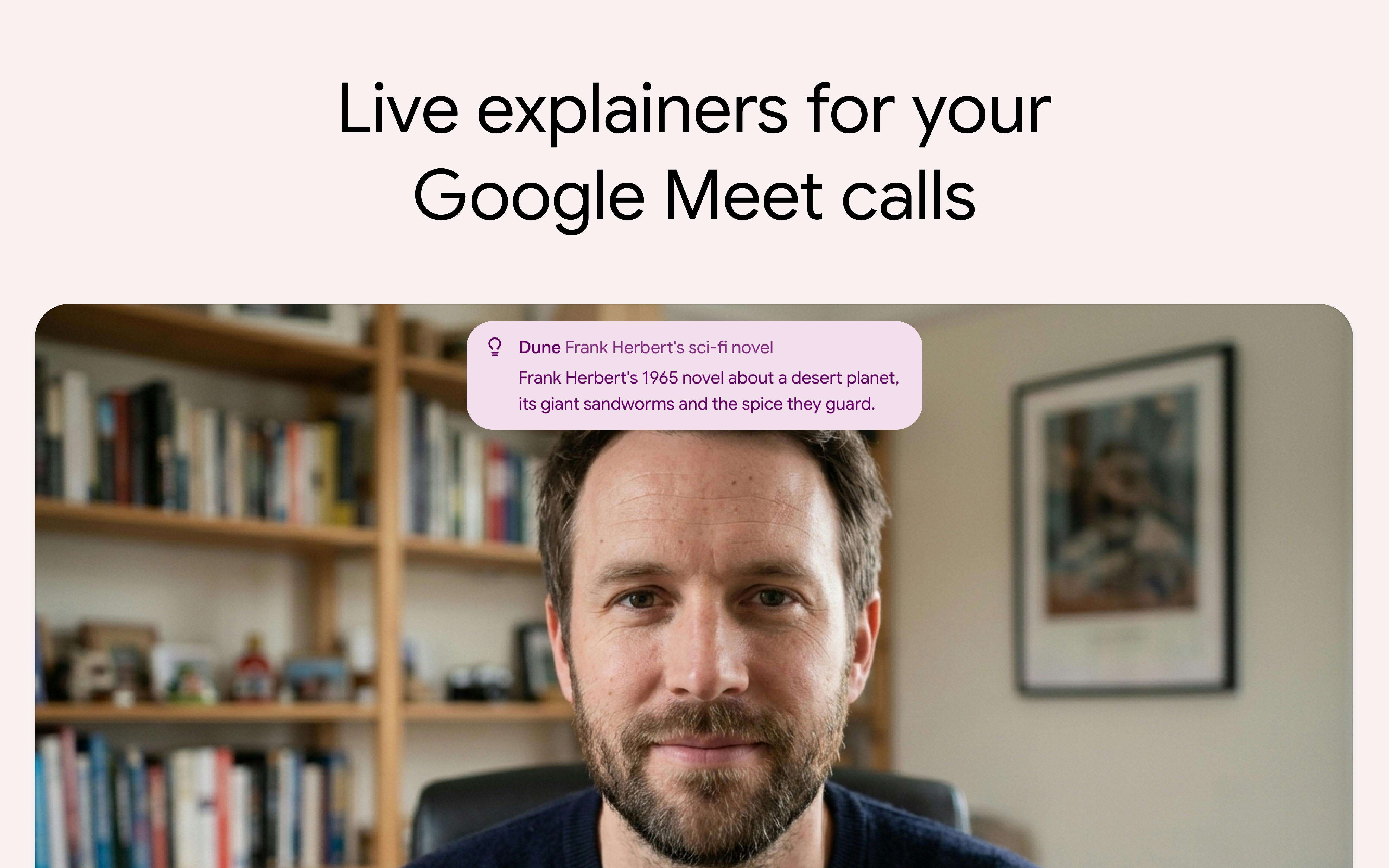
Hintly for Google Meet™ is a Chrome browser extension designed specifically for Google Meet. Its core function can be summed up in one sentence: the moment you miss a term, it gives you an explanation in real time.
According to the official description, Hintly captures terms, names, and things people mention during a meeting, and pops up a prompt shortly after they appear to help you quickly understand the context. This design approach is quite clever — instead of having you dig through chat history or search afterward, it fills the information gap while the conversation is still happening, allowing you to keep participating in the discussion rather than passively staying silent.
The product received 105 upvotes on Product Hunt, ranking 6th in the Chrome extension category for that day — a moderately above-average performance. Developer Myster Violets positions it as an AI-assisted tool for meeting scenarios.
Why Does This Need Genuinely Exist?
The widespread adoption of remote meetings comes with a hidden cost: cognitive load when information density is too high.
In face-to-face communication, you can gauge whether to ask a follow-up question based on expressions, gestures, and the room's atmosphere. But in video meetings like Google Meet, the cost of asking is noticeably higher — interrupting seems impolite, yet not interrupting might mean you can't understand the entire conversation. This is especially true in cross-departmental, cross-disciplinary meetings where terminology barriers are nearly unavoidable.
Most meeting tools on the market focus on transcription, note generation, and post-meeting summaries — these features address the "review" problem. Hintly enters at a more upstream stage: real-time understanding. It doesn't replace your note-taking; it ensures you can keep up during the meeting itself.
This positioning differentiates it from meeting recording tools like Otter.ai and Fireflies. The latter are more like post-meeting archivists, while Hintly tries to be your personal simultaneous interpreter — not translating languages, but translating concepts.
Cognitive Load is a core concept in cognitive psychology, introduced by educational psychologist John Sweller in 1988. It refers to the burden placed on working memory when a person processes information. Working memory capacity is very limited — generally only able to handle 4 to 7 information units simultaneously. In remote meetings, participants need to complete multiple tasks at once: understanding what the other person is saying, comprehending terminology, organizing their own responses, and monitoring the meeting's pace. The stacking of these tasks quickly depletes working memory capacity. When encountering unfamiliar terms, cognitive load spikes instantly, making it impossible to absorb subsequent content. This is precisely the problem Hintly tries to solve: by using an external tool to instantly supplement term meanings, it transfers part of the cognitive burden from the brain to the screen, allowing participants to retain enough cognitive resources to follow the discussion.
Product Capabilities and Potential Limitations
Based on currently available information, Hintly's functional boundaries are fairly clear: identify terms, provide prompts, and limited to the Google Meet platform.
Strengths:
- Lightweight, existing as a Chrome extension with no need to switch platforms
- Strong real-time capability, emphasizing "a moment after" rather than after-the-fact remediation
- Focused scenario, only doing Google Meet rather than being an all-encompassing meeting assistant
Points to watch:
- How accurate and comprehensive is terminology recognition? Can it cover technical terms, names, abbreviations, and industry jargon?
- Does the prompt presentation interfere with the meeting view? If the popup is too conspicuous, it could actually distract attention
- Privacy and data security issues: How is meeting audio processed? Is it uploaded to the cloud?
- Currently only supports Google Meet, leaving Zoom and Teams users out for now
The answers to these questions remain unclear, but given that the product is still in its early stages (launched on Product Hunt), future iterations are worth watching.
Regarding privacy and data processing, Chrome extensions involving audio and speech recognition in meeting scenarios typically follow one of two technical paths: one is on-device processing, where speech recognition and terminology matching are completed in the browser, and audio data never leaves the user's device; the other is cloud processing, where audio streams are uploaded to a server for analysis before results are returned. The former offers better privacy but is limited by local computing power, while the latter may offer higher recognition accuracy but carries data leakage risks. Additionally, the Chrome permissions Hintly needs to obtain (such as tab audio capture, microphone access, etc.) directly relate to its data processing boundaries. For enterprise users, if a company uses Google Workspace and has strict data compliance requirements, whether such an extension can pass IT department approval is also a key factor determining whether it can be promoted in workplace scenarios.
The Segmentation Trend in the AI Meeting Assistant Space
Hintly's emergence reflects how AI meeting tools are diverging from "general-purpose" to "scenario-specific."
Early AI meeting products pursued comprehensiveness: transcription, summaries, action item extraction, and sentiment analysis all in one. But as competition intensifies, entrepreneurs and developers are looking for narrower niches. Hintly's chosen niche is "real-time terminology understanding" — a direction specific enough and painful enough.
Similar segmentations include: real-time script prompts for sales scenarios, question prediction for interview scenarios, and professional terminology assistance for medical scenarios. The common logic behind these products is: general AI capabilities are already strong enough; differentiation comes from deep understanding of specific scenarios.
For ordinary users, this means more and more "small and beautiful" AI tools will appear in the future, addressing long-tail needs that big companies overlook. Whether Hintly can succeed in this direction depends on whether its recognition accuracy and user experience can withstand the test of real meetings.
If you frequently attend Google Meet meetings, especially discussions involving unfamiliar domains, this tool is worth a few minutes of your time. It's currently available through the Chrome Web Store, and the official website link can be found on its Product Hunt page.
Vertical SaaS refers to software services built for specific industries or scenarios, as opposed to general-purpose SaaS that covers a broad range of functions. Hintly is precisely an embodiment of the vertical SaaS approach in AI meeting tools: it doesn't try to be an all-purpose meeting assistant, but only solves the single problem of "real-time terminology understanding" in Google Meet scenarios. The advantage of this strategy is that the product can be made light enough and focused enough, with low user decision-making costs; the disadvantage is a relatively limited market ceiling, and vulnerability to being covered by platform providers (such as Google itself integrating similar features into Meet) or larger meeting tools. In recent years, the commoditization of AI capabilities (i.e., the continuously decreasing cost and barrier to calling large model APIs) has enabled small teams and even individual developers to quickly build vertical tools — this is the underlying reason why "small and beautiful" products like this keep emerging on Product Hunt.
One-line Summary
Hintly is a Chrome extension that explains unfamiliar terms in real time during Google Meet, representing a new trend of AI meeting tools moving toward scenario-specific segmentation.
Paragraph Summary
Hintly for Google Meet is a Chrome browser extension that captures terms, names, and concepts users might miss during a meeting and pops up real-time explanation prompts to help them keep up with the discussion. The product was released by developer Myster Violets, received 105 upvotes on Product Hunt, and ranked 6th in the Chrome extension category that day. Unlike tools like Otter.ai and Fireflies that focus on post-meeting transcription and notes, Hintly enters the real-time understanding phase during the meeting, addressing the cognitive load problem caused by high information density in remote meetings. Currently, the product only supports the Google Meet platform, and questions about terminology recognition accuracy, prompt presentation, and audio privacy handling remain to be verified. The article argues that Hintly's emergence reflects the trend of AI meeting tools diverging from general-purpose to scenario-specific, with differentiated competitiveness coming from deep understanding of specific scenarios.
Related articles

Chain of Thought Isn't Just for AI: How Humans Can Use CoT to Improve Thinking Quality
Chain of Thought isn't just a prompt trick for large models. Starting from a Hacker News discussion, this article analyzes why CoT works for human thinking too, breaks down actionable ways to transfer it, and highlights the key differences between human CoT and machine CoT.
Cloudflare Teams Up with OpenAI: Closi…
Cloudflare Teams Up with OpenAI: Closing the Loop from Vulnerability Discovery to Defense with AI
Cloudflare uses OpenAI Daybreak to investigate security vulnerabilities and generate reviewable remediation plans, while developers use Codex to boost coding efficiency and quality.

Orca Multi-Agent Orchestration in Practice: A Guide to Parallel Collaboration with Claude and Codex
Orca is Stable AI's free open-source agent workbench supporting 34 agents like Claude Code and Codex in parallel. Learn its Git worktree isolation, multi-model orchestration, and mobile management.