Hive Intelligence: Filling the Real-Time On-Chain Data Gap for AI Agents

Hive Intelligence provides real-time on-chain data to AI Agents via MCP servers, solving AI hallucinations in crypto scenarios.
The article explores how general-purpose AI in crypto trading can produce wrong contract addresses or expired prices due to lacking real-time on-chain data, and introduces Hive Intelligence as a solution. Founded by Rishabh Narang in 2024, Hive is a decentralized multi-agent AI network connecting AI Agents to real-time market prices via hosted MCP servers, supporting modular swarm intelligence and verifiable computation. Onboarding is simple with npx hive init, offering 10,000 free calls per month and paid plans from $49/month. The article also covers partner Quaza Rewards' token incentive program but notes the video's promotional nature, advising developers to rely on measured accuracy and latency.
When users ask AI for real-time crypto market data, the answers often come from outdated training corpora rather than the actual on-chain state. In crypto trading scenarios, the cost of such "hallucinations" can be wrong contract addresses or long-expired token prices, directly causing financial losses. This is one of the most significant bottlenecks at the intersection of AI and Web3 today: general-purpose large models lack access to real-time blockchain data. According to a review video from a YouTube Explainer channel, Hive Intelligence attempts to solve this problem at the infrastructure level.
The Crypto Data Blind Spot of AI
General AI models have knowledge cutoffs at their training data's time point, and know almost nothing about real-time on-chain transfers, liquidity changes, or token contract deployments. The video points out that cases of traders and developers suffering losses because AI fabricated wrong smart contract addresses or provided expired token prices are not uncommon.
An AI equipped with the right data channels is entirely different: it can instantly trace data sources, check wallet states across multiple chains, and identify risks before users interact with suspicious tokens. This capability gap forms the starting point of Hive Intelligence's product logic.
On-chain data refers to information such as transactions, account states, smart contract code, and event logs recorded directly on the blockchain, characterized by being publicly verifiable and tamper-proof. Unlike centralized market data provided by exchange APIs, on-chain data reflects the actual transfer of assets and the real execution of contracts. For an AI model to accurately answer "what is the current price of a token" or "does an address hold a certain asset," it must query the on-chain state in real time rather than rely on historical snapshots in its training corpus. What Hive emphasizes—"real-time market prices" and "cross-chain wallet state checks"—is essentially connecting to these on-chain data sources through data channels.
What Is Hive Intelligence
According to the video, Hive Intelligence was founded by Rishabh Narang in 2024 and positions itself as a decentralized multi-agent AI network and collective intelligence protocol. Its core mechanism is to connect autonomous AI Agents directly to real-time market prices through hosted Model Context Protocol (MCP) servers.
Architecturally, Hive adopts a modular swarm intelligence design, allowing specialized AI models and Agents to collaborate, share context, and execute multi-step workflows. For developers, this means Agents can have unified access to real-time crypto prices and automated token security checks. The platform also offers enterprise-grade data privacy and permission layering, and supports verifiable Agent computation—each execution generates a receipt, ensuring determinism of data provenance.
It should be noted that the above architectural description comes from a single review source and has not been cross-validated by independent technical audits.
Model Context Protocol (MCP) is an open standard proposed by Anthropic in 2024, aimed at providing a unified way to connect AI models with external data sources and tools. Traditionally, AI models could only rely on static knowledge learned during training, whereas MCP allows models to access real-time APIs, databases, or local files through standardized requests via a client-server architecture. In Hive's context, MCP servers act as a bridge between AI Agents and blockchain data, enabling Agents to obtain on-chain prices, contract states, and other information on demand without writing separate integration code for each data source. This protocol reduces integration complexity in Agent development and also improves the auditability of data access.
Installation and Pricing: Access via a Single Command

The video emphasizes that Hive's onboarding cost is deliberately kept low. Running a single terminal command npx hive init connects Hive to existing AI applications, with configuration and Agent data-calling logic handled automatically by the tool—no manual setup required.
In terms of pricing, logging in gives you 10,000 free calls per month with no credit card required. For heavy usage scenarios, tiered paid plans are available, starting at $49 per month, with Pro and enterprise options above that.
This design approach aligns with the current "low-friction onboarding" trend in AI Agent toolchains: first let developers run a usable workflow at zero cost, then convert to paid based on actual call volume.
npx is a package execution tool in the Node.js ecosystem that allows developers to directly run command-line tools from the npm registry without global installation. npx hive init means pulling Hive's initialization tool from the npm registry and executing it, automatically generating configuration files, installing dependencies, and binding Agent data-calling logic. This "single-command access" pattern is increasingly popular among developer tools because it lowers the onboarding barrier to a minimum, enabling developers to verify within minutes whether a tool meets their needs. For users unfamiliar with Node.js, the Node.js runtime environment still needs to be installed beforehand.
Quaza Rewards: Using Tokens to Incentivize Tool Exploration

The latter half of the video introduces Hive's partner Quaza Rewards—a platform that rewards users with crypto tokens for exploring new tools. Hive is one of its featured partners; users who complete a test of Hive receive 1 QA token, and participation is free with no crypto experience required.
According to the video's data, Quaza's directory already includes over 400 partner brands, AI tools, and Web3 projects, and has distributed over 1.2 million QAA tokens to more than 120,000 active members cumulatively. The participation process is simplified into three steps: sign up and try a tool (about 30 seconds), fill in interests to get a welcome reward (about 2 to 10 minutes per task), and rewards arrive instantly after verification.
QA tokens can be used to pay for freelance services on Quaza Connect, unlock premium features, promote your own projects, or exchange for other cryptocurrencies on supported third-party marketplaces.
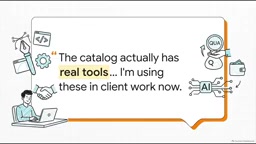
The video cites feedback from a freelancer named Alex: he discovered tools like Runway, Eleven Labs, and Midjourney in the directory that he actually uses for client work, while cumulatively earning 47 QAA.
Several Judgments from a Review Perspective
From an infrastructure perspective, Hive addresses a real problem—for AI Agents to enter financial and on-chain scenarios, real-time, verifiable data supply is a prerequisite, and MCP as an access standard also follows the current direction of the Agent tool ecosystem.
However, the video itself has obvious promotional characteristics: the Quaza reward mechanism and the Hive review are placed in the same narrative, and token incentives may affect the neutrality of the review. For developers, what's more worth attention is the measured data accuracy and latency performance within the free quota, rather than the rewards themselves; for ordinary users, treating "exploring tools for rewards" as a source of side income requires careful assessment of token price volatility risk.
The question raised at the end of the video is worth keeping: be a consumer of AI, or a participant in the decentralized future—but the answer should be based on measured data, not marketing narratives.
One-line Summary
Hive Intelligence provides real-time on-chain data to AI Agents via MCP servers, solving the AI hallucination problem in crypto scenarios.
Paragraph Summary
The article discusses the problem that general-purpose AI in crypto trading scenarios may produce wrong contract addresses or expired prices due to the lack of real-time on-chain data, and introduces Hive Intelligence as a solution. Hive was founded by Rishabh Narang in 2024 and positions itself as a decentralized multi-agent AI network, connecting AI Agents to real-time market prices through hosted MCP servers, supporting modular swarm intelligence and verifiable computation. Onboarding is extremely simple—just run npx hive init—with 10,000 free calls per month and paid plans starting at $49/month. The article also introduces the token incentive program of partner Quaza Rewards, but notes that the video content has promotional characteristics and suggests developers base decisions on measured accuracy and latency.
Related articles

iPhone Duo Hands-On: Is the $2,000 Small-Screen Foldable Worth It?
YouTube's Allison shares her iPhone Duo hands-on: dual-screen multitasking doubles efficiency, great video viewing, nice matte finish—but thick body, small outer screen, and a $2,000 luxury price.

Sentry's Ad Cracks Up Developers: Can On-call Actually Be Fun?
Sentry's ad short film taps into developers' on-call anxiety, using humorous dialogue to showcase its observability platform—errors, logs, traces, metrics, replays, and releases in one place.

LLM App Getting Worse With Every Change? Build an Effective Evaluation System in Three Steps
How do you know if your LLM app is getting better or worse? A Reddit-based guide to test sets, automated regression evaluation, LLM-as-judge scoring, and structured agent tracing.