How a Specialized Model Beat GPT-6 Astra: Why Wet Lab Data Is the True Moat at the Scientific Frontier
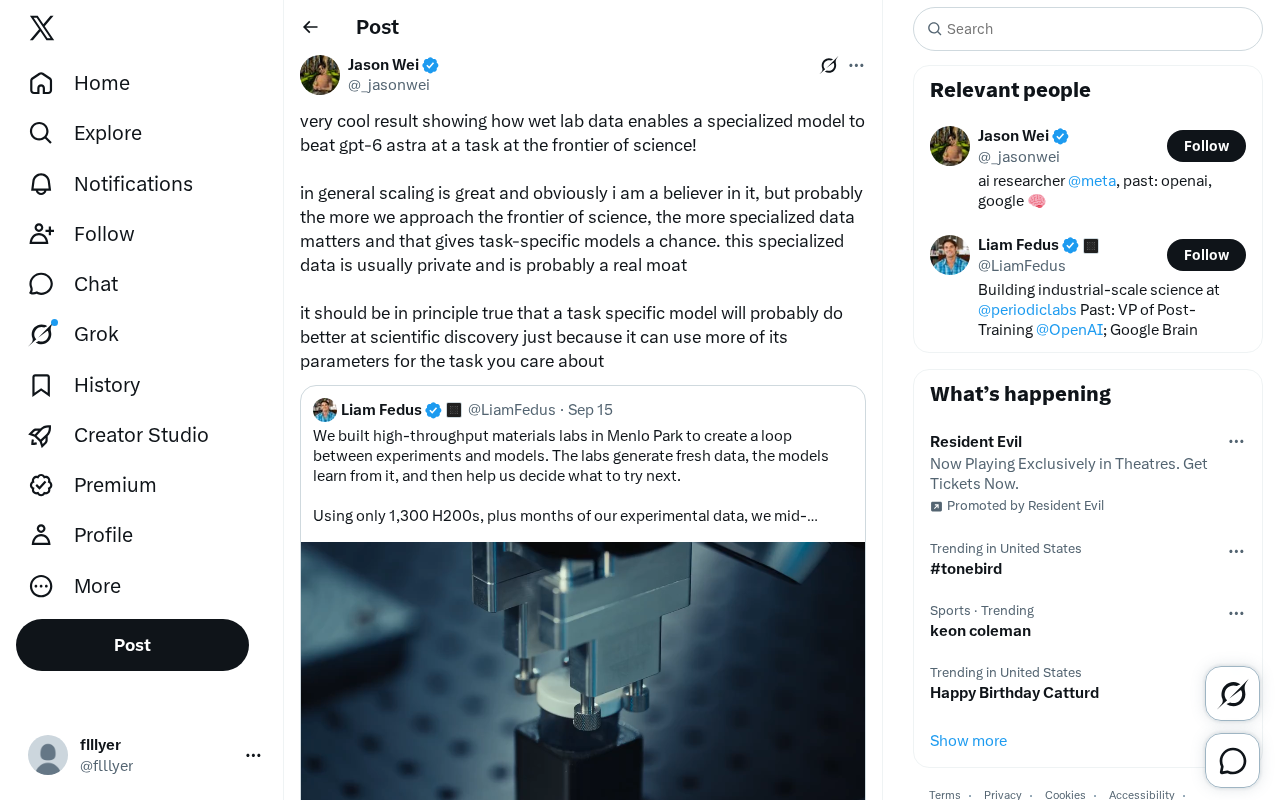
A specialized model with private wet lab data outperforms GPT-6 Astra, exposing the limits of scaling at the scientific frontier.
A specialized model trained on proprietary wet lab data outperformed the general-purpose model GPT-6 Astra on a frontier scientific task, sparking debate about the limits of the scaling approach. The core argument: the closer you get to the true edge of scientific discovery, the less valuable public internet data becomes, while scarce, private laboratory data is the decisive resource. Such wet lab data is extremely costly to obtain and rarely made public, forming a data moat that general-purpose models cannot easily cross. Technically, specialized models can concentrate all their parameter capacity on a single target task, while general-purpose models dilute effective per-task capacity across vast domains. This finding doesn't reject scaling — it identifies its structural limitations in scientific applications and provides important empirical support for the "specialized model + proprietary data" approach.
A Counterintuitive Result: A Specialized Model Beats a General-Purpose Giant
As AI capabilities continue to climb, a thought-provoking result has sparked discussion: a specialized model trained on wet lab data outperformed the general-purpose large model GPT-6 Astra on a task at the cutting edge of science. What makes this case worth examining is that it touches on a question long obscured by scaling narratives — as we approach the true boundaries of scientific knowledge, can general-purpose models maintain their advantage?
The argument acknowledges that scaling itself is powerful and expresses strong conviction in the scaling approach. But the critical caveat is this: the closer you get to the scientific frontier, the more important specialized data becomes — and that's precisely what gives task-specific models a genuine window of opportunity.
Why Specialized Data Matters More at the Scientific Frontier
General-purpose large models are trained on massive, publicly available, crawlable internet data. This gives them unmatched breadth of coverage. But at the very frontier of scientific discovery, what's truly valuable is often not public information — it's scarce, unpublished data generated through wet lab experiments.
This is the crux of the core argument: such specialized data is typically proprietary, and likely constitutes a genuine moat. In other words, whoever controls this data holds a structural advantage over general-purpose models on specific scientific tasks — one that's very difficult to overcome. No matter how much public text exists on the internet, it cannot substitute for first-hand results accumulated through real experiments.
Proprietary Data as a Competitive Barrier
In most AI competitive analyses, model architecture and compute are treated as the core advantages. But this case points to another possibility: in scientific discovery, exclusive data ownership may be the decisive factor. When valuable experimental data is held by a specific institution or company, even a competitor with a much larger general-purpose model will struggle to catch up on that particular task.
Wet lab refers to experiments conducted in real physical environments involving biological or chemical materials — such as cell culture, protein expression, gene editing, or compound synthesis — as opposed to purely computational "dry lab" simulations. Wet lab data has several distinctive characteristics: it is extremely costly to obtain (a single dataset may require weeks or even months of experimental cycles and significant consumables), it is highly dependent on a specific institution's equipment and specialized personnel, and the results are often not published in open literature but accumulated as internal knowledge. This stands in sharp contrast to the "near-zero marginal cost of replication" of internet text data. As a result, data accumulated by institutions with large-scale wet lab pipelines — such as major pharmaceutical companies or specialized biotech laboratories — is fundamentally inaccessible to web crawlers, creating a physically grounded data barrier.
The Technical Logic of Parameter Allocation
Beyond the data argument, there is a technical rationale worth unpacking. In principle, it makes sense that task-specific models would perform better on scientific discovery tasks — because they can dedicate more of their parameters to the task you actually care about.
General-purpose large models must distribute their parameter capacity across tens of thousands of tasks, domains, and languages. This means the model capacity actually mobilized for any single task is diluted. A model trained specifically for a scientific task can concentrate its full parameter capacity in that direction, achieving a higher degree of "focus" and a higher performance ceiling on that task.
This logic aligns closely with the classic generalist-vs-specialist tradeoff: there is a natural tension between breadth and depth. When a task is sufficiently specialized and difficult, the value of depth outweighs the value of breadth.
From the perspective of neural network capacity allocation, a model with a fixed number of parameters is essentially fitting a training distribution using a limited "representation space." The training objectives of general-purpose large models span dozens of domains — code, natural language, mathematics, commonsense reasoning — and parameters must simultaneously serve all of these directions, leaving relatively limited effective capacity for any single domain. A specialized model can project the same or even fewer parameters entirely into the feature space of the target task, which in statistical learning theory corresponds to lower hypothesis space complexity and tighter generalization bounds. In addition, a specialized model's input-output format, loss function design, and data augmentation strategy can all be tailored to the target task — something general-purpose models cannot achieve to the same degree given their need to accommodate multi-task training paradigms. This mechanism is especially critical in data-scarce scientific frontier scenarios: a small amount of high-quality specialized data paired with a highly aligned model architecture often outperforms the transfer performance of a large general-purpose model trained on vast amounts of generic data on the same specific task.
Implications for the Direction of AI Development
This case is not a refutation of the scaling approach — it is a clarification of its limits. Scaling remains enormously valuable for handling general problems and covering broad knowledge, and that is not in dispute. But it serves as a reminder to the field: scaling is not a master key.
For teams focused on scientific discovery, this implies several things:
- Institutions that possess unique wet lab data may hold an advantage in AI-assisted research that is very difficult to replicate;
- Betting on a single, massive general-purpose model to solve all scientific problems may not be the optimal strategy;
- The combination of specialized models and proprietary data may be a pragmatic path for deploying AI at the scientific frontier.
It is worth noting that this discussion is currently based on a single-source perspective, and the specific experimental setup, task definitions, and comparative details have not been fully disclosed. But the core tension it raises — the contest between the universality of scaling and the scarcity of specialized data — is a real and important issue in today's AI scientific applications.
Conclusion: The Moat May Be Hiding in the Lab
As more and more resources pour into larger general-purpose models, this result serves as a gentle reminder: at the very frontier of science, the deciding factor may not be parameter count, but who controls the data that no one else can access. The proprietary nature of wet lab data may be the most underestimated moat in the next phase of AI-driven scientific competition.
Related articles
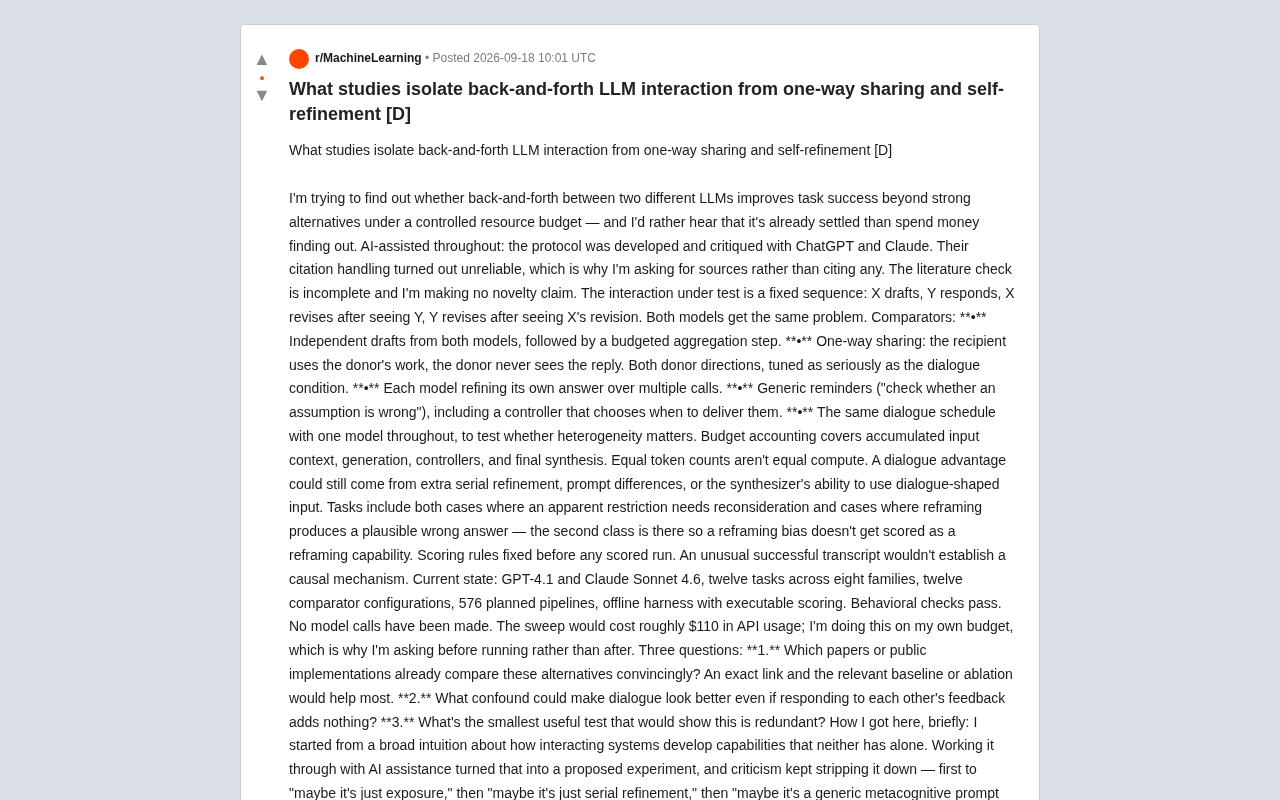
Can Multi-LLM Dialogue Really Improve Task Performance? Lessons from a Rigorous Experimental Design
A researcher designed rigorous controlled experiments to isolate whether multi-LLM back-and-forth dialogue genuinely outperforms simpler baselines like self-refinement and one-way sharing.

Which $10 AI Coding Plan Should You Choose? Go vs. Code Credit Breakdown
After DeepSeek's price hike, should you pick Go or Code for your $10 AI coding plan? We break down credit allocations for Mimo, Qwen, DeepSeek V4, Kimi, and more.
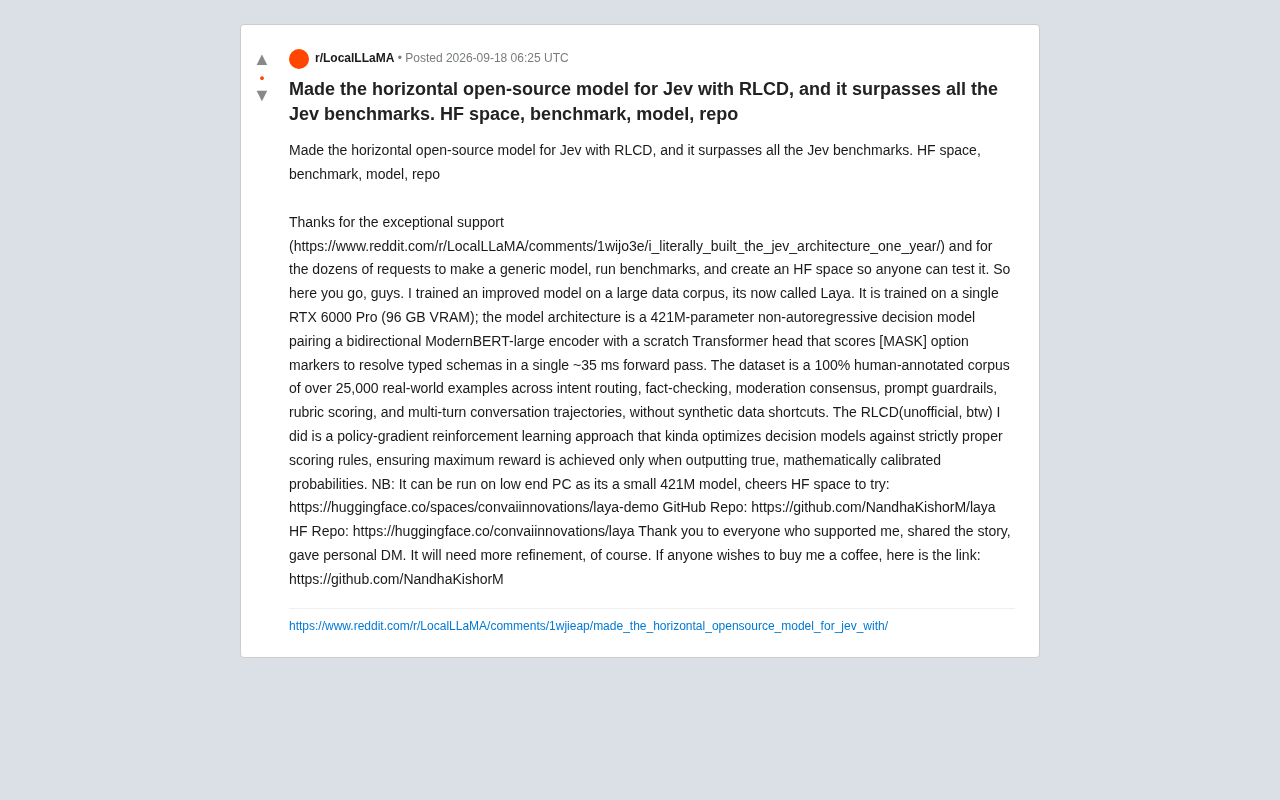
Laya Open-Source Decision Model: How 421M Parameters Beat Jev Benchmarks
Laya is an open-source 421M-parameter non-autoregressive decision model built on the Jev architecture, trained with RLCD on 25,000 human-annotated samples using a single GPU, running in ~35ms on low-end PCs.