How AI Agents Call GitHub Tools: Secure Automation Under the MCP Protocol

MCP enables AI Agents to securely call GitHub tools through human confirmation and standardized communication.
Using an AI assistant summarizing a GitHub issue as an example, the article breaks down the full tool-calling workflow under the MCP protocol: the model understands the intent and selects the GitHub tool, the system pauses before making an external API request and asks the user for confirmation, and after authorization the client encapsulates the request as a JSON payload and routes it to the MCP server, which executes the actual API call and returns structured results. The article emphasizes that human confirmation is the key safety design, ensuring the Agent's autonomy remains within controllable boundaries, while the client-server architecture and JSON communication format reduce tool integration complexity and allow different tools to be integrated in a unified way, balancing automation convenience with safety boundaries.
When a user tells the AI assistant "summarize issue 42," a series of precise and largely invisible collaborations takes place behind the scenes. This process demonstrates how an AI Agent calls GitHub tools through MCP (Model Context Protocol), striking a balance between autonomy and human control.
From Request to Tool Selection: The AI's Decision Moment
After the user makes a natural-language request, the model first understands the intent and determines that an external tool needs to be called. In this example, the model recognizes that "summarize the issue" requires access to a GitHub repository, so it selects the GitHub tool from the available tools.
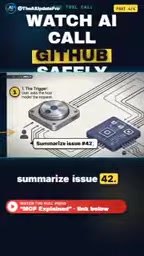
This step may look simple, but it involves the model's understanding of the task, matching of tool capabilities, and planning of the execution path. The model does not perform the operation directly; instead, it first forms an intent to call and waits for subsequent confirmation.
MCP (Model Context Protocol) is an open protocol proposed by Anthropic that aims to standardize how AI models connect to external tools and data sources. In the MCP architecture, AI applications (such as chat assistants) act as clients, while services that provide specific capabilities (such as accessing GitHub or querying databases) act as servers. The client communicates with the server through standardized JSON-RPC messages and dynamically discovers available tools and their parameter schemas, enabling the model to understand each tool's functionality and generate call requests that conform to the specification. This design transforms tool integration from custom development into plug-and-play standardized access, greatly reducing the cost of ecosystem expansion.
Human Confirmation: The First Safety Gate
Before actually initiating an external API request, the system pauses and asks the user whether to allow or deny this specific operation. This is a key safety design in the MCP protocol—even if the Agent has autonomous calling capabilities, critical operations still require human authorization.
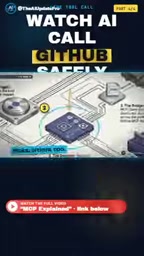
This design prevents the AI from accessing sensitive data or performing dangerous actions without permission. The user has the final say, and the Agent's autonomy is confined within controllable boundaries.
The human confirmation mechanism is often called "Human-in-the-Loop" (HITL) in Agent design. Unlike traditional permission pop-ups, HITL emphasizes introducing human judgment at key decision points in automated workflows rather than relying solely on static permission rules. In MCP scenarios, confirmation requests carry information such as the tool name, call parameters, and potential scope of impact to help users make informed decisions. This mechanism is especially suitable for operations with side effects or involving sensitive data, such as writing files, sending messages, or accessing private repositories. HITL is not only a safety measure but also a product design approach for building user trust—it gives users a sense of control over AI behavior, making them more willing to authorize Agents to perform complex tasks.
Execution After Confirmation: Triggering the External API Call
The external API call is actually executed only after user confirmation is obtained. At this point, the Agent's request is released, and the system ensures that the entire process is both autonomous and controlled.
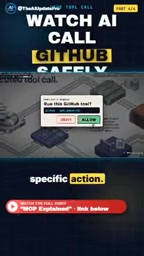
This stage reflects the core value of the MCP protocol: providing the convenience of automation without sacrificing safety boundaries. A single click by the user determines whether the Agent can cross system boundaries to obtain external data.
Client-Server Communication: The Standardized Journey of a JSON Payload
After confirmation, the client encapsulates the request as a JSON payload and routes it to the MCP server. The server is responsible for executing the actual GitHub API call and returning the structured summary result to the active context.
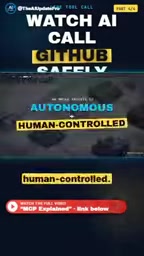
The entire communication process follows a standardized protocol, and the client is decoupled from the server, allowing different tools to be integrated in a unified way. The JSON payload carries call parameters and context information; the server parses it, performs the corresponding operation, and then returns the result.
JSON-RPC is a lightweight remote procedure call protocol that uses JSON as its data format and communicates through a request-response pattern. In MCP, the JSON payload sent by the client usually contains a method name (such as tools/call), a tool identifier, and a parameter object; the result returned by the server contains execution status, structured data, or error information. Unlike REST APIs, JSON-RPC does not rely on HTTP verbs and URL paths to express semantics; instead, it encapsulates operation intent in the message body, making it more suitable for Agent scenarios that require dynamic discovery capabilities and bidirectional communication. This standardized format allows MCP servers to be reused by different clients and makes it easier for developers to debug and extend tool capabilities.
The Value of a Standardized Protocol: Seamless Secure Automation
Through this "invisible" standardized journey, a simple human request is transformed into a secure external operation, with no need for the user to worry about technical details. The MCP protocol enables AI Agents to flexibly call external tools such as GitHub while ensuring safety through human confirmation mechanisms.
This model provides a reference for AI application development: tool calls should not be a black box; instead, human oversight should be introduced at key points. As Agent capabilities grow, designing a balance between autonomy and controllability will become an important topic in product experience.
From a technical perspective, MCP's client-server architecture and JSON communication format reduce the complexity of tool integration; from a product perspective, the confirmation pop-up design helps users maintain trust in AI behavior. Together, these make AI Agents both efficient and reliable in real workflows.
One-line Summary
MCP enables AI Agents to securely call GitHub tools through human confirmation and standardized communication.
Related articles
Ollama+RAG Local Knowledge Base Setup: A Step-by-Step AnythingLLM Tutorial
Based on a Bilibili tutorial, this guide details building a local RAG knowledge base with Ollama + AnythingLLM: from general LLM knowledge limits and RAG principles to document upload, vector storage, and verification.
The Ultimate Ollama Tutorial: A Beginner's Guide to Running Large Models Locally for Free
Ollama is an open-source local large model management tool supporting free download and deployment of models like DeepSeek, with command-line and Web UI, cross-platform, automatic GPU/CPU scheduling — ideal for AI beginners and private deployment.
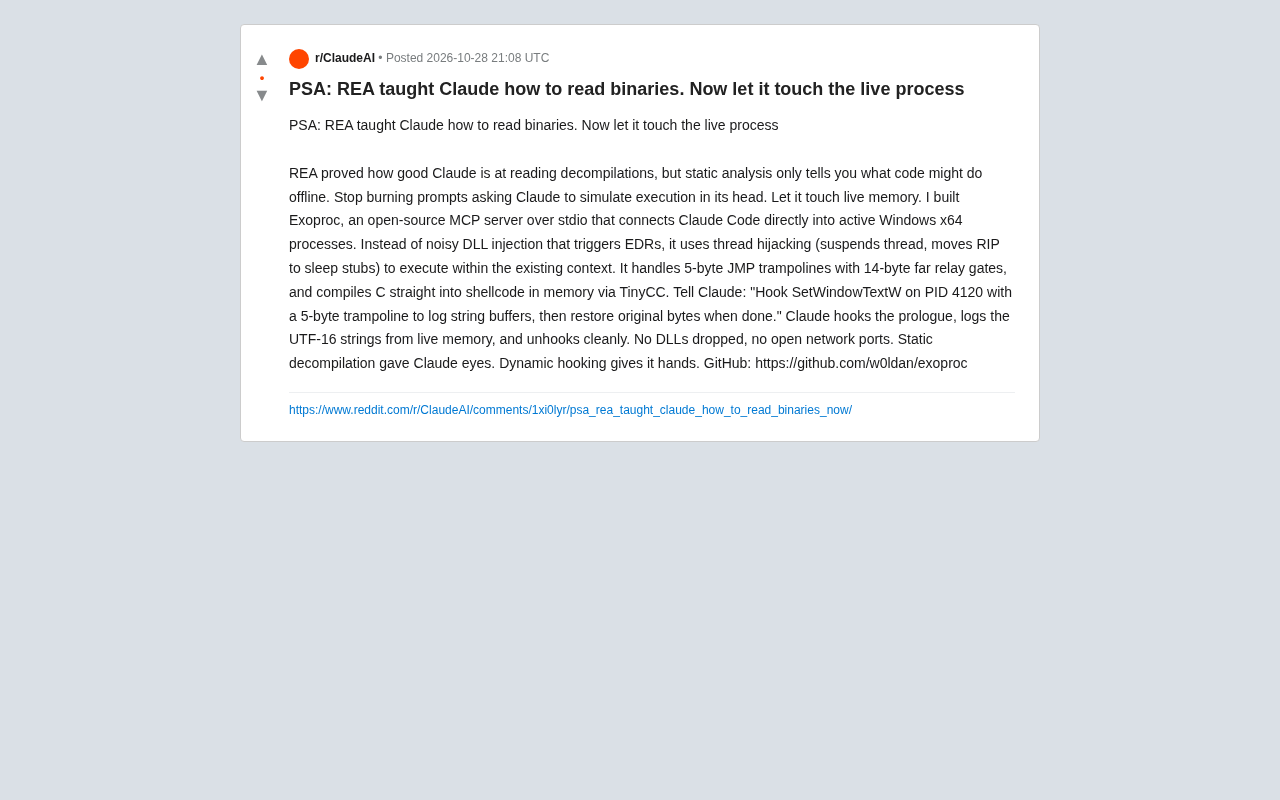
Giving Claude "Hands": Exoproc Open-Source MCP Server Enables Live Process Hooking
Exoproc is an open-source MCP server enabling Claude Code to hook live Windows x64 processes via thread hijacking, bypassing EDR for dynamic analysis. Static decompilation gave Claude eyes; dynamic hooking gives it hands.