How AI Dubbing Breaks Language Barriers: The New Multilingual Paradigm of the Lex Fridman Podcast

Lex Fridman's Russian podcast episode showcases AI dubbing as a game-changer for multilingual content.
Lex Fridman Podcast episode 500 was recorded entirely in Russian with guest Khabib Nurmagomedov, using ElevenLabs AI voice technology to provide an English dub — a first for the show. This human-AI collaborative approach demonstrates how AI dubbing can break language barriers, slash localization costs, and enable creators worldwide to produce content in their native language while distributing globally, marking a new era in multilingual content.
A Historic Podcast Interview Recorded in Russian with AI-Assisted Dubbing
In episode 500 of the Lex Fridman Podcast, host Lex Fridman sat down for an in-depth conversation with MMA legend Khabib Nurmagomedov, who retired from UFC with an undefeated record of 29-0. Lex Fridman is an AI researcher at MIT whose eponymous podcast has become one of the world's most influential long-form conversation shows since its launch in 2018, known for ultra-long deep conversations lasting 3–8 hours with guests ranging from tech leaders like Elon Musk and Mark Zuckerberg to scientists, philosophers, athletes, and political figures. Choosing Khabib as the guest for the landmark 500th episode and recording entirely in Russian held special significance for Fridman — born in Soviet-era Russia, Russian is his native language.
The most striking technical highlight of this interview wasn't the content itself, but how it was presented — the entire conversation was conducted in Russian, a first in the history of the Lex Fridman Podcast.
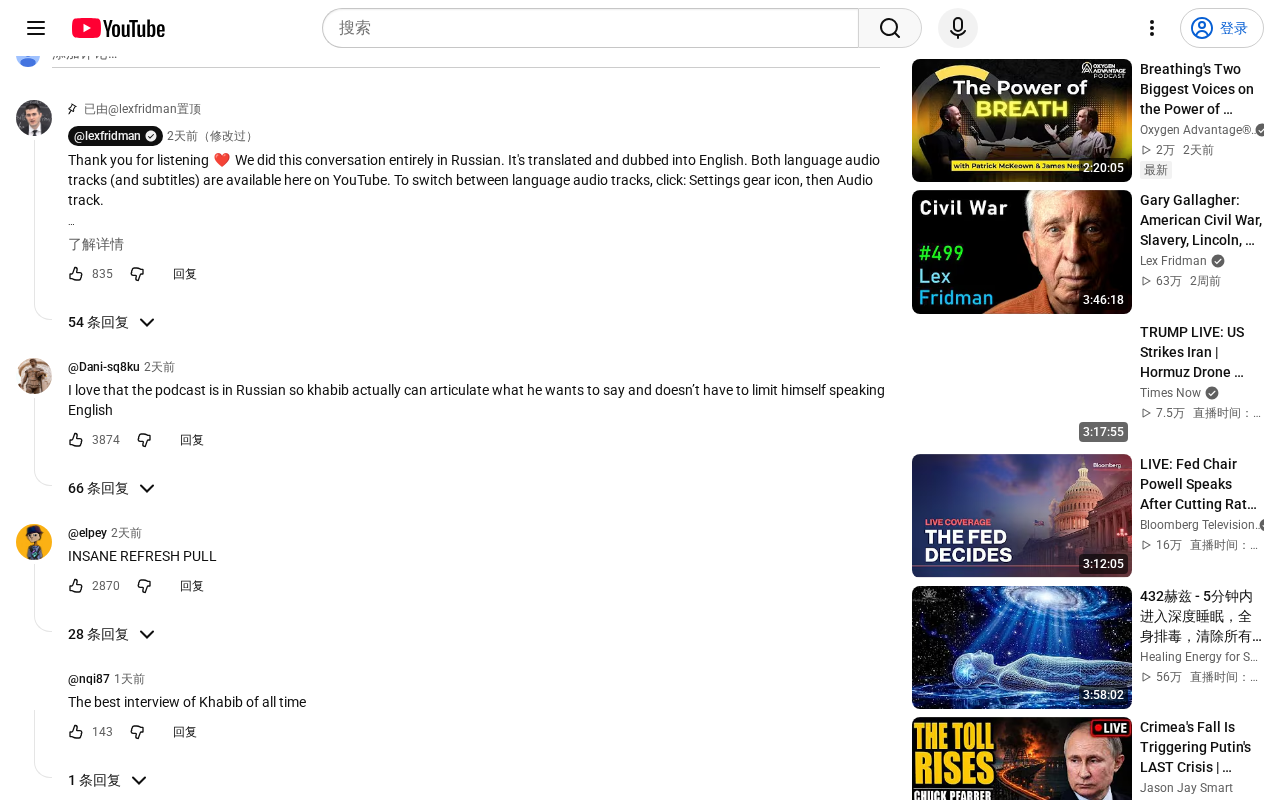
More importantly, the episode offered a complete English AI dub version. As Lex explained in his introduction: "If you're hearing English right now, you're actually listening to the English dub." Viewers on YouTube can switch audio tracks via the settings gear icon, freely toggling between the original Russian version and the English dub, with Russian subtitles also available. Notably, YouTube launched an experimental multilingual AI audio track feature in 2024, allowing creators to add AI-generated multilingual dub tracks to their videos — and this episode is a prime example of that feature being adopted by a top-tier creator.
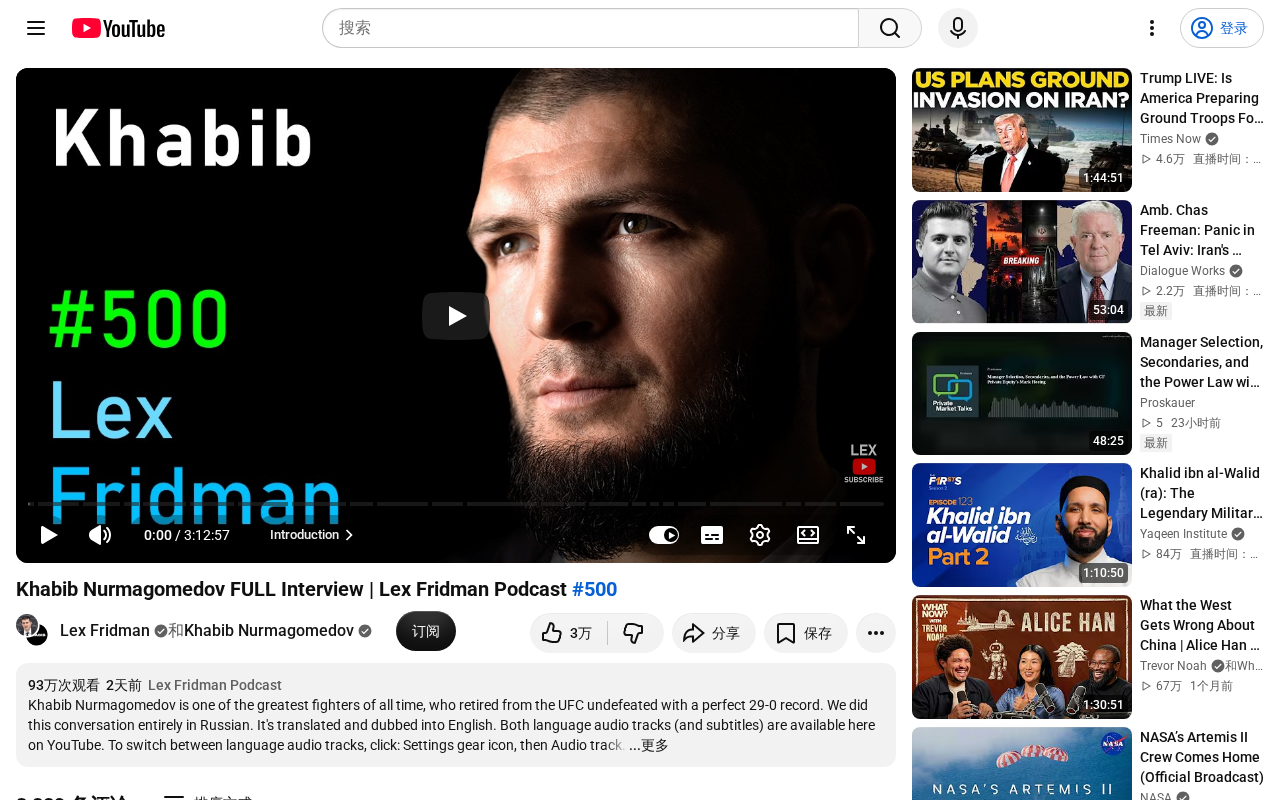
Behind this production workflow lies a collaborative effort involving translation, dubbing, and AI technology. According to the episode notes, the translation and dubbing were completed jointly by a team of human translators — including Lex himself — working alongside AI, with special thanks to AI voice synthesis company ElevenLabs for its technical support. Founded in 2022 by former Google engineers, ElevenLabs has rapidly become one of the most influential companies in AI voice synthesis, with a valuation exceeding $1 billion. Its core technology is based on autoregressive Transformer models and diffusion models in deep learning, capable of extracting a speaker's voice print characteristics from a small number of voice samples and transferring them to speech synthesis of arbitrary text. In 2024, ElevenLabs' "AI Dubbing" feature already supports automatic dubbing in 29 languages, with clients including Hollywood studios, top global podcasts, and game studios.
AI Voice Dubbing Technology: New Infrastructure for Content Globalization
From Subtitles to Convincingly Realistic Multilingual AI Dubbing
For a long time, cross-language content distribution relied primarily on two methods: subtitle translation and human dubbing. Subtitles require viewers to constantly read, fragmenting the viewing experience; traditional human dubbing is expensive, time-consuming, and often loses the speaker's original voice qualities and emotional nuances.
AI voice technology from companies like ElevenLabs is transforming this landscape. Through voice cloning and cross-lingual speech synthesis, AI can generate dubbing in another language while preserving the speaker's timbre, intonation, and even emotional characteristics. From a technical perspective, voice cloning can be divided into two broad categories: Speaker Adaptation and Speaker Encoding. The former requires fine-tuning a pretrained model with the target speaker's data, typically needing speech samples ranging from several minutes to several hours; the latter uses an encoder network to compress the speaker's acoustic features into a fixed-dimensional embedding vector (speaker embedding), requiring only a few seconds of reference audio to complete the cloning.
The core challenge in cross-lingual voice cloning is that phoneme systems differ dramatically across languages — for example, Russian's abundant soft consonants and stress rules are entirely different from English. Modern solutions typically employ language-agnostic intermediate representations (such as IPA phoneme sequences or self-supervised speech representations), enabling models to accurately produce target language speech while preserving the source speaker's timbre. In this interview, the English dub not only conveyed Khabib's viewpoints but also attempted to reproduce the calm yet powerful tone with which he speaks.
Human-AI Collaboration: Balancing AI Efficiency with Human Quality Control
Interestingly, Lex emphasized in his notes that this was "a collaborative effort between human translators and AI," not a purely automated AI product. This reveals an important reality about how AI dubbing is being deployed today: in high-quality, high-impact content scenarios, AI serves as an efficiency tool, while humans handle quality control, cultural context calibration, and emotional fine-tuning.
For an interview lasting several hours and covering sensitive and deep topics such as religion, history, and philosophy, purely machine-generated translation is prone to errors in semantic subtleties. When Khabib discussed the thousand-year history of Dagestan, the resistance of Imam Shamil, and the meaning of Islamic faith in life, precision in word choice was paramount.
Regarding the historical background of Dagestan, some additional context is helpful: Dagestan is located on the eastern slopes of the Caucasus Mountains in southern Russia and is the most ethnically diverse republic in the Russian Federation, home to over 30 ethnic groups speaking more than a dozen languages. This land has a deep wrestling tradition — freestyle wrestling and Sambo (a martial art developed during the Soviet era) are the most common sports activities among local youth. Imam Shamil, mentioned by Khabib, was a legendary leader who resisted the Russian Empire during the 19th-century Caucasian Wars, symbolizing unyielding resistance in Dagestani culture. Translating these historical and cultural symbols requires not only linguistic accuracy but also a deep understanding of cultural context — this is precisely where the human-AI collaboration model proves its value, ensuring a balance between technical efficiency and content rigor.
What AI Dubbing Means for Content Creators
Breaking Language Barriers and Expanding Global Audience Reach
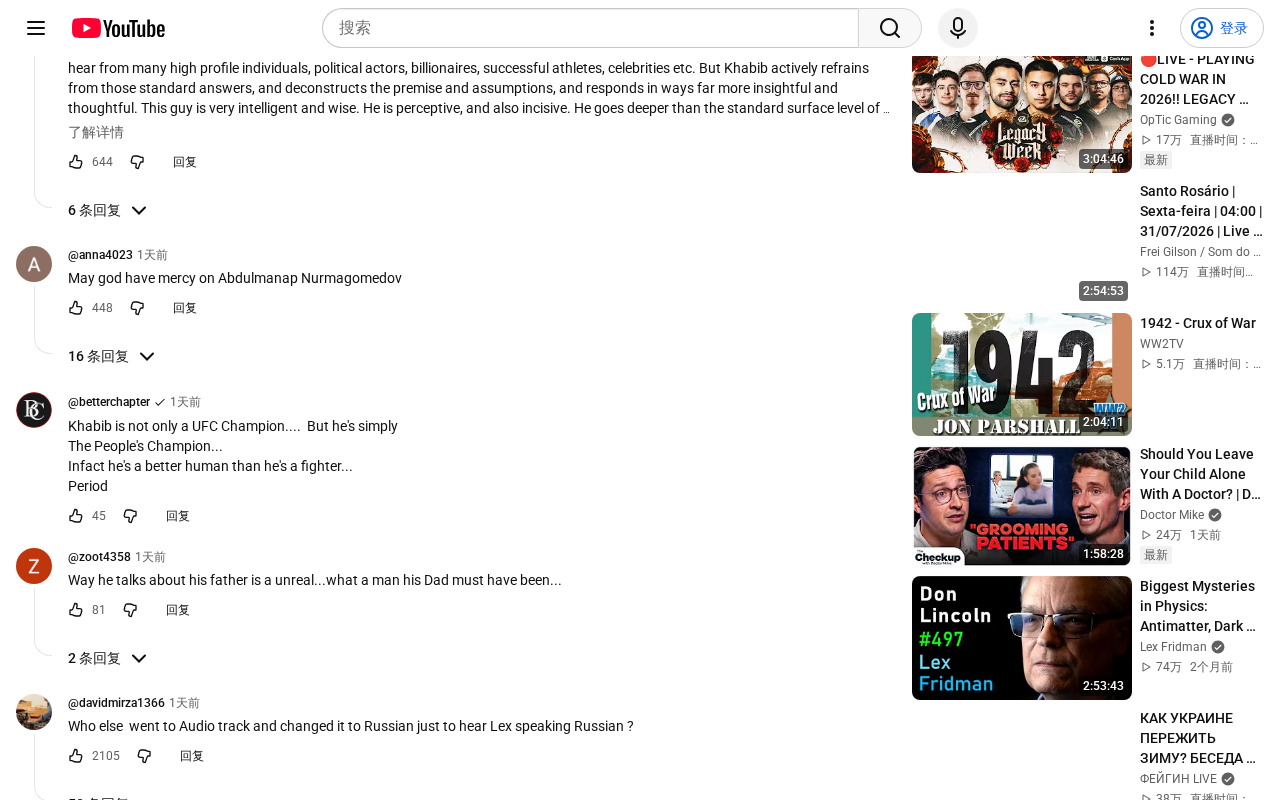
In the past, prominent non-native English speakers who wanted to reach a global audience had to either struggle to express themselves in imperfect English (often failing to convey their full meaning) or rely on subtitles that diminished the power of their expression. Khabib confessed during the interview: "I can feel it in my heart and soul, but sometimes I can't find the right words." Speaking in his native language allowed him to fully and accurately convey his thoughts.
AI dubbing technology makes it possible to "create in your native language, distribute globally." For thinkers, experts, and creators around the world, this is a tremendous liberation — the value of content is no longer constrained by the creator's foreign language proficiency.
Scalable Multilingual Localization for Podcasts and Long-Form Video
Podcasts and long-form video are among the fastest-growing sectors in the content industry, but localization has always been a challenge — conversations that run two or three hours make human dubbing costs nearly prohibitive. The global podcast market was valued at approximately $30 billion in 2024 and is projected to exceed $100 billion by 2030. However, there is a severe language imbalance in global podcast content — English-language podcasts account for over 60% of the global total, while native English speakers represent only about 5% of the world's population. This means the vast majority of potential listeners are excluded by language barriers.
Traditional human dubbing costs approximately $15–50 per minute of content (depending on the language and voice actor's caliber). A single 3-hour podcast episode could cost thousands of dollars for dubbing into just one language, and covering 10 languages could run into tens of thousands of dollars. AI voice dubbing compresses localization costs to 5%–10% of traditional methods and reduces delivery timelines from weeks to hours, making it feasible for a single episode to simultaneously reach multilingual markets. Spotify began testing AI dubbing features in 2023, and YouTube has been rolling out multilingual AI audio track capabilities as well.
It's foreseeable that as AI voice technologies from companies like ElevenLabs mature, offering multilingual audio tracks will gradually become standard for mainstream podcasts — just as video platforms today routinely provide multilingual subtitles.
Beyond Technology: Quality Content Remains the Core Competitive Advantage
While the technical production approach of this interview was quite pioneering, what truly makes it worth remembering is the depth of the content itself.
To understand Khabib's legend, one must appreciate the global influence of UFC and MMA. UFC (Ultimate Fighting Championship) is the world's largest mixed martial arts organization. MMA allows fighters to combine techniques from boxing, wrestling, Brazilian jiu-jitsu, Muay Thai, and other combat disciplines, making it the competitive sport closest to real combat. Khabib retired with a perfect 29-0 record — unprecedented in UFC lightweight division history. His showdown with Conor McGregor at UFC 229 in 2018 attracted over 2.4 million PPV (pay-per-view) purchases and remains one of the most commercially valuable fights in UFC history.
Khabib shared why Dagestan has been able to produce over 20 world champions from a single run-down gym with only one shower and cold water — it's not the equipment, but the coaches, the competitive environment, and a "hunger" born of survival necessity. Dagestan's ability to produce world-class fighters under extremely austere conditions is inseparable from its unique geographic isolation, tribal competitive traditions, and the systematized Soviet-era sports training infrastructure. Khabib's father, Abdulmanap Nurmagomedov, was himself a legendary coach who fused Sambo, judo, and freestyle wrestling into a distinctive training system.
Khabib spoke about how his father used the book Nations and Peoples to train his geography knowledge, how his father's maxim — "Diamonds are formed under immense pressure" — sustained him through his epic battle with Conor McGregor, and how faith helped him stay humble after fame: "You can keep money in your hands, but not in your heart." Khabib's decision to retire was partly prompted by his father's passing in 2020 — he had promised his mother he would not fight again, a decision that also made him one of the rare legends in MMA history to voluntarily walk away at the peak of his career.
This reminds us: AI dubbing is a content amplifier, not a content substitute. Technology can help quality content cross language barriers to reach more people, but the intellectual density, authenticity, and depth of content will always be what truly moves audiences. When technology reduces language barriers to a minimum, competition over content quality actually becomes even more pure and intense.
Conclusion: The Multilingual Content Era Is Dawning
Lex Fridman's Russian-recorded, AI-assisted dubbed interview may one day be seen as a landmark moment — demonstrating how AI voice technology has moved from the lab into mainstream, high-impact content production.
For creators, this means a broader stage; for audiences, it means access to voices previously unreachable due to language barriers. And the human-AI collaborative production model offers a pragmatic template for AI adoption in the content industry: technology handles efficiency and scale, while humans ensure quality and warmth.
Key Takeaways
Related articles

Workbuddy for Absolute Beginners: How a Desktop AI Agent Fits Into Real Workflows
A beginner's guide to the Workbuddy desktop AI agent: installation, claiming credits, file management, and building automated workflows—compared with CodeX for fit and cost, helping professionals shift from AI question-askers to AI managers.

OpenAI's New Agent Stack: Computer Use, Decisions API, and Ultra-Fast Workflows
OpenAI Dev Day unveiled a new agent stack: Computer Use outperforms humans, Decisions API delivers ultra-low-latency classification via Luna, Agents API opens the same Computer Use capabilities, and GPT-6.1 Sol costs only one-seventh of Astra. Core updates, benchmark data, and developer insights.

Liang Wenfeng Open-Sources DeepInfo Inference Framework, Takes On U.S. Ban
DeepSeek open-sources its DeepInfo inference framework after its models, featuring GPU/CPU cross-pipelining, small-model prediction with large-model verification, and full Huawei Ascend and NVIDIA chip support—facing the U.S. federal ban head-on. This article analyzes its significance for AI deployment and open-source strategy.