How AI Is Reshaping Indie Game Development: A Hacker News Discussion
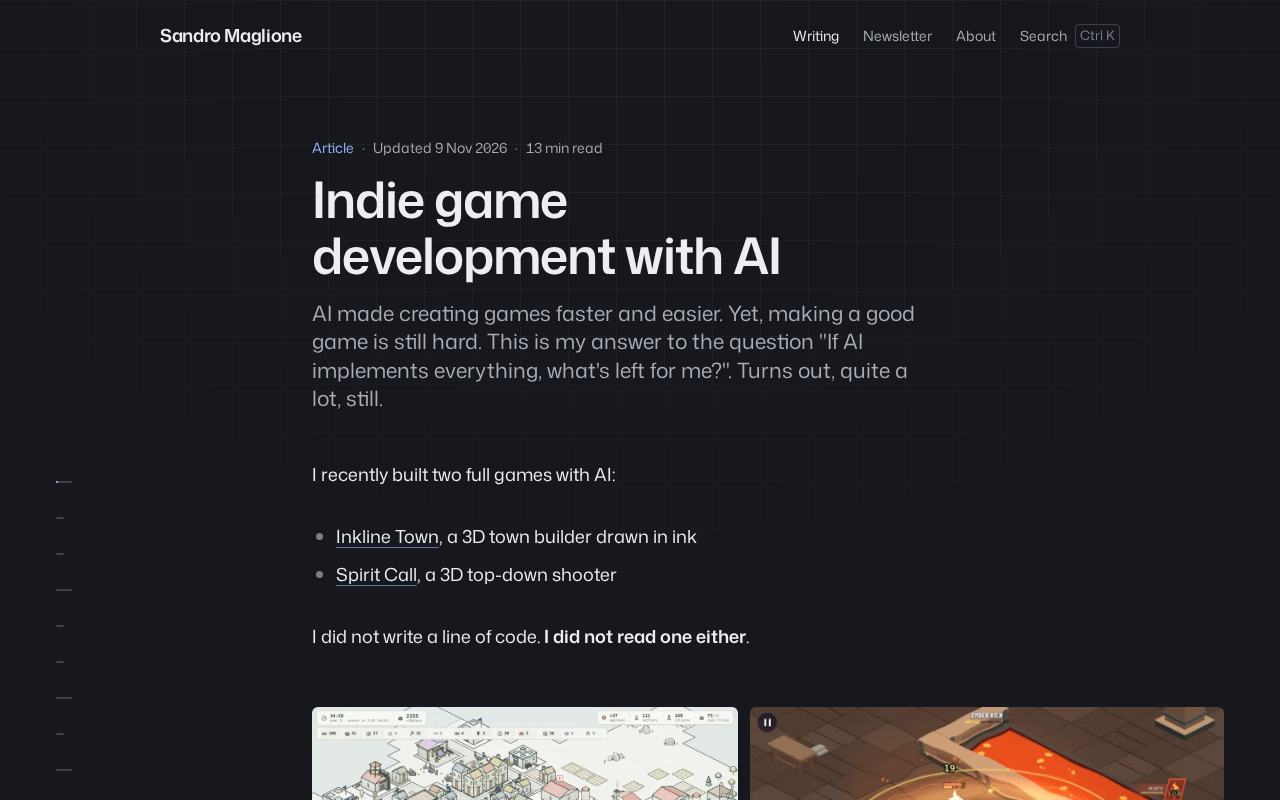
Hacker News discussion shows indie developers treat AI as a co-pilot, balancing efficiency and creative control.
Based on a small-scale Hacker News discussion about "Indie Game Development with AI," this article outlines indie developers' practical attitudes toward AI tools. AI mainly enters high-repetition, lower-barrier scenarios such as code assistance, art generation, and level and narrative drafting, significantly compressing prototyping cycles. But the community shares concerns about copyright ownership, stylistic consistency, and creative homogenization, forming two camps: "tool advocates" and "the cautious." The conclusion: indie developers prefer to treat AI as a co-pilot rather than autopilot, using it for intermediate steps while keeping core decisions like gameplay creativity and emotional expression in their own hands.
Introduction
Indie game development has always been known for limited resources and unlimited creativity. As AI tools gradually permeate every stage of game development, a Hacker News discussion thread titled "Indie Game Development with AI" drew community attention. The post itself had only 11 points and 3 comments, but the topic it touched on—the practical role and limitations of AI in indie game development—is worth exploring in depth.
Where AI Fits into Indie Game Development
Judging from the context of the Hacker News discussion, indie developers' interest in AI centers on a few high-frequency scenarios: code assistance, art asset generation, level design assistance, and narrative content drafting. What these scenarios share is that they are highly repetitive and relatively low in professional barrier to entry—which fits perfectly with the reality of tight manpower in indie teams.
The attitude revealed in the community discussion is not blindly optimistic. Some commenters pointed out that AI-generated assets still have gray areas around stylistic consistency and copyright ownership, and that using them directly in commercial projects requires careful evaluation. This is a consensus concern within the Hacker News technical community, not a lone voice.
Code assistance in the context of indie game development usually refers to programming assistants based on large language models (such as GitHub Copilot, Cursor, etc.) and conversational code generation tools. These tools can complete code snippets based on natural language descriptions or context, explain error messages, and generate boilerplate logic (such as save systems and state machines), thereby reducing the burden on indie developers of memorizing engine APIs and writing repetitive code.
Art asset generation mainly relies on diffusion models (Stable Diffusion, Midjourney, etc.) and image editing tools to quickly produce concept sketches, textures, UI icons, and placeholder assets. Its advantage is providing style references at extremely low cost, but the controllability of output resolution, consistency, and commercial licensing still require human oversight.
Level design assistance refers to using procedural content generation or AI-driven layout suggestion tools to quickly generate level drafts for developers to screen and iterate on, rather than directly replacing human design.
The Tension Between Efficiency Gains and Creative Control
The most direct value of AI tools lies in compressing the prototyping cycle. Indie developers can use AI to quickly generate placeholder art and test level logic, leaving more time for polishing core gameplay. For indie projects that require frequent trial and error, this is no small matter.
But the discussion also presented another view: over-reliance on AI may cause games to lose their distinctiveness. The core competitiveness of indie games often comes from unique visual language and narrative character, while AI-generated content tends toward convergence. Although there were only a few comments, they clearly divided into two camps—the "tool advocates" and the "cautious"—with the former valuing efficiency and the latter worrying about homogenization.
Stylistic consistency is a core engineering challenge that AI-generated content faces in game projects. Assets produced by different tools, different prompts, and different random seeds often have subtle but perceptible differences in color systems, brushwork, and lighting logic. For games that require large numbers of art assets, this inconsistency can undermine the overall visual language. Common practical approaches include: establishing unified prompt templates and style reference libraries, using fine-tuning techniques such as LoRA to lock in a specific art style, and having artists unify color grading and shape refinement in post-production.
The risk of homogenization stems from the training distribution of the generative models themselves—models tend to output statistically "average" results, which easily leads to similar visual tropes appearing across different projects. The distinctiveness that indie games rely on for their footing requires vigilance against exactly this tendency toward averaging.
Indie Developers' Real-World Trade-offs
The Hacker News discussion was limited in scale, so no industry-level conclusions can be drawn from it. But from the direction of the interactions the post generated, it can be inferred that indie developers are more inclined to treat AI as a "co-pilot" rather than "autopilot"—using it to handle tedious intermediate steps while retaining control over final creative decisions.
Practical Issues Worth Noting
- Copyright and licensing: The terms for commercial use of AI-generated assets vary by tool, and they need to be confirmed one by one before a project begins.
- Stylistic unity: When mixing multiple tools, human intervention is needed to reconcile visuals and narrative.
- Player perception: Some players are resistant to AI-generated content, so promotional strategy needs careful consideration.
Conclusion
This small-scale discussion on Hacker News reflects the pragmatic attitude of the indie game community toward AI: embrace the tools, but don't let the tools define the work. For indie developers, AI is an accelerator that shortens the distance from idea to playable build, while the soul of the game—gameplay creativity and emotional expression—remains in the developers' own hands.
Note: This article is based on the limited discussion content of the Hacker News post "Indie Game Development with AI." The post had relatively little engagement, and the viewpoints presented are grounded in the direction of the community discussion, without inferences beyond the scope of the source material.
Related articles
Anthropic Model Benchmarking: Fable 5 vs 5.1 vs 5.2 Comparison
Based on Reddit community comparison material, this analyzes benchmark differences among Anthropic models Fable 5, 5.1, and 5.2, and discusses the practical implications of version iterations for developers and model selection advice.
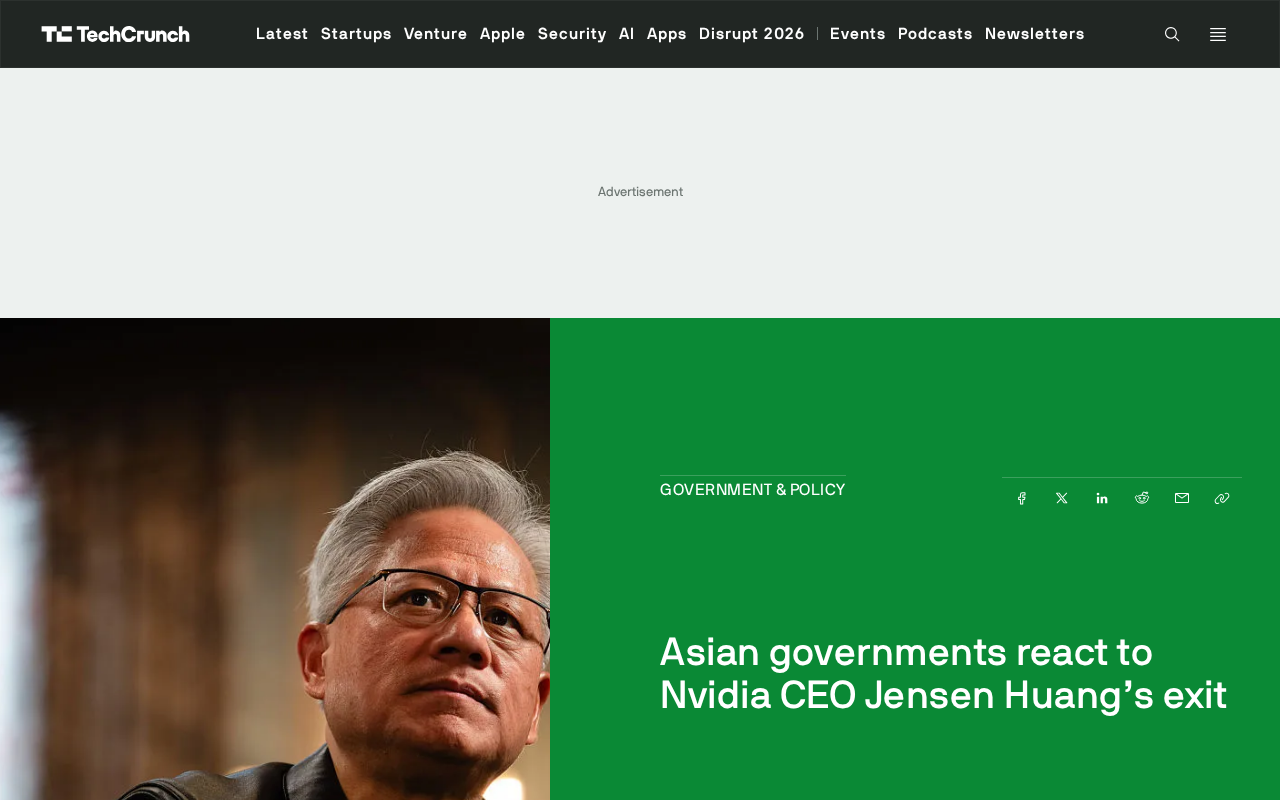
Jensen Huang Steps Down as Nvidia CEO, Asian Governments Scramble to Respond to Chip Supply Shifts
Jensen Huang's departure as Nvidia CEO triggers chain reactions across Asian governments: some confirm chip supply commitments, others monitor local AI project impacts and handle related investigations. This article analyzes supply chain stability, project risks, and compliance uncertainty.
Reddit Player Builds RISK Game Environment and Trains an AI That's Nearly Impossible to Beat
Reddit player builds a RISK training environment and trains an aggressive AI model that's nearly unbeatable. Strong at expansion but weak at defense, the author hits a bottleneck trying human data training, revealing common game AI development challenges.