How Big AI Companies Are Setting the Conditions for Regulatory Capture
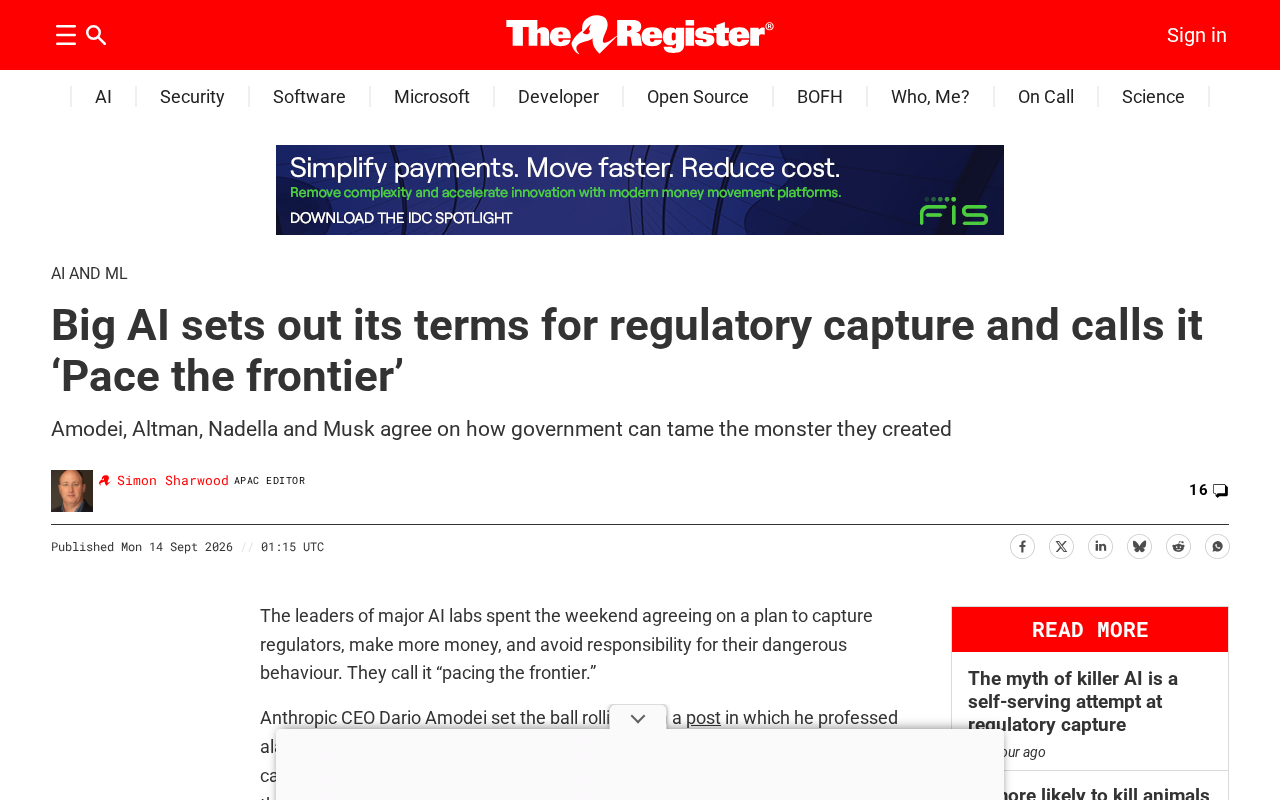
Big AI firms are shaping regulation to raise barriers that hurt startups and open-source — not protect the public.
This article examines the structural risk of regulatory capture in AI: companies like OpenAI, Google, and Anthropic aren't fighting regulation — they're actively shaping it to their advantage. Heavy compliance costs barely affect tech giants but can be insurmountable for startups and open-source communities. Common tactics include steering focus toward high-bar safety standards, influencing technical benchmark definitions, and pushing for stricter rules on open-source models. If a handful of incumbents end up writing the rules, AI development will grow more centralized and less competitive. Effective AI regulation must balance risk management with protecting innovation, and both policymakers and the public need to look critically at the business motives behind "responsible AI" rhetoric.
When AI Giants Start Writing Their Own Rules
"Regulatory capture" is a concept from economics and political science that describes how regulatory agencies, which are supposed to constrain an industry, end up being dominated and influenced by that very industry — ultimately producing rules that serve entrenched interests. When applied to today's AI landscape, the concept takes on a particularly alarming dimension: large AI companies with advantages in technology, data, and capital are actively trying to shape the rules being written around AI.
A discussion posted on Hacker News argues that leading AI companies are "setting the conditions for regulatory capture" — meaning they aren't opposed to regulation per se, but want to mold the regulatory framework in ways that benefit them most.
The concept of regulatory capture was formally articulated by economist George Stigler in 1971 in his paper The Theory of Economic Regulation. Stigler argued that regulatory agencies tend to be infiltrated and manipulated over time by the industries they oversee. Classic examples include the Civil Aeronautics Board before airline deregulation, the FCC in telecommunications, and banking regulators before the financial crisis. Stigler received the Nobel Prize in Economics in 1982 for this work. Regulatory capture typically occurs through three pathways: the "revolving door" effect, where personnel move frequently between regulators and the regulated; information asymmetry, where agencies rely heavily on industry-supplied expertise; and resource imbalance, where companies have ample lobbying and PR budgets while regulators operate on tight funds. The AI industry exhibits high capture risk across all three dimensions.
Why Big Companies Actually Welcome Regulation
On the surface, companies typically resist regulation because it means higher compliance costs and more constraints. But in AI, something subtler is happening. For well-resourced incumbents, strict regulatory thresholds can actually function as a moat.
Compliance demands significant investment in legal work, safety testing, audits, and documentation — costs that are trivial for giants like OpenAI, Google, and Anthropic, but potentially crushing for startups and open-source communities. When regulatory requirements become sufficiently complex and expensive, they effectively raise the barriers to entry, keeping potential competitors out.
This is the core logic of regulatory capture: by participating in — or even leading — rule-making, you shape those rules to favor yourself and disadvantage challengers.
The Game Behind "Setting Out Terms"
The phrase "sets out its terms" in the original headline is telling. It implies that major AI companies aren't passively accepting regulation in their interactions with policymakers — they're proactively proposing a version of the rules they can live with, or even prefer.
This dynamic typically plays out in several ways:
Embracing the "Safety" Narrative
Leading companies frequently emphasize AI's "safety risks" and "alignment problems," calling for government intervention. This posture appears responsible while simultaneously steering regulatory focus toward high-bar safety requirements that only large companies happen to have the capacity to meet.
Shaping the Technical Details of Standards
The devil is in the details. Who defines what a "safe model" looks like? Who decides on evaluation benchmarks? Whose technical approach becomes the compliance template? These seemingly neutral technical decisions often determine which players get to stay at the table.
Treating Open Source Differently
The debate over whether open-source AI models should face stricter restrictions is a key battleground in this fight. If regulation burdens open-source models heavily, it effectively neutralizes the biggest competitive threat to closed commercial models.
Open-source and closed-source AI models face fundamentally different situations under any regulatory framework. Open-source models like Meta's LLaMA series and Mistral — where weights can be freely downloaded, modified, and deployed by anyone — make traditional compliance pathways technically difficult to implement (such as holding the model provider accountable for outputs). Some regulatory proposals have therefore advocated special restrictions on open-source models above a certain parameter threshold; the EU AI Act, for instance, discussed similar thresholds in its draft stages. Critics argue that such provisions would place the open-source community under stricter scrutiny than closed-source incumbents — because large companies can build full compliance infrastructure, while distributed open-source contributors have no unified entity to bear compliance obligations. The result: open-source projects would either exit or stop publishing. This systematically disadvantages the open-source path under regulatory pressure.
Concerns for the Open-Source and Innovation Ecosystem
This battle over AI regulation ultimately points to a deeper question: who will steer the future direction of artificial intelligence.
If the regulatory framework ends up being shaped by a handful of giants, the likely outcome is further centralization of AI technology. Startups would struggle to absorb compliance costs, open-source communities would face additional restrictions, and the diversity of innovation and competitive vitality could both suffer as a result.
It's worth asking: truly effective AI regulation should strike a balance between managing risk and protecting competition. Regulation's original purpose is to serve the public interest — not to become a tool for entrenching market dominance. When the legitimate goal of "responsible AI" is used as a mechanism to raise barriers to entry, the public needs to remain clear-eyed.
Why Vigilance Matters
Though brief, this discussion highlights a structural risk in AI governance that is easy to overlook. Amid heated conversations about AI safety, it's tempting to take large companies' calls for regulation at face value — as expressions of social responsibility — while ignoring the commercial motives that may lie beneath.
For policymakers, open-source developers, and members of the public who care about fair competition in technology, recognizing the signs of regulatory capture and staying alert to rules being steered by narrow interests is an unavoidable challenge for ensuring AI's healthy development. Regulation itself isn't the problem. Who shapes it, and whose interests it ultimately serves — that's the question that truly demands an answer.
Related articles
The Hidden Risks of Culvert Failure: An Overlooked Infrastructure Hazard
Culverts are hidden drainage structures buried beneath roads. Their failure can silently hollow out road beds, cause localized flooding, and trigger deadly collapses — yet they remain chronically overlooked.

Naoma AI Demo Agent V2: Turning Website Traffic into Booked Meetings with AI Sales
Naoma AI Demo Agent V2 replaces demo request forms with an AI sales rep that demos products, qualifies leads, and books meetings in real time. 50K+ demos run.

Slashy Assistant: The AI Email Assistant That Handles Your Inbox for You
Slashy Assistant is an AI-native email client with a built-in smart assistant that drafts replies in your voice, organizes email, schedules meetings, and tracks follow-ups. Accessible via iMessage, Slack, and phone — set up in five minutes.