How Can Ordinary Investors Get Pre-IPO Exposure to Anthropic Through Funds?

Before Anthropic's IPO, retail investors can participate through direct-holding funds, SPVs, and total return swaps, but each has hidden costs and risks.
Based on an industry conversation, the article breaks down three paths for ordinary investors to participate in Anthropic's pre-IPO investment: direct-holding funds, SPVs, and total return swaps. Direct holding offers the highest transparency; SPVs involve multiple fee layers and information opacity; total return swaps are synthetic exposure whose risks must be managed at the portfolio level. Different funds' valuation mark methods directly affect the first-day NAV increase at IPO. Drawing on SpaceX's Pre-IPO experience, the article also reminds investors to pay attention to the fund's other holdings, position sizing, and volatility tolerance, and notes that innovative ETF structures based on swaps and perpetual contracts have already appeared in Europe.
Title
How Can Ordinary Investors Get Pre-IPO Exposure to Anthropic Through Funds?
Meta Description
With an Anthropic IPO on the horizon, ordinary investors can gain pre-IPO exposure through three routes: direct-holding funds, SPVs, and total return swaps. This article breaks down the fee structures, valuation marks, and volatility risks of each path, and offers practical advice drawing on SpaceX's Pre-IPO experience.
Article Content
Expectations for Anthropic's IPO are heating up. In a professional conversation circulating on Bilibili, two industry insiders familiar with ETF and closed-end fund structures detailed the various paths through which ordinary investors can participate in this AI company's pre-IPO investment, along with the hidden costs behind each path. The discussion starts from SpaceX's Pre-IPO experience, but the real focus is: when a star AI company has not yet listed on public markets, can retail investors actually "get on board," and in what posture should they do so?
Three Exposure Structures: Direct Holding Is Only for the Few
The conversation mentions that public retail investors can indirectly hold SpaceX through about 18 funds—this sample is equally useful for understanding the path to Anthropic: a minority of these funds directly hold the underlying stock, while more build exposure through special purpose vehicles (SPVs) or total return swaps. Funds that truly hold the underlying directly show their holdings on the fund facts card, offering the highest transparency; the SPV path adds a layer of fee structure and information opacity concerns; the swap path is synthetic exposure, and investors do not actually hold the stock.
According to the guests, about nine to ten ETF products already include Anthropic holdings, with weights ranging from low single digits to nearly ten percent, among which MN (Mango's ETF) has a relatively high holding ratio. But SPVs are currently the main way to obtain exposure, and that is exactly where the problem lies.
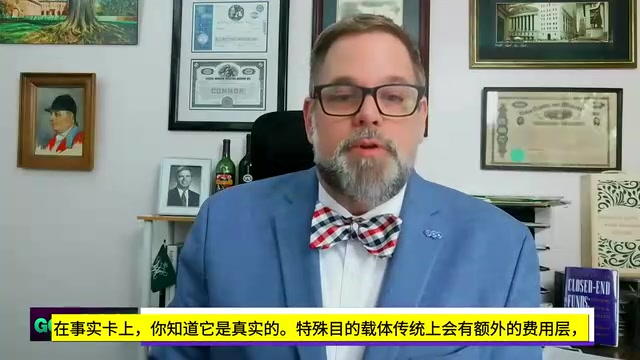
Special Purpose Vehicle (SPV) is an independent legal entity established for a specific investment objective, commonly used in private equity and Pre-IPO investing. When obtaining exposure to non-public companies, funds typically set up an SPV to hold the target company's shares, and investors purchase shares in the SPV. This structure allows funds to bypass the thresholds of direct investment (such as minimum investment amounts and accredited investor restrictions), but it also introduces additional complexity: the SPV itself has management fees, administrative fees, and other costs, and its financial disclosure requirements are lower than those of public funds, reducing transparency of the underlying assets. In addition, SPV valuations may lag market changes, affecting investors' judgment of true risk.
Total Return Swap is a derivative contract in which two parties agree to exchange the total return of the underlying asset (including dividends and capital gains) for a fixed or floating interest rate. In Pre-IPO investing, investors obtain economic exposure to the underlying stock through the swap but do not actually hold the stock. The advantage of this synthetic exposure is flexibility and lower cost, but the risks lie in counterparty credit risk, liquidity risk, and the complexity of contract terms. Swaps are usually traded over the counter and lack centralized clearing, so the risk transmission mechanism differs from direct shareholding.
The Hidden Costs of SPVs: Multiple Fee Layers and an Unclear Underlying
The core risk of the SPV structure lies at two levels: first, historically SPVs often add extra fee layers, which stack up and raise the actual holding cost; second, even under the U.S. 40-act disclosure framework, investors find it difficult to fully see the details of the SPV's underlying assets and cannot be 100% certain whether the exposure is as advertised.
The conversation specifically notes that funds differ greatly in valuation marks and expense ratios—some funds have clearly higher cost burdens than peers, and the valuation mark method directly affects the calculation basis for the IPO first-day "pop" (the net asset value increase from the first-day gain). In other words, funds that all advertise "Anthropic exposure" may differ greatly in actual quality and holding experience.
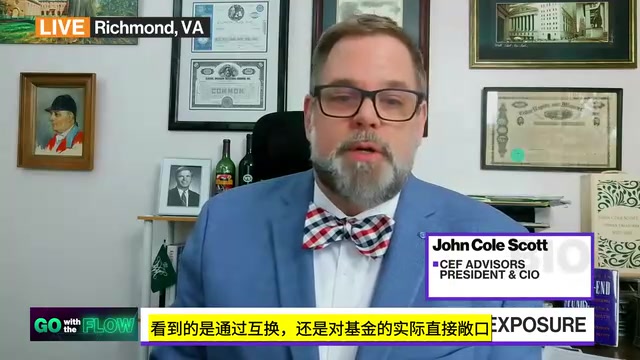
The 40-act disclosure framework refers to the U.S. Investment Company Act of 1940, which sets disclosure obligations for registered investment companies (such as mutual funds and closed-end funds). However, as private instruments, SPVs are generally not subject to the strict disclosure requirements of the 40-act; even if the fund itself is 40-act registered, the details of the underlying assets held through the SPV may be opaque. Investors may be unable to fully confirm the SPV's actual holdings, valuation methods, and fee structure, which increases information asymmetry risk. By contrast, funds that directly hold the underlying stock must disclose holdings in the facts card, offering greater transparency.
Total Return Swaps: More Flexible, but Risks Need Closer Watching
Compared with SPVs, total return swaps are a newer approach; some products are even linked to perpetual contract prices and are essentially synthetic exposure. The guest frankly said that most of the clients he serves are retirement-income investors with a conservative style, and their acceptance of holding exposure through swaps is lower than direct shareholding—because funds with direct shareholding really buy the stock with real money, "which in our view is safer for investors."
The issue with swaps is not on the return side but in the risk transmission mechanism: swaps interact with the portfolio differently from real position marks, and volatility and risk need to be managed at the portfolio level. This is not a question of "whether there is exposure" but of "in what form the exposure exists."
How Much Can It Rise on the First Day? Valuation Marks Determine the Answer
An unavoidable question: the price at which a fund marks its private shares directly determines the net asset value increase on the first day of the IPO. The conversation mentions that listed closed-end funds such as DXYZ still use earlier valuation marks, and their first-day NAV increase depends on the final market cap assumption, ranging from single digits to the low teens of percent; VCX's estimates are similar, with obvious differences under different market cap assumptions.
BlackRock's Tony Kim has long managed BTX; the fund's Anthropic holding has risen from low single digits in earlier years to nearly ten percent, is direct exposure, and trades at a discount. According to the guest, Tony Kim himself is highly bullish on the stock and does not plan to sell in the short term, and may even add on pullbacks.
Valuation Mark is the process by which a fund prices non-listed assets. Because private shares have no public market price, funds need to use valuation models (such as comparable company analysis and discounted cash flow) to determine fair value. Different funds may differ in valuation methods, assumptions, and update frequency, causing the same asset to be marked at different prices in different funds. When the target company IPOs, its public market price is often higher than the Pre-IPO valuation, creating a "pop" (first-day gain). The price at which a fund marks its private shares directly determines the magnitude of the first-day NAV increase. The closer the mark price is to the IPO offering price, the smaller the pop; the lower the mark price, the larger the pop. Therefore, the valuation mark method becomes a key variable affecting investor returns.
What Can Be Learned from the SpaceX Case
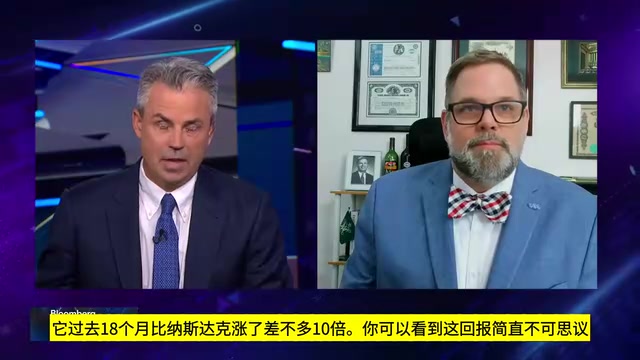
The conversation cites estimates from the data team: Anthropic-related exposure has returned far more than the Nasdaq benchmark over the past 18 months. Such returns are certainly attractive, but the SpaceX Pre-IPO boom also offers a cautionary tale—retail enthusiasm often creates a pre-IPO premium, and post-IPO performance is usually decent, but drawdowns are not absent.
The guest reminds us that AI is indeed a strong current driving trend, but volatility may come from outside the company: market events, elections, and global politics can all cause stocks and closed-end funds to move badly for reasons unrelated to fundamentals. After listing, the company needs to keep proving through quarterly earnings that it can expand revenue and increase market share.
Practical Advice for Ordinary Investors
If someone asks "How should I buy Anthropic," the first piece of advice from the conversation is surprisingly plain: first look at the fund's other holdings besides Anthropic. These are not pure single-asset investments; you must also accept the other members of the "same family" and have enough trust in the fund sponsor and management team.
The second piece of advice concerns position sizing: to achieve a meaningful NAV boost, you may need to allocate nearly ten percent of the portfolio, which is already a large position in a conservative advisor's framework. The third piece of advice concerns volatility tolerance: newer fund structures such as DXYZ and VCX have at times traded at prices far above NAV, and such volatility is not friendly to retail investors; while BTX, converted from a closed-end fund, has empirically better trading stability.
New Approaches in Europe and Regulatory Variables
Finally, the conversation mentions that Europe has already seen "all-private" ETF structures priced on total return swaps and perpetual contracts, and Luxembourg's ETF ecosystem is expanding. The guest is open to this but stresses that sponsor qualifications and a portfolio-level view of risk management remain key. Another closed-end fund institution is preparing a long-short product on a unicorn index, which has not yet been brought to market.
These innovations expand ordinary people's access to Pre-IPO assets, but opportunity and risk always share the same source: swaps are not position marks, and synthetic exposure is not the same as real shareholding. Before Anthropic officially rings the bell, investors who want to "get on board early" must first figure out exactly which vehicle they are boarding.
One-line Summary
Before Anthropic's IPO, retail investors can participate through direct-holding funds, SPVs, and total return swaps, but each has hidden costs and risks.
Paragraph Summary
Based on an industry conversation, the article breaks down three paths for ordinary investors to participate in Anthropic's pre-IPO investment: direct-holding funds, SPVs, and total return swaps. Direct holding offers the highest transparency; SPVs involve multiple fee layers and information opacity; total return swaps are synthetic exposure whose risks must be managed at the portfolio level. Different funds' valuation mark methods directly affect the first-day NAV increase at IPO. Drawing on SpaceX's Pre-IPO experience, the article also reminds investors to pay attention to the fund's other holdings, position sizing, and volatility tolerance, and notes that innovative ETF structures based on swaps and perpetual contracts have already appeared in Europe.
Related articles

DeepSeek Harness Quick Start Guide: From Installation to 5 Real-World Cases
What is DeepSeek Harness? Based on a Bilibili tutorial, this article covers how this AI Agents software works, installation and setup, four working modes, and five real-world cases: a 3D racing game, official website, music player, science animation, and self-developed plugin—plus token money-saving tips.

Breaking Down DeepSeek's Super-agent Architecture: How Router+Worker Solves the Multi-Session Management Bottleneck
An analysis of DeepSeek's Super-agent paper: how the Router+Worker two-tier architecture uses Fast Pass, Chain of Recall, and storage-compute separation to solve multi-AI-session management bottlenecks, and how much it truly alleviates the human attention bottleneck and what engineering trade-offs it makes.

19K Stars in 5 Days: Why DeepSeek's Open-Source AI Programmer Went Viral
DeepSeek's open-source AI programmer hit 19K GitHub stars in 5 days. Why it went viral: the agent boom, AI writing its own code, and the shift from Q&A tools to AI employees.