How DSLs Make LLM Outputs More Reliable: Principles and Practice
How DSLs Make LLM Outputs More Reliabl…
DSLs improve LLM output reliability by constraining generation space, enabling validation, and eliminating ambiguity.
LLMs are powerful but notoriously unpredictable in production. This article explores how Domain-Specific Languages (DSLs) address this through three mechanisms: deterministic syntax validation, semantic convergence, and reduced generation freedom. It covers practical patterns including structured outputs, custom DSLs with guardrails, and three-layer IR architectures, alongside honest discussion of design costs and training data limitations.
The LLM Reliability Problem
Large Language Models (LLMs) have demonstrated remarkable capabilities in natural language processing, code generation, and content creation — yet one challenge has consistently troubled developers: unreliable outputs. Given the same prompt, a model might return results with inconsistent formatting, loose structure, or even internal contradictions.
This unreliability has deep technical roots. LLMs use an autoregressive generation mechanism, sampling the next token at each step from a probability distribution. The temperature parameter controls the randomness of sampling, while nucleus sampling (top-p) randomly selects from the highest-probability token subset. These decoding strategies together mean that identical inputs can produce dramatically different outputs. That randomness is a feature for creative writing — but a critical liability in production systems that demand precise, reproducible results.
When integrating LLMs into production-grade systems, this uncertainty often becomes the fatal weak link. A perspective that recently sparked widespread discussion on Hacker News — "DSLs Enable Reliable Use of LLMs" — offers a compelling framework for addressing this challenge. This article explores why DSLs (Domain-Specific Languages) can serve as an effective mechanism for constraining and improving LLM output quality.
What Is a DSL, and Why Does It Pair Naturally with LLMs?
The Basics of DSLs
A DSL is a specialized language designed for a specific problem domain. Unlike general-purpose programming languages (such as Python or Java), its syntax and semantics are tightly focused on a particular context. SQL is a DSL for database queries, regular expressions are a DSL for text matching, and HTML is a DSL for document structure. The core strengths of a DSL lie in: clear expression constraints, well-defined syntactic boundaries, and a restricted semantic space.
DSLs are typically divided into two categories: internal DSLs (embedded within a host language, such as Ruby's Rails DSL or Python's SQLAlchemy) and external DSLs (with independent parsers and grammars, such as SQL, regex, and YAML). For LLM use cases, external DSLs hold a distinct advantage — their independent syntax can be strictly validated by a parser, whereas the boundaries of internal DSLs are comparatively fuzzy.
Constraints Are the Source of Reliability
LLM unreliability stems largely from an overly open generation space. Asking a model to "describe a data processing pipeline in natural language" can yield wildly varied outputs. But asking it to "generate a processing script in a specific DSL syntax" dramatically narrows the generation space. This constraint is the essence of reliability — a restricted output space means fewer opportunities for error and results that are far easier to validate programmatically.
Three Core Mechanisms by Which DSLs Improve LLM Reliability
Mechanism 1: Verifiability — Making Errors Impossible to Hide
DSLs typically have strict syntactic definitions that can be formally described using BNF (Backus-Naur Form) or its extended form, EBNF. BNF is a meta-language for describing grammatical rules, and the syntax of nearly all programming languages and structured DSLs can be expressed with it. Once a BNF definition exists, a parser can be auto-generated to perform deterministic syntactic validation of LLM outputs — a fundamentally different proposition from the "subjective evaluation" of natural language.
When a model's output fails to conform to the grammar, the system can immediately detect the error and even feed specific error messages (e.g., "missing closing parenthesis on line 3") back to the model, triggering an automated "generate → validate → correct" feedback loop. This precise error localization and self-correction capability is something free-form natural language output simply cannot replicate. By contrast, when an LLM produces unstructured text, there is no deterministic method to judge whether it is correct.
Mechanism 2: Semantic Convergence — Eliminating Ambiguity
Natural language is rife with ambiguity — the same sentence can carry multiple interpretations. DSLs, on the other hand, assign a clearly defined meaning to every syntactic construct. When LLMs are guided to express intent through a DSL, the output semantics are convergent and unambiguous. This is especially critical in scenarios that require precise execution, such as automated pipelines and API call orchestration.
Take SQL as an example: SELECT name FROM users WHERE age > 18 has exactly one semantic interpretation, free from the cultural nuance or boundary disputes that a natural-language phrase like "adults" might invite. By anchoring semantics within a formal system, DSLs fundamentally eliminate the conditions under which ambiguity can arise.
Mechanism 3: Reduced Cognitive Load — Putting the Model on Rails
Interestingly, DSLs don't just help machines — they also help LLMs "think" more clearly. A well-designed DSL acts as structured reasoning scaffolding for the model. Instead of improvising freely across the vast space of natural language, the model advances along the track provided by the DSL.
This connects directly to the root causes of LLM hallucination. Hallucinations arise fundamentally because a model's optimization objective is linguistic fluency, not factual accuracy — models tend to generate content that "sounds plausible" rather than content that is "actually correct." When the output space is compressed by a DSL, the model has far less room to freelance, shrinking the breeding ground for hallucinations and thereby reducing their frequency.
Practical Implementation: Three Typical Application Patterns
Structured Outputs and Function Calling
Major LLM providers have been actively moving in this direction. OpenAI introduced Function Calling in 2023, later iterating to Structured Output with strict JSON Schema constraints; Anthropic introduced Tool Use; Google offers Function Declarations. These capabilities share a consistent design philosophy: by having the model generate outputs within a predefined symbolic space, they transform "free generation" into "constrained structure filling" — all of which are, in essence, official implementations of lightweight DSLs.
By forcing models to output structured data conforming to a predefined schema, developers obtain predictable, parseable results that dramatically reduce the complexity of downstream processing.
Custom DSLs: A Powerful Tool for Complex Business Scenarios
For complex business scenarios, teams can design their own DSLs. For example, an automated operations system might define a DSL describing deployment workflows, have an LLM translate natural language user requests into corresponding DSL scripts, and then rely on a deterministic engine to handle execution. This architecture completely decouples the LLM's "understanding and translation" capability from the traditional system's "reliable execution" capability — each component does its job without interfering with the other.
In practice, such systems are typically combined with Guardrails mechanisms: after the LLM generates DSL output, a parser immediately validates syntactic correctness. If validation fails, the error message is injected back into the prompt, asking the model to regenerate — forming an automated quality assurance loop.
Intermediate Representation: Balancing Usability and Reliability
DSLs can also serve as an "Intermediate Representation" layer between natural language and final execution: the user expresses intent in natural language, the LLM translates it into DSL, and the DSL is then compiled or interpreted into concrete actions. This three-layer architecture (natural language layer → DSL layer → execution layer) preserves the usability of natural language while delivering the reliability of a programming language — a pragmatic path for building production-grade AI applications.
This pattern shares its intellectual lineage with the IR (Intermediate Representation) design philosophy in compiler engineering: by introducing an intermediate layer, high-level abstractions are decoupled from low-level execution, allowing each layer to evolve and be optimized independently.
Limitations and Challenges: Real Costs That Can't Be Ignored
Designing a DSL Is a Craft in Itself
Designing a great DSL requires considerable expertise. A DSL that's too simple lacks expressive power; one that's too complex defeats the purpose of constraint. Finding the right balance between "expressiveness" and "restrictiveness" is the core challenge of this approach in practice — and it is frequently underestimated.
Good DSL design should follow several principles: the principle of least surprise (syntactic behavior matches intuition), orthogonality (functional modules don't overlap), and progressive complexity (simple scenarios use concise syntax; advanced features are only introduced for complex cases). A DSL that violates these principles is not only difficult for LLMs to generate reliably, but also imposes a long-term maintenance burden on the team.
Training Data Determines the Model's DSL Proficiency
How well an LLM has mastered a given DSL depends directly on how frequently that language appeared in its training corpus. For widely used languages like SQL and JSON, models perform robustly. For a brand-new, privately designed DSL, however, additional adaptation strategies are required.
Common solutions, listed in order of increasing cost, are: first, few-shot learning — embedding 3–5 "natural language → DSL" conversion examples in the prompt to leverage the LLM's in-context learning ability for rapid adaptation, which is typically the most cost-effective starting point; next, combining RAG (Retrieval-Augmented Generation) to inject DSL documentation and additional examples; and finally, fine-tuning, which adjusts model weights on a private DSL dataset and is suitable for scenarios with extremely high generation quality requirements and frequent DSL usage. These costs are non-trivial in practice and require careful trade-offs based on business value and engineering resources.
Conclusion
The proposition that "DSLs make LLM usage more reliable" reveals a profound piece of engineering wisdom: rather than trying to make an inherently uncertain model behave deterministically, use constraints to guide it toward determinism. By narrowing the generation space, providing verifiable structure, and eliminating semantic ambiguity, DSLs pave a practical path for deploying LLMs in production.
As capabilities like structured output and function calling continue to mature, the combination of DSLs and LLMs is likely to become one of the standard paradigms for building reliable AI systems. For developers, seriously thinking about "how to design the right DSL for your business domain" may yield more sustainable, long-term returns than endlessly refining prompts alone.
Key Takeaways
Related articles

Osprey: General-Purpose Pretraining Makes Speculative Decoding Draft Models More Efficient
Osprey treats pretraining as a reusable, target-agnostic asset. Through pruning and lightweight adaptation, a single draft model transfers across multiple LLMs, boosting mean acceptance length by 16%-22%.
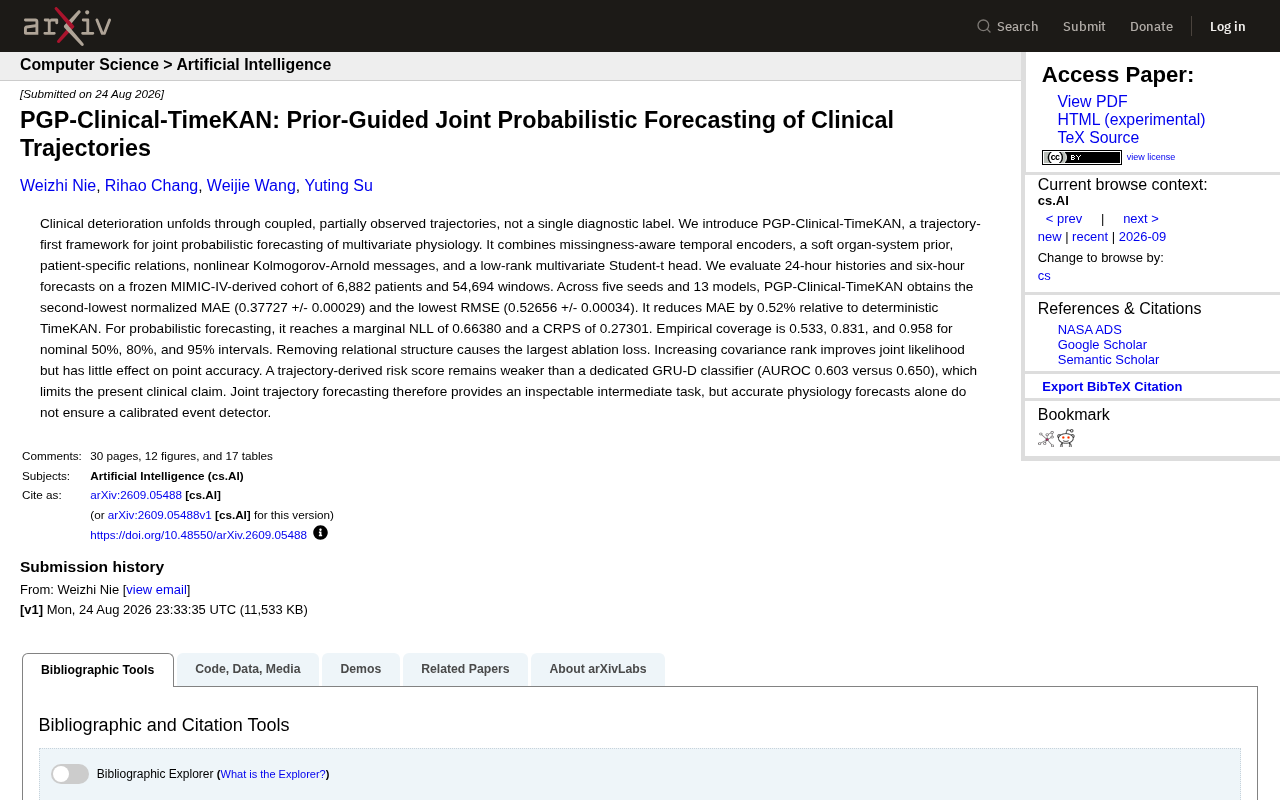
PGP-Clinical-TimeKAN: A Detailed Guide to the Multivariate Physiological Indicator Joint Prediction Framework
An in-depth analysis of the PGP-Clinical-TimeKAN framework for joint probabilistic prediction of multivariate physiological indicators, covering trajectory-first paradigm, KAN message passing, MIMIC-IV validation, and ablation studies.
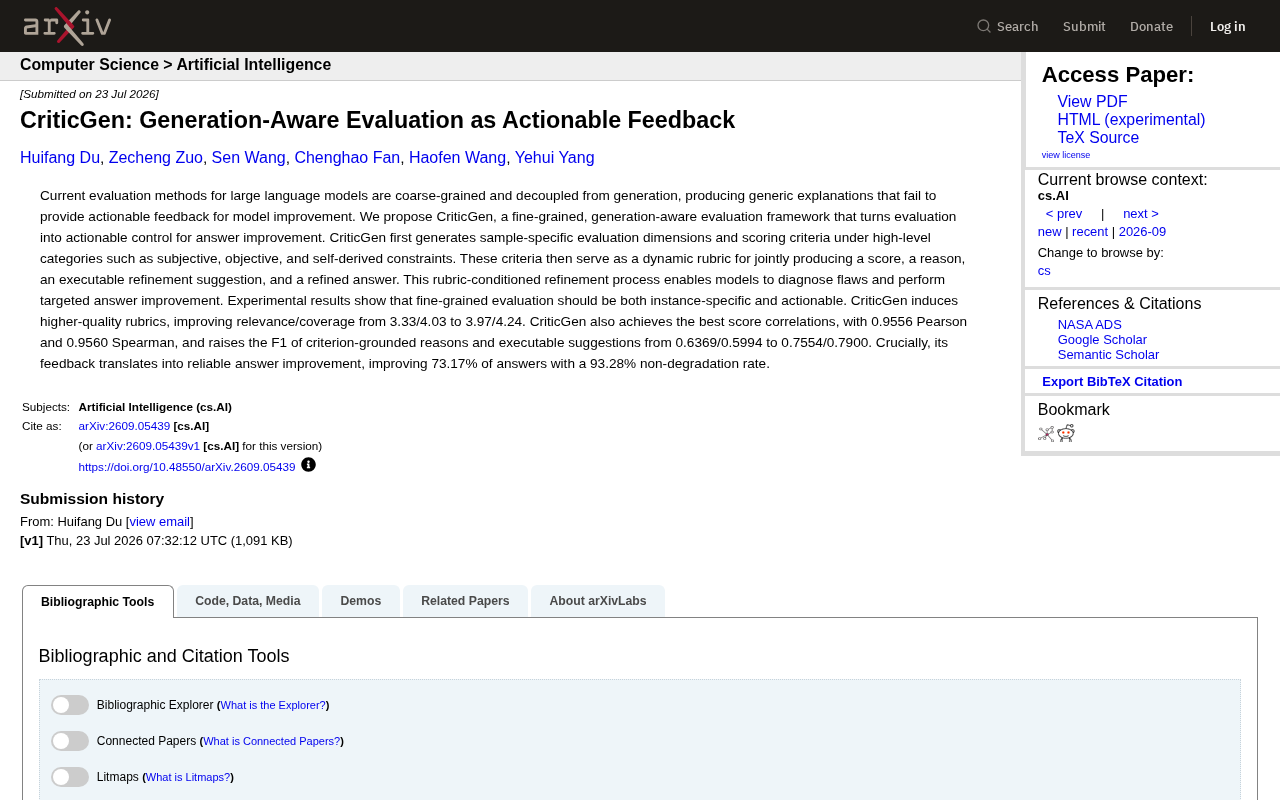
CriticGen: A New Framework That Transforms AI Evaluation into Actionable Improvement Feedback
CriticGen proposes a generation-aware evaluation framework that transforms AI assessment from passive scoring to an active optimization loop, achieving 73.17% answer improvement and 93.28% non-degradation rate.