How Knowledge Graphs Extend LLM Context: From Vector Retrieval to Relational Reasoning
How knowledge graphs go beyond vector search by making implicit relationships explicit for LLM reasoning.
This article explains how knowledge graphs enhance LLM context not by adding more text, but by making implicit relationships between information explicit and traversable. It covers the fundamental limitations of vector retrieval for multi-hop reasoning, how graph structures enable relational inference, the practical GraphRAG workflow including local and global search strategies, and provides a realistic assessment of when graph-based approaches are worth the investment versus standard vector RAG.
Introduction: A Frequently Mentioned but Rarely Well-Explained Question
As RAG (Retrieval-Augmented Generation) systems become increasingly widespread, the idea that "knowledge graphs can enhance LLM context capabilities" has become almost a consensus in the tech community. Yet when someone directly asks the question — "How exactly do knowledge graphs truly add to the contextual information available to an LLM?" — you'll find that surprisingly few people can explain it thoroughly.
Many people's understanding of GraphRAG stays at the vague impression that "using graphs for retrieval is more advanced than vector retrieval." But what exactly does a knowledge graph bring to the table at the information level that vector retrieval cannot? This article will systematically break down this question from a technical mechanism perspective.
The Core Limitations of Traditional Vector Retrieval
To understand the value of knowledge graphs, we first need to clearly see the shortcomings of standard vector RAG.
The Essence of Vector Retrieval: Similarity Matching
The standard RAG workflow goes like this: split documents into chunks, convert them into vectors using an embedding model, then at query time convert the user's question into a vector and find the most semantically similar segments to stuff into the context. This approach works well for single-point factual queries, but it has a fundamental flaw — it can only find isolated segments that are semantically similar to the query, without understanding the relationships between segments.
It's worth elaborating on how embedding models work. The core task of an embedding model is to map text of arbitrary length into a fixed-dimensional dense vector space — typically 768 or 1536 dimensions. In this space, semantically similar texts are mapped to nearby positions, while semantically unrelated texts are far apart. During retrieval, the system computes the cosine similarity or dot product between the query vector and all document chunk vectors, returning the Top-K segments with the highest scores. The mathematical essence of this mechanism is approximate nearest neighbor search (ANN) in high-dimensional space, with common acceleration algorithms including HNSW (Hierarchical Navigable Small World) and IVF (Inverted File Index). However, no matter how efficient the algorithm, what it measures is always "how similar two pieces of text are in terms of what they're about" — not "what relationships exist between the things described in two pieces of text." Furthermore, chunking strategies — fixed-length splitting, paragraph-based splitting, or sliding window with overlap — directly affect retrieval quality. Chunks that are too fine lose context; chunks that are too coarse introduce noise. But regardless of how you chunk, cross-chunk relationship information is inevitably severed.
Here's an example: If you ask "What is the connection between Company A's CEO and Company B?", and these two pieces of information are scattered across different paragraphs in different documents, vector retrieval might only recall the segment about Company A's CEO while missing the crucial piece of information buried elsewhere stating that this person previously worked at Company B. That's because these two text segments aren't necessarily close in semantic space.
Multi-Hop Reasoning: Vector Retrieval's Achilles' Heel
Questions that require traversing multiple information nodes in a step-by-step fashion are called multi-hop queries. Vector retrieval is inherently ill-suited for these scenarios because it only has the concept of "similarity" and lacks the dimension of "relationships."
Multi-hop reasoning has been a long-studied challenge in NLP. In 2018, Yang et al. released the HotpotQA dataset, which was the first to systematically define this challenge: every question in the dataset requires extracting and combining information from at least two Wikipedia articles to answer. For example, "In which country was the director of The Lord of the Rings born?" is a typical two-hop question — the first hop identifies the director as Peter Jackson, and only the second hop can locate New Zealand. In industrial scenarios, multi-hop reasoning is often even more complex: in corporate compliance reviews, "Is any affiliated party of a supplier's parent company on the sanctions list?" might involve a 3-5 hop relationship chain. The fundamental difficulty vector retrieval faces with such questions is that there may be zero semantic overlap between the query text and the text segment containing the final answer. You're searching for "the director's birth country," but the paragraph containing the answer discusses "Peter Jackson was born in Wellington" — if the system doesn't know Peter Jackson is that director, this segment simply won't be recalled.
The Core Information Dimension Added by Knowledge Graphs
This is precisely the critical point where knowledge graphs step in. The core incremental value they bring can be summarized as: Knowledge graphs transform implicit relationships between pieces of information into structured data that can be retrieved and traversed.
From Isolated Nodes to Relationship Networks
Knowledge graphs store information in the form of "entity-relationship-entity" (i.e., triples, such as Zhang San —works_at→ Company B). When an LLM needs to answer a question, the system no longer just finds similar segments — it can:
- Locate the starting entity — first find the core entity node mentioned in the question
- Traverse along relationship edges — follow connections in the graph to find related entities
- Assemble a relationship subgraph — provide these interconnected nodes and relationships together as context to the LLM
The concept of knowledge graphs has deep academic roots. Its theoretical foundations trace back to the Semantic Web and RDF (Resource Description Framework) — a vision proposed by Tim Berners-Lee, the inventor of the World Wide Web, in 2001. In formal terms, a knowledge graph is essentially a directed labeled graph $G = (V, E, L)$, where $V$ is the set of entity nodes, $E$ is the set of relationship edges, and $L$ is the labeling function. Each edge can be represented as a triple $(h, r, t)$, meaning "head entity - relationship - tail entity." In 2012, Google officially launched its Knowledge Graph product, bringing this concept from academia into industry's field of vision. In GraphRAG scenarios, graph traversal is the core operation. The most commonly used traversal strategies include BFS (Breadth-First Search) and DFS (Depth-First Search): BFS expands outward layer by layer from the starting entity, suitable for obtaining all related entities within a fixed number of hops; DFS explores deeply along a single path, suitable for tracing specific relationship chains. In practice, systems typically set a traversal depth limit (e.g., 2-3 hops) to balance context richness against noise control.
This means that information that was "physically separated and semantically dissimilar" in the original text is now connected through explicit edges in the graph. What the LLM receives is no longer scattered fragments, but complete context with structure and relationships.
Key Insight: What's Added Is the Relationship Dimension
Returning to the original question: the contextual information that a knowledge graph adds is not fundamentally "more text" but rather "relationships that were originally implicit between texts, now made explicit." This relationship information is lost during plain text chunking, and the graph recaptures and structures it.
The Practical Workflow of GraphRAG
Combining mainstream implementations, a typical GraphRAG system works roughly as follows:
Construction Phase
- Use an LLM to extract entities and relationships from raw documents to build a knowledge graph
- Perform community detection on graph nodes to generate summaries at different granularities
- Simultaneously maintain a vector index, forming a hybrid "graph + vector" structure
During the construction phase, the choice of community detection algorithm is crucial. Microsoft's open-source GraphRAG project uses the Leiden algorithm — an improved version of the classic Louvain algorithm, proposed by a research team at Leiden University in the Netherlands in 2019. The Leiden algorithm partitions tightly connected nodes in the graph into different communities through a three-phase iterative process of "local moving - refinement - aggregation." Compared to Louvain, Leiden guarantees internal connectivity within each community, avoiding the problem of "disconnected communities." In GraphRAG's implementation, community detection is performed hierarchically: the first level might produce dozens of large communities, each corresponding to a macro-level topic; further subdivision produces smaller-grained sub-communities corresponding to more specific topics. The system uses an LLM to automatically generate summary descriptions for each community, and these summaries play a central role in global queries later. In its 2024 paper, Microsoft reported that the token consumption of this construction process is roughly several times the size of the original document corpus — for a document set of one million tokens, building the graph and community summaries might require several million tokens' worth of LLM calls.
Retrieval Phase
- Local Search: Starting from entities relevant to the question, traverse neighboring nodes to obtain local relational context
- Global Search: Leverage pre-generated community summaries to answer questions requiring a macro perspective (e.g., "What are the main themes across the entire document collection?") — precisely the kind of scenario that pure vector retrieval can barely handle
Local queries and global queries differ fundamentally in their technical implementation. The local query workflow is: first locate starting nodes in the graph through entity name matching or embedding similarity, then perform k-hop graph traversal (typically k=1 or 2), collecting all entities, relationships, and associated raw text chunks along the path, and finally rank these by relevance, trim to fit the LLM's context window limit, and feed everything into the model. Global queries work entirely differently — they don't start from specific entities but instead adopt a Map-Reduce strategy: first distribute the question to all community summaries, having the LLM evaluate each community's relevance to the question and generate a partial answer (Map phase), then aggregate these partial answers and have the LLM synthesize a final answer (Reduce phase). This design enables global queries to take a "bird's-eye view" of the entire knowledge base, answering inductive questions like "What common trends are reflected in this batch of research reports?" In production deployments, many teams also adopt a hybrid retrieval architecture — using vector retrieval for fast initial candidate narrowing, then supplementing with graph traversal for relational context, with both result streams merged before being sent to the LLM. This "vector pre-filtering + graph augmentation" pattern has proven in engineering practice to be a cost-effective compromise.
This combination of "local relationship traversal + global summarization" enables the LLM to handle both fine-grained multi-hop reasoning and questions requiring holistic synthesis.
A Realistic View: Knowledge Graphs Are Not a Silver Bullet
On a practical note, graph-based approaches are not without their costs:
- High construction costs: Using an LLM to extract entity-relationships, build, and maintain a knowledge graph involves token consumption and engineering complexity far exceeding simple vector RAG
- Extraction quality determines the ceiling: If entity-relationship extraction goes wrong, the graph itself becomes noisy and can actually mislead the model
- Not every scenario requires it: For simple factual Q&A, vector retrieval is sufficient — adding a knowledge graph is over-engineering
Regarding construction costs, some publicly available practice data provides useful reference points. According to multiple teams' reports, using a GPT-4-level model for entity-relationship extraction from 10,000 document chunks consumes roughly 2-5 million tokens, with API costs alone potentially reaching tens of dollars — and this doesn't include community summary generation or ongoing maintenance costs. For continuously updated knowledge bases, incremental graph construction (processing only new or changed documents) is a major engineering challenge — newly added entities may need to undergo entity resolution (disambiguation and merging) with existing entities in the graph, a step that still heavily relies on manual review or additional LLM calls.
Regarding extraction quality, there are three common error patterns: first, entity omission (false negatives), where important entities go unrecognized, leaving the graph incomplete; second, relationship hallucination (false positives), where the LLM "hallucinates" relationships that don't exist in the text; third, coreference failure, where the same entity in different contexts is recognized as different nodes (e.g., "Tesla," "TSLA," and "Musk's company" treated as three separate entities). These errors are amplified during graph traversal — a single erroneous edge can pull completely irrelevant information into the context, causing the LLM to generate incorrect answers.
For scenario selection, a practical decision framework is: if your typical queries can be answered directly by retrieving 1-2 text chunks, vector RAG is sufficient; if queries frequently involve relational reasoning questions like "What is the relationship between A and B" or "Through what path did C influence D," or if you need thematic summarization across large document collections, then the investment in knowledge graphs is worthwhile. Financial risk management, pharmaceutical R&D, legal compliance, and intelligence analysis — these "relationship-intensive" domains are typical high-value scenarios for GraphRAG.
Therefore, the more pragmatic view is: Knowledge graphs are best suited for relationship-intensive domains requiring multi-hop reasoning or global synthesis (such as enterprise knowledge management, research literature, compliance auditing, etc.), rather than being the default optimal choice.
Conclusion
The way knowledge graphs extend LLM context is not by providing "more information" but by providing "better-organized information" — they make the implicit relationships scattered throughout text explicit and structured, enabling LLMs to reason along relationship networks and thereby break through the ceiling of vector retrieval's "seeing similarity but missing connections."
Understanding this point is what it truly means to grasp the essence of GraphRAG.
Key Takeaways
Related articles
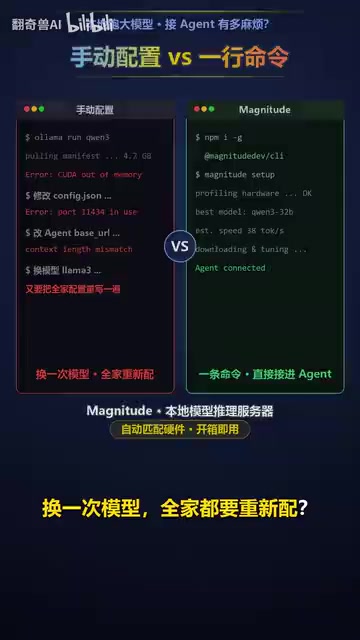
Magnitude: One Service to Handle Local LLM Inference and Agent Integration
Magnitude is an open-source local LLM inference server that auto-optimizes for your hardware and integrates seamlessly with Codex, Claude Code, and other AI Agents.
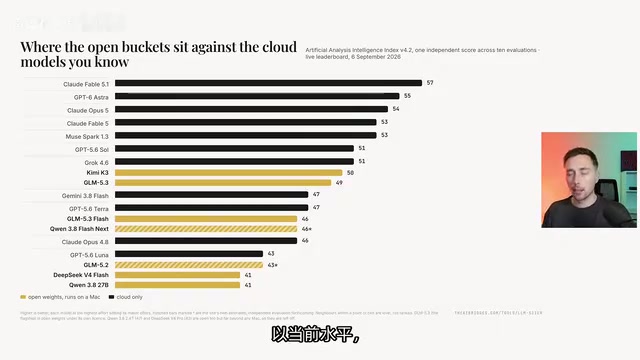
Mac Local AI Buying Guide: A Complete Breakdown of Memory Configurations and Model Speed
In-depth analysis of Mac memory requirements, inference speed, and costs for running local AI LLMs. From 48GB to 512GB configs — which models fit, how bandwidth affects speed, and local vs. cloud cost comparison.
Perplexity Builds AI Sandbox with Rust: A Deep Dive into the RustConf Technical Talk
Perplexity shares its Rust-built sandbox architecture for its Computer product at RustConf. Explore why Rust is ideal for secure AI execution environments.