How Muscle Cars Reshaped America: From Prohibition to National Treasure

Muscle cars rose from moonshiners' mod culture through GM loopholes and Mustang marketing, then transformed under emissions rules and oil crises.
Using National Geographic's "Cars That Changed History" as a thread, the article traces muscle cars from postwar American garage-mod culture to the mainstream product line. Prohibition-era moonshiner modification traditions gave postwar youth a cultural gene for speed. Oldsmobile's Rocket 88 first mass-produced the "small body, big V8" formula; DeLorean exploited a GM option-package loophole to launch the GTO, igniting the market. Iacocca packaged rebellion into the affordable Mustang, reaching 400,000 units a year. Shelby's GT350 and GT500 pushed performance to its peak. The 1970 Clean Air Act and 1973 oil embargo ended the golden age, with the GTO discontinued in 1975. The Mustang survived on image rather than horsepower, with over 10 million sold—proving a category's vitality lies in carrying emotion, not specs.
Muscle cars were never just a means of transportation. Born at the intersection of postwar American optimism and rebel culture, they created an entirely new automotive category by stuffing a big-block V8 into a lightweight body. National Geographic Channel's "Cars That Changed History" series traces this story in full—from Prohibition-era moonshiners to a General Motors engineer's "loophole" maneuver to the rebirth after the oil crisis. The story of the muscle car is practically a condensed history of American social change.
War Legacy and the Speed Gene
In September 1945, World War II ended. Detroit's auto factories switched from military production back to civilian, with Ford and GM racing to roll out reliable family sedans. But to many young veterans, these cars were too tame. They had encountered high-power engines and heavy machinery on the battlefield, and after discharge, they didn't see ordinary sedans as transportation—they saw modification potential.
This passion for tinkering didn't appear out of thin air. Its roots ran back to the Prohibition era of 1920: moonshiners, evading pursuit, modified suspension springs, hid liquor compartments, and beefed up engines to build getaway cars that could outrun the police. After Ford introduced its affordable V8 in 1932, it quickly became the moonshiners' powerplant of choice. Prohibition was repealed in 1933, but the instinct for speed remained. Drag racing and later NASCAR were the legalized outlets for this "outlaw speed" culture.
According to National Geographic's account, postwar youth took garage-mod culture nationwide, and cars began to become vehicles for personality, comfort, and competition.
NASCAR (National Association for Stock Car Auto Racing) was founded in 1948, and its early races absorbed many Southern moonshiners' modified cars and the people and vehicles of drag racing, bringing a speed competition that had hovered on the edge of the law onto an institutionalized track. This legalization process not only gave modified technology a public proving ground, but also showed automakers a direct link between performance image and sales—what consumers saw on the track, they were willing to buy in the showroom. The "track pedigree" that muscle cars later emphasized grew precisely out of this cultural thread from illegal to legal speed.
A Rule Opened by a "Loophole"
The muscle car's technical formula was simple: big-block V8 + lightweight body. But it was General Motors that truly turned it into a product. In 1949, Oldsmobile launched the Rocket 88, stuffing a 135-horsepower V8 into a lighter, smaller body, with a top speed over 100 mph, taking six of nine races in the NASCAR season. This car is widely regarded as the first muscle car because it was the first to successfully bring the "small body, big engine" formula into the showroom.
What truly set off the muscle car explosion was John DeLorean. While at Pontiac, the brand's image had grown stale, seen as a "grandma car." DeLorean's team came up with a plan: put a big-block V8 into the compact Tempest Le Mans. But GM had an internal rule prohibiting large engines in mid-size cars. DeLorean found the blind spot—the restriction applied only to the base engine; if the V8 was offered as an option, it wasn't a violation.
In 1963, the Pontiac GTO debuted with 348 horsepower and a 0-60 time of about six seconds, and orders poured in quickly after launch. According to the program, the GTO received 5,000 orders almost immediately. This "option-package loophole" bypassed internal oversight and formally brought garage-mod culture into the mainstream product line.
The multi-brand structure of General Motors at the time is key context for understanding this "loophole." GM had multiple brands—Chevrolet, Pontiac, Oldsmobile, Buick, and Cadillac—each with different positioning, and internal engineering and product rules to prevent excessive overlap between brands and runaway power configurations. These rules typically targeted the displacement or model class of the base engine, while the approval path for optional equipment was relatively loose. DeLorean exploited exactly this management gap—when a big-block V8 appeared as an option, it bypassed the hard limits on base models. While this achieved the performance goal, it also exposed the tension between large corporations' internal rules and market demand, becoming a case often cited in later automotive product planning.
Mustang: Selling Image, Not Horsepower
Ford's response to the GTO came from Lee Iacocca. He didn't take the extreme-performance route, but set two hard targets for the team: a price under $2,500 and a weight under 2,500 pounds—nearly unforgiving from an engineering standpoint. Iacocca chose to base it on the existing compact Falcon rather than design from scratch.
In April 1964, Ford unveiled the Mustang at the New York World's Fair. Overnight it became the fastest-selling car in American history, with Ford's annual output reaching 400,000 units. But the program also points out a fact often overlooked: most early Mustangs were not high-performance versions—they had a sports car halo but were practical, economical cars at heart. Iacocca's real breakthrough was marketing—packaging the muscle car's rebellious image into a product the masses could afford.
The Mustang's success triggered a Detroit arms race. Chevrolet launched the Camaro, with an official explanation of the name that was almost provocative in its bluntness: "a small, vicious animal that eats Mustangs." The Dodge Challenger, Plymouth Roadrunner, and Oldsmobile 442 all entered the fray, and horsepower figures became the centerpiece of every brochure.
Shelby and the Peak of the Muscle Car
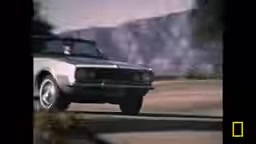
To catch up in the performance race, Ford brought in Carroll Shelby. This Texan had been a racing driver, had beaten Ferrari at Le Mans, and founded Shelby American in 1962. In 1965, Shelby stripped down and lightened the Mustang, swapped in plexiglass windows, removed the rear seat, and built the GT350, which won its first race in the hands of Ken Miles—validating the Mustang's track pedigree.
In 1967, Shelby launched the GT500. He installed a larger-displacement V8, added twin hood scoops to funnel cold air directly into the engine bay during driving for free power gains. Iacocca named the new car GT500—in the program's words, "the number 500 didn't really mean anything, it was just bigger than everyone else's number." The 428-cubic-inch big-block V8 produced 355 horsepower, making it one of the most powerful Mustangs ever, and it later became a silver-screen icon in the film Bullitt.
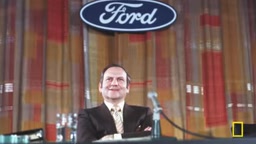
Carroll Shelby's background deserves another layer of explanation. He was not only a racing driver but also an engineer involved in race car design, and in 1959 he won the 24 Hours of Le Mans as a driver. After retiring for health reasons, he turned to vehicle modification and manufacturing, founding Shelby American, initially known for swapping Ford V8s into the AC Cobra. Shelby's relationship with Ford was essentially that of a "factory tuner": Ford supplied the vehicles and powertrains, while Shelby handled weight reduction, chassis tuning, and performance enhancement. This collaboration model allowed Ford to quickly launch track-competitive high-performance versions without major changes to the main production line, and provided the organizational foundation for the birth of the GT350 and GT500.
Tightening Rules and the End of the Golden Age
The turning point came from regulation. In 1970, the Nixon administration introduced the Clean Air Act; strict emissions controls and the switch to unleaded gasoline made big-block V8s hard to keep compliant, and horsepower plummeted. In 1973, the Fourth Middle East War triggered an oil embargo, gas stations formed long lines, and fuel prices rose across the board. Big-displacement muscle cars became economically impractical.
The Pontiac GTO grew heavier and slower, and was discontinued in 1975. Chrysler and GM abandoned most of their V8 production lines, and the golden age of the muscle car was declared over.
But the Mustang survived. The program's analysis suggests the Mustang's survival strategy differed from other muscle cars—it sold not just horsepower, but freedom, style, and a kind of cool you could own. After the oil crisis eased, muscle cars slowly returned in the '80s and '90s. In 2007, Ford revived the Mustang Shelby GT500 with a 5.4-liter supercharged V8 producing 500 horsepower, a 0-60 time under five seconds, while meeting modern emissions and fuel-economy requirements.
Since its debut in 1964, Ford has sold over 10 million Mustangs cumulatively. That number alone shows that what the muscle car left behind is not a particular model, but a cultural gene.
The Clean Air Act was first passed in 1963; the 1970 amendments greatly strengthened the federal government's authority over vehicle emissions and led to the creation of the EPA. After that, emissions standards tightened year by year, and the promotion of unleaded gasoline required engines to lower compression ratios or add catalytic converters, directly squeezing the生存 space of big-displacement, high-compression V8s. Automakers had to rebalance power against compliance, and many classic muscle cars thus saw cliff-like horsepower cuts in the early 1970s. Only by understanding this regulatory background can one see that the muscle car's decline was not simply a change in market taste, but a forced pivot of a technical path under regulatory pressure.
Why Muscle Cars Deserve to Be Remembered
National Geographic's conclusion is: muscle cars were born at the intersection of war machinery and youth culture, and ultimately became a symbol of self-expression, rebellion, and power. They changed the way Americans drive, and they changed the way Americans see themselves.
From a content creator's perspective, this history offers a case worth pondering repeatedly: the vitality of a category often depends not on technical specs, but on whether it can carry the emotions of a generation. The muscle car's horsepower figures were long ago surpassed by electric vehicles, but the "refusal to blend into the background" attitude it represents can still be recognized, consumed, and passed down more than half a century later. The Mustang is the survivor, but the reason it survived is not that it was the fastest, but that it was the first to figure out what it was selling.
Related articles

How the Grok Team Hits 11,000 PRs a Month: Replacing Manual Review with Deterministic Constraints
Inside the Grok team's formula for 11,000 monthly PRs at a 0.5% rollback rate: Lint rules, type systems, and formal verification as deterministic constraints.

Is Spacetime Made of Something? Six Possible Answers from Quantum Gravity
Is spacetime made of something? This article surveys the main candidate answers from quantum gravity: spacetime may be fundamental, geometry quantized, causal relations prior to distance, spacetime an emergent state of matter, geometry derived from string theory, or no spacetime atoms needed at all.

After GTA 6, Where Does the Game Industry Go?
The Vergecast talks with Game File's Stephen Totilo about GTA 6's impact on gaming: billion-dollar budgets, console market struggles, cloud gaming tests, and the future of microtransactions—and whether it marks the end of an era.