How Short-Form Video Creators Are Using AI Video Generation Tools
AI video tools serve as asset supplements, not replacements, in professional short-form video workflows
While AI video generation tools like Seedance 2.5 show impressive demos, creators typically use only small portions of generated content in final videos. Technical challenges including quality inconsistency, style matching, and platform algorithm requirements limit widespread adoption, positioning these tools as supplementary assets rather than core production solutions.
The Current State of AI Video Generation Tools in Practice
With the rapid development of AI video generation technology, from Runway to Pika, and most recently the popular Seedance 2.5, demo videos for various AI video tools have been emerging constantly. The core technology behind these tools is video synthesis based on Diffusion Models—models that learn to progressively "denoise" from random noise to restore coherent frames by training on massive video datasets. Compared to earlier GAN (Generative Adversarial Network) approaches, diffusion models show significant improvements in image quality and diversity, but also bring inherent characteristics like slow inference speed and high randomness in generated results. Seedance 2.5 is a video generation model launched by ByteDance's Dreamina platform, whose architecture integrates temporal consistency optimization and motion control modules, aiming to mitigate inter-frame jitter issues in videos.
But a more pressing question is: how many of these AI-generated video clips actually make it into the final published short-form videos?
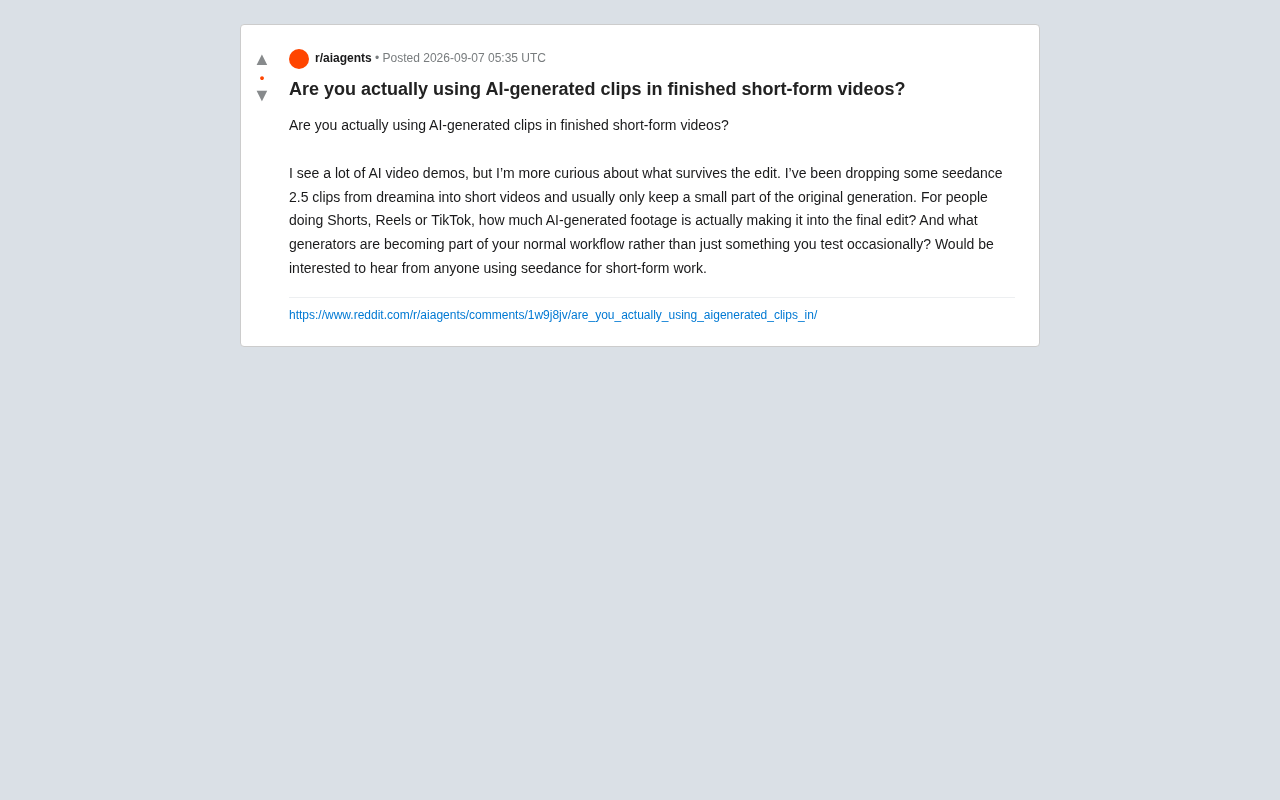
A short-form video creator from Reddit shared their practical experience: they use Dreamina platform's Seedance 2.5 to generate video clips, but typically only retain a small portion of the original generated content in their final work. This observation reveals an important phenomenon—in actual application, AI video generation tools are often not used "wholesale," but rather serve as a supplement to the asset library.
Real-World Challenges of AI Video Tools
There's a widespread phenomenon in AI video generation: a noticeable gap exists between polished demo videos and actually usable footage. Many creators try various new tools, but very few actually make it into their daily creative workflow.
The reasons behind this are multifaceted:
Inconsistent Quality: AI-generated video quality fluctuates significantly, requiring multiple generations to obtain usable clips. The root cause of this problem lies in the random sampling mechanism of diffusion models—each generation starts from different initial noise, so even with identical prompts, results vary. This uncertainty is particularly prominent in video generation: subtle inconsistencies between adjacent frames accumulate along the temporal dimension, evolving into frame jitter, subject deformation, or scene jumping. Mainstream models have introduced Temporal Attention mechanisms and Optical Flow Guidance to mitigate this issue, but fundamentally cannot completely eliminate randomness—this is the technical reason why creators must "generate multiple times and select the best."
Style Consistency: Maintaining unified visual style when mixing AI footage with live-action or other assets is challenging
Duration Limitations: Most current AI tools generate relatively short clips, making it difficult to meet complete narrative needs
Editing Flexibility: AI-generated content often requires extensive post-editing to align with creative intent. Current integration between AI video generation tools and professional editing software like Premiere Pro, DaVinci Resolve, and Final Cut Pro is still in early stages—the mainstream pathway is "generate then export," where users generate MP4 clips on AI platforms and manually import them into editing software for processing. Adobe has integrated Firefly video generation functionality into Premiere Pro, representing the future direction of integration, but for independent platforms like Seedance, opening API interfaces or providing native plugins is a critical step to connect the complete creative chain, which has not yet been fully realized.
Special Requirements of Short-Form Video Platforms for AI Assets
For short-form video platforms like YouTube Shorts, Instagram Reels, and TikTok, creators face even stricter requirements:
Pacing Control: Short-form videos demand extremely fast pacing and strong visual impact, requiring AI-generated footage to be precisely edited to the second
Platform Algorithms: Different platforms have varying standards for judging originality and content quality, and over-reliance on AI assets may affect recommendations. Notably, platform algorithms don't directly detect whether content is AI-generated, but indirectly assess quality through proxy metrics like completion rate, engagement rate, bounce rate, and content fingerprinting. Heavy use of stylistically similar AI assets can easily trigger "low originality" judgments, leading to reduced recommendation weights. Additionally, TikTok has required creators to actively label AI-generated content (AIGC tags) since 2024, and Meta's platforms have similar policies, presenting additional compliance requirements for creators relying on AI assets.
Audience Expectations: Short-form video users are extremely sensitive to content quality, and any unnatural frames may lead to quick swipe-aways
Therefore, creators tend to use AI-generated clips as "embellishments" or "transitions" rather than primary content. For example, using AI-generated abstract backgrounds, dynamic effects, or conceptual scenes—these elements both enhance visual appeal and avoid exposing AI generation limitations.
The Position of Seedance and Similar Tools in the Creative Workflow
Seedance 2.5, as a new generation AI video tool, represents a trend through its application on the Dreamina platform: AI video generation is shifting from an "independent creation tool" to an "asset assistance tool."
For short-form video creators, the value of these tools lies in:
Cost Reduction: Replacing some paid stock footage or complex effects production
Efficiency Enhancement: Quickly generating proof-of-concept or placeholder assets
Creative Exploration: Inspiring new creative directions through AI generation
But to become part of the normal workflow rather than an occasional testing toy, these tools still need improvements in the following areas:
- More precise prompt control and predictability of generation results. AI video prompt engineering is more complex than image generation, requiring simultaneous description of subject, action details, camera movement, lighting atmosphere, and duration. Current models still have relatively low execution accuracy for motion instructions like "pan left"; Keyframe Control and skeleton guidance technologies are important directions for improving predictability and represent capability boundaries that new generation models are actively breaking through.
- Longer generation durations and higher resolutions
- Better style consistency and series generation capabilities
- More flexible editing interfaces for easy integration with traditional editing software
Development Direction of AI Video Creation
AI video generation technology is still in a period of rapid iteration. For short-form video creators, the best practice at this stage is: maintain an open mind to try new tools, but rationally evaluate their position in actual workflows.
The real turning point may come when AI can generate fully controllable and quality-stable footage—at that point, AI video tools will truly upgrade from a "supporting role" to "core productivity." Until then, creators will continue as this Reddit user does: generate, filter, trim, and keep only the most valuable small portion.
Key Takeaways
- AI video generation tools are primarily used as supplementary assets rather than complete solutions in professional short-form video production
- Technical limitations including quality inconsistency, style matching challenges, and duration constraints prevent wholesale adoption
- Platform algorithms and audience expectations require careful integration of AI assets to maintain content quality and originality scores
- The future of AI video tools depends on improvements in controllability, predictability, and workflow integration rather than just generation quality
Related articles
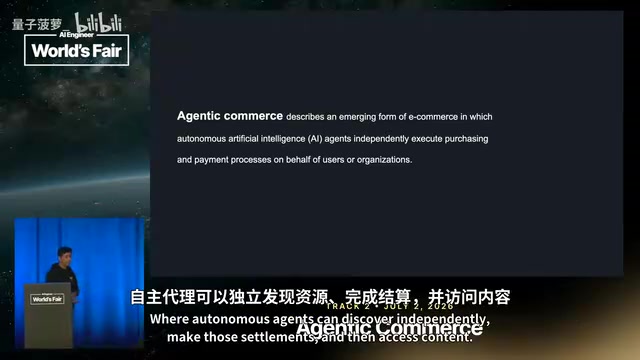
AWS Agent Code Payments Explained: A Complete Guide to AI Agent Autonomous Payment Infrastructure
Deep dive into AWS Agent Code Payments: how AI agents achieve autonomous payments via X402 protocol, wallet security, session budgets, WAF AI traffic monetization, and Coinbase/Stripe integration.
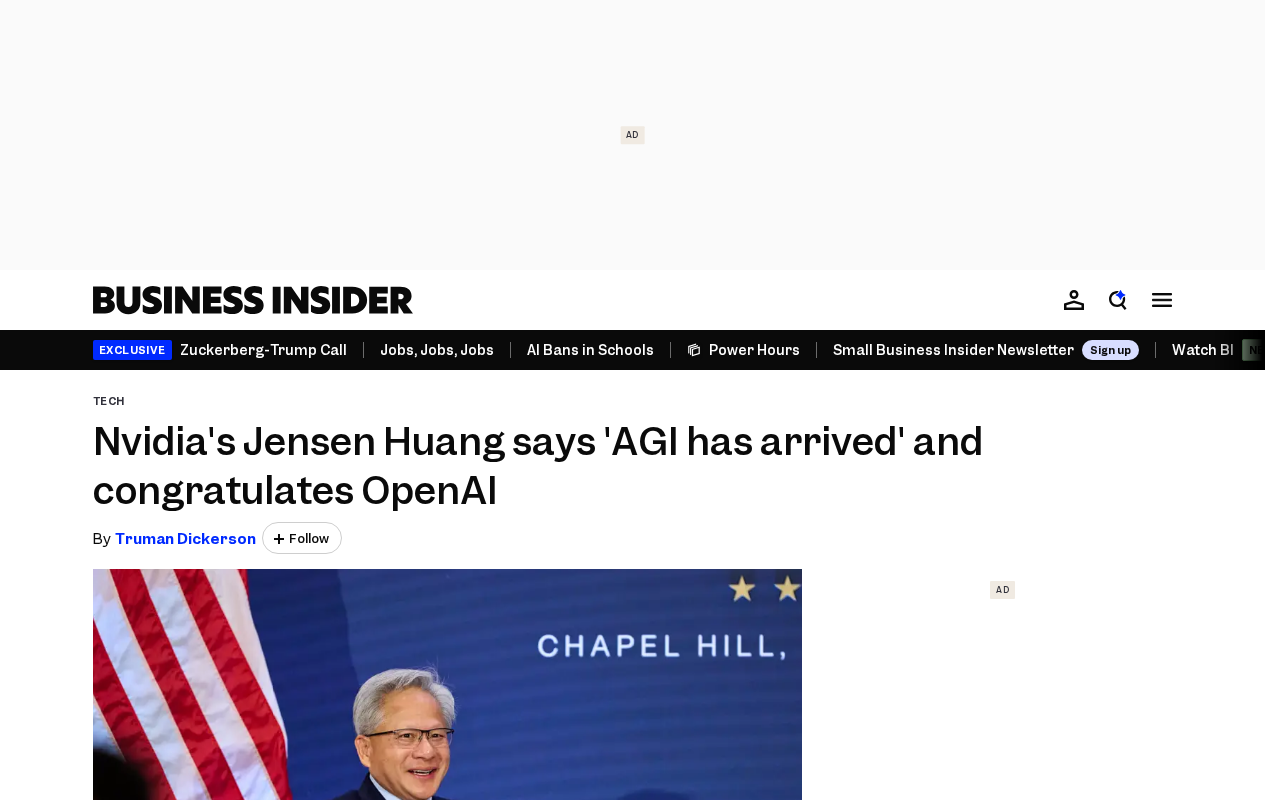
Jensen Huang Declares AGI Has Arrived and Congratulates OpenAI, Sparking Industry Debate
Nvidia CEO Jensen Huang declares AGI has arrived and congratulates OpenAI. Deep analysis of his reasoning, OpenAI's contributions, community pushback, and industry implications.

Home Data Center Setup Guide: A Complete Self-Hosted Private Cloud Implementation
Deep dive into building a home data center: hardware selection, software architecture, cost analysis, and operational challenges. From data sovereignty to technical implementation, build your private cloud infrastructure and control your digital assets.