How to Choose a High-Quality AI Agent Development Course: 5 Practical Screening Criteria

5 practical criteria to identify high-quality AI Agent development courses and avoid costly mistakes.
A Bilibili creator who transitioned from mechanical engineering to a 30K/month LLM role shares five actionable criteria for evaluating AI Agent courses: whether the curriculum covers the full pipeline (including Function Calling, RAG, and deployment); whether projects are resume-worthy with real tool integrations; whether the course addresses production engineering challenges like Token cost and context management; whether content stays up to date; and whether mentorship and feedback are provided. The framework is broadly applicable to evaluating any AI Agent course.
For anyone looking to break into the large language model (LLM) space, the AI Agent development course market is a minefield — quality varies wildly, and picking the wrong one can cost you thousands of dollars and months of wasted time. A Bilibili content creator who successfully transitioned from a mechanical engineering background into a 30K/month LLM engineering role has distilled his experience into a practical framework for evaluating AI Agent courses. This article summarizes his core insights to help developers who are still exploring their options — or stuck halfway through a course — make smarter decisions.
From Mechanical Engineering to AI: Why Agent Development Is Worth Learning
This creator started out in mechanical engineering. Upon graduating, he found himself facing a brutal reality: few job openings, fierce competition, low salaries, and limited upward mobility. Skills like CAD, Solidworks, and material mechanics weren't moving the needle on job applications — the more he applied, the more anxious he became.
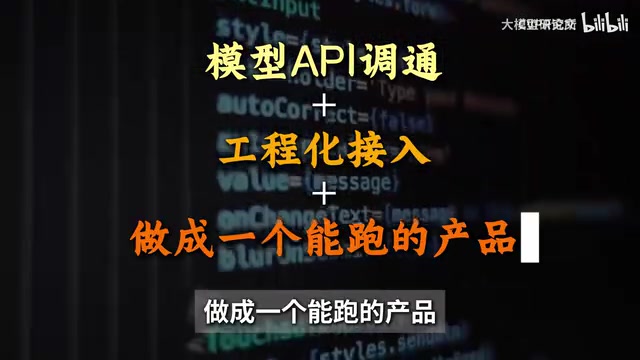
The turning point came from a key observation: many impressive-looking AI applications are fundamentally just a matter of wiring up a model's API, adding some engineering logic, and shipping it as a working product. For someone from an engineering background — accustomed to logical decomposition and process-driven delivery — this path had far greater transferability than doubling down on mechanical engineering. The only missing piece was a structured learning path for AI application development.
But the self-study process was full of its own traps. Watching public videos gave him a head full of concepts — Prompt engineering, Agents, Function Calling — yet he still couldn't build anything substantial. Following scattered tutorials had him building chat UIs one day, wiring up vector databases the next, and getting stuck at deployment the day after. The most frustrating part: no resume-worthy projects, no portfolio to show, and difficulty even landing internships. This state of "I learned it but didn't really learn it" is a common affliction among self-taught developers.
Five Screening Criteria: How to Judge Course Quality
Here's the actionable checklist he developed for evaluating courses. Stick to this logic and you're unlikely to go wrong.

1. Does It Cover a Complete Delivery Pipeline?
A high-quality Agent course should cover the full pipeline: requirements decomposition → model selection → API integration → tool calling (Function Calling / Tools) → RAG retrieval → memory and state management → evaluation and monitoring → production deployment.
The evaluation method is straightforward: ignore the marketing copy and check whether the course syllabus actually contains these keywords — Function Calling, Tools, RAG, evaluation and observability, production deployment. If a course only teaches you to write prompts and have the model "play a character," it's a prompt engineering course, not an Agent development course.
RAG (Retrieval-Augmented Generation) deserves a separate explanation. The core idea behind RAG is to avoid baking all knowledge into model weights. Instead, when a user asks a question, the system first retrieves relevant passages from an external knowledge base (documents, databases, web pages, etc.), then injects those passages into the prompt so the model generates answers grounded in retrieved content. This approach supports private data and reduces hallucination risk. Function Calling / Tools is the mechanism that allows a model to proactively invoke external functions or APIs — the model decides when to call a function and what parameters to pass, and the system executes the call and returns the result. These two capabilities are what separate a real Agent from a simple chatbot: RAG addresses "where does knowledge come from," while Function Calling addresses "how does action get taken." Without either, an Agent is just "an interface that talks" rather than a system that actually completes tasks.
2. Can the Projects Go on Your Resume?
A solid hands-on project should have three elements:
- Clear inputs and outputs: What does the user provide? What does the system return?
- Tool integration: Retrieval, databases, APIs, spreadsheets, web scraping, enterprise systems — at least one must be integrated
- Metrics or a closed loop: Accuracy, hit rate, response latency, cost — even basic quantification counts
Good examples include an enterprise knowledge base Q&A Agent (RAG + permissions + citation tracing + admin dashboard), or a multi-tool office automation Agent (reading emails, parsing spreadsheets, generating weekly reports, auto-archiving). If all you get is a chatbot demo paired with hours of theory about "what is an agent, planning, reflection" — that has zero practical value.

3. Does It Reflect a Real Engineering Perspective?
The real challenge with Agents isn't getting them to run — it's keeping them running reliably. A trustworthy course should clearly explain engineering realities: how to control Token costs, how to trim context, how to prevent tool-calling failures, and how to handle data security. You don't need deep expertise on every point, but you need to know where the landmines are — otherwise your system will blow up the moment it hits a production environment.
Token cost control and context trimming are among the most overlooked engineering challenges in production. Major LLMs charge by the token. A multi-turn Agent that doesn't manage context will linearly accumulate conversation history with each round, causing both costs and latency to spiral out of control. Common mitigation strategies include: sliding window truncation (keep only the last N turns), summary compression (condense conversation history into a short paragraph), and tiered caching (pre-embed high-frequency knowledge into the system prompt). Preventing tool-calling failures involves retry logic, timeout handling, and result validation — because the function-call parameters a model generates aren't always valid API inputs, and a middleware layer needs to handle edge cases gracefully. These details never surface in demo videos but are often the decisive factor in real-world system stability.
4. How Frequently Is It Updated?
The LLM ecosystem moves fast — old courses go stale quickly. Check two things: Does the syllabus include content from the last few months (new tool-calling patterns, framework updates, evaluation methodology changes)? And are the assignments and code repositories actively maintained, or was the course a one-and-done release?
5. Does It Include Hands-On Support and Feedback?
Prioritize courses that offer assignment reviews, project Q&A, and community interaction — ideally with resume advice and project framing guidance as well. Career changers don't just need video content. They need someone to pull them out of the hole when they get stuck.
Advice for Career Changers
Back to the original question — do high-quality AI Agent development courses exist? Yes, they do. But the key is finding one that actually helps you ship a real project.

If you're feeling lost, want to get started but don't know where, or have stalled out halfway through a project — rather than grinding through anxiety, take a structured approach: go from API integration to business-layer integration, then to building a complete intelligent application end-to-end. Fully running through a tool chain once and completing one project you can put on your resume is worth more than watching a hundred scattered tutorials.
One important caveat: this content comes from a single creator's personal experience and includes promotional elements for his own course. Readers should apply independent judgment when referencing his criteria. That said, the evaluation framework itself — complete delivery pipeline + quantifiable projects + engineering-first perspective + continuous updates + hands-on support — is genuinely sound and can serve as a universal yardstick for assessing any AI Agent course, regardless of which specific course you ultimately choose.
Related articles

Chain of Thought Isn't Just for AI: How Humans Can Use CoT to Improve Thinking Quality
Chain of Thought isn't just a prompt trick for large models. Starting from a Hacker News discussion, this article analyzes why CoT works for human thinking too, breaks down actionable ways to transfer it, and highlights the key differences between human CoT and machine CoT.
Cloudflare Teams Up with OpenAI: Closi…
Cloudflare Teams Up with OpenAI: Closing the Loop from Vulnerability Discovery to Defense with AI
Cloudflare uses OpenAI Daybreak to investigate security vulnerabilities and generate reviewable remediation plans, while developers use Codex to boost coding efficiency and quality.

Orca Multi-Agent Orchestration in Practice: A Guide to Parallel Collaboration with Claude and Codex
Orca is Stable AI's free open-source agent workbench supporting 34 agents like Claude Code and Codex in parallel. Learn its Git worktree isolation, multi-model orchestration, and mobile management.